The Cannabis Industry: The Best Books on Legalisation and the Business, in Order
This is the story of how a prohibited crop became a licensed industry — the movement that pushed for it, the policy choices that shape every legal market, and the businesses that formed once the law changed. One caution governs the whole path: cannabis law and cannabis economics move faster than books do, so several titles here describe a legal landscape that no longer exists, and each entry says where that is the case. Read them for the mechanisms and the arguments, and check every specific claim about legal status against something current.
How prohibition happened, and how it came apart
BeginnerUnderstand that neither the ban nor its reversal was driven mainly by evidence about the drug. Get the American political history in order — the 1937 tax act, the Controlled Substances Act, medical marijuana as the wedge — before any of the policy or business arguments.
▸ Study plan for this stage
Pace: Five to six weeks for 680 pages. Lee's Smoke signals is 524 pages and is the substantial book of the stage — four weeks at 30 pages a session, covering the fullest social and political history of cannabis in America from nineteenth-century medical use through Anslinger, the counterculture and the AI
- The 1937 Marihuana Tax Act as the operative American prohibition, and Anslinger's role in building the public case for it out of press campaigns rather than pharmacology.
- Scheduling under the Controlled Substances Act, and what Schedule I placement does downstream to research access, banking and taxation — the constraint every later chapter of this path runs into.
- Dufton's central finding: the parent-led anti-marijuana movement of the late 1970s reversed a decriminalisation campaign that had already succeeded in a dozen states, which is the clearest evidence that reform is not a one-way ratchet.
- Medical marijuana as the wedge. The AIDS-era compassionate-use movement created a constituency, a delivery infrastructure and a legal argument that recreational campaigns then inherited.
- Racial enforcement as a constant across the whole period, with arrest disparities persisting through both prohibition and partial reform.
- The gap between the stated and operative reasons for prohibition, which Lee documents from the archival record rather than asserting.
- That the movement built the industry. Almost every early legal operator came out of the medical or activist world, which shapes stage four's business history in ways an ordinary industry study would miss.
- How was the 1937 federal prohibition constructed legally, and why did the tax mechanism matter rather than a straightforward ban?
- What does Schedule I classification actually prevent, and which of those consequences still bind in states with legal markets?
- What reversed American decriminalisation in the late 1970s, on Dufton's account, and who organised it?
- Why did medical access succeed politically where recreational legalisation had failed, and what did that choice bake into the eventual industry?
- Which parts of Lee's account are drawn from archives and which from participant recollection? The distinction matters for how much weight to give each.
- Build a timeline of American cannabis law from Lee and Dufton, marking federal actions on one line and state actions on another. The divergence between the two lines is the subject of stage three.
- Take one claim made in the 1930s press campaign Lee describes and trace what evidence was offered for it at the time. Doing this once shows how the prohibition case was actually constructed.
- Read Dufton's chapters on the parent movement and write a one-page account of it in its own terms, sympathetically. Any reader who cannot do this has not understood why it succeeded.
- Check the current federal scheduling status and any pending change against what Lee describes, and note every consequence in his book that would follow from a reclassification.
Next up: Cannabis prohibition was one component of a much larger enforcement system, and legalisation was a reaction to that system rather than to the plant.
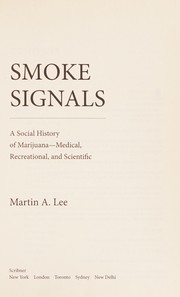
The fullest social and political history of cannabis in America, from the medical use of the nineteenth century through Anslinger, the counterculture, and the AIDS-era medical movement that made legalisation possible. Start here; it ends around 2012 and so predates every adult-use market except Colorado and Washington.

A historian's account of the pendulum between reform and backlash, and the most useful thing on the path for understanding the parent-led anti-marijuana movement of the late 1970s that reversed an almost-won decriminalisation. Read it second, because it explains why the process took another forty years.
The drug war around it
BeginnerCannabis policy is a subset of drug policy, and the enforcement machinery, the asset forfeiture, and the racial disparities in arrest rates all belong to the larger system. Read widely enough here to see what legalisation was reacting against.
▸ Study plan for this stage
Pace: Six to seven weeks. Baum's Smoke and mirrors is 396 pages, three weeks, and goes first: the political history of the American war on drugs from Nixon onward, reported from inside the agencies that ran it. It was written in 1996 and is now completely historical, which is exactly its value — it captur
- The enforcement consensus Baum documents: a bipartisan American commitment to supply-side interdiction and escalating sentencing that held for roughly a quarter century with almost no elite dissent.
- Mandatory minimum sentencing and the sentencing disparities that followed, which are the mechanism converting drug policy into incarceration policy.
- Civil asset forfeiture as a funding mechanism for enforcement agencies, and the incentive it creates independent of any policy goal.
- Racial disparity in arrest and sentencing rates for offences committed at similar rates across groups — the empirical fact that did more than any other to make legalisation politically possible.
- The Portuguese decriminalisation model Hari reports, and the crucial distinction between decriminalising possession and legalising supply, which are different policies with different effects.
- Contested science in the addiction literature. Hari's synthesis leans on a particular reading of the research, and knowing that it is disputed is part of reading the book honestly.
- The transitional grey market Dolce describes, in which quasi-legal operators, breeders and medical intermediaries built the supply chain, product knowledge and genetics that legal markets later inherited.
- What was the American enforcement consensus, when did it form, and what held it together across administrations of both parties?
- Explain civil asset forfeiture and say why it changes agency behaviour regardless of the underlying policy.
- What is the difference between decriminalisation and legalisation, and what does the Portuguese case actually demonstrate about each?
- Which of Hari's claims about addiction are contested, and how would you check one of them?
- What did the grey market Dolce describes contribute to the legal industry that formed afterwards — in supply, in expertise and in personnel?
- Baum wrote in 1996 and Dolce during the transition. Which of their observations are now purely historical, and which describe things still true?
- Find current arrest data by offence and demographic group for your own jurisdiction and compare it with the disparities Baum documents. Whether the gap has narrowed is the single most useful check on the whole reform argument.
- Take one enforcement programme described in Smoke and mirrors and trace whether it still exists, in what form and at what budget.
- Read Hari's account of the Portuguese reform and then find one evaluation of it from a research body. List every point where the book and the evaluation differ in emphasis.
- For each place Dolce visits, look up its current legal status. The list of changes is the most concrete demonstration available of how fast this subject dates.
Next up: Having seen what legalisation was reacting against, the analytical question becomes what a legal market should actually be designed to do.
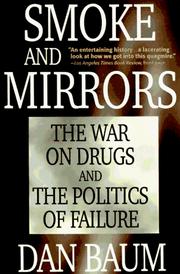
The political history of the American war on drugs from Nixon onward, reported from inside the agencies that ran it. Written in 1996 and completely historical now, which is exactly its value: it shows the enforcement consensus at full strength.
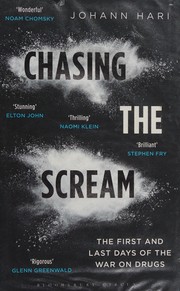
A journalist's global tour of prohibition and its alternatives, including Portugal's decriminalisation. Vivid and openly polemical, and some of its scientific claims about addiction have been contested — read it for the reporting and check the science elsewhere.

Dolce travels through the emerging legal and quasi-legal cannabis world — Amsterdam, Israel, Colorado, California breeders — as it was being built. The best sense of the transitional moment, and the most dated book on the path in its market specifics.
Designing a legal market
IntermediateThis is the analytical core: legalisation is not one decision but dozens — licence caps, potency taxes, home growing, advertising, who may own what. Learn to see that a legal market's outcomes are mostly determined by those design choices rather than by legality itself.
▸ Study plan for this stage
Pace: Two months and the analytical core of the path. Caulkins, Kilmer and Kleiman's Marijuana Legalization is 304 pages in a question-and-answer format and needs three weeks read attentively rather than skimmed; it lays out the design space without advocating a position, which is rare in this literature
- The design space as the actual subject: licence caps, potency and weight-based taxation, home cultivation rights, advertising rules, vertical integration limits and permitted ownership are separate decisions with separate consequences.
- Taxation by potency versus by weight versus by price, and why each produces a different product mix and a different relationship with the illicit market.
- Commercialisation as a variable rather than a given. State monopoly, non-profit supply, co-operatives and grow-your-own are alternatives to a for-profit licensed industry, and Caulkins and colleagues treat them all seriously.
- The revenue illusion: cannabis tax revenue is small relative to state budgets under any realistic design, and policy justified primarily by revenue is being justified by the weakest available argument.
- The federal-state collision Hudak describes — a Schedule I substance sold under state licence — and its two operative consequences, exclusion from ordinary banking and punitive federal tax treatment of business expenses.
- Enforcement discretion as the load-bearing element of the whole American arrangement, which means the industry's legal footing depends on a policy choice rather than on law.
- What is distinctive about cannabis among drugs, on Kleiman, Caulkins and Hawken's comparison: the dependence profile, the overdose risk and the enforcement cost differ enough that arguments do not transfer between substances.
- That every specific number in these books is now a decade old while the framework is not, which is the correct way to use them.
- List eight distinct design choices a legalising jurisdiction must make, and give the main consequence of each.
- Compare potency-based, weight-based and price-based cannabis taxes on revenue stability, product mix and illicit competition.
- Why do Caulkins, Kilmer and Kleiman treat commercial for-profit supply as one option among several rather than as the definition of legalisation?
- What exactly does federal Schedule I status do to a state-licensed business's banking and tax position, on Hudak's account?
- Where is cannabis genuinely unlike other controlled drugs, and where do reformers assume a similarity that does not hold?
- Which claims across these three books are framework and which are data? Sort a dozen and note how easy the distinction is to miss.
- Take your own jurisdiction, or one you are interested in, and fill out the full design checklist from Caulkins, Kilmer and Kleiman. The blanks you cannot fill are the parts of the policy nobody has decided.
- Compute what cannabis tax revenue would be as a share of a state budget at a plausible market size, then compare with the claims made in the legalisation campaign. The gap is the revenue illusion in numbers.
- Model the effect of a tax increase on the price gap between licensed and illicit product, and identify the point at which the illicit market becomes the cheaper option.
- Read one current state regulation on licensing or advertising and map each provision back to a design choice in the book. Regulations look arbitrary until you can do this.
- Write a one-page memo recommending a design for a jurisdiction of your choice, stating for each choice what you are optimising for. Doing so forces you to notice that the goals conflict.
Next up: With the design space mapped, the next stage watches what actually happened when jurisdictions made those choices in practice.

Caulkins, Kilmer and Kleiman lay out the design space without advocating a position, which is rare in this literature and the reason it anchors the stage. Our record is the 2016 second edition; there is an earlier record of the same book, so do not buy both, and expect the market data to be a decade old.

A Brookings scholar's compact account of the American federal-state collision — how a Schedule I substance became a state-licensed industry, and what the resulting banking and tax problems are. Our record displays the bare title 'Marijuana'; read it for the institutional mechanics Caulkins assumes.

Kleiman, Caulkins and Hawken on drug policy as a whole, in the same question-and-answer format, which lets you see where cannabis is genuinely unlike other drugs and where reformers assume it is. Read it last in this stage as the wider frame.
The business that formed
IntermediateFollow the industry from grey-market dispensaries to licensed corporations: capital, branding, licence scarcity, and the persistent question of whether legal producers can beat illicit ones on price. Note that market structure has changed substantially since all of these were published.
▸ Study plan for this stage
Pace: Two and a half to three months. Barcott's Weed the people is 325 pages, three weeks, and goes first: a reporter's account of Washington and Colorado in the first years of adult-use legalisation, when nobody knew how any of it would work. It is the founding-period narrative and the baseline against w
- The founding period Barcott documents, in which regulators, operators and banks were all improvising simultaneously and nobody had a model for what a legal cannabis business was.
- Licence scarcity as the industry's original asset. Where licences were capped, their value dominated business valuations, which produced a speculative phase before any operating economics existed.
- The California grey-market inheritance in Hecht: an established medical supply chain, decades of cultivation expertise, and a set of operators who had priced in the risk of federal enforcement.
- Federal enforcement raids as a business risk that shaped capital structure — no ordinary lending, no listing on major exchanges, and equity from investors pricing legal jeopardy.
- Vertical integration and branding as attempts to escape a commodity market, which is what Goldstein and Sumner show cannabis cultivation fundamentally is.
- The price collapse. Legal wholesale prices have fallen sharply as cultivation capacity expanded, and the economics of an agricultural commodity assert themselves regardless of how the product is marketed.
- Why illicit supply persists: a tax and compliance wedge large enough to keep an untaxed competitor cheaper, which is the direct empirical test of stage three's design arguments.
- DeAngelo's position as advocate and operator. His account of the movement's self-understanding is first-hand and valuable; his account of the industry's social benefit is a commercial argument and should be read as one.
- What did the first regulators in Washington and Colorado get wrong, on Barcott's reporting, and what did they have no way of knowing?
- How did California's medical grey market shape the national industry's supply chain, expertise and expectations?
- Why was capital for early cannabis businesses so expensive, and what does that do to the kind of firm that survives?
- What do Goldstein and Sumner find about wholesale prices and operator profitability, and what does that imply about the licence-scarcity model?
- Under what tax and compliance conditions does illicit supply remain cheaper than licensed supply? Answer with the mechanism, not just the direction.
- Which of DeAngelo's claims are about the movement and which are about his industry's commercial interest? Sort five of them.
- Find current wholesale price data for a legal market and plot it from the opening of that market to now. The curve is Goldstein and Sumner's argument and it is public.
- Compute the total tax and compliance wedge per unit in one legal jurisdiction and compare with the local illicit price. If the wedge exceeds the gap, the design has a structural problem.
- Take three companies described in Barcott or Hecht and find out what happened to them. The attrition rate is the honest measure of the founding period.
- Read DeAngelo's chapter on the industry's social value and rewrite each claim as something falsifiable. What resists rewriting is advocacy.
- Compare a licence's market value in one capped jurisdiction at the market's opening and today. The change is the whole industry's financial history in one number.
Next up: Everything so far has been told from north of the border, and the supply that built the market has a history of its own.

A reporter's account of Washington and Colorado in the first years of adult-use legalisation, when nobody knew how any of it would work. The best narrative of the founding period, and the baseline against which later consolidation should be read.

The California story specifically — medical dispensaries, federal raids, Proposition 19's defeat — reported by a journalist who covered it for a decade. Read it alongside Barcott because California's grey market shaped what the whole national industry became.

The founder of one of the largest American dispensaries arguing for his own industry — useful precisely because it is a participant's brief, and the clearest statement of the movement's self-understanding as it turned commercial. Read it as advocacy, not analysis.

Two agricultural economists on the actual market: falling wholesale prices, why illicit supply persists under high taxes, and why most licensed operators lose money. The most current and most quantitative book on the path, and the right one to finish this stage on.
Where the supply came from
BeginnerClose by looking south. The North American market was built on decades of Latin American production, and the prohibition that created it was itself partly a Mexican and Colombian story. This stage exists to stop the subject reading as a purely American one.
▸ Study plan for this stage
Pace: Six to seven weeks for 696 pages, and both are academic histories that should be read slowly. Campos's Home grown is 344 pages and takes three to four weeks; it is rigorous archival history and its central finding genuinely overturns the standard account — Mexico banned cannabis before the United St
- Campos's overturning of the diffusion story: Mexican prohibition preceded the American ban and grew from Mexican debates about madness, degeneracy and violence rather than from United States pressure.
- How a drug's reputation is constructed nationally. Campos shows the Mexican discourse about cannabis-induced madness developing in Mexican newspapers, asylums and military records, on its own evidence and its own terms.
- Why the direction of causation matters. If prohibition was not exported, then the standard account of American power writing the world's drug laws needs at least one significant qualification.
- Britto's account of the Colombian bonanza: a marijuana export economy built in the Sierra Nevada and Guajira regions in the 1970s, with its own labour patterns, financing and political protection.
- The bust as the origin of something worse. When the marijuana trade collapsed, the infrastructure, routes and capital moved to cocaine, which is the clearest available case of a suppression success producing a substitution failure.
- Regional political economy as the determinant of a producing area's fate — land tenure, state absence and existing smuggling networks shaped who profited and who was destroyed.
- That a cannabis industry's shape is set by prohibition regimes in other countries at least as much as by its own, which is the point of ending here rather than with a business book.
- What does Campos's archival evidence show about the sequence of Mexican and American prohibition, and what does the standard account get wrong?
- How was the Mexican reputation of cannabis constructed, and from which institutional sources does Campos draw the record?
- Describe the Colombian marijuana boom of the 1970s: who grew it, who financed it, who protected it, and who bought it.
- By what mechanism did the collapse of the Colombian marijuana trade contribute to the rise of cocaine?
- What do these two books together imply about a national legalisation policy that treats supply as a domestic question?
- Which findings in this stage are archival and which are interpretive? Campos and Britto are both careful about the distinction; be able to say where it falls.
- Write out the standard diffusion account of drug prohibition in one paragraph, then annotate it with Campos's corrections. Keeping both versions shows exactly what the archives changed.
- Trace the supply chain of the Colombian boom from Britto's account, from a grower in the Sierra Nevada to a buyer in the United States, marking who captured value at each step.
- Compare the labour and land conditions Britto describes with those in a current legal cultivation region. The comparison is the honest test of whether legalisation changed the production end at all.
- Return to the timeline you built in stage one and add a second track for Mexico and Colombia. The interleaving is the argument of this stage.
- Write a one-page answer to whether a country can design a domestic cannabis market without a position on foreign supply, drawing on both books.
Next up: The path ends in the archives because the front end of this subject changes faster than any book can follow, and only the history stays put.

Campos shows that Mexico banned cannabis before the United States did, driven by its own beliefs about madness and violence — an argument that overturns the standard account of prohibition being exported northward to southward. Rigorous archival history and genuinely surprising.

The rise and collapse of Colombia's marijuana export economy in the 1970s, and how its bust set the stage for cocaine. Read it last: it is the clearest demonstration that a cannabis industry's shape is set by prohibition regimes in other countries as much as by its own.
Discussion
Keep reading
Paths that share books, cover the same subject, or open a related topic.