Evelyn Waugh Reading Order: Where to Start
This curriculum guides a beginner through Evelyn Waugh's major works in roughly chronological order of composition, so that each book builds the tonal, stylistic, and thematic intuition needed for the next. You begin with the razor-sharp early satires — the easiest entry points — then move through the pivot of Brideshead Revisited, and finally tackle the ambitious Sword of Honour trilogy, by which point you will have the full measure of Waugh's voice, Catholicism, and disillusionment with modernity.
First Laughs: The Early Satires
BeginnerGet comfortable with Waugh's deadpan comic voice, his savage social observation, and his gift for absurdist plotting — the essential toolkit for everything that follows.
▸ Study plan for this stage
Pace: 6–8 weeks total, reading roughly 20–25 pages per day. Suggested pacing: Decline and Fall (220 pp) in ~2 weeks; Vile Bodies (220 pp) in ~2 weeks; Scoop (230 pp) in ~2 weeks; final 1–2 weeks for review, re-reading key passages, and completing exercises.
- Deadpan narration: Waugh's narrator reports catastrophe, cruelty, and absurdity in a tone of perfect, unruffled detachment — the gap between tone and event is the engine of the comedy.
- The innocent abroad: protagonists Paul Pennyfeather (Decline and Fall) and William Boot (Scoop) are passive, well-meaning naïfs who are buffeted by a chaotic world they never fully understand, making the satire land without a moralistic mouthpiece.
- Social class as farce: all three novels anatomise the English class system — its rituals, pretensions, and hypocrisies — exposing the gap between aristocratic self-image and actual behaviour (the Bright Young Things in Vile Bodies, the prep-school governors in Decline and Fall).
- Absurdist plotting and narrative acceleration: Waugh constructs plots that escalate through coincidence, sudden reversals, and non-sequiturs (e.g., Paul's repeated encounters with Grimes; the Boot confusion in Scoop), giving the novels a cartoon-like momentum.
- Institutional satire: each book skewers a specific British institution — the public-school and penal systems (Decline and Fall), the gossip press and high society (Vile Bodies), and Fleet Street foreign correspondence (Scoop) — showing all institutions as equally absurd and self-serving.
- The throwaway cruelty: Waugh dispatches characters — Grimes, Little Lord Tangent, Agatha Runcible — with casual, almost parenthetical violence that shocks precisely because the narrative refuses to mourn them.
- Dialogue as social X-ray: Waugh's characters reveal their vacuity, snobbery, or desperation almost entirely through what they say and, crucially, what they fail to say or notice.
- The satirist's ambivalence: even in these early comedies, Waugh is not simply contemptuous — there is an elegiac undertone (the doomed gaiety of the Bright Young Things; the romantic fantasy of Ishmaelia) that complicates the laughter and anticipates his later, darker work.
- How does Waugh use Paul Pennyfeather's passivity in Decline and Fall to generate both comedy and social critique — and what would be lost if Paul were a more assertive protagonist?
- In Vile Bodies, the Bright Young Things party compulsively yet seem utterly joyless. How does Waugh use their dialogue and the novel's fragmented structure to convey this paradox?
- The mix-up between William Boot the nature columnist and John Boot the novelist drives the entire plot of Scoop. What does this case of mistaken identity allow Waugh to satirise about Fleet Street, foreign policy, and the nature of 'expertise'?
- Identify two or three moments across the three novels where Waugh kills off or ruins a character with startling abruptness. What is the tonal and thematic effect of this technique?
- How does Waugh's treatment of institutions (the school in Decline and Fall, the press in Scoop) suggest that the problem is systemic rather than a matter of individual villainy?
- By the end of all three novels, the protagonists have largely returned to something resembling their starting point. What does this circular structure say about Waugh's satirical worldview?
- Voice imitation: Write a 300-word scene describing a minor disaster (a car crash, a party going wrong, a job interview) entirely in Waugh's deadpan third-person style — no character may express appropriate emotion, and the narrator must remain serenely indifferent.
- Character catalogue: After finishing each novel, list every named character and write one sentence capturing how Waugh signals their social class or pretension purely through their speech or behaviour. Compare the three lists: what patterns emerge?
- Structural mapping: Draw a simple plot diagram for Decline and Fall and Scoop, marking every major reversal or coincidence. Note where Waugh accelerates the pace and where he slows it — then write a paragraph explaining what the rhythm tells you about his satirical targets.
- Close-reading journal: Choose one page of dialogue from each novel (three pages total) and annotate them line by line, noting what each character reveals about themselves without intending to. Pay special attention to non-sequiturs and moments of mutual incomprehension.
- Newspaper parody: Inspired by the Beast's editorial culture in Scoop, write a mock front-page story (headline, standfirst, and two short paragraphs) in the style of Lord Copper's paper — sensationalist, factually vague, and entirely confident in its own authority.
- Comparative essay (500–700 words): Argue which of the three novels you find the most savage in its satire and which the most melancholy, using specific scenes as evidence. This forces you to distinguish between Waugh's comic registers before moving to his more complex later work.
Next up: Mastering Waugh's deadpan voice and his satirical anatomy of English institutions in these three novels gives you the tonal and thematic baseline needed to feel the full weight of his shift toward moral seriousness, Catholic guilt, and genuine tragedy in the novels that follow.
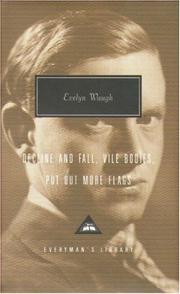
Waugh's debut novel and the perfect on-ramp: short, farcical, and brilliantly funny. It introduces his signature technique of treating catastrophe with icy detachment.
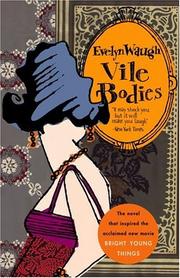
A step up in bitterness and pace, skewering the Bright Young Things of 1920s London. Reading it after Decline and Fall shows how quickly Waugh's satire darkened.
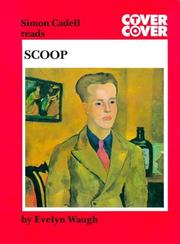
Often called his funniest novel, this Fleet Street farce is still accessible while adding a new target — journalism and imperial adventure — that deepens his satirical range.
Sharpening the Blade: Mid-Period Satires
BeginnerSee Waugh's comedy grow more pointed and morally charged as he begins to weave Catholic sensibility and genuine pathos into the farce.
▸ Study plan for this stage
Pace: 4–5 weeks total: Weeks 1–3 for A Handful of Dust (~20–25 pages/day, reading slowly to track irony and character erosion), Weeks 4–5 for The Loved One (~15–20 pages/day, a shorter book that rewards close attention to its savage comic set-pieces).
- Satirical irony as moral indictment: Waugh uses comedy not merely to amuse but to expose the spiritual emptiness of modern life — in A Handful of Dust through the collapse of a marriage and an English country house, and in The Loved One through the American funeral industry's grotesque commodificati
- The 'innocent victim' protagonist: Tony Last (A Handful of Dust) and Dennis Barlow (The Loved One) both occupy the role of the naive or detached observer undone by a corrupt world — a recurring Waugh archetype that deepens here with genuine pathos.
- Catholic sensibility and the sacred vs. the profane: By this mid-period, Waugh's Catholicism (he converted in 1930) begins to charge his satire with a sense that what is being mocked represents a real spiritual loss — the desecration of tradition, beauty, and authentic grief.
- Pathos within farce: Unlike the purely farcical early novels, A Handful of Dust earns genuine tragedy in Tony's fate, and The Loved One finds unexpected tenderness amid its black comedy — the reader laughs and winces simultaneously.
- The English class system and its discontents: Hetton Abbey in A Handful of Dust stands as a symbol of an aristocratic ideal that is already hollow; its destruction is both comic and elegiac.
- Americanization and cultural vulgarity: The Loved One is Waugh's sharpest attack on American materialism, sentimentality, and the sanitizing of death — Whispering Glades serving as a cathedral of kitsch opposed to everything Waugh held sacred.
- The function of the ending as moral verdict: Both novels end in ways that are deliberately shocking or bleak — Tony reading Dickens forever in the jungle, Aimée's suicide and Dennis's cynical departure — signaling that Waugh's comedy now carries real consequences.
- Intertextuality and literary allusion: A Handful of Dust's title (from T.S. Eliot's The Waste Land) and its Dickens motif reward attention to how Waugh embeds literary references to deepen thematic meaning.
- In A Handful of Dust, how does Waugh use Hetton Abbey — its architecture, Tony's devotion to it, and its ultimate fate — as a symbol of what is being lost in modern English life?
- Tony Last is often described as both sympathetic and complicit in his own destruction. Using specific scenes from A Handful of Dust, argue for or against this reading.
- How does Waugh's treatment of death differ between A Handful of Dust (the death of John Andrew) and The Loved One (the death of Sir Francis Hinsley and the operations of Whispering Glades)? What does each approach reveal about his moral vision?
- The Loved One is set almost entirely in California among British expatriates and American mortuary workers. How does the contrast between these two groups serve Waugh's satirical purposes?
- Both novels end with their protagonists in a kind of living death or moral vacancy. Compare Tony Last's fate in the Brazilian jungle with Dennis Barlow's final departure — what is Waugh saying about survival in a corrupt world?
- Where do you detect Waugh's Catholic sensibility most clearly in these two books, even though neither novel is explicitly 'about' religion?
- Map the moral landscape: Draw a simple two-column chart for each novel listing characters who represent 'authentic values' vs. 'corrupt/hollow values.' Then write two or three sentences explaining where Waugh's sympathy lies and how the comedy enforces that judgment.
- Track the tonal shifts: As you read A Handful of Dust, mark every passage where the tone shifts from comic to genuinely sad (the death of John Andrew is the obvious pivot). Write a short paragraph after finishing the novel describing how Waugh manages these transitions without breaking the satirical frame.
- Close-read a set piece: Choose one extended comic scene from The Loved One — such as Dennis's first visit to Whispering Glades or the Guru Brahmin subplot — and annotate it line by line: identify the target of the satire, the comic technique used (irony, bathos, incongruity), and the underlying serious point.
- Eliot connection: Read the 'handful of dust' passage from T.S. Eliot's The Waste Land (Part I, 'The Burial of the Dead,' line 30). Write a half-page reflection on how Waugh's title reframes or extends Eliot's image of spiritual aridity in the context of Tony Last's story.
- Rewrite an ending: Take the final scene of either novel and rewrite it with a conventionally 'happy' or redemptive conclusion. Then write a brief explanation of what is lost — thematically and morally — when the bleakness is removed. This exercise reveals how essential the dark endings are to Waugh's meaning.
- Compare a review to your reading: Find a contemporary review of either novel (the original 1930s/1940s press reception is available in many library databases) and compare the reviewer's interpretation to your own. Write a paragraph noting where you agree, disagree, or where your beginner's perspective catches something the reviewer takes for granted.
Next up: Mastering how Waugh fuses comedy with moral seriousness and Catholic pathos in these two novels equips the reader to fully appreciate Brideshead Revisited, where the satirical armor is largely set aside and the Catholic themes, elegiac tone, and critique of modernity move to the explicit foreground.

The darkest of the pre-war novels and a turning point: the comedy is still present but the tragedy is real. It prepares you emotionally for the more serious Waugh to come.

A late, brilliant satire on the American funeral industry that shows Waugh at his most savage and controlled — a bridge between the early farces and his mature, elegiac work.
The Great Pivot: Brideshead Revisited
IntermediateUnderstand Waugh's masterpiece — his most ambitious, lyrical, and explicitly Catholic novel — and grasp how it transforms everything you have learned about his voice into something elegiac and profound.
▸ Study plan for this stage
Pace: 3–4 weeks, roughly 25–35 pages per day. Brideshead Revisited runs approximately 350 pages in most editions — divide it into four natural sections following Waugh's own structure: the Prologue & Book One ("Et in Arcadia Ego," ~130 pp.), Book Two ("A Twitch Upon the Thread," ~130 pp.), and the Epilogu
- The elegiac mode: how Waugh shifts from satirical comedy to lyrical, mournful retrospection, and why Brideshead marks a decisive tonal rupture in his career
- Memory and time: the novel's Proustian architecture, narrated entirely in retrospect by Charles Ryder, and how the act of remembering shapes and distorts what is told
- Catholic theology as structural spine: the doctrines of grace ('the twitch upon the thread'), sin, redemption, and deathbed conversion are not ornamental — they are the plot's engine
- The Arcadian myth and its loss: 'Et in Arcadia Ego' as a meditation on the impossibility of sustaining paradise — Oxford, Venice, and Brideshead itself as successive Edens that must be forfeited
- Class, aristocracy, and decline: the Marchmain family as a portrait of English Catholic aristocracy in terminal decay, and Waugh's deeply ambivalent romanticism about that world
- Sebastian Flyte and Charles Ryder: the nature of their relationship (friendship, love, obsession, surrogate family), and how Sebastian functions as Charles's first 'tutor' in beauty and faith
- Julia Flyte and the second movement: how Julia mirrors and deepens the themes introduced through Sebastian, and what her final renunciation of Charles reveals about Waugh's theology of sacrifice
- Waugh's prose style at its most ornate: the deliberate use of lush, baroque description (the 'numinous' quality of Brideshead, the fountain, the food and wine) as a theological argument that beauty points toward the divine
- How does the framing device — Charles narrating from a wartime billet at Brideshead — shape the reader's experience of every scene that follows, and what does it tell us about the novel's relationship to loss?
- Waugh described the novel's theme as 'the operation of divine grace on a group of diverse but closely connected characters.' Trace that operation through at least three characters, showing how grace works differently in each case.
- Sebastian is largely absent from Book Two, yet his shadow falls over every page of it. How does Waugh keep Sebastian present, and what does his off-page fate — tending the sick at a North African monastery — mean thematically?
- What is the significance of Lord Marchmain's deathbed scene? How does Charles's internal response to it dramatize his own conversion, and why does Waugh make the moment so ambiguous rather than triumphant?
- How does Waugh use physical spaces — Oxford, Venice, Brideshead Castle, the army camp — to carry emotional and spiritual meaning? Choose two locations and analyze them closely.
- In what specific ways does Brideshead Revisited transform the satirical voice of Waugh's earlier work? What is gained and what, arguably, is lost in this transformation?
- Passage imitation: Select one of Waugh's most lyrical descriptive passages (the champagne-and-strawberries scene, the fountain at Brideshead, the Venetian interlude) and write a 200–300 word imitation in the same register — ornate, sensory, suffused with a sense of impermanence. Then write a brief note on what the exercise revealed about Waugh's technique.
- Theological annotation: As you read, keep a running margin-note log (or a dedicated notebook page) every time a Catholic concept — grace, mortal sin, contrition, providence — appears, whether explicitly named or dramatized through action. At the end, map these annotations onto the novel's timeline to see how the theological argument accumulates.
- Character arc diagram: Draw a simple timeline for each of the four main characters (Charles, Sebastian, Julia, Lord Marchmain) tracking their relationship to faith across the novel. Mark the turning points. Write two or three sentences per character explaining what drives each pivot.
- Comparative close reading: Find a passage of roughly equal length from one of Waugh's earlier satirical novels (Decline and Fall or Vile Bodies, if you have encountered them) and place it beside a passage from Brideshead. Write a structured comparison (one page) analyzing diction, sentence rhythm, emotional register, and narrative distance.
- The 'unreliable narrator' audit: Charles Ryder is a narrator shaped by nostalgia and retrospection. Identify three moments in the novel where his account seems colored by longing, self-justification, or blind spots. Write a paragraph for each, arguing what a more objective account of the same scene might reveal.
- Reader's letter: After finishing the novel, write a one-page letter to Evelyn Waugh (in the voice of a thoughtful contemporary reader) responding to his Preface, in which he famously worried that the novel's 'grossly sentimental' quality was a product of wartime privation. Do you agree with his self-criticism? Defend your position with specific textual evidence.
Next up: Brideshead Revisited establishes Waugh's Catholic and elegiac vision at its most expansive, setting the thematic and moral coordinates — grace, guilt, aristocratic decline, the claims of faith on secular life — that his later work will test in darker, more ironic, and more explicitly historical registers.

The novel Waugh is most famous for, and the one that demands the context built by the earlier satires. Its themes of grace, loss, and aristocratic decline land far harder once you know how far Waugh has travelled to get here.
The Sword of Honour Trilogy
IntermediateRead Waugh's crowning achievement as a novelist — a trilogy that synthesises his comedy, his Catholicism, and his bitter disillusionment into a panoramic account of one man's experience of the Second World War.
▸ Study plan for this stage
Pace: 10–12 weeks total: ~3–4 weeks per volume. Men at Arms (~250 pp): ~20 pages/day; Officers and Gentlemen (~250 pp): ~20 pages/day; Unconditional Surrender (~250 pp): ~20 pages/day. Allow an extra 3–4 days between volumes for reflection, note review, and journaling before moving on.
- Guy Crouchback as the 'last good man': tracking his idealism, disillusionment, and spiritual redemption across all three volumes
- The Catholic moral framework: how Waugh uses Guy's faith — his failed marriage to Virginia, his sense of vocation, and his final acts of charity — as the trilogy's ethical spine
- Comedy as elegy: Waugh's satirical set-pieces (Apthorpe's 'thunderbox', the chaos of Crete, the absurdity of wartime bureaucracy) functioning simultaneously as farce and as lament for a dying civilisation
- The myth of the 'good war' dismantled: how each volume progressively strips away Guy's romantic illusions about honour, chivalry, and England's crusade against the Modern Age
- Military institutions and class: the portrayal of the British Army as a microcosm of social decay, populated by careerists, incompetents, and hollow 'gentlemen'
- The Cretan campaign in Officers and Gentlemen as the trilogy's moral and structural turning point — the retreat as a collapse of both military order and personal honour
- Virginia Troy as foil and redemption figure: her arc from faithless ex-wife to sacrificial victim in Unconditional Surrender and what her death means for Guy's spiritual journey
- The revision history and unified vision: Waugh condensed the original three novels into a single revised text; understanding his authorial choices illuminates the trilogy's thematic coherence
- How does Guy Crouchback's initial motivation for enlisting — his sense that the Nazi-Soviet Pact has clarified the moral stakes of the war — change by the end of Unconditional Surrender, and what does that change reveal about Waugh's view of modern history?
- What role does Apthorpe play in Men at Arms, and how does his death function as both a comic and an elegiac moment that foreshadows the trilogy's larger disillusionment?
- In Officers and Gentlemen, the evacuation of Crete is presented as a moral catastrophe as much as a military one. Which specific scenes or characters embody this collapse, and how does it alter Guy's sense of personal honour?
- How does Waugh use Virginia Troy's remarriage to Guy and her subsequent death in Unconditional Surrender to resolve — or complicate — the trilogy's Catholic moral argument?
- The trilogy is populated with institutions — the Halberdiers, Hookforce, the wartime bureaucracy — that consistently fail their members. What is Waugh saying about the relationship between institutions, honour, and the individual conscience?
- By the final pages of Unconditional Surrender, Guy has performed a genuine act of charity (securing papers for the Jewish refugees) yet feels no heroic satisfaction. How does this ending encapsulate Waugh's mature vision of what it means to act well in a fallen world?
- Disillusionment timeline: Create a three-column chart (one column per volume) tracking the specific events, encounters, or revelations that erode Guy's idealism. At the end, write a one-paragraph thesis on the shape of his spiritual arc across the whole trilogy.
- Character voice journal: After finishing Men at Arms, write a one-page diary entry in Apthorpe's voice on the day of the 'thunderbox' confrontation. After Officers and Gentlemen, do the same for Guy on the night of the Crete evacuation. Compare the two entries — what do the different voices reveal about Waugh's tonal range?
- Scene annotation exercise: Choose one comic set-piece from each volume (e.g., the thunderbox dispute; the chaos aboard the evacuation ship; the Yugoslav partisans episode). Annotate each passage closely, identifying where the comedy shades into something darker and what specific language effects Waugh uses to achieve the double register.
- Comparative essay (500–700 words): Waugh revised and condensed the trilogy into a single-volume Sword of Honour in 1965. Research the key changes he made (e.g., the trimming of Apthorpe's scenes, the altered ending). Write a short essay arguing whether the revisions strengthen or weaken the work's emotional impact.
- Catholic ethics close-read: Identify three moments across the trilogy where Guy's Catholic conscience directly conflicts with military duty or social expectation. For each, write a brief analysis (150–200 words) of how Waugh frames the conflict and what moral weight he assigns to Guy's choice.
- Contextual reading response: Read a short primary source account of the Crete campaign (e.g., a memoir excerpt or historical summary) and then re-read the relevant chapters in Officers and Gentlemen. Write a one-page reflection on what Waugh fictionalises, what he preserves, and what his selective choices tell you about his artistic intentions.
Next up: Completing the trilogy equips the reader with a full command of Waugh's mature style, Catholic worldview, and satirical method, providing the ideal critical foundation for exploring his non-fiction, travel writing, and autobiographical works — or for a retrospective study of his earlier novels in light of the themes the trilogy crystallises.

The first volume introduces Guy Crouchback and establishes the trilogy's tone: comic misadventure shadowed by genuine spiritual longing. Start here and do not skip ahead.
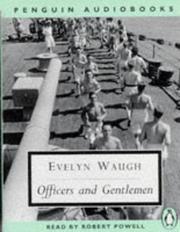
The middle volume deepens Guy's disillusionment as the ideals of the first book are systematically stripped away — the emotional and structural heart of the trilogy.
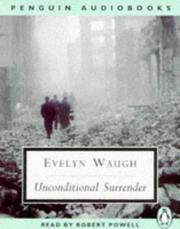
The devastating conclusion, in which Waugh's themes of honour, faith, and the corruption of good intentions reach their fullest and most moving expression. Everything in the curriculum has been building to this.
Context and Reflection: The Life Behind the Work
ExpertUnderstand the biography and critical legacy that illuminate every book you have read — Waugh's conversion, his contradictions, his place in twentieth-century literature.
▸ Study plan for this stage
Pace: 6–7 weeks, ~40–50 pages/day — Hastings's biography runs roughly 700 pages; allow extra days at the end of each week for annotation review, journal writing, and re-reading key passages. Aim to finish Part I (early life through conversion) by end of week 2, the middle section (1930s novels and war yea
- Waugh's Catholic conversion (1930) as a spiritual, aesthetic, and social rupture — not merely a biographical footnote but the lens through which his satire, his snobbery, and his moral seriousness must be read
- The tension between Waugh's public persona (the belligerent, reactionary wit) and his private suffering — depression, loneliness, and the fear that he was fundamentally unlovable, as documented by Hastings through letters and diaries
- Class anxiety and social aspiration: Waugh's middle-class origins versus his lifelong performance of aristocratic belonging, and how this contradiction energizes novels like 'Decline and Fall,' 'Vile Bodies,' and 'Brideshead Revisited'
- The biographical roots of his fictional characters — Hastings traces real-life models (e.g., Harold Acton, Alastair Graham, Teresa 'Baby' Jungman) that illuminate the emotional stakes behind the comic surfaces
- Waugh's marriages and romantic failures as formative wounds: the first marriage's collapse and the eventual stability (and constraints) of his marriage to Laura Herbert
- His war experience — the Cretan debacle, the Yugoslavian mission, the disillusionment — as the direct biographical engine behind the Sword of Honour trilogy and the character of Guy Crouchback
- Waugh's critical reception across his lifetime: early celebration as a satirist, mid-career suspicion of his Catholicism and conservatism, and the posthumous reassessment of his literary stature
- The concept of 'Augustan nostalgia' in Waugh's worldview — his belief in a pre-modern, hierarchical, Catholic civilization whose loss he mourned and whose ruins he catalogued in his fiction
- How does Hastings argue that Waugh's Catholic conversion reshaped not only his personal life but the moral architecture of his fiction — and do you find her case convincing based on the novels you have already read?
- In what ways does Hastings reveal a gap between the man Waugh performed in public and the man recorded in his private correspondence? Which private revelation surprised you most, and how does it change your reading of a specific novel?
- Hastings identifies several real people who served as models for Waugh's characters. Choose two such figures and trace how the biographical original both illuminates and diverges from the fictional creation.
- How does Waugh's class anxiety — his sense of being an outsider performing insider status — manifest in his biography according to Hastings, and how does this reframe the social comedy in his earlier novels?
- Based on Hastings's account of the war years, how accurately and how selectively did Waugh transform his own military experience into fiction? What did he choose to omit, and why might those omissions matter?
- How does Hastings assess Waugh's place in twentieth-century English literature — what does she see as his enduring contribution, and what does she identify as the legitimate criticisms of his work and worldview?
- Biographical annotation pass: Go back to one novel you read in an earlier stage and annotate it afresh using Hastings as a guide — mark every passage where a biographical parallel (a real person, a real event, a real emotion) now adds a layer of meaning invisible on first reading.
- Character dossiers: For three fictional characters from Waugh's novels, build a one-page dossier pairing Hastings's account of the real-life model with the fictional version — note what Waugh kept, what he changed, and what the change reveals about his artistic intentions.
- Conversion timeline: Create a visual timeline of Waugh's Catholic conversion and its aftermath (instruction, reception, key Catholic friendships, doctrinal crises over his first marriage's annulment) and annotate it with corresponding moments in his fiction where Catholic themes surface.
- Critical dialogue journal: Hastings makes interpretive claims throughout the biography. Choose five claims you either strongly agree or disagree with, write a paragraph responding to each, and support your position with specific evidence from both the biography and the novels themselves.
- Letter and diary close-reading: Hastings quotes extensively from Waugh's letters and diaries. Select three quoted passages that struck you as especially revealing, transcribe them, and write a short essay (300–400 words) on what each passage tells us that the novels alone could not.
- Legacy essay: Write a 600–800 word essay answering the question 'What kind of writer was Evelyn Waugh, and why does he still matter?' — drawing exclusively on Hastings's biography and the novels you have read throughout this curriculum, synthesizing biography and literary analysis into a single, argued position.
Next up: By grounding every novel you have read in the life, contradictions, and critical legacy documented by Hastings, you are now equipped to move from appreciation to genuine literary-critical argument — the natural next step being sustained independent critical writing or engagement with scholarly essays that debate Waugh's place in the canon.

The standard, authoritative life of Waugh, widely praised for its balance and depth. Reading it last lets the biography illuminate the fiction rather than overshadow it.
Discussion
Keep reading
Paths that share books, cover the same subject, or open a related topic.