Patricia Highsmith Reading Order: Where to Start
This curriculum moves from Highsmith's most accessible and celebrated work into her full Ripley saga, then into her darkest and most complex standalone psychological thrillers. Each stage builds familiarity with her signature themes — moral ambiguity, the criminal mind, and creeping dread — so that later, more unsettling novels land with full force.
First Encounter: The Gateway Novel
BeginnerGet hooked on Highsmith's voice, her amoral protagonists, and her slow-burn tension through her most beloved and approachable standalone thriller.
▸ Study plan for this stage
Pace: 4–5 weeks total: Week 1–2 — read "Strangers on a Train" (~30 pages/day, ~260 pages); Week 3–5 — read "The Talented Mr. Ripley" (~25 pages/day, ~295 pages), slowing down to savour Ripley's psychological unravelling.
- The 'double' or doppelgänger motif: how Highsmith pairs two men who mirror and corrupt each other (Guy & Bruno in 'Strangers on a Train'; Tom & Dickie in 'The Talented Mr. Ripley')
- Amoral protagonists: understanding how Highsmith generates sympathy and even identification with characters who lie, manipulate, and kill
- Slow-burn psychological tension: Highsmith's technique of building dread through interiority and mundane detail rather than action-movie set pieces
- Guilt without redemption: how Highsmith subverts the classic crime-fiction formula by refusing to punish or morally rehabilitate her protagonists
- The unreliable inner voice: learning to read the gap between what a character tells themselves and what the reader can infer is actually true
- Class anxiety and identity: how both novels use social aspiration and the fear of exposure as engines of plot and character motivation
- Complicity of the reader: Highsmith's craft of making the reader root for the 'wrong' person and what that reveals about narrative empathy
- In 'Strangers on a Train,' at what point — if ever — does Guy become morally equivalent to Bruno, and what textual evidence supports your reading?
- How does Highsmith use physical setting (the train compartment, the carousel, the Italian landscape) to externalise the psychological states of her characters in both novels?
- Tom Ripley commits murder and escapes consequence. How does Highsmith keep the reader on his side, and does she — or should she — succeed?
- Compare Bruno Antony and Tom Ripley as villains: what do they want, how do they pursue it, and what makes one feel more 'sympathetic' than the other?
- Both novels hinge on a protagonist being 'seen' or recognised at the wrong moment. How does the threat of exposure function as a structural device across the two books?
- What does Highsmith suggest about identity — is it fixed or performed? Use specific scenes from 'The Talented Mr. Ripley' (e.g., Tom impersonating Dickie) to support your answer.
- 'Guilt Thermometer' chart: While reading 'Strangers on a Train,' track Guy's guilt level chapter by chapter on a simple 1–10 scale with one-sentence notes. At the end, graph the arc and write a short paragraph on what it reveals about Highsmith's pacing.
- Villain monologue: After finishing 'The Talented Mr. Ripley,' write a one-page interior monologue in Tom's voice justifying his final act in the novel. Focus on mimicking Highsmith's flat, rationalising prose style.
- Comparative character map: Draw a two-column diagram pairing Bruno↔Guy and Tom↔Dickie. For each pair, list shared traits, mirrored desires, and the key moment their fates diverge. Annotate with page references.
- Rewrite a scene with moral clarity: Choose one scene where Highsmith withholds moral judgment (e.g., Bruno's poolside confession, Tom forging Dickie's letters) and rewrite it from the perspective of a conventional thriller narrator who does pass judgment. Then write a short reflection on what is lost.
- Close-reading log: Select three passages — one from each book plus one of your choice — where tension is built with no overt action (pure interiority or description). Annotate each for specific craft techniques: sentence length, word choice, point-of-view distance, sensory detail.
- Reader-response journal: After each book, write a candid half-page answering: 'Did I want the protagonist to get away with it? Why or why not?' Compare your two entries when both books are done and look for patterns in your own reading empathy.
Next up: Mastering Highsmith's voice and her amoral-protagonist formula in these two standalone works gives you the psychological vocabulary and readerly trust needed to follow Tom Ripley across the full five-novel Ripliad, where the stakes, the moral complexity, and the stylistic ambition deepen with each instalment.
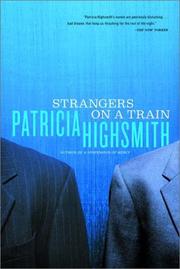
Highsmith's debut and the perfect entry point: a tightly plotted, propulsive thriller that introduces her core obsession with guilt, complicity, and the double. Reading this first gives you the essential Highsmith toolkit before anything else.
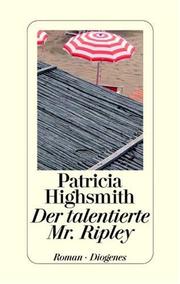
The novel that made Highsmith a legend. Tom Ripley is her greatest creation — charming, hollow, and terrifying. Reading it second, after Strangers on a Train, lets you see how she deepened her amoral-protagonist formula into something truly iconic.
The Ripley Saga: Following Tom
BeginnerRead the five Ripley novels in sequence, tracing Tom's evolution from desperate impostor to settled, almost domestic murderer — and understanding Highsmith's long meditation on identity and evil.
▸ Study plan for this stage
Pace: 10–12 weeks total; roughly one novel per 2.5–3 weeks at ~20–25 pages/day. Suggested pacing: Ripley Under Ground (weeks 1–3), Ripley's Game (weeks 4–6), The Boy Who Followed Ripley (weeks 7–9), Ripley Under Water (weeks 10–12). Keep a running reading journal throughout.
- Tom Ripley's moral evolution: tracking how Tom shifts from anxious, reactive killer in the earlier saga to a calm, almost aristocratic agent of violence across these four novels
- The 'settled self' paradox: Tom has a fixed identity (Monsieur Ripley of Belle Ombre, husband, art connoisseur) yet remains fundamentally fraudulent — explore how Highsmith uses domesticity as ironic camouflage
- Art, forgery, and authenticity: Ripley Under Ground centers on the Derwatt forgery ring, making the fake/real dichotomy literal; this theme echoes through all four books as a metaphor for Tom's own fabricated identity
- Empathy as a weapon: in Ripley's Game, Tom deliberately engineers Jonathan Trevanny's destruction — Highsmith inverts the reader's sympathies by making us root for the manipulator
- Innocence drawn into corruption: The Boy Who Followed Ripley introduces Frank, a young American fugitive; examine how Highsmith uses naïve characters as mirrors that reflect Tom's own buried guilt
- Bourgeois evil and the banality of comfort: Tom's life at Belle Ombre — gardening, harpsichord, fine wine — is rendered with affectionate detail, forcing readers to confront how evil can be cozy and cultured
- Surveillance, paranoia, and the persistent past: Ripley Under Water introduces the obsessive Pritchards, showing that Tom's buried crimes are never truly gone — the past as an undead antagonist
- Highsmith's narrative technique: close third-person limited POV that grants access to Tom's rationalizations without authorial judgment, creating moral vertigo in the reader
- How does Tom's relationship to violence differ in Ripley Under Ground compared to Ripley Under Water — what does this change reveal about Highsmith's long view of his character arc?
- In Ripley's Game, Tom chooses Jonathan Trevanny almost arbitrarily as his pawn. What does this choice, and Tom's detached observation of Jonathan's suffering, say about Highsmith's conception of evil as banal and impersonal?
- The Derwatt forgery scheme in Ripley Under Ground literalizes the fake/real theme. How does Highsmith use the world of art fraud to comment on Tom's own identity as a lifelong impostor?
- Frank, the teenage fugitive in The Boy Who Followed Ripley, is one of the few characters Tom treats with something resembling genuine tenderness. What does this relationship reveal about Tom's capacity — or incapacity — for authentic human connection?
- Belle Ombre, Tom's French country home, functions almost as a character across all four novels. How does Highsmith use this domestic setting to create irony, and what does it suggest about the relationship between civilization and moral corruption?
- By Ripley Under Water, Tom faces an antagonist (David Pritchard) who mirrors his own obsessive tendencies. How does Highsmith use this doubling to comment on Tom's nature, and what does the novel's resolution suggest about the sustainability of Tom's way of life?
- Character evolution chart: After finishing each novel, add a row to a running table tracking Tom across four axes — emotional temperature (cold/warm), level of premeditation in his violence, quality of his domestic life, and degree of threat from the outside world. Review the completed chart after Ripley Under Water and write a one-paragraph thesis on his arc.
- Forgery as metaphor close-reading: Select two passages from Ripley Under Ground — one describing a Derwatt forgery and one describing Tom performing his 'respectable gentleman' persona — and write a 300-word comparative analysis arguing how Highsmith makes the parallel explicit through language and imagery.
- Empathy audit for Ripley's Game: Keep a marginal tally (or sticky-note log) every time you catch yourself sympathizing with Tom over Jonathan Trevanny. At the end of the novel, write a short reflection: What specific techniques (POV, pacing, Tom's wit) did Highsmith use to engineer that sympathy? What does it feel like to notice you've been manipulated?
- Dialogue with Frank: After reading The Boy Who Followed Ripley, write a one-page imagined journal entry from Frank's perspective the day after he last sees Tom. Then write Tom's equivalent entry for the same day. Compare the emotional registers — what does the gap between them reveal about Tom's interiority?
- Belle Ombre as setting analysis: Compile a list of every domestic detail Highsmith gives Belle Ombre across all four novels (garden, harpsichord, Héloïse's presence, meals, decor). Write a 400-word essay arguing whether the house functions as Tom's true self, his disguise, or something more ambiguous.
- Final synthesis essay: After completing Ripley Under Water, write a 500–700 word essay responding to this prompt: 'Tom Ripley is Highsmith's most sustained argument that evil is not monstrous but livable. Using evidence from all four novels in this stage, agree, complicate, or refute this claim.'
Next up: Completing the Ripley saga gives readers a fully formed understanding of Highsmith's most sustained character study, equipping them to move outward into her standalone novels — where the same themes of identity, guilt, and moral ambiguity are explored without the safety net of a familiar protagonist, demanding even greater readerly alertness.

The direct sequel finds Ripley older, married, and running an art forgery scheme. Reading it immediately after The Talented Mr. Ripley shows how Highsmith transforms her antihero into something colder and more comfortable with crime.
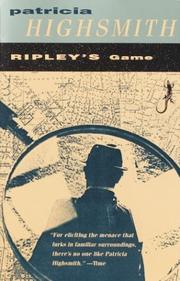
Widely considered the best of the sequels, this novel introduces a new moral victim and is more emotionally complex. It rewards the familiarity with Tom built in the first two books.
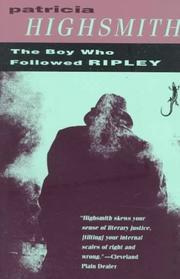
A quieter, more melancholy entry that explores Ripley's strange capacity for empathy. Best read fourth, when you know Tom well enough to feel the weight of his rare moments of tenderness.
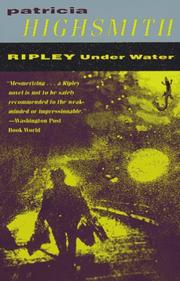
The final Ripley novel, written near the end of Highsmith's life. It has a looser, more surreal quality that only makes sense — and resonates fully — after reading the whole saga in order.
The Dark Standalones: Psychological Depths
IntermediateExplore Highsmith's richest standalone thrillers, where she pushes psychological portraiture to its most disturbing and literary extremes.
▸ Study plan for this stage
Pace: 8–10 weeks total, reading roughly 20–25 pages per day. Suggested pacing: "The Cry of the Owl" in weeks 1–3 (~180 pages), "Deep Water" in weeks 4–6 (~270 pages), "The Tremor of Forgery" in weeks 7–10 (~240 pages). Allow 2–3 buffer days between books for reflection journaling before moving on.
- The voyeur as protagonist: how Highsmith uses the act of watching (Robert Forester's surveillance of Jenny in 'The Cry of the Owl') to externalize interior psychological states and blur the line between desire and menace
- Guilt without crime / crime without guilt: Vic Van Allen's calm, almost aesthetic relationship to violence in 'Deep Water' inverts conventional thriller morality, making the reader complicit in his detachment
- Displacement and expatriate identity: 'The Tremor of Forgery' uses Howard Ingham's isolation in Tunisia to dramatize how geography can dissolve moral certainty and selfhood
- The unreliable interiority: all three novels are focalized through protagonists whose self-perception is systematically at odds with how other characters — and the reader — perceive them
- Social pressure as psychological weapon: in each book, community gossip, suspicion, and social performance are more destabilizing to the protagonist than any legal consequence
- Ambiguity as structural principle: Highsmith withholds definitive answers about guilt, motive, and even event (did Ingham kill someone? did Vic?), training the reader to tolerate — and examine — irresolution
- The mundane as uncanny: domestic settings (suburban New Jersey in 'Deep Water', a quiet Pennsylvania town in 'The Cry of the Owl') are rendered sinister through psychological pressure rather than Gothic machinery
- Gender and power dynamics: the three novels collectively portray women (Melinda Van Allen, Jenny Thierolf, Ina Jessup) as catalysts who expose the fragility and violence latent in Highsmith's male protagonists
- In 'The Cry of the Owl', how does Highsmith use Robert's voyeurism as both a character flaw and a form of narrative sympathy — and at what point, if any, does the reader's identification with him break down?
- Vic Van Allen in 'Deep Water' is charming, cultured, and almost certainly a murderer. How does Highsmith's prose style — its flatness, its irony — prevent the reader from condemning him outright, and what does that say about the novel's moral architecture?
- How does the Tunisian setting in 'The Tremor of Forgery' function as more than backdrop? In what specific ways does the landscape, culture, and heat alter Ingham's psychology and erode his American moral framework?
- All three protagonists are, in different ways, passive men who nonetheless cause or attract catastrophic violence. What is Highsmith arguing about passivity, masculinity, and culpability across these three novels?
- Highsmith consistently refuses to resolve the central ambiguities of these plots (who killed whom, whether a crime was committed at all). How does this structural irresolution affect your experience as a reader, and what literary purpose does it serve?
- Compare the role of the 'other woman' or romantic rival across the three books. How do Jenny, Melinda, and Ina each function differently as psychological pressure points for their respective protagonists?
- Voyeur's log: While reading 'The Cry of the Owl', keep a running log of every scene in which Robert watches, is watched, or imagines being watched. At the end, map these moments onto the plot arc and write a paragraph on how surveillance structures the novel's tension.
- Moral ledger for Vic: After finishing 'Deep Water', create a two-column document — one column listing every piece of evidence that Vic is guilty, one listing every piece that exonerates or complicates him. Then write a one-page 'closing argument' from the perspective of a prosecutor and a one-page argument from the defense, using only textual evidence.
- Prose style imitation: Select one paragraph from each of the three novels that you find most psychologically unsettling. Analyze what specific sentence-level choices (tense, free indirect discourse, word choice, rhythm) create the effect. Then write a 200-word original scene in Highsmith's style, using a mundane domestic setting to convey latent menace.
- Setting as psychology: For 'The Tremor of Forgery', draw or diagram the physical spaces Ingham inhabits (the hotel, the beach, the café). Annotate each space with the psychological states Ingham experiences there. Write a short essay arguing whether Tunisia liberates or destroys him — or both.
- Comparative protagonist portrait: After completing all three books, write a 500-word character study that places Robert Forester, Vic Van Allen, and Howard Ingham in conversation. What do they share? Where do they diverge? What composite portrait of the 'Highsmith man' emerges?
- Reader-response reflection: At the end of each book, write a candid one-page journal entry answering: 'At what moments did I find myself rooting for the protagonist, and what does that reveal about how Highsmith is manipulating my sympathies?' Compare all three entries when the stage is complete.
Next up: Mastering how Highsmith sustains psychological ambiguity and moral complicity across full standalone novels prepares the reader to examine how she refines and varies these techniques across a longer career arc — including her shorter fiction and the thematic obsessions that recur across her entire body of work.
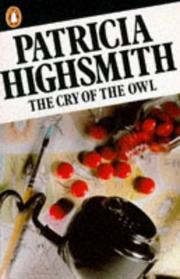
A masterclass in paranoia and obsession, this novel shows Highsmith at her most claustrophobic. After the Ripley books, you're primed to appreciate how she builds dread without a glamorous antihero at the center.

A chilling portrait of a suburban marriage rotting from the inside. This is Highsmith at her most socially savage, and it pairs perfectly with The Cry of the Owl as a study in quiet, domestic menace.
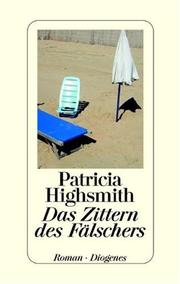
Often cited by critics as her most underrated novel, this existential thriller set in Tunisia is her most literary and ambiguous work — best saved for last, when you are fully fluent in her moral universe.
Discussion
Keep reading
Paths that share books, cover the same subject, or open a related topic.