Charles Dickens Reading Order: Where to Start
This curriculum takes you from Dickens's most accessible novel all the way through his darkest and most ambitious masterpieces, with clear guidance on which long books reward the effort and which can be safely skipped. Each stage builds your ear for Dickens's style — his humour, his serialised plotting, his social rage — so that by the end you can tackle any of his works with confidence.
The Perfect Entry Point
BeginnerGet hooked on Dickens's voice, humour, and storytelling rhythm without being overwhelmed by length or darkness.
▸ Study plan for this stage
Pace: 6–8 weeks total. Week 1–2: Read A Christmas Carol (~106 pages) at a leisurely pace — roughly 15–20 pages per sitting, 3 sittings per week. Savour each stave slowly. Week 3–8: Read The Pickwick Papers (~800 pages) at ~25–30 pages per day, 5 days per week — skip no chapters, but feel free to linger on
- Dickens's narrative voice: the warm, conspiratorial, humorous narrator who speaks directly to the reader and shapes emotional tone
- The 'stave' structure of A Christmas Carol as a deliberate artistic choice — how Dickens uses music metaphor to signal transformation and rhythm
- Character as caricature: how Dickens builds instantly memorable figures (Scrooge, Mr. Pickwick, Sam Weller) through exaggerated but deeply human traits
- Social satire with a light touch: how A Christmas Carol critiques Victorian poverty and greed through fantasy and sentiment rather than polemic
- Episodic storytelling: how The Pickwick Papers, originally published in monthly serials, is structured as linked comic adventures rather than a tight plot — and why that is a feature, not a flaw
- Dickensian humour: the mechanics of his comedy — comic misunderstanding, eccentric minor characters, verbal wit, and physical farce — as seen in the Pickwickians' misadventures
- The double-act dynamic: the relationship between the naive, good-hearted Mr. Pickwick and the street-smart, wisecracking Sam Weller as a template Dickens returns to throughout his career
- Sentiment and pathos: how Dickens balances laughter with genuine emotional warmth, making readers care as well as laugh
- In A Christmas Carol, how does Dickens use the three spirits structurally and emotionally — what does each ghost reveal about Scrooge, and how does the stave format reinforce the arc of transformation?
- How does the opening description of Scrooge ('Hard and sharp as flint…') establish Dickens's narrative voice, and where in The Pickwick Papers do you see that same voice at work?
- The Pickwick Papers was published in monthly instalments. Where can you feel the seams of serial publication — cliffhangers, self-contained comic episodes, introduction of new characters — and how does this shape your reading experience?
- How does Sam Weller function as a foil to Mr. Pickwick, and why is their partnership central to the novel's comedy and heart?
- Both books use humour to approach serious subjects (poverty and redemption in A Christmas Carol; law, class, and imprisonment in The Pickwick Papers). Choose one serious theme from each book and explain how Dickens uses comedy or fantasy to make it palatable to a wide audience.
- By the end of both books, what would you say are the defining hallmarks of 'Dickens's world' — the types of people, places, and moral values that feel distinctly his?
- Voice imitation journal: After finishing A Christmas Carol, write a short paragraph (10–15 sentences) describing a modern miser or a festive scene in Dickens's style — use direct address to the reader, comic hyperbole, and at least one moment of genuine warmth. Compare your draft to Dickens's opening pages.
- Stave mapping: Draw or chart the five staves of A Christmas Carol as a musical score — label the emotional 'key' of each stave (e.g., cold/dark, wonder, grief, joy, rebirth) and note one specific image or line that captures that mood. Reflect on how the structure itself tells the story.
- Character card collection: As you read The Pickwick Papers, create a small index card (physical or digital) for each major recurring character — name, one-line physical description in Dickens's style, their comic function, and your favourite line or moment. Aim for at least 8 cards by the end.
- Serial reading simulation: Pick any three consecutive chapters of The Pickwick Papers and read them one week apart, as a Victorian reader would have. After each 'instalment,' jot down your predictions and emotional reactions. Reflect on how the gap changes your engagement.
- Sam Weller's 'Wellerisms': Sam speaks in a distinctive pattern of comic analogies ('as the man said when…'). Find at least five Wellerisms in the novel, write them out, and then try composing two of your own in the same format about a modern situation.
- Comparative reflection essay (500 words): Write informally on the question — 'What do A Christmas Carol and The Pickwick Papers share, and what does that tell me about what Dickens valued?' Focus on tone, character types, and moral outlook rather than plot summary.
Next up: Having absorbed Dickens's irresistible narrative voice, comic energy, and warm moral worldview in these lighter works, the reader is now ready to meet that same voice applied to longer, darker, and more structurally ambitious novels — where the humour deepens into social fury and the characters carry heavier psychological weight.

At under 100 pages, this is the ideal first Dickens: every hallmark of his style — pathos, comedy, social conscience, vivid characters — is present in a compact, perfectly formed story. It proves Dickens is fun before you commit to a doorstop.
Dickens's first novel is essentially a comedy sketch show in book form — loose, episodic, and hilarious. Reading it second trains your eye for his serialised structure and introduces the Dickensian 'type' character, preparing you for the more plotted novels ahead.
The Essential Middle Novels
BeginnerRead the two novels most critics and readers agree are the best starting points for the 'real' Dickens — strong plots, unforgettable characters, and manageable length.
▸ Study plan for this stage
Pace: 6–8 weeks total: Weeks 1–3 for Oliver Twist (~25–30 pages/day across ~360 pages), Weeks 4–7 for Great Expectations (~25–30 pages/day across ~500 pages), and Week 8 as a reflection and comparison week with no new reading — just review, journaling, and exercises.
- Social class and mobility: Both novels expose the brutal rigidity of Victorian class structure — Oliver is born into the workhouse underclass, while Pip's entire arc is driven by the dream (and disillusionment) of becoming a 'gentleman.'
- The orphan as protagonist: Dickens repeatedly uses the orphan figure to strip a character of social identity and force them to earn (or discover) their place in the world — Oliver and Pip are two of his most iconic examples.
- Serialized storytelling techniques: Both novels were originally published in monthly or weekly installments, which explains their episodic pacing, cliffhanger chapter endings, and vivid scene-by-scene momentum.
- Caricature vs. character: Dickens populates both novels with larger-than-life figures (Fagin, the Artful Dodger, Miss Havisham, Magwitch) whose exaggerated traits serve as social commentary, not just entertainment.
- The corruption of wealth and charity: Oliver Twist critiques the Poor Laws and hypocritical philanthropy; Great Expectations interrogates whether money ennobles or corrupts — and who the 'real' benefactors in life turn out to be.
- Bildungsroman structure: Great Expectations is one of the defining coming-of-age novels in English literature; reading it alongside Oliver Twist shows how Dickens evolved from a plot-driven rescue narrative to a deeply psychological portrait of growth and regret.
- Guilt, shame, and self-deception: Pip's narrative is saturated with shame about his origins and guilt over his treatment of Joe; Oliver's innocence, by contrast, is almost supernaturally preserved — comparing the two reveals Dickens's shifting moral vision.
- London as a living character: Both novels use the city's geography — its slums, fog, rivers, and mansions — as a moral landscape that reflects and shapes the characters who move through it.
- In Oliver Twist, how does Dickens use the workhouse system and characters like Mr. Bumble to satirize the Poor Law Amendment Act of 1834? What specific scenes make this critique most vivid?
- Fagin and Magwitch are both criminals who take a young boy under their wing — how does each character function differently in his respective novel, and what does Dickens seem to be saying about crime, society, and redemption through each of them?
- Trace Pip's attitude toward Joe Gargery from the opening chapters of Great Expectations to the novel's end. What does this arc reveal about Pip's moral development and Dickens's definition of a true 'gentleman'?
- Both Oliver and Pip have their identities shaped by secrets withheld from them. Compare how the revelation of those secrets (Oliver's parentage; the source of Pip's expectations) functions as a plot device and as a thematic statement.
- Miss Havisham is one of Dickens's most theatrical creations. How does her frozen, decaying world at Satis House serve as a symbol, and what does her eventual fate suggest about the consequences of living in the past?
- How does Dickens use physical descriptions of London — its streets, the Thames, specific neighborhoods — differently in Oliver Twist versus Great Expectations, and what does each portrait of the city reveal about the novel's central concerns?
- Villain comparison chart: Create a two-column character profile for Fagin (Oliver Twist) and Magwitch (Great Expectations). For each, note their first appearance, their relationship to the young protagonist, their social backstory, and their ultimate fate. Write a short paragraph arguing which character Dickens treats more sympathetically and why.
- Chapter-ending audit: Pick any five consecutive chapters from each novel and note how each chapter ends. Identify which endings are cliffhangers, which are emotional resolutions, and which introduce a new mystery. Reflect in writing on how this serialization technique keeps you reading.
- Rewrite a scene from Oliver's perspective in first person: Choose any scene from Oliver Twist (e.g., 'Please, sir, I want some more') and rewrite it as a first-person interior monologue in the style Dickens uses for Pip in Great Expectations. Notice what changes when interiority is added.
- Shame and pride timeline for Pip: Draw a simple timeline of Great Expectations and mark at least six moments where Pip feels ashamed of his origins or proud of his new status. Annotate each mark with a one-sentence explanation. At the end, write two sentences on whether Pip earns his redemption.
- London mapping exercise: Using a free online map of Victorian London (or a hand-drawn sketch), plot at least four key locations from each novel (e.g., the workhouse parish, Fagin's den, Jacob's Island for Oliver Twist; the forge in the marshes, Satis House, Jaggers's office, the Thames for Great Expectations). Annotate each pin with the scene that takes place there and its thematic significance.
- Side-by-side opening lines analysis: Read the opening paragraphs of both novels back to back. Write a one-page comparison addressing: What does each opening immediately tell us about narrative voice, the protagonist's situation, and the tone Dickens is setting? How do the differences foreshadow each novel's central themes?
Next up: Mastering these two novels builds the character-reading skills, social-theme awareness, and tolerance for Dickens's serialized pacing needed to tackle his longer, more structurally ambitious works — where the comedy deepens, the plots multiply, and the social criticism grows even bolder.
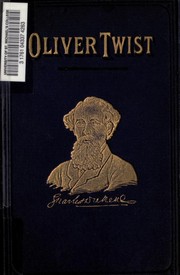
Dickens's first true novel with a sustained plot and a dark social thesis. It is shorter and faster-paced than his later work, making it the ideal bridge from the sketches of Pickwick to the full Dickensian novel.
Widely considered the best first 'big' Dickens novel: tightly plotted, psychologically rich, and written in a leaner late style. After Oliver Twist you will recognise the themes of class and identity and appreciate how much Dickens matured.
The Major Works — The Ones You Must Read
IntermediateTackle the long novels that define Dickens's reputation, now that you have the stamina and vocabulary for his serialised, multi-plot structures.
▸ Study plan for this stage
Pace: 10–12 weeks total: Weeks 1–5 for David Copperfield (~40 pages/day, reading in chapter clusters of 3–5 at a time to follow the episodic serial rhythm); Weeks 6–11 for Bleak House (~35 pages/day, slightly slower to track the dual-narrator structure and sprawling cast); Week 12 reserved for comparative
- Serialised novel structure: how both novels were published in monthly/weekly instalments and how cliff-hangers, recurring motifs, and delayed revelations are engineered for that format
- First-person vs. dual narration: David Copperfield's retrospective, unreliable 'I' versus Bleak House's alternation between Esther Summerson's intimate first-person and an omniscient, present-tense narrator — and what each mode conceals or distorts
- The Bildungsroman in David Copperfield: the arc from traumatised child to self-made author, and how Dickens fictionalises his own blacking-factory shame and social ascent
- Chancery and systemic critique in Bleak House: the Court of Chancery as a symbol of institutional rot, delay, and the destruction of individual lives — Dickens's most sustained attack on a specific social institution
- Character as social type: how figures like Micawber, Uriah Heep, Tulkinghorn, and Mrs. Jellyby function simultaneously as vivid individuals and as satirical embodiments of social vices (false optimism, sycophantic ambition, legal predation, telescopic philanthropy)
- The orphan and the secret: both novels centre on protagonists whose true identity or parentage is hidden or unstable — tracing how the secret-plot drives narrative suspense and thematic statements about class and legitimacy
- Dickens's prose style at full stretch: the management of pathos (the deaths of Dora and Jo), comic grotesque (Micawber's speeches, Skimpole's self-justifications), and panoramic social description within single novels
- Memory, nostalgia, and self-deception: David Copperfield's retrospective narration constantly interrogates whether the adult David truly understands his own past, making the novel as much about the limits of memory as about the events themselves
- In David Copperfield, how does Dickens use the contrast between 'undisciplined' and 'disciplined' hearts — embodied by characters like Dora and Agnes — to argue a moral thesis, and do you find that thesis convincing or troubling?
- Bleak House opens with one of the most famous paragraphs in English fiction (the fog and mud of Chancery). How does that opening image function as a structural metaphor for everything that follows in the novel?
- Both novels feature a protagonist whose social identity is threatened or obscured (David by his stepfather Murdstone and his time at the blacking warehouse; Esther by her illegitimacy). How does each novel use that threat to explore Victorian anxieties about class mobility and respectability?
- Uriah Heep and Harold Skimpole are both parasitic characters, yet they operate very differently. Compare how Dickens constructs them as social critiques — what specific vice or system does each one embody?
- Bleak House uses two narrators with radically different tones and tenses. By the end of the novel, what has Dickens achieved by splitting the narration that a single narrator could not have accomplished?
- David Copperfield is often called Dickens's 'favourite child' and is heavily autobiographical. Where do you see the autobiographical pressure distorting or enriching the novel's artistic choices?
- Serial reading simulation: Divide David Copperfield into its original 20 monthly instalments (a list is easily found online) and read one instalment per sitting. After each, write a single sentence predicting what will happen next — then check your prediction at the start of the next sitting. This trains you to feel the novel as its first readers did.
- Narrator voice journal for Bleak House: Keep a two-column notebook. Each time you switch narrators, jot down (a) one thing Esther notices that the omniscient narrator would never say, and (b) one thing the omniscient narrator reveals that Esther cannot see about herself. By the end you will have a detailed map of what each narrator knows and hides.
- Character web diagram: After finishing each novel, draw a large diagram connecting every named character with labelled lines ('employs', 'deceives', 'loves', 'represents in Chancery', etc.). Pay special attention to how many characters in Bleak House are entangled in the Jarndyce suit — the diagram will make the systemic critique visceral.
- Close-reading passage comparison: Select the death of Dora (David Copperfield) and the death of Jo (Bleak House). Write a 400-word comparison of Dickens's prose technique in each scene — sentence rhythm, use of repetition, point-of-view distance — and argue which death you find more artistically effective and why.
- Rewrite an Esther chapter in the omniscient voice: Take any chapter narrated by Esther Summerson and rewrite two paragraphs as if the omniscient narrator were describing the same events. Then reflect in writing: what is lost, what is gained, and what does that tell you about Dickens's deliberate choice?
- Social institution audit: Make a list of every institution depicted negatively in Bleak House (the Court of Chancery, the philanthropic societies, the slum of Tom-All-Alone's, etc.). For each, write one sentence on the specific harm it causes to a named character. Then write a short paragraph arguing whether Dickens offers any positive institutional alternative, or whether his critique is purely d
Next up: Mastering the long, multi-plot architecture and social-critical ambition of David Copperfield and Bleak House gives you the analytical stamina and thematic vocabulary to engage with Dickens's later, darker, and more formally experimental works — where his disillusionment deepens and his narrative techniques grow even more compressed and symbolic.
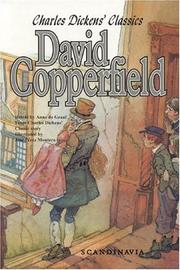
Dickens called this his 'favourite child' and it is his most autobiographical novel. Read it before Bleak House because its warmth and relatively linear first-person narration ease you into the longer form.
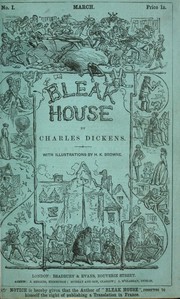
Considered by many scholars the greatest English novel of the 19th century. Its dual narrative, savage satire of the legal system, and sprawling cast reward everything you have learned so far. This is the summit of the curriculum.
The Dark Late Masterpieces
ExpertExperience Dickens at his most psychologically complex and socially radical — the novels where the comedy recedes and the critique becomes almost modern.
▸ Study plan for this stage
Pace: 10–13 weeks total: ~5–6 weeks for Dombey and Son (~30 pages/day, ~960 pages), then ~5–6 weeks for Our Mutual Friend (~30 pages/day, ~900 pages), with a 1-week reflection and synthesis period at the end. Set aside longer weekend sessions (60–90 min) for the densest chapters.
- The commodification of human relationships — in Dombey and Son, Paul Dombey Sr. treats his son, daughter, and wives as instruments of commercial legacy, making capitalism's dehumanizing logic the novel's central engine
- The 'dust heap' as economic and moral symbol — in Our Mutual Friend, the mounds of refuse left by old Harmon literalize how Victorian wealth is built on filth, waste, and death, anticipating 20th-century critiques of capital
- Identity, disguise, and self-reinvention — both novels feature characters (Carker, John Rokesmith/Harmon, Bella Wilfer, Boffin) who perform false selves, raising questions about whether authentic identity can survive a money-saturated society
- The psychological depth of villainy — Carker in Dombey and Son and Headstone/Wrayburn in Our Mutual Friend move beyond caricature into studies of obsession, class resentment, and repressed desire
- Female agency and its limits — Florence Dombey's patient endurance versus Bella Wilfer's conscious moral education and Lizzie Hexam's fierce self-determination show Dickens testing and expanding his conception of women's inner lives
- The Thames and urban geography as moral landscape — Our Mutual Friend uses the river as a space of death, rebirth, and social mixing, while Dombey and Son uses the railway as a symbol of modernity's violent disruption
- Satire of the nouveaux riches and social performance — the Veneerings and Podsnap in Our Mutual Friend represent Dickens's most withering portrait of hollow respectability and the dinner-party as social theater
- Narrative fragmentation and seriality — both novels were published in monthly parts; understanding how Dickens managed suspense, subplot weaving, and reader expectation across installments is essential to reading their structure
- How does Mr. Dombey's business philosophy corrupt every personal relationship he forms, and at what point — and why — does Dickens allow him redemption? Is that redemption earned or sentimental?
- In Our Mutual Friend, the Harmon/Rokesmith plot depends on sustained deception of the reader and of Bella — how does Dickens manage our sympathy for a hero who is lying throughout, and does the novel fully resolve the ethical problem this creates?
- Compare the railway in Dombey and Son with the Thames in Our Mutual Friend as symbolic landscapes: what does each setting say about modernity, mortality, and social change?
- Both Carker (Dombey and Son) and Bradley Headstone (Our Mutual Friend) are men of lower or middling origin who have achieved respectability through effort, yet both become destroyers. What does Dickens suggest about the psychological cost of class aspiration?
- Bella Wilfer undergoes one of Dickens's most deliberate female character arcs. Trace her development from mercenary girl to moral adult — do you find it convincing, and how does it compare to Florence Dombey's more passive growth?
- Our Mutual Friend is often called Dickens's most 'modern' novel. Based on your reading of both books in this stage, what specific techniques or thematic preoccupations feel ahead of their time, and what still belongs unmistakably to the Victorian moment?
- Dust and Money Audit: As you read Our Mutual Friend, keep a running log of every time money, inheritance, or material objects change hands. Annotate each entry with the human cost paid. At the end, write a one-page analysis of what the pattern reveals about the novel's moral economy.
- Character Mask Chart: For both novels, create a two-column chart listing each major character's 'performed self' versus their 'true self' (or the self they are becoming). For characters like Rokesmith/Harmon or Boffin, track how the mask shifts chapter by chapter.
- Close-Reading the Railway and the River: Select one passage featuring the railway in Dombey and Son (e.g., Dombey's journey after Paul's death, or Carker's end) and one featuring the Thames in Our Mutual Friend (e.g., Gaffer Hexam's opening, or Rogue Riderhood's near-drowning). Write a 400-word comparative analysis of Dickens's prose style, imagery, and symbolic intent in each.
- Podsnap vs. Dombey — A Satirical Portrait Gallery: Write two short character sketches (200 words each) in Dickens's own satirical register, updating Podsnap and Dombey Sr. to a contemporary setting. This forces you to internalize how Dickens constructs social types through speech patterns, physical description, and repeated verbal tics.
- Serialization Reconstruction: Choose one monthly installment boundary in either novel (the original part divisions are noted in most scholarly editions). Write a paragraph predicting what a Victorian reader would have expected next, then write a second paragraph analyzing how Dickens either fulfilled or subverted that expectation.
- Comparative Essay — 'The Cost of Respectability': Write a 700–1,000 word essay arguing whether Dickens, across both novels, ultimately believes that Victorian respectability is redeemable or irredeemably corrupt. Use at least three specific scenes from each book as evidence.
Next up: Mastering the psychological density, symbolic architecture, and social radicalism of these two late novels gives the reader the critical vocabulary and tolerance for ambiguity needed to engage with Dickens's unfinished work, his journalism, and the scholarly debates about what his career as a whole ultimately means.
Often overlooked but essential: the first novel where Dickens fully controls a tragic, unified theme (pride and emotional coldness). It bridges the early and late styles and is a revelation after Bleak House.
Dickens's last completed novel and his most cynical — a savage portrait of money, identity, and social performance. Having read the earlier works, you will catch every callback and see how far his vision darkened.
What to Skip (and Why) — The Informed Detour
ExpertUnderstand which long Dickens novels are skippable for most readers, and get the one short alternative that gives you their essence without the slog.
▸ Study plan for this stage
Pace: 2–3 weeks total: spend the first week on Hard Times (~30 pages/day — it's Dickens's shortest novel at ~300 pages), then 10–12 days on A Tale of Two Cities (~35 pages/day). Budget an extra 2–3 days at the end for comparative reflection and exercises.
- Hard Times as Dickens's most compressed and polemical novel — a deliberate, thesis-driven critique of Utilitarianism and industrialism that sacrifices his usual sprawl for argumentative efficiency, making it the rare 'short Dickens' worth the trade-off
- The 'Gradgrind System' as a stand-in for Dickens's broadest social critique: facts over imagination, utility over humanity — understanding this unlocks the thematic DNA of his longer industrial novels without reading them
- A Tale of Two Cities as an outlier in the Dickens canon — structurally lean and melodramatic, but notably thin on the comic characterization, digressive subplots, and social satire that define his best work, raising the question of what readers actually lose by skipping it
- The concept of 'essence vs. experience': Hard Times delivers Dickens's social conscience in concentrated form, while A Tale of Two Cities delivers plot and pathos — distinguishing these two modes helps readers decide what they are actually seeking from Dickens
- Dickens's use of symbolic compression in Hard Times (Coketown, Sissy Jupe, the circus) versus his use of historical spectacle in A Tale of Two Cities (the Revolution, the guillotine, the crowd) — two very different shortcuts away from his novelistic strengths
- The informed detour principle: understanding WHY a canonical work is skippable for most readers (not because it is bad, but because it is unrepresentative) is itself an advanced critical skill
- Sydney Carton as a case study in Dickensian sentimentality unmoored from social context — his arc in A Tale of Two Cities shows what happens when Dickens prioritizes emotional effect over the systemic critique that gives his best characters meaning
- How Hard Times's brevity makes it the single best 'sampler' for readers who want Dickens's reformist voice without committing to Bleak House or Little Dorrit
- After reading Hard Times, can you articulate in one paragraph what Dickens is arguing against — and explain why this short novel captures that argument more efficiently than a longer one might?
- A Tale of Two Cities is enormously popular and frequently assigned in schools, yet many Dickens scholars consider it unrepresentative of his genius. What specific elements of his craft are largely absent from it, and what does it offer instead?
- Compare Sissy Jupe (Hard Times) and Sydney Carton (A Tale of Two Cities) as vehicles for Dickens's moral vision. Which character feels more grounded in a social system, and why does that distinction matter for evaluating each novel?
- If a reader tells you they want to understand 'what Dickens is really about' and has time for only one short book, how would you make the case for Hard Times over A Tale of Two Cities — or would you? Defend your answer with specific textual evidence.
- How does Dickens's use of setting differ between Coketown in Hard Times and Revolutionary Paris in A Tale of Two Cities? What does each setting allow him to do, and what does each prevent him from doing?
- Having read both books, define in your own words what makes a Dickens novel 'skippable for most readers' versus 'essential.' What criteria are you applying, and are those criteria about the books or about the reader?
- The 'Essence Audit': After finishing Hard Times, write a one-page memo titled 'What This Short Novel Contains.' List every major Dickensian theme, technique, and social concern you can identify. Then, after finishing A Tale of Two Cities, write the same memo. Compare the two lists side by side — which novel's list looks more like the 'full Dickens'?
- Rewrite the opening paragraph of Hard Times ('Now, what I want is, Facts...') as if Dickens had written it in the expansive style of a longer novel — add subplots, secondary characters, comic digressions. Then reflect: what is gained and what is lost? This exercise makes the compression of Hard Times viscerally legible.
- Track Sydney Carton's appearances in A Tale of Two Cities and note every scene where his arc could have been embedded in a broader social critique but isn't. Write a short paragraph on what a 'full Dickens' version of his story might have looked like — what institutions, classes, or systems would surround him?
- Write a 300-word 'advisory note' addressed to a specific type of reader (e.g., a student, a busy professional, a lover of historical fiction) recommending one of these two books and explicitly advising them to skip the other — for now. Ground every recommendation in the actual text.
- Create a two-column comparison chart: on one side, list the elements of Hard Times that feel most 'Dickensian' (per your understanding of his broader reputation); on the other, list the elements of A Tale of Two Cities that feel most 'un-Dickensian.' Use this chart to draft a working definition of 'the Dickens novel' as a form.
- Read the final chapter of each book back to back in a single sitting. Write a one-page reflection: which ending earns its emotional weight through the novel's accumulated social and character work, and which relies more heavily on pure narrative mechanics? This sharpens your ability to evaluate Dickensian sentimentality critically.
Next up: By identifying what Hard Times and A Tale of Two Cities lack or compress, the reader has now built a precise negative map of Dickens's full powers — making them ideally primed to encounter those powers in their most complete and demanding form in the major novels ahead.
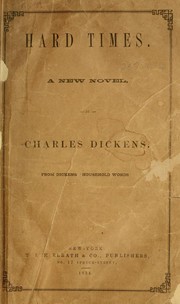
SKIP Martin Chuzzlewit, Barnaby Rudge, and Little Dorrit unless you are a completist — they are long and uneven. Hard Times is the smart alternative: it is Dickens's shortest novel, delivers his sharpest industrial-age critique, and takes only a weekend to read.
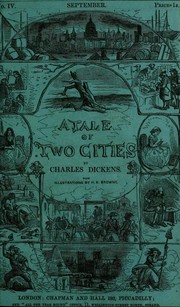
Also often assigned but frequently abandoned — include it here as the one 'historical' Dickens worth finishing. It is lean, melodramatic, and fast, and rounds out your sense of his full range without the 900-page commitment of Nicholas Nickleby or Dombey.
Discussion
Keep reading
Paths that share books, cover the same subject, or open a related topic.