Best Books on Demography and Population, in Order
This curriculum builds a rigorous, end-to-end understanding of demography — from the core mechanics of population change to the sweeping civilizational consequences of fertility decline, mass migration, and global ageing. Starting at an intermediate level, the path moves from accessible big-picture frameworks, through the technical and analytical core of the discipline, and finally into the frontier debates shaping the 21st century.
The Big Picture: Population Change and Its Consequences
IntermediateGrasp the scale and stakes of demographic change — why fertility, mortality, and migration matter for economies, politics, and civilizations — before diving into the mechanics.
▸ Study plan for this stage
Pace: 8–10 weeks, ~40–50 pages/day (approximately 3–4 hours of focused reading). Suggested pacing: "Empty Planet" (2.5 weeks), "The Coming Population Crash" (2.5 weeks), "Factfulness" (3 weeks) to allow time for reflection and exercises between books.
- The demographic transition model: how societies move from high fertility/mortality to low fertility/mortality, and why most developed nations are now below replacement level
- The 'empty planet' thesis: global population growth is slowing and will eventually decline, contradicting doomsday predictions of overpopulation
- Fertility collapse in developed and middle-income countries: understanding why women are having fewer children and the economic/social drivers (education, contraception access, female workforce participation)
- Mortality decline and aging populations: how increased lifespans create new challenges for healthcare, pensions, and labor markets
- Migration as a demographic force: how internal and international migration reshapes populations, economies, and political landscapes
- The relationship between demographic change and economic growth: why declining populations pose challenges for GDP growth, tax bases, and innovation
- Debunking catastrophism: learning to interpret population data critically and avoid both overpopulation panic and complacency
- Interconnections between demography, environment, and resources: how population size, consumption patterns, and sustainability interact
- What is the demographic transition, and at what stage are most developed countries? What stage are developing countries at, and why?
- According to 'Empty Planet,' why is global population growth slowing, and what evidence does Bricker provide that we are not headed toward unlimited population expansion?
- What are the primary drivers of fertility decline in countries like Japan, South Korea, and parts of Europe, and how do they differ from historical assumptions about population growth?
- How does Pearce's 'The Coming Population Crash' frame the relationship between population decline and environmental sustainability? What are the trade-offs he identifies?
- What does Rosling mean by 'factfulness,' and how does he use demographic data to challenge common misconceptions about global progress and population trends?
- How might a shrinking, aging population affect economic growth, labor supply, innovation, and government finances in developed nations?
- What role does migration play in offsetting natural population decline in some countries, and what are the political and social consequences?
- Create a demographic transition diagram for three countries at different development stages (e.g., Japan, India, Nigeria). Plot their fertility and mortality rates, and predict where they will be in 20 years based on trends discussed in the books.
- Track your own country's or region's population pyramid over the past 50 years (use UN data or national statistics). Write a one-page analysis of how the shape has changed and what it implies for the future workforce and dependency ratios.
- Fact-check one 'population crisis' claim from media or politics using the critical thinking framework from 'Factfulness.' Identify which of Rosling's instincts (gap instinct, negativity bias, etc.) might be distorting the narrative.
- Debate exercise: argue both sides of whether population decline in developed countries is primarily a problem or an opportunity. Use evidence from all three books to support each position.
- Analyze a news article or policy proposal about immigration or aging populations. Identify which demographic trends it references and whether it accurately represents the data or oversimplifies the issue.
- Create a 'demographic futures' scenario for a developed country (e.g., Germany, Japan, or your own) 30 years from now, incorporating fertility, mortality, and migration assumptions. Outline the economic and social implications.
Next up: This stage establishes why demographic change matters at a civilizational scale and equips you with critical thinking tools to interpret population data; the next stage will dive into the technical mechanisms—fertility measurement, mortality analysis, and migration modeling—that explain *how* demographers measure and project these changes.
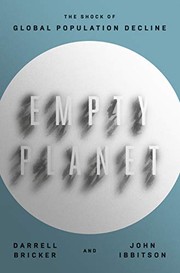
A compelling, evidence-based challenge to overpopulation fears, arguing the real crisis is global depopulation. It immediately frames the central tension of modern demography and builds intuition around fertility decline worldwide.

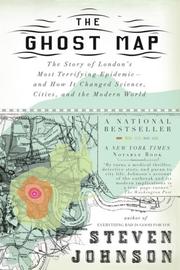
Traces the full arc of demographic history — from Malthusian panic to the fertility transition — giving the reader a narrative backbone and historical context before tackling formal theory.
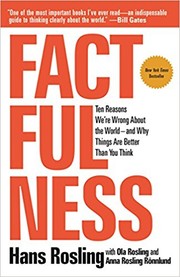
Corrects systematic misconceptions about global population, health, and development using data. Essential for calibrating intuitions about mortality and fertility trends before going deeper.
Core Demography: Fertility, Mortality, and Migration
IntermediateMaster the fundamental demographic processes — how fertility, mortality, and migration are measured, what drives them, and how they interact to produce population change.
▸ Study plan for this stage
Pace: 10–12 weeks, ~40–50 pages/day (mix of dense demographic theory and narrative history; Preston requires slower reading, Harper and Khanna move faster)
- Demographic measures and rates: crude birth rate, total fertility rate, crude death rate, age-specific mortality, life expectancy, and how they are calculated and compared across populations
- Fertility drivers: economic development, education, contraceptive access, cultural norms, and the demographic transition model (stages of fertility decline)
- Mortality patterns: causes of death, age structure effects, epidemiological transitions, and how disease, climate, and living conditions shape survival curves
- Migration mechanics: push/pull factors, voluntary vs. forced migration, internal vs. international flows, and how migration reshapes population composition and growth
- Population dynamics and interaction: how fertility, mortality, and migration together determine natural increase, population momentum, and long-term demographic structure
- Historical case studies: Rome's population collapse (disease, climate, migration) and modern migration systems (Khanna's geopolitical analysis of population flows)
- Data interpretation: reading population pyramids, life tables, and demographic projections to understand past and future population change
- What is the difference between crude birth rate and total fertility rate, and why does the distinction matter when comparing fertility across countries?
- How did mortality patterns change in Rome from the 1st to 5th centuries, and what role did disease, climate, and migration play in population decline?
- What are the four stages of the demographic transition model, and what fertility and mortality patterns characterize each?
- Why do people migrate, and how do push factors (e.g., famine, war, disease) differ from pull factors (e.g., economic opportunity, political stability)?
- How do fertility, mortality, and migration interact to produce net population change, and can migration offset natural decrease?
- What does Khanna argue about the geopolitical significance of migration in the 21st century, and how does it connect to demographic imbalances?
- Calculate crude birth rate, crude death rate, and natural increase rate for a hypothetical population using provided data; then repeat for a real country using UN or World Bank data
- Construct and interpret a population pyramid for two contrasting countries (e.g., Nigeria and Japan); identify fertility and mortality patterns visible in the shape
- Build a simplified life table from age-specific mortality data; calculate life expectancy at birth and at age 65; compare across two time periods or populations
- Map and analyze migration flows: identify push/pull factors for a historical case (e.g., Roman migration into frontier provinces during the 2nd–3rd centuries) and a contemporary case (e.g., Syrian refugee crisis or internal rural-to-urban migration in China)
- Apply the demographic transition model to Rome (using Harper's evidence) and to a modern developing country; plot estimated fertility and mortality rates across centuries/decades and explain transitions
- Write a 2–3 page analysis: select one demographic crisis from Harper's Rome (e.g., the Plague of Cyprian, climate shocks) and explain how mortality, fertility, and migration responded; connect to modern parallels
Next up: This stage equips you with the core toolkit—how to measure and interpret demographic change—and historical/contemporary examples of how fertility, mortality, and migration reshape societies; the next stage will apply these tools to specific populations, policy interventions, and long-term projections.
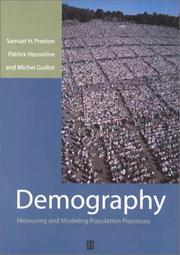
The canonical academic textbook of the discipline. It introduces life tables, fertility measures, stable population theory, and migration models with rigor. Read this as the analytical backbone of the entire curriculum.

A masterclass in how mortality (plague, climate) reshapes civilizations, read after Preston so the reader can apply demographic thinking to a rich historical case study.

Focuses on migration as the third demographic force, arguing that mass human movement will define the 21st century. Pairs with the mortality and fertility focus of earlier books to complete the demographic triad.
The Fertility Transition and Its Drivers
IntermediateUnderstand why fertility falls — the roles of education, women's empowerment, economic development, culture, and policy — and what ultra-low fertility means for societies.
▸ Study plan for this stage
Pace: 6–8 weeks, ~40–50 pages/day. Read "The Son Also Rises" (weeks 1–3), then "What to Expect When No One's Expecting" (weeks 4–8). Allocate 2–3 days per week for reflection and note-taking.
- Intergenerational mobility and social persistence: how Clark's surname data reveals that fertility and economic success are linked across generations, challenging assumptions about rapid social change
- The fertility transition mechanism: understanding the shift from high fertility in pre-industrial societies to low fertility in developed economies, and the role of education and female labor force participation
- Women's empowerment and education as fertility drivers: how increased access to education and economic opportunities for women directly correlates with declining birth rates
- Economic development and the demographic transition: the relationship between rising incomes, urbanization, and falling fertility rates across different societies
- Ultra-low fertility as a demographic crisis: recognizing that fertility below replacement level (below 2.1 children per woman) creates aging populations, labor shortages, and economic stagnation
- Cultural and institutional barriers to fertility: examining how religious beliefs, family structure norms, and social policies either support or inhibit childbearing decisions
- Policy interventions and their limits: understanding which policies (childcare support, parental leave, immigration) can modestly influence fertility, and which cannot reverse the transition once underway
- According to Clark's research in 'The Son Also Rises,' what does surname-based intergenerational mobility data reveal about the persistence of social status, and how does this relate to fertility patterns?
- What is the demographic transition, and what are the primary economic and social drivers that cause fertility to decline as societies develop?
- How do female education and labor force participation influence fertility rates, and what evidence do Last and Clark present for this relationship?
- What does 'ultra-low fertility' mean, and what are the major economic and social consequences that Last identifies for societies experiencing it?
- What is the relationship between cultural norms (religion, family structure, gender roles) and fertility decisions, as discussed in both books?
- Which policy interventions does Last argue can influence fertility, and why does he suggest some policies have limited effectiveness in reversing the fertility transition?
- Create a timeline chart mapping the fertility transition in 3–4 countries (e.g., Sweden, Japan, South Korea, the United States) using data from both books; annotate with key economic and policy events that coincide with fertility shifts.
- Conduct a comparative analysis: select two societies at different stages of the fertility transition and write a 2–3 page memo explaining why their fertility rates differ, citing specific evidence from Clark and Last.
- Build a causal diagram showing how female education → labor force participation → delayed marriage → lower fertility, using concrete examples from the books to validate each link.
- Interview 3–5 people (of varying ages and backgrounds) about their fertility decisions and family planning; analyze their responses against the drivers identified in the books (economic security, education, gender roles, policy awareness).
- Design a hypothetical policy intervention to address ultra-low fertility in a specific country; write a 2–page proposal that acknowledges Last's skepticism about policy limits while identifying which interventions might have the most traction.
- Create an annotated reading journal with 10–12 key quotes from both books; for each quote, explain its significance to understanding the fertility transition and ultra-low fertility outcomes.
Next up: This stage establishes the mechanisms and evidence for why fertility falls in developed societies, preparing you to examine the specific demographic consequences (aging, shrinking workforces, pension crises) and policy responses that will be explored in the next stage.

Examines intergenerational mobility and family reproductive strategies across centuries and cultures, revealing deep structural forces behind fertility behavior that complement standard demographic explanations.

A focused, data-rich analysis of below-replacement fertility in the United States and its economic and social consequences — a concrete case study to follow the broader theory.
Ageing Societies and Economic Consequences
ExpertAnalyze how population ageing reshapes labor markets, public finance, healthcare, and geopolitical power, and evaluate the policy responses available to governments.
▸ Study plan for this stage
Pace: 8–10 weeks, ~40–50 pages/day (accounting for dense economic and demographic analysis)
- Demographic transition and the structural shift toward older populations in developed economies
- The dependency ratio and its impact on labor force participation, tax bases, and social security systems
- Healthcare cost escalation driven by age-related diseases and long-term care demand
- Pension system sustainability and the intergenerational fiscal burden
- Labor market disruption: skills mismatch, wage stagnation, and the decline of working-age cohorts
- Asset price inflation and deflation cycles tied to generational consumption and savings patterns
- Geopolitical implications of demographic decline in developed nations versus growth in emerging markets
- Policy levers: immigration, retirement age reform, productivity growth, and fiscal restructuring
- How does the demographic transition create a structural mismatch between the working-age population and retirees, and what are the fiscal consequences for governments?
- What mechanisms does population ageing use to reshape labor markets, and how do wage and employment outcomes differ across age cohorts?
- How do asset price cycles (stocks, real estate, bonds) respond to generational wealth accumulation and decumulation patterns, and what does this imply for retirement security?
- What are the primary drivers of healthcare cost inflation in ageing societies, and which policy interventions show the most promise in controlling expenditure?
- How does demographic decline in developed economies alter the geopolitical balance relative to younger, faster-growing populations in emerging markets?
- What trade-offs exist between immigration, automation, and raising retirement ages as policy responses to population ageing?
- Create a dependency ratio projection for a specific developed country (e.g., Japan, Germany, or Italy) over the next 30 years using UN demographic data; analyze how this ratio constrains fiscal policy
- Map out the pension system in your home country or a case study nation: identify the current contribution rate, replacement rate, and projected shortfall; propose a reform package balancing equity and sustainability
- Build a simple spreadsheet model of healthcare costs as a function of age structure; test scenarios where life expectancy increases by 5 years or fertility drops further
- Conduct a comparative analysis of two countries with different demographic trajectories (e.g., South Korea vs. Nigeria); assess how geopolitical leverage shifts over 50 years
- Analyze labor force participation trends by age and gender in a developed economy; identify sectors most vulnerable to worker shortages and propose workforce adaptation strategies
- Write a policy brief (2,000–2,500 words) evaluating three policy responses to ageing (e.g., immigration reform, automation investment, pension restructuring) with evidence from the books and supporting data
Next up: This stage equips you to understand the structural economic constraints and policy trade-offs imposed by demographic change, preparing you to examine targeted interventions—such as healthcare innovation, pension design, and labor market adaptation—in greater depth in the next stage.

A rigorous economic analysis of global population ageing, covering pension systems, healthcare costs, and labor supply. Builds directly on the fertility and mortality foundations established earlier.

Argues that consumer spending and economic cycles are driven by demographic waves, offering a provocative demand-side lens on ageing that complements the supply-side focus of Magnus.
Frontier Debates: Population, Power, and the Future
ExpertEngage with the cutting-edge and contested questions — geopolitical power shifts, the end of growth, pronatalist policy, and what a shrinking world population means for humanity's future.
▸ Study plan for this stage
Pace: 8–10 weeks, ~40–50 pages/day. "Human Tide" (approx. 400 pages) over 4–5 weeks, then "End of the World Is Just the Beginning" (approx. 500+ pages) over 4–5 weeks, with 1–2 weeks for synthesis and debate preparation.
- Demographic transition and its reversal: how fertility decline reshapes societies and creates the 'population implosion' in developed nations
- Geopolitical consequences of population shifts: how shrinking workforces, aging populations, and regional demographic imbalances alter global power dynamics
- The end of growth paradigm: why perpetual economic expansion becomes impossible in a contracting population world
- Pronatalist policy and state intervention: the limits and contradictions of government attempts to reverse fertility decline (Japan, Russia, South Korea)
- Supply chain fragility and deglobalization: how demographic collapse in key regions forces reshoring and regional self-sufficiency
- Resource scarcity vs. surplus: the paradox that fewer people may face worse resource conflicts, not better ones
- The future of work, pensions, and social systems: structural crises when the working-age population shrinks relative to dependents
- Civilizational decline narratives: distinguishing between demographic inevitability and policy-driven futures
- What is the demographic transition, and why does Morland argue that the world is entering a new, post-transition phase? What are the implications?
- According to 'Human Tide,' which regions face the most acute population decline, and what does Morland predict about their geopolitical influence by 2050?
- How does Zeihan connect demographic collapse to the fragmentation of global supply chains and the end of American-led globalization?
- What is the relationship between population decline and resource scarcity in Zeihan's framework? Why might a shrinking world face worse, not better, resource conflicts?
- What pronatalist policies does Morland examine, and why have they largely failed to reverse fertility decline in developed nations?
- How do the two authors differ in their assessment of whether demographic decline is inevitable or reversible through policy intervention?
- What does Zeihan mean by 'the end of the world as we know it,' and how is it tied to demographic and geopolitical shifts rather than environmental collapse?
- How would you explain to a policymaker why simply increasing immigration or offering child subsidies cannot solve the structural problems both authors identify?
- Create a demographic timeline: map out the fertility rates and population projections for 5–6 key countries (Japan, Germany, Nigeria, India, USA, Russia) from 1950 to 2100 using data from both books. Annotate with geopolitical turning points each author identifies.
- Debate preparation: take a position ('demographic decline is inevitable' vs. 'pronatalist policy can reverse it') and build a case using evidence from both Morland and Zeihan. Identify where they agree and where they diverge.
- Supply chain mapping: choose one critical industry (semiconductors, pharmaceuticals, rare earth minerals) and trace how demographic shifts in key production regions (Taiwan, South Korea, China) would disrupt it according to Zeihan's logic.
- Policy memo: write a 2–3 page memo to a fictional government addressing one demographic crisis (aging workforce, pension insolvency, shrinking tax base) using insights from both books. Propose realistic interventions and their likely limitations.
- Comparative analysis essay: analyze how Morland's 'Human Tide' and Zeihan's 'End of the World' differ in their treatment of the same phenomenon (e.g., China's population crisis, European decline). Which framing is more compelling and why?
- Scenario planning: develop three 50-year futures (optimistic, pessimistic, middle-ground) for a region facing severe population decline (e.g., Eastern Europe, Japan). Ground each in the authors' logic and identify policy inflection points.
Next up: This stage equips you to recognize demographic collapse as a civilizational force reshaping geopolitics, economics, and social systems—preparing you to examine specific regional case studies, policy responses, and alternative futures in the next stage.

Argues that demography is the master variable of modern history — explaining the rise of nations, wars, and empires. A sweeping synthesis that rewards readers who now have the full demographic toolkit.

A provocative capstone arguing that deglobalization and demographic collapse will simultaneously unravel the post-WWII order. Forces the reader to apply everything learned to the most consequential forward-looking questions in demography.
Discussion
Keep reading
Paths that share books, cover the same subject, or open a related topic.