Reading through grief
This curriculum moves from gentle orientation to grief's emotional landscape, through intimate memoirs that make loss feel shared, and finally into deeper reflective and philosophical territory for carrying grief as a lifelong companion. Each stage builds on the last — first understanding how grief works, then feeling less alone through others' stories, then finding wisdom for the long road ahead.
How Grief Actually Works
BeginnerUnderstand that grief is not a linear process, dispel myths (like the 'five stages'), and build a compassionate vocabulary for what you are experiencing.
▸ Study plan for this stage
Pace: 6–8 weeks total. Week 1–4: "It's Ok That You're Not Ok" (~20–25 pages/day, reading reflectively rather than quickly — pause after each chapter). Week 5–8: "On Grief and Grieving" (~15–20 pages/day, given its denser, more clinical tone and the emotional weight of its case material). Build in at least
- Grief is a natural, non-pathological response to loss — not a problem to be fixed or a disorder to be treated (Devine's central argument in 'It's Ok That You're Not Ok').
- The 'five stages' model (denial, anger, bargaining, depression, acceptance) was originally developed by Kübler-Ross to describe the experience of the dying — not the bereaved — and is widely misapplied as a prescriptive checklist.
- Kübler-Ross herself, in 'On Grief and Grieving', reframes the five stages as fluid, non-linear emotional states that can overlap, repeat, or be skipped entirely — not a ladder to climb.
- Our culture has a 'grief illiteracy' problem: social pressure to 'move on,' timelines for recovery, and the idea that grief can be resolved are all myths that cause additional harm to grieving people (Devine).
- Grief is not proportional to the 'legitimacy' of the loss — disenfranchised grief (losses society does not fully recognize) is just as real and painful as socially sanctioned grief.
- Compassionate witnessing — being present with pain without trying to fix it — is more healing than advice, silver linings, or problem-solving (a practice Devine models throughout her writing).
- Continuing bonds: love for the person or thing lost does not have to end; grief and love coexist rather than grief being something you 'get over'.
- Building a personal grief vocabulary — finding words for specific feelings like anticipatory grief, secondary losses, and grief bursts — helps reduce isolation and self-judgment.
- In your own words, why is applying the five stages as a step-by-step roadmap harmful to grieving people, and what did Kübler-Ross actually intend them to represent?
- What does Megan Devine mean when she says some grief 'cannot be fixed' — and how does that reframe what support should look like?
- Can you identify at least two myths about grief that you held (or encountered in others) before reading these books, and explain what each book says to counter them?
- What is a 'secondary loss,' and why does recognizing secondary losses matter for understanding the full scope of what a grieving person is experiencing?
- How do Devine and Kübler-Ross differ in tone, audience, and purpose — and how do those differences make them complementary rather than contradictory?
- What does 'grief literacy' mean to you now, and how might you use it to support yourself or someone else differently than you would have before?
- Grief myth audit: Before starting the books, write down every belief you hold about how grief 'should' work and how long it 'should' last. After finishing both books, revisit the list and annotate each belief — keep, revise, or discard — citing specific passages that changed your thinking.
- Personal grief vocabulary journal: As you read, collect words and phrases from both books that name something you have felt but never had language for (e.g., 'grief burst,' 'anticipatory grief,' 'the gap'). Write 2–3 sentences connecting each term to a real experience.
- Stage-mapping exercise (Kübler-Ross): After finishing 'On Grief and Grieving,' draw a non-linear map (not a list) of the five emotional states as you or someone you know has actually experienced them — use arrows, loops, and overlaps to reflect the real, messy pattern.
- Compassionate witness practice: Write an unsent letter to yourself at your most grief-stricken moment, responding only with presence and validation — no advice, no silver linings, no 'at least.' Use Devine's model of compassionate witnessing as your guide.
- Loss inventory: List all the losses connected to one significant grief experience — the primary loss and every secondary loss (routines, identity, relationships, future plans). Reflect in writing on which losses have received the least acknowledgment.
- Discussion or reflection prompt: Choose one quote from each book that felt most true or most challenging. Write a short paragraph on each explaining why it resonated or provoked resistance — this surfaces your own assumptions about grief.
Next up: By dismantling false models and building an honest, compassionate vocabulary for grief, the reader is now ready to move into deeper psychological and somatic frameworks — exploring not just what grief is, but how it lives in the body, the mind, and long-term identity.
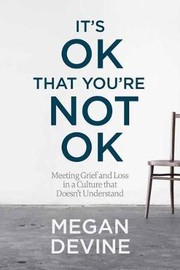
The ideal first book: warm, direct, and validating. Devine rejects the idea that grief is a problem to be fixed and gives the reader immediate permission to feel exactly what they feel — a crucial foundation before anything else.
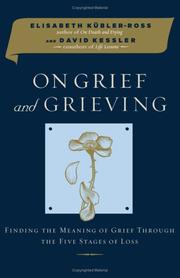
Read second to understand where the famous 'five stages' actually came from — and how Kübler-Ross herself meant them as fluid descriptions, not a checklist. Provides essential shared language for the rest of the curriculum.
You Are Not Alone — Memoirs of Loss
BeginnerFeel the companionship of others who have walked through profound loss, and recognize your own experience reflected in honest, beautifully written personal accounts.
▸ Study plan for this stage
Pace: 8–10 weeks total, reading at a gentle pace of ~15–20 pages per day. Week 1–3: The Year of Magical Thinking (Joan Didion) — allow extra time to sit with each chapter. Week 4–6: A Grief Observed (C. S. Lewis) — short but dense; re-read passages freely. Week 7–10: The Light of the World (Elizabeth Alex
- Magical thinking as a grief mechanism — Didion's concept that the bereaved mind bargains with reality, refusing to accept the permanence of loss, revealing how irrationality is a normal and even protective response to shock.
- The vortex effect — Didion's term for how ordinary objects, places, and sensory details unexpectedly pull the griever back into the moment of loss, illustrating how grief is non-linear and ambush-like.
- Grief as a crisis of faith and identity — Lewis in A Grief Observed records how the death of his wife Joy dismantled his confident theology, showing that doubt and spiritual anguish are not signs of weakness but of honest love.
- The journal as a survival tool — Both Didion and Lewis wrote their accounts in real time, demonstrating how writing can externalize overwhelming interior pain and create a small sense of order amid chaos.
- Celebration as an act of mourning — Alexander's The Light of the World frames grief through beauty, art, food, and cultural memory, offering the insight that honoring what was luminous in a life is itself a form of grieving.
- The body's memory of the beloved — Across all three books, the authors describe how grief lives physically: in appetite, sleep, muscle memory, and the persistent expectation that the deceased will walk through the door.
- Community, solitude, and the tension between them — All three memoirists navigate when to lean on others and when grief demands private space, modeling different but equally valid approaches to surviving loss.
- Grief as transformation, not resolution — None of the three books ends with 'closure'; instead, each author arrives at a changed relationship with loss — one that integrates rather than erases the person who died.
- In The Year of Magical Thinking, what does Didion mean by 'magical thinking,' and can you identify two or three specific examples from the book where she catches herself engaging in it?
- How does C. S. Lewis's understanding of God and faith shift across the four notebook entries in A Grief Observed — and what does his final stance suggest about the relationship between grief and belief?
- Elizabeth Alexander structures The Light of the World around beauty, art, and cultural richness rather than clinical stages of grief. What does this choice reveal about her philosophy of loss and love?
- All three authors describe moments when grief ambushes them through an ordinary sensory trigger (a smell, a shoe, a piece of music). Choose one example from each book and explain what it reveals about how memory and loss are intertwined.
- How does each author use writing itself — the act of putting grief on the page — as part of their survival? What are the similarities and differences in their approaches?
- By the end of all three memoirs, none of the authors claims to be 'healed.' What has each one found instead, and how does that reframe what it means to move forward after profound loss?
- Keep a parallel grief journal: Each time you finish a reading session, write one paragraph in your own voice responding to what you just read — not a summary, but a personal reaction. Notice which passages made you feel seen, resistant, or moved, and why.
- Annotate for 'vortex moments': As you read, mark every passage where an author is ambushed by grief through a sensory detail or ordinary object. At the end of each book, review your marks and write a short reflection on what patterns you notice across your own life.
- Write a one-page 'portrait of the luminous' inspired by Alexander's approach: Choose someone you have lost (or fear losing) and describe them entirely through specific, beautiful details — a gesture, a meal they made, a phrase they used — without ever using the word 'grief' or 'loss.'
- Conduct a comparative close-reading: Select one short passage from each of the three books that deals with the same theme (e.g., the physical sensation of grief, or the question of where the dead 'go'). Place them side by side and write a paragraph on how each author's voice, style, and worldview shapes their experience of the same phenomenon.
- Create a personal 'grief timeline': Draw a simple horizontal line and mark significant losses in your own life. For each one, note whether you recognize any of the responses described by Didion, Lewis, or Alexander. This is not about diagnosis — it is about recognition and self-compassion.
- Write a letter to one of the three authors: Tell them what in their memoir surprised you, what you disagreed with, and what you will carry with you. This exercise transforms passive reading into active dialogue and deepens retention of the book's emotional core.
Next up: By living inside these three intimate first-person accounts, the reader has built an emotional vocabulary and a felt sense of what grief looks like from the inside — which creates the empathy and curiosity needed to move into the next stage, where broader frameworks, research, and diverse cultural perspectives on loss can be explored with both intellectual rigor and personal grounding.
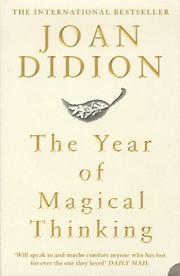
A landmark memoir of spousal loss, written with unflinching precision. Its raw honesty about the irrationality of grief — the 'magical thinking' — will feel instantly recognizable and deeply comforting in its honesty.

Short, raw, and written in real time after the death of his wife, this reads like a private journal. Its brevity and emotional directness make it accessible, and it pairs powerfully with Didion by showing grief from a different voice and faith perspective.

A lyrical, luminous memoir of sudden spousal loss that balances grief with deep gratitude and love. Its poetic beauty offers a gentler emotional tone after Lewis, and broadens the range of voices in this stage.
Grief in the Body and in Relationship
IntermediateUnderstand how grief lives in the body, how it affects relationships, and how different kinds of loss — a child, a parent, a sibling — carry their own particular weight.
▸ Study plan for this stage
Pace: 6–7 weeks total: Weeks 1–3 for "Option B" (~25–30 pages/day, including journaling pauses); Weeks 4–6 for "The Bright Hour" (~20–25 pages/day, reading more slowly to absorb the lyrical, fragmented structure); Week 7 reserved for reflection, re-reading marked passages, and completing synthesis exercis
- Somatic grief — how loss registers physically in the body (Sandberg's descriptions of chest pain, exhaustion, and the inability to perform ordinary tasks; Riggs's account of living inside a dying body)
- The 'elephant in the room' effect — how grief reshapes social dynamics and makes others uncomfortable, explored through Sandberg's frank analysis of what friends and colleagues said or failed to say
- Resilience vs. resilience-as-performance — Sandberg's Option B framework distinguishes genuine post-traumatic growth from the social pressure to 'bounce back' quickly
- Anticipatory grief — Riggs experiences loss before death arrives, mourning her future self, her children's motherless years, and her husband's coming widowhood simultaneously
- The asymmetry of spousal loss vs. parental loss — Sandberg loses a partner and must re-parent alone; Riggs faces leaving her children, illuminating how the direction of loss (losing vs. being lost) shapes the grief experience differently
- Narrative as survival tool — both authors use writing itself as a coping mechanism, making the act of reading their books a study in how storytelling metabolizes pain
- Community and 'the village' — Sandberg documents how leaning on friends, family, and even workplace structures can either sustain or fracture a grieving person
- Mortality as a relational event — Riggs's illness forces everyone around her (husband John, children, friends) to grieve in real time alongside her, blurring the line between the dying and the bereaved
- After reading Option B, how does Sandberg describe the physical and cognitive symptoms of acute grief, and what specific strategies does she use to re-engage with daily life — and which feel earned versus prescribed?
- Sandberg introduces the three P's (personalization, pervasiveness, permanence) drawn from Martin Seligman's work. How do these concepts map onto her actual lived experience as she narrates it, and where does the framework feel insufficient?
- Nina Riggs writes from inside terminal illness rather than from the outside looking in at loss. How does this shift in vantage point change what grief looks and feels like on the page compared to Sandberg's retrospective account?
- Both books center on children — Sandberg's fear of failing her kids as a solo parent, Riggs's anguish at leaving hers. What specific passages capture the particular weight of grief that involves children, and how do the two authors differ in how they carry it?
- How do Sandberg and Riggs each portray the grief of the people around them — spouses, friends, colleagues — and what does this reveal about grief as a relational, not merely individual, experience?
- By the end of both books, what is each author's implicit answer to the question: 'Can the body and the self recover, or is the goal something other than recovery?'
- Body-mapping journal: After each reading session, spend 5 minutes writing one sentence locating where you felt the reading in your body (tightness, heaviness, relief, etc.). At the end of both books, review your entries and look for patterns — this mirrors the somatic awareness both authors cultivate.
- Passage annotation challenge: Flag every moment in Option B where Sandberg describes a physical sensation of grief (not an emotion — a bodily event). Do the same in The Bright Hour. Compare your two lists: whose body speaks more loudly, and in what register?
- The 'unsaid' letter: Sandberg writes extensively about what people said wrong or not at all. Draft a short letter (1 page) to a grieving person in your own life — past or present — using what you've learned from her account of what actually helped.
- Parallel timeline: Draw a simple two-column timeline. On one side, track Sandberg's emotional and relational milestones in Option B. On the other, track Riggs's in The Bright Hour. Where do the timelines rhyme? Where do they diverge sharply? Write 3–4 sentences of analysis.
- Perspective swap: Choose one scene from The Bright Hour written from Riggs's point of view and rewrite a single paragraph from the perspective of her husband John or one of her sons. Then do the reverse with a scene from Option B — rewrite a moment from the perspective of Sandberg's children. Reflect on what shifts.
- Synthesis discussion (solo or with a reading partner): Articulate in 200–300 words — spoken aloud or written — the single most important thing each book taught you about grief that you did not know before. Then identify one question each book left unanswered for you, to carry into the next stage.
Next up: By grounding grief in the body and in intimate relationships through two deeply personal memoirs, this stage builds the emotional and experiential vocabulary needed to engage with broader cultural, philosophical, or clinical frameworks of loss that a subsequent stage might introduce.
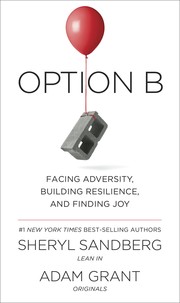
Sandberg writes about sudden loss and the practical, social, and emotional work of rebuilding resilience. It bridges personal memoir and research-backed insight, introducing the idea that grief and growth can coexist.

A memoir written by a woman facing her own death, leaving behind a family. Reading grief from the perspective of the dying — rather than the bereaved — deepens empathy and expands the emotional range of the curriculum.
Carrying Grief for the Long Haul
ExpertMove from surviving grief to integrating it — understanding grief not as something to get over, but as a permanent, meaningful part of a life well-lived.
▸ Study plan for this stage
Pace: 6–8 weeks total. Weeks 1–4: "Bearing the Unbearable" (~20–25 pages/day, including pauses for reflection journaling). Weeks 5–8: "When Breath Becomes Air" (~15–20 pages/day, read slowly and meditatively — this book rewards deliberate, unhurried reading). Build in at least one full rest day per week w
- Grief as integration, not resolution: Cacciatore's central argument that grief is not a problem to be solved or a phase to exit, but a lifelong relationship with love and loss
- Mindful grieving (ATTEND model): Cacciatore's framework — Attunement, Trust, Therapeutic presence, Embodiment, Nuance, and Directed mindfulness — as a compassionate alternative to stage-based grief models
- The danger of 'grief bypassing': how cultural pressure to 'move on' causes secondary wounds on top of the original loss, and why sitting with suffering is an act of courage
- Witness vs. fixer: the radical shift from trying to alleviate another's grief to simply bearing compassionate, non-judgmental witness to it — a core relational practice in Cacciatore's work
- Mortality as meaning-maker: Kalanithi's lived argument that confronting death clarifies what makes a life worth living, and that meaning is constructed in the face of — not despite — finitude
- Identity reconstruction under loss: how Kalanithi navigates the collapse of his identity as a surgeon/future-self and rebuilds a coherent self around writing, fatherhood, and presence
- The 'good enough' life: Kalanithi's engagement with the question of how much time is 'enough' and how one decides what to do when time is radically limited
- Love as the thread that outlasts the body: both books converge on the idea that love — for a child, a patient, a partner — is what gives grief its weight and its worth
- According to Cacciatore, why do conventional grief models (e.g., Kübler-Ross's five stages) fall short for catastrophic loss, and what does her ATTEND framework offer instead?
- How does Cacciatore distinguish between a 'grief witness' and a 'grief fixer,' and why does she argue the former is more healing? Can you think of a moment in your own life when you needed a witness rather than a solution?
- Kalanithi asks: 'What makes a life worth living in the face of death?' How does his answer evolve from his early career to his final months, and what role does writing 'When Breath Becomes Air' itself play in that answer?
- Both books treat love as inseparable from grief. How do Cacciatore and Kalanithi each articulate this relationship, and where do their perspectives most powerfully converge or diverge?
- Kalanithi chooses to have a child after his terminal diagnosis. Using the frameworks from both books, how might you interpret this decision as an act of grief integration rather than grief denial?
- After reading both books, how has your personal definition of 'carrying grief well' changed? What does it now mean to you to integrate a loss rather than recover from it?
- Grief timeline mapping: Draw a personal timeline of significant losses (people, identities, futures). For each, note whether you were encouraged to 'move on' or allowed to integrate. Annotate with Cacciatore's language — where did grief bypassing occur? Where did you find a true witness?
- ATTEND self-audit: After finishing 'Bearing the Unbearable,' apply Cacciatore's ATTEND framework to one past or present grief experience. Write 1–2 paragraphs for each of the six elements, honestly assessing where you were supported and where you were not.
- Letter to a lost future: Kalanithi grieves not only his life but the future self he would have been. Write a letter to a version of yourself that will not exist — a career path abandoned, a relationship ended, a health status changed. Practice the integration Kalanithi models.
- Witness practice: Identify someone in your life who is grieving. For one week, commit to being a Cacciatore-style witness — no advice, no silver linings, no fixing. Journal each day about what arose for you and for them.
- Parallel reading journal: Keep a two-column journal as you read Kalanithi. Left column: Kalanithi's words or moments that stop you. Right column: your honest, unfiltered response. At the end, read back through and write a one-page synthesis: what did his dying teach you about your living?
- Meaning statement: Drawing on both books, write a personal 'grief integration statement' — a 200–300 word articulation of how you intend to carry your losses forward as part of a meaningful life. Revisit and revise it six months from now.
Next up: By internalizing grief as a permanent, meaning-laden dimension of life rather than a wound to heal, the reader is now equipped to explore how communities, cultures, and rituals collectively hold and transmit grief across generations — the natural next frontier beyond the individual integration work done here.

Written by a grief therapist and bereaved mother, this book offers the most direct and compassionate guidance on living with catastrophic loss. It synthesizes everything the earlier stages have touched and gives it a mindful, long-term framework.
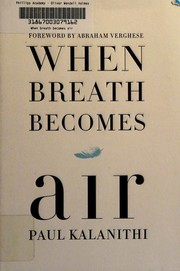
A neurosurgeon's meditation on mortality, meaning, and what makes life worth living when it is ending. The perfect closing book: it reframes grief as the price of love, leaving the reader with a sense of profound, hard-won meaning.
Discussion
Keep reading
Paths that share books, cover the same subject, or open a related topic.