There is a workable order here: what dying physically is, then what bereavement does to the living, then what happens to the body and to the industry that handles it, and last the history and the research that explain why we think about death the way we do.
Starting with theory is the common mistake. The five stages are the most repeated idea in this subject and among the least well supported as a description of grief, so meeting them first tends to bend everything read afterwards to fit them. Meeting them after the clinicians and the bereavement researchers puts them where they belong — as a historically important interview study, not a map.
Stated plainly once: every book below is a book. None of them is a palliative care team, a hospice nurse, a doctor or a bereavement counsellor, and several of these authors are clinicians who say so themselves.
What dying actually looks like
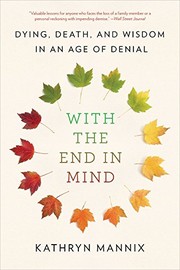
With the end in mind is the best opening. Kathryn Mannix spent a career in British palliative medicine and builds the book out of patient case narratives, arguing that ordinary dying follows a recognisable physical pattern that almost nobody has been shown, because most deaths now happen out of sight. It is the least frightening book on this list and the most specific.
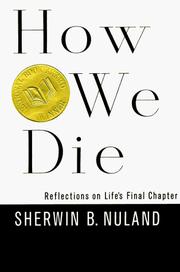
How We Die is its unsentimental counterpart. Sherwin Nuland, a surgeon, works through the physiology disease by disease — heart failure, cancer, stroke, Alzheimer's, accident, old age — and refuses consolation on principle. It won the National Book Award in 1994 and it is graphic about what organ failure does.
Being Mortal moves back from the deathbed to the decade before it. Atul Gawande writes about nursing homes, assisted living, hospice and the goals-of-care conversation that medicine handles badly; it is the most immediately useful book here for anyone with an aging parent. Advice for Future Corpses is the practical handbook of the group: Sallie Tisdale, a nurse, on what a dying body does, what to say in the room, and what the people present are actually meant to do.
Two first-person accounts
When Breath Becomes Air is a neurosurgeon's memoir of his own metastatic lung cancer, written while he was dying. Paul Kalanithi did not finish it; his wife Lucy wrote the epilogue that closes it. The Year of Magical Thinking is Joan Didion's account of the year after her husband died at their dinner table, and its value is the precision with which it records how grief deranges ordinary reasoning.
Both are single cases. Read as literature they are exceptional; read as a description of how bereavement works in general they will mislead, which is what the last section of this path corrects.
The trade, and the body
The American way of death is Jessica Mitford's 1963 investigation of American funeral directing — pricing, upselling, embalming, the legal position of the bereaved consumer. She revised and reissued it in the 1990s, so check which edition you are buying. Smoke gets in your eyes and The Undertaking are both insider accounts: Caitlin Doughty on working in a crematory, Thomas Lynch on three decades as a small-town funeral director and poet. Stiff follows the donated body into anatomy labs, crash tests and forensic research; Mary Roach's register is comic, which some readers find wrong for the material.
If you want only one Doughty book, take From Here to Eternity over the crematory memoir — it travels to Indonesia, Japan, Mexico, Bolivia and rural Colorado to document how other cultures handle their dead, and it carries more argument.
History and the evidence
The hour of our death is Philippe Ariès's thousand-year history of Western attitudes to dying — long, learned and organised around a sequence of broad cultural stages. Later historians have argued that the periodisation is too tidy and the sources skewed toward elites, so it is best read as a framework to argue with.
On death and dying is where the five stages come from. Elisabeth Kübler-Ross drew them from interviews with dying hospital patients in the 1960s, and the book was genuinely influential in getting clinicians to talk to those patients at all. Two things are worth knowing: she was describing terminal illness rather than bereavement, and the stage sequence has not held up well as a description of either. The other side of sadness is the counterweight and the right place to finish. George Bonanno summarises longitudinal bereavement research showing that resilience is the most common outcome, that grief oscillates rather than progresses, and that the assumption everyone must do "grief work" is not supported by the data.
Read in that order and the famous ideas arrive with their evidence attached. Browse more reading paths on death, medicine and the mind, or follow this one straight through.
Follow the full ordered path here: Death and Dying: The Best Books on Mortality, in Reading Order.