What to Read Before Infinite Jest: How to Prepare for Wallace's Novel, in Order
Infinite Jest is a thousand pages with a hundred pages of endnotes, and the first two hundred pages deliberately withhold the information that would make them easy. Nothing here is a survey of Wallace's career; it is the run-up that gets a reader past the point where most copies are shelved, and the novel is the last book on it. If you dislike long digressive sentences, footnotes as a narrative device, or a plot that resolves outside the text, this path will not convert you and you should skip the novel honestly rather than grind at it.
Learn the voice on short pieces
BeginnerGet comfortable with Wallace's sentence, his footnotes and his tonal swings before committing a thousand pages to them
▸ Study plan for this stage
Pace: Six to eight weeks, and this is the stage where you find out cheaply whether the rest of the path is worth your time. Read A Supposedly Fun Thing I'll Never Do Again first, an essay at a time — the title piece and the state fair essay are the two to read first regardless of their order in the book.
- The footnote as a narrative device rather than a citation: Wallace uses notes to hold qualification, second thoughts and whole scenes, and Infinite Jest runs on this at a hundred-page scale
- The digressive sentence with self-correction built in — the clause that qualifies the clause before it — which is the single feature that decides whether a reader can tolerate him
- Tonal swing as method: a paragraph moves from comedy to genuine distress and back without signalling, and learning to follow that at essay length is the point of starting here
- The essays as the cheapest available test of taste — if the cruise ship piece is a chore, the novel will be a thousand pages of the same problem and the honest response is to stop
- Girl With Curious Hair as the collection written immediately before the novel, where television, entertainment and the exhaustion of irony are already fully formed at twenty pages a time
- Brief Interviews' withheld half of a conversation — the questions are removed and only the answers printed — which trains you for the novel's habit of giving you one side of things
- The sincerity project: Wallace's stated ambition to get past irony without simply abandoning it, which is the argument the whole path eventually leads to
- Reading order note worth holding: Brief Interviews was published after the novel, and is included here for training rather than chronology
- In the cruise essay, what is the footnoted material doing that the main text cannot? Pick three notes and classify each.
- Where in the state fair essay does the tone change, and what triggers it? The shifts are engineered and locating them is a skill you will need.
- Which stories in Girl With Curious Hair are about television, and what do they claim about it?
- In Brief Interviews, the questions are absent. Reconstruct one from the answer, and say what the removal achieves.
- Having read all three, do you actually enjoy this writer? Answer honestly now, because the honest answer is what this stage is for.
- Read the cruise essay with a finger in the footnotes and take every note as it comes. It is the exact technique the novel requires and this is a hundred-page rehearsal rather than a thousand-page one.
- Copy out one Wallace sentence longer than a hundred words and mark where each qualification begins. One sentence is enough to see the machine.
- Time yourself on twenty pages of the essays. That rate, halved, is roughly what the novel will run at, and knowing it makes the last stage schedulable.
- Write 200 words in imitation of the footnoted digression on any subject you like. It is the fastest way to understand what the device costs the writer.
- After Brief Interviews, note which register you found hardest — the comic, the clinical, or the confessional. That register is the one to watch for in the novel.
Next up: You now know the voice and have decided honestly whether you want a thousand pages of it, which is the only sound basis for spending the next three stages preparing for one book.
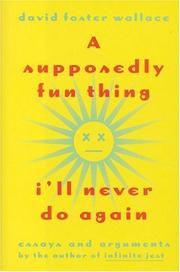
The essays are the cheapest way to find out whether you enjoy this writer, and the title piece is the purest sample of the footnoted digression Infinite Jest runs on. Start here, not with the fiction.
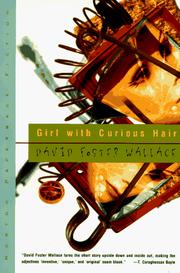
The story collection written immediately before Infinite Jest, where the novel's obsessions with television, entertainment and irony are already fully formed but only twenty pages long at a time.
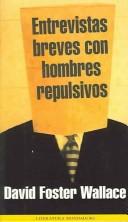
Published after Infinite Jest but the best short training for its hardest register: the interview form, the withheld half of a conversation, the sincerity Wallace was trying to smuggle back past irony.
The books behind the book
IntermediateUnderstand where the novel's addiction material and its formal ambitions actually come from
▸ Study plan for this stage
Pace: Ten to twelve weeks. Read Wittgenstein's Mistress first — around 240 pages, formally strange, and quick if you let it be. The Alcoholics Anonymous basic text is a large book and you need only its first hundred pages or so; two evenings, read as a document rather than cover to cover. Every Love Story
- Markson's novel as a genuine formal ancestor: a single voice, no scenes, propositions accumulating into a consciousness, and Wallace wrote a long essay calling it a high point of experimental American fiction
- What Wallace took from it and what he did not — the accumulation, not the austerity, which is why Infinite Jest is a thousand pages where its model is 240
- The AA material as vocabulary rather than doctrine for the reader's purposes: roughly a third of the novel takes place in a halfway house and quotes the programme's language directly and without explanation
- The specific things the Big Book supplies — the steps, the slogans, the surrender premise, the insistence on cliché — all of which the novel deploys as though the reader already knows them
- That the novel is genuinely interested in why a set of clichés works for people who are cleverer than the clichés, which is only visible if you have read the clichés in their own setting
- Max's biography as the source for how much of the book is drawn from life: Wallace's own halfway-house stay, his junior tennis, his time in Boston, and his relationship with the recovery world
- Why the biography goes before the novel rather than after — it costs no plot and explains a great deal of texture, which is an unusual trade to be offered
- Lipsky's five days of transcribed conversation as the closest thing to an author's commentary on this specific book, in Wallace's own voice, recorded on the tour for it
- What is the situation in Wittgenstein's Mistress, and how long does the novel take to let you establish it?
- What does Wallace praise in Markson in his essay on the book, and can you see the same feature in the essays you read in the last stage?
- What do the AA slogans actually claim? State three of them plainly, in the programme's own terms.
- According to Max, which parts of the novel come most directly from Wallace's own experience?
- In the Lipsky conversations, what does Wallace say the novel is trying to do? He answers this more than once and not always consistently.
- Does knowing the biography change how you expect to read the novel? Say specifically how, before you find out.
- Read the first hundred pages of the AA basic text with a pen, listing every phrase that reads as a fixed formula. That list is a glossary for a third of the novel.
- Read Wittgenstein's Mistress in as few sittings as possible. Its effect is cumulative and it is short enough to take in two.
- From Max, write a one-page chronology of Wallace's life from the mid-1980s to the novel's publication. The overlap with the book's material is the finding.
- Mark every passage in Lipsky where Wallace discusses the novel's structure or ending, and keep those page numbers. You will want them in the final stage.
- Write 200 words on what the recovery material is doing in a novel about entertainment. Attempting the connection before you read the book is more useful than being told it.
Next up: With the sources and the life in place, what remains is navigational — the maps that get a reader through a scrambled chronology and a hundred pages of endnotes.
Wallace called this the high point of experimental American fiction and wrote a long essay about it. It is a genuine ancestor of Infinite Jest's method, and it is short — a rare chance to see the influence without the length.

Roughly a third of Infinite Jest takes place inside a halfway house and quotes AA doctrine directly, often without explanation. Reading even the first hundred pages of the Big Book turns the Ennet House sections from opaque to legible; you do not have to agree with it to need it.
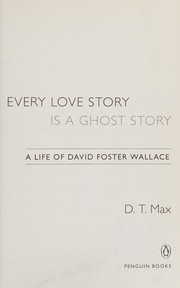
The biography, and the source for how much of the novel is drawn from Wallace's own halfway-house stay and junior tennis. Read it before the novel rather than after; it costs you no plot and explains a great deal of the texture.
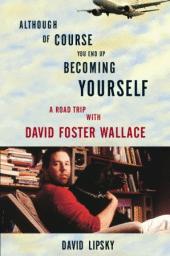
Five days of transcribed conversation with Wallace on the Infinite Jest book tour, in his own voice, about this specific book. The closest thing to an author's commentary track that exists.
The companions to keep beside you
IntermediateHave a map of the novel's chronology, its subsidized years and its cast before the first two hundred pages bury you
▸ Study plan for this stage
Pace: Two to three weeks of preparation now, and then months of intermittent use. Do not read Elegant Complexity through — it is over 500 pages of section-by-section commentary and it is designed to be used one section behind your own reading. Spend an evening learning how it is organised and then shelve
- The chronology problem: the novel's years are named by corporate sponsors rather than numbered, and the sections are not in order, so knowing which year a section is in is the single most useful navigational fact
- Carlisle's method — section by section, who is where and when — and the correct way to use it, which is one section behind your reading so that it explains rather than spoils
- Burn's account of the novel's shape and of the ending, which happens outside the text: the crucial events are inferable from material distributed across the book rather than narrated
- Reading Burn's overview before starting and his conclusion after, which is a deliberate split rather than an oversight — the first prevents disorientation, the second prevents despair
- Boswell's frame: the novel as an argument with postmodern irony, and the claim that Wallace is attempting sincerity without naivety, which is what the book is actually about beneath the tennis and the addiction
- Why Boswell goes last — it is a thesis about the novel, and reading a thesis before the text substitutes someone else's reading for your own
- The general principle for all three: a companion resolves a question, it does not tell you what the book means, and the difference is worth deciding on before you start
- That the endnotes are part of the text and not apparatus, which is the one navigational fact none of the companions can supply for you and which changes how you physically hold the book
- How are the novel's years named, and can you list them in order? This is the single fact that most reduces first-read confusion.
- How is Elegant Complexity organised, and how quickly can you find the commentary for a given page?
- What does Burn say happens at the end, and what evidence in the text does he say establishes it?
- What is your rule going to be for consulting Carlisle? Write it down now, because deciding it mid-novel means deciding it badly.
- What is Boswell's thesis in one sentence, and can you already imagine an objection to it from the essays you read in the first stage?
- Read Burn's overview chapter and write out the subsidised years in order on a card. Put the card in the novel as a bookmark; it is the most useful twenty minutes on this path.
- Spend one evening with Elegant Complexity's structure and index without reading its commentary. Learning the format now saves you looking things up badly later.
- Write your consultation rule on the same card. A workable one: finish a section, then read Carlisle's entry for it, and never read ahead.
- Read Boswell's introduction only, then stop and shelve it until after your first read of the novel. Deciding to defer it is the exercise.
- Set up the physical book now: two bookmarks, one in the main text and one in the endnotes, and check how the endnotes are numbered so you can find one instantly.
Next up: The voice, the sources, the life and the maps are all in place, which is exactly the condition under which the last stage stops being an endurance test and becomes a readable book.
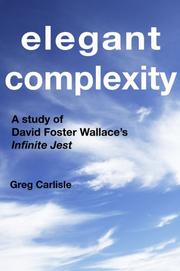
A section-by-section guide to Infinite Jest, tracking who is where and when across the scrambled chronology. The intended way to use it is one section behind your reading, so it explains rather than spoils.

Short, and the best single explanation of the novel's shape and its ending — which happens off the page and defeats most first readers. Worth reading its overview before you start and its conclusion after.

Places Infinite Jest inside Wallace's argument with postmodern irony, which is the thing the novel is actually about. Read this last of the companions, once you have enough of the book in hand to argue with it.
Infinite Jest
IntermediateRead the novel with a workable plan for the endnotes, the chronology and the first two hundred pages
▸ Study plan for this stage
Pace: Three to six months. The novel runs past a thousand pages with close to a hundred pages of endnotes, and the sane plan is a fixed daily page count rather than a chapter target, because the sections vary from two pages to eighty. Twenty pages a day finishes it in under two months; ten pages a day in
- The two-institution structure: a junior tennis academy and a halfway house on the same hill, with a third strand of political and espionage material connecting them
- Subsidised time as the chronology's organising joke — years named for sponsors, sections presented out of order, and the reader expected to date a scene from internal evidence
- The endnotes as text: they contain scenes, a filmography, a full pharmacological glossary and at least one of the novel's most important narratives, and skipping them removes plot rather than ornament
- Entertainment as the novel's central object — a film so absorbing that viewers will do nothing else, which is a premise and a thesis at once
- Addiction and entertainment as the same argument in two registers, which is why the AA material from the second stage is structural rather than local colour
- The Hal and Gately strands as the two halves of the book's question: one man cannot say what he means and one man has nothing left to say it with
- The ending that happens off the page — the crucial events are inferable from information distributed across the novel, and the last scene is chronologically early
- The first two hundred pages as a deliberate barrier: information the reader needs is withheld to make the eventual arrival of it meaningful, which is a defensible choice and also the reason so many copies are abandoned
- What happens to Hal, and where in the book is the evidence? The answer is distributed and assembling it is the novel's real test.
- What is the Entertainment, who made it, and what does the novel claim it does to people?
- Read the endnote containing the filmography. What does that list tell you that the narrative never says outright?
- Where does the novel end, chronologically? Locating it is a different question from where it stops.
- Now read Boswell. Is Infinite Jest an argument against irony, and does the novel practise what it argues?
- Was the preparation worth it? Name one thing from each earlier stage that you actually used.
- Set a daily page count on day one and write it inside the cover. A fixed rate is the difference between finishing and stalling on a book with no chapter structure.
- Read every endnote as it comes, without exception, for the first two hundred pages. If you still want to batch them after that, at least the decision will be informed.
- Keep a one-line log per section: whose section, which year, where. It takes ten seconds a section and it is the only defence against the scrambled chronology.
- At page two hundred, write 200 words on what you now know that you did not at page fifty. That document is the argument for the first two hundred pages.
- When you finish, read Burn's chapter on the ending and then reread the novel's first thirty pages. In that order, and only in that order — the opening is the last scene chronologically and it is a completely different chapter the second time.
- Write 500 words on what the novel is for, then read Boswell in full. Doing it in that sequence is the whole reason he was deferred.
Next up: This is the end of the path. The natural next step is not another long novel but Wallace's later essay collection Consider the Lobster, which is the same voice with the argument stated openly rather than dramatised across a thousand pages.

The destination. Two bookmarks, one in the text and one in the endnotes, and read every note as it comes — several are full scenes. Commit to page two hundred before deciding; that is where the withheld information starts arriving, and almost every abandonment happens before it.
Discussion
Keep reading
Paths that share books, cover the same subject, or open a related topic.