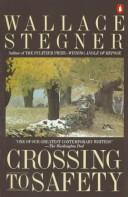
Start with Crossing to Safety. It was the last novel he published, it is about two married couples across roughly forty years of friendship, and almost nothing happens in it that would look like a plot in summary. That is exactly why it works as an entry point: it is the purest sample of what he is good at, which is patience, and it carries none of the baggage of the more famous book.
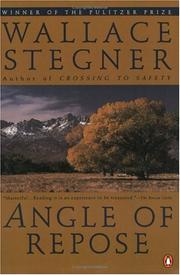
The obvious alternative is Angle of repose, the Pulitzer winner. Read it second. It is probably the greater novel, and it comes with a complication worth knowing about in advance rather than discovering afterwards.
The two major novels
Crossing to Safety first. Then Angle of repose, in which a wheelchair-bound historian reconstructs the marriage of his pioneer grandparents in the mining West, cutting between his own present and their letters. The book is built out of the papers of a real nineteenth-century writer and illustrator, Mary Hallock Foote, and the extent to which her words were used and credited has been disputed for decades — by scholars and by her descendants. It does not diminish the novel, but readers generally prefer to meet that fact upfront rather than have it arrive as a surprise.
Those two books are the case for Stegner. If neither holds you, the rest will not.
The autobiographical pair
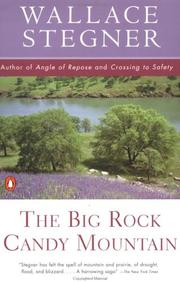
The Big Rock Candy Mountain is the early long novel — a family dragged around the West by a father chasing the next scheme, closely modelled on his own childhood. It is his most emotionally direct book and the least controlled.
Recapitulation returns to the same character decades later, coming back to Salt Lake City for a funeral and re-encountering everything he left. Read them in that order and with a gap between them; the second is written to be a much later meeting, and reading them back to back flattens the effect.
The Joe Allston pair
All the little live things and The spectator bird share a narrator — a retired literary agent, elderly, funny, and steadily more aware of what he has failed to understand. Read All the little live things first; The spectator bird, which won the National Book Award, assumes him. The pair is the most underrated part of the fiction and the best demonstration that Stegner could be sharp as well as elegiac.
The nonfiction, which is not optional
Stegner mattered as much as an essayist on the American West as he did as a novelist, and skipping this material gives you an incomplete writer.
Beyond the Hundredth Meridian is the important one: a biography of John Wesley Powell and, through him, an argument that the arid West was settled on a lie about how much water it had. It is one of the founding documents of western environmental thought, and it reads as prophecy now rather than as history.
Wolf willow is the strangest and possibly the finest thing in this list — a book about a Saskatchewan childhood that mixes memoir, frontier history and short fiction without apology for switching between them. It should not work. It does.
The sound of mountain water and Where the bluebird sings to the lemonade springs are essay collections, the first containing his most quoted piece of writing on wilderness, the second collecting late reflections on the West as a region and as an idea. Either is a good place to spend an evening; neither needs to be read straight through.
Where to stop
Two novels and one work of nonfiction is a complete and honest Stegner: Crossing to Safety, Angle of repose, and Beyond the Hundredth Meridian. Add Wolf willow if the western material is what drew you, and the Allston pair if the domestic material was.
The one thing not to do is start with The Big Rock Candy Mountain because it comes first chronologically. It is the work of a writer who had not yet learned restraint, and restraint is the whole point of him. The full reading path has the stage-by-stage notes, and you can find more author guides on Discover.