Max Hastings Reading Order: Where to Start
Hastings has written more than twenty-five books of military history, which makes publication order useless as a guide — several of the early ones are minor and several of the late ones are his best. This order goes by scope instead: the single-volume history of the whole Second World War first, then the campaign books that fill in its major fronts, then the wars either side of it, and finally the specialist studies that only pay off once you know the shape of the war they sit inside. No completeness is attempted here; the aim is the acknowledged best of a very large catalogue.
Start Here: The Whole War in One Book
IntermediateAcquire the frame — every theatre of the Second World War, weighted by casualties rather than by anglophone familiarity.
▸ Study plan for this stage
Pace: 4 to 5 weeks. All Hell Let Loose is 768 pages and there is no shortcut through it — 25 pages a day gets you there in a month. It is organised chronologically but reads as a mosaic of testimony rather than a campaign narrative, so it survives being put down and picked up better than most military his
- This is deliberately the first book despite being written late in Hastings's career, because every other title in this path becomes more useful once you hold this frame
- The organising decision is to weight the war by where the dying actually happened rather than by anglophone familiarity: the Eastern Front and China get proportionate space, and D-Day gets far less than a British or American reader expects
- Roughly two-thirds of the war's dead were civilians, and Hastings builds the book around that fact — famine in Bengal, the siege of Leningrad, occupied Poland, the Chinese interior — rather than treating civilians as background to operations
- The method throughout is quoted testimony from diaries, letters and interviews, set against a spare operational spine. He is not narrating battles so much as sampling the experience of an enormous number of people
- His governing judgement, stated openly, is that the Soviet Union did most of the work of destroying the German army; every Western campaign book later in this path sits inside that proportion
- Hastings is a former newspaper editor and war correspondent, not an academic, and it shows in the prose and in the willingness to deliver a verdict on people by name
- Those verdicts are the recurring feature of his whole body of work: he is consistently sceptical of generals, consistently respectful of soldiers and civilians, and he does not hedge
- Read this and you can place any of the later books instantly — Overlord is one campaign inside it, Bomber Command one instrument, The Secret War one supporting activity
- How does the space Hastings gives each theatre compare with the version of the war you arrived with? Name the two fronts you knew least about.
- What is his argument about the relative contributions of the Soviet Union, the United States and Britain? Be able to state it in the proportions he uses.
- Why does he insist on the civilian experience being the main story rather than a humanitarian addendum? What does the book lose by that choice, and what does it gain?
- Pick three of his verdicts on named commanders. What evidence is each resting on, and would a different selection of testimony support a different verdict?
- Where does Hastings admit uncertainty? A book this confident makes its occasional hesitations worth noticing.
- Keep a running tally of theatres as you read — Eastern Front, Mediterranean, Pacific, China-Burma-India, the Atlantic, the strategic air war — with a rough note of scale. That tally is the frame the whole path depends on.
- After each chapter, write down one piece of testimony that changed something you thought. The book works by accumulation and the accumulation is easy to lose without notes.
- Look up total military and civilian deaths by country and set them beside the number of pages Hastings gives each. The correlation is his editorial policy made visible.
- Write one paragraph on Hastings's view of generalship in general. You will test it against four more books and it is worth having stated early.
Next up: With the whole war in proportion, the campaign books can be read as deep sections through it rather than as the war itself.

His single-volume history of the Second World War, deliberately built around civilians and the Eastern Front rather than around D-Day. It is the book every other Hastings title becomes more useful after, so read it first even though it came late in his career.
The Western Campaigns
IntermediateWork through the European fighting in detail, from the outbreak of one war to the destruction of Germany in the next.
▸ Study plan for this stage
Pace: 8 weeks. Catastrophe 1914 is 704 pages and needs three; Overlord (431) and Armageddon (664) should be read back to back over the remaining five, because Armageddon begins almost exactly where Overlord stops and Hastings intends the pairing. Around 25 to 30 pages a day throughout. Take Catastrophe fi
- Catastrophe 1914 covers how Europe went to war and what the first five months cost, and it is placed here rather than at the front of the path because it is written in the mature style All Hell Let Loose established and assumes a reader already fluent in campaign narrative
- Its argument on war guilt is not neutral: Hastings holds Germany and Austria-Hungary principally responsible and argues explicitly against the fashionable view that all the powers sleepwalked in equally. Know that you are reading one side of a live historical dispute
- It also insists that 1914 was not trench warfare — it was mobile, enormous and appallingly costly, with the French army suffering losses in a few weeks that dwarf anything later in the war's popular memory
- Overlord is the Normandy campaign and the book that made his name. Its notorious claim is that German units outfought Allied ones man for man, and that Allied victory came from materiel, air power and numbers rather than from tactical superiority
- That argument caused real anger among British and American veterans when it appeared, and it remains the most contested thing he has written; read it knowing that the counter-case exists and is made by serious historians
- Armageddon covers the last eight months of the war in the west and in Germany — the winter fighting, the Rhine, the collapse, the fate of German civilians and of the millions moving west ahead of the Red Army
- Read as a pair, Overlord and Armageddon make one continuous argument about the Anglo-American armies: competent, immensely well-supplied, casualty-averse for reasons Hastings takes seriously, and never as good as the enemy at fighting
- Nothing in this stage displaces the proportion established in stage one — the Western campaigns were the smaller half of the German war, and Hastings keeps saying so inside books devoted to them
- State Hastings's position on responsibility for 1914 and the strongest objection to it. Which evidence would have to change for him to be wrong?
- What did the first five months of 1914 cost, and why does that period get squeezed out of the popular memory of the First World War?
- Reconstruct the Overlord argument precisely. What is he claiming about German versus Allied units, on what evidence, and what is he NOT claiming?
- Casualty-aversion in the British and American armies: Hastings treats it as a rational political constraint rather than as cowardice. Does the book let that explanation off too lightly?
- Read the end of Overlord and the start of Armageddon together. What has changed for the Allied armies, and what has not changed at all?
- What happened to German civilians in the last eight months, and how does Hastings handle the moral weight of it without excusing the regime?
- Before Overlord, write down what you believe about the quality of Allied and German troops in Normandy. Compare it after. The book is designed to move you and it is worth knowing how far it did.
- Track the ratio of Allied to German casualties in the engagements he describes, and set it beside his tally of tanks, aircraft and shells. His whole case sits in that comparison.
- Read one chapter of Catastrophe 1914 for its testimony alone, ignoring the operations. The French and Austrian material is the least familiar and the most affecting.
- For Armageddon, mark every passage about refugees and displaced civilians. It is the material that connects the campaign books back to All Hell Let Loose.
- Find a review of Overlord written by a veteran or a critic who disagreed with it. Hearing the objection in its own voice is part of reading this book properly.
Next up: The European campaigns done, Hastings takes the same method to Asia, where he is on less familiar ground and less encumbered by British memory.

How Europe went to war in 1914 and what the first five months cost. Read it here rather than chronologically first, because it is written in the mature style All Hell Let Loose established and assumes a reader already comfortable with campaign narrative.
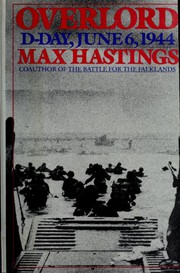
The Normandy campaign, and the book that made his name — notorious for arguing that German units outfought Allied ones man for man. Essential, and still the most controversial thing he has written.
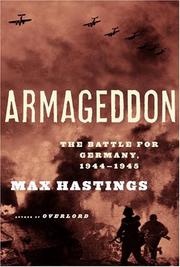
The last eight months in Germany, picking up almost exactly where Overlord ends. The pairing is deliberate on his part and the two should be read back to back.
The Other Wars
IntermediateFollow Hastings out of Europe into the three Asian wars he has covered at book length.
▸ Study plan for this stage
Pace: 10 weeks — this is the longest stage in the path and two of the three books are very long. Nemesis wants three weeks, The Korean War (422 pages) two, and Vietnam three to four; it is the biggest book here and the densest in testimony. Read them in this order, which is chronological and also the orde
- ⚠️ Nemesis is published in the United States as Retribution. Same book, and this path's most likely duplicate purchase after All Hell Let Loose. Check before ordering
- Nemesis covers the Pacific and Asian war in 1944 and 1945, and its distinctive move is giving real space to the Chinese and Burmese fronts that most Anglo-American accounts pass over in a paragraph
- It is also where Hastings handles the atomic bombings, and he does so as a historian weighing alternatives — invasion, blockade, continued conventional bombing — rather than as a moralist arriving with the verdict written
- The Korean War is an early book and reporting-driven in a way the later ones are not: Hastings interviewed participants on all sides while many were still alive, and the book's value is as much testimony as analysis
- It is the natural sequel to Nemesis — the same region five years later, several of the same commanders, and a war that most readers know only as a gap between two larger ones
- Vietnam: An Epic Tragedy 1945-1975 covers thirty years, not just the American decade, and draws on Vietnamese testimony from both North and South alongside American material
- That symmetry is what makes it his best late work: the North Vietnamese leadership is treated as capable of the same callousness toward its own people that he attributes to Western commanders, and the South Vietnamese are given a hearing they usually do not get
- Read last of the campaign books, Vietnam is where his lifelong scepticism about generals and governments is most fully earned, because by then you have watched him apply it to his own country's wars first
- What does Nemesis show about the Chinese and Burmese fronts that a standard Pacific-war account leaves out, and why have they been left out?
- Lay out the alternatives to the atomic bombings as Hastings presents them, with his estimate of the cost of each. Where does he come down, and how firmly?
- The Korean War draws heavily on interviews. What can that method reach that documents cannot, and what does it get wrong?
- In Vietnam, what does including the years from 1945 change about the shape of the story compared with an account beginning in the 1960s?
- Hastings is unsparing about both Hanoi and Washington. Reconstruct his charge against each, and decide whether the symmetry is earned or imposed.
- Across all three books, what is his consistent view of what commanders owe the people they command? Test it against a case where you think he is unfair.
- Sketch a timeline of Vietnam from 1945 to 1975 before reading, with the French war marked separately. The book assumes it and the American portion makes far more sense on top of it.
- For each of the three wars, write one paragraph on how it ended and who decided it should. Hastings is interested in the endings of wars more than most military historians.
- Pick one battle in Nemesis and one in Korea and compare how he uses testimony in a 1980s book and a 2000s one. His method changed and the two books show it plainly.
- Note every Vietnamese voice quoted in Vietnam and which side it belongs to. The balance is a deliberate structural claim and counting it makes the claim explicit.
Next up: With the campaigns behind you, the narrower books can do what they are for — argue with a piece of received wisdom you now know well enough to have an opinion about.

The Pacific and Asian war in 1944 and 1945, including the Chinese and Burmese fronts that most Anglo-American accounts skip. Published in the United States as Retribution, so check before you buy it twice.
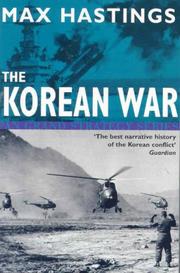
An early book but a durable one, and the natural sequel to Nemesis — the same region five years on, with many of the same commanders. Reporting-driven in a way the later books are not.

Thirty years of war told from Vietnamese as well as American testimony, and probably his best late work. Read it last of the campaign books: it is the one where his scepticism about generals is most fully earned.
The Specialist Studies
IntermediateRead the narrower books, each of which argues with a piece of received wisdom you now know well enough to have an opinion about.
▸ Study plan for this stage
Pace: 10 weeks. Bomber Command (400 pages) two weeks, Chastise (464) two, The Secret War (640) three, Abyss (576) three. Read Bomber Command and Chastise consecutively — the second is a short pointed companion to the first — then the two later books in either order, though Abyss makes the better finish. A
- Every book in this stage is an argument with something readers already believe, which is why they come last: you now know enough to disagree
- Bomber Command is his history of the strategic air offensive against Germany, and it is the book that first got him accused of disloyalty to British veterans — it questions whether the campaign was worth what it cost in aircrew lives and in German civilian lives
- It only becomes fully persuasive after All Hell Let Loose, because the case is an opportunity-cost case: the argument depends on knowing what else those aircraft, crews and industrial resources could have been doing
- Hastings is careful to separate the aircrew from the policy. His admiration for the men flying is unqualified; his scepticism is aimed at the strategy and at Arthur Harris
- Chastise takes the Dambusters raid — the most legendary single British operation of the war — and treats it as a remarkable feat of engineering and a poor use of highly trained aircrew, with a hard look at who died on the ground
- The Secret War covers intelligence, codebreaking and espionage across the whole war, with a running argument that most of it mattered far less than the postwar memoir literature claims, and that even Ultra changed fewer outcomes than is usually asserted
- Placed after the campaign books, that claim is testable: you have read the campaigns and can ask what intelligence actually altered in each
- Abyss is the Cuban missile crisis over thirteen days in 1962, drawing on Soviet and Cuban material as well as American — the same method applied to a war that did not happen, and the right note to finish on for a historian this preoccupied with how wars begin
- State the case against the strategic bombing campaign as Hastings makes it, then state the best case for it. Where exactly do they disagree — on effectiveness, on morality, or on both?
- How does he separate his judgement of Bomber Command's aircrew from his judgement of its leadership, and is that separation coherent?
- In Chastise, what did the dams raid achieve, what did it cost, and who was killed downstream? Why has the legend held so firmly against those facts?
- The Secret War argues that intelligence mattered less than claimed. Pick a campaign from earlier in this path and test the claim against it.
- What did Soviet and Cuban sources add to the Cuban missile crisis that the American-only accounts missed?
- Abyss is about a war that did not happen; Catastrophe 1914 is about one that did. Read together, what does Hastings think determines which way it goes?
- Before Bomber Command, write down what you believe the bombing campaign accomplished. Then list, after reading, the three specific claims that moved you and the one that did not.
- For Chastise, find a popular account or film treatment of the Dambusters raid and note every element Hastings contradicts. The gap between the two is the book's subject.
- While reading The Secret War, keep a list of moments where intelligence demonstrably changed an outcome. If the list is short, that is his argument confirmed; if you can lengthen it, you have a real objection.
- Map the thirteen days of Abyss as a decision timeline for each of the three governments. Seeing the three side by side is what the multi-archive research is for.
- Finally, write a page on where you now disagree with Hastings and why. Twenty-eight hundred pages in, a reader who agrees with everything has not been reading him properly — his own method is built on refusing to take a received account on trust.
Next up: That is the acknowledged best of a catalogue of more than twenty-five books, and from here you can pick up any military history and tell within a chapter whether the author has weighed the cost or only narrated the operation.
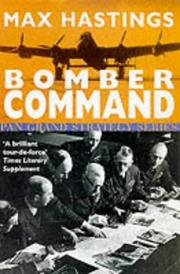
The strategic air offensive against Germany, and the book that first got him accused of disloyalty to British veterans. Only fully persuasive once All Hell Let Loose has shown you what else the same resources might have done.

The Dambusters raid, treated as a feat of engineering and a poor use of aircrew rather than as a legend. A short, pointed companion to Bomber Command.

Intelligence, codebreaking and espionage across the whole of the Second World War, with a running argument that most of it mattered far less than the memoirs claim. Read it after the campaign books so you can test the claim yourself.
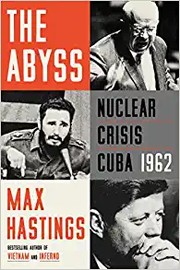
Thirteen days in 1962, drawing on Soviet and Cuban material as well as American. The right book to finish on: the same method applied to a war that did not happen.
Discussion
Keep reading
Paths that share books, cover the same subject, or open a related topic.