The history of espionage: the best books on spies and secrets
This curriculum traces the full arc of espionage history — from ancient deception and early statecraft through the world wars, the Cold War's shadow conflicts, and into the modern intelligence era. Each stage builds on the last: you first absorb the grand sweep and key vocabulary, then zoom into pivotal eras and operations, and finally grapple with the deeper analytical and moral dimensions that define intelligence as a force in world history.
Foundations: The Big Picture
BeginnerGain a broad, accessible overview of how spycraft developed across centuries — key figures, turning points, and the essential vocabulary of intelligence work.
▸ Study plan for this stage
Pace: 4–5 weeks, ~40–50 pages/day. "The Spy Who Couldn't Spell" (~300 pages) in weeks 1–2, then "Secret History of the World" (~650 pages) in weeks 3–5, with 2–3 days for review and synthesis at the end.
- How modern espionage evolved from Cold War tradecraft to digital-age intelligence gathering, as illustrated through the Robert Hanssen case
- The role of human psychology, tradecraft failures, and counterintelligence in real spy operations
- Major historical turning points in intelligence work: from ancient times through medieval networks to modern surveillance and code-breaking
- The intersection of secrecy, power, and institutional oversight in shaping how nations conduct intelligence
- Essential espionage vocabulary: moles, dead drops, cutouts, compartmentalization, and tradecraft
- How technological and social changes have transformed spycraft across different historical eras
- The tension between individual agency and systemic vulnerabilities in intelligence organizations
- What were the key tradecraft mistakes Robert Hanssen made, and how did they eventually lead to his capture?
- How did the FBI's organizational culture and counterintelligence procedures fail to detect Hanssen for so long?
- What major historical periods and turning points does Jonathan Black identify as crucial to the development of espionage and secret intelligence?
- How have the methods, tools, and vulnerabilities of spycraft changed from ancient times to the modern era?
- What role does human psychology—greed, ideology, ego—play in both the commission and detection of espionage?
- How do the lessons from Hanssen's case illustrate broader principles of intelligence work discussed in the historical overview?
- Create a detailed timeline of Robert Hanssen's espionage career (recruitment, dead drops, communication methods, detection) and annotate it with the specific tradecraft errors he made at each stage.
- Build a 'tradecraft glossary' with 15–20 terms from both books (e.g., mole, cutout, dead drop, compartmentalization) with definitions and real examples from Hanssen's case or historical examples.
- Write a 2–3 page comparative analysis: identify one historical espionage case from 'Secret History of the World' and compare its methods, risks, and detection to the Hanssen case.
- Map out the organizational failures in the FBI's counterintelligence division that allowed Hanssen to operate undetected; cross-reference these with any historical institutional vulnerabilities Black discusses.
- Create a visual diagram showing how Hanssen's spy network operated (his handlers, communication channels, dead drops, payment methods) and label each element with the tradecraft principle it represents.
- Write a reflective 1–2 page essay: 'What makes a successful spy?' using evidence from both Hanssen's failures and the historical figures/cases discussed in Black's book.
Next up: This stage establishes the vocabulary, historical context, and real-world case study foundation needed to dive deeper into specific espionage tradecraft, intelligence agency operations, and the ethical/legal frameworks that govern modern spycraft in the next stage.

A gripping, accessible true-spy story that introduces core concepts — tradecraft, counterintelligence, and FBI investigation — through a single compelling case, easing beginners into the world of real espionage.

Provides broad historical context for hidden knowledge and secret societies across civilizations, giving the reader a sense of how secrecy and intelligence have been woven into human history from the earliest times.
The World Wars: Espionage Comes of Age
BeginnerUnderstand how the two World Wars transformed spycraft from amateur adventure into organized, state-sponsored intelligence — including codebreaking, double agents, and deception operations.
▸ Study plan for this stage
Pace: 8–10 weeks, ~40–50 pages/day. Allocate roughly 3 weeks to "The Codebreakers" (dense, technical material), 3 weeks to "Double Cross" (narrative-driven), and 2–3 weeks to "Agent Zigzag" (shorter, character-focused). Build in review weeks between books.
- Mechanization of codebreaking: how Enigma and other cipher machines forced intelligence agencies to industrialize cryptanalysis (Kahn's core thesis)
- The Enigma machine and its vulnerabilities: rotor mechanics, the Polish breakthrough, and the British Bombe machine that cracked it
- Double agents as force multipliers: how the XX Committee weaponized turned German spies to feed disinformation and shape Nazi strategy
- Deception operations at scale: Operation Fortitude and other D-Day deceptions that relied on double agents and false intelligence networks
- Institutional transformation: how amateur spycraft evolved into professional, state-sponsored intelligence bureaucracies (MI5, MI6, Abwehr)
- The human element in technical espionage: how individual agents (like Zigzag) operated within larger systems of codebreaking and deception
- Counterintelligence as offensive weapon: turning enemy agents rather than simply catching them, and using them to manipulate enemy decision-making
- What were the key technical vulnerabilities of the Enigma machine, and how did the Bombe machine exploit them to break German codes at scale?
- How did the XX Committee identify, turn, and manage German double agents, and what was their strategic objective in doing so?
- What was Operation Fortitude, and how did double agents and false intelligence networks contribute to its success in deceiving Nazi Germany about the D-Day invasion?
- How did Eddie Chapman (Agent Zigzag) operate as a double agent, and what does his story reveal about the risks and rewards of human intelligence in wartime?
- How did espionage and intelligence operations differ between WWI and WWII, and what organizational changes enabled the shift?
- What role did codebreaking play in shaping military strategy during WWII, and how did it interact with human intelligence operations?
- Create a timeline mapping the evolution of codebreaking from Kahn's pre-Enigma examples through the Bombe machine's deployment; annotate key breakthroughs and their military impact.
- Build a flowchart of the XX Committee's double-agent network from 'Double Cross,' showing how each turned agent fed into Operation Fortitude and what false information they conveyed.
- Write a 500-word comparative analysis: how did Eddie Chapman's individual motivations and methods in 'Agent Zigzag' differ from the systematic, bureaucratic approach described in 'Double Cross'?
- Decode a simple substitution cipher or rotor-based cipher by hand (using online tools or historical examples), then research how the Bombe machine automated this process—reflect on the leap from manual to mechanical cryptanalysis.
- Create a 'dossier' on one double agent from 'Double Cross' (e.g., Juan Pujol/Garbo, Dusko Popov) documenting their recruitment, handlers, cover story, and intelligence value; compare it to Chapman's profile.
- Design a hypothetical deception operation: choose a WWII military scenario and outline how you would use double agents and false codebreaking intelligence to mislead an adversary, grounding your plan in tactics from the three books.
Next up: This stage establishes how organized, state-sponsored intelligence—powered by codebreaking, double agents, and coordinated deception—became decisive in modern warfare; the next stage will explore how these Cold War successors adapted these tradecraft innovations to the ideological and technological challenges of the nuclear age.
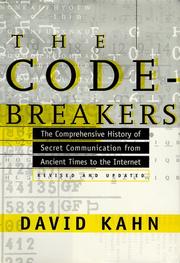
The definitive history of cryptology from ancient Egypt to the mid-20th century; reading this first gives you the indispensable technical and historical backbone of signals intelligence before tackling specific wartime operations.
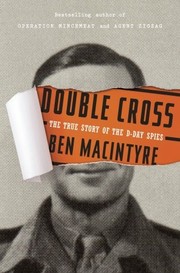
Macintyre's masterful account of Britain's XX System — turning every Nazi spy into a double agent — shows how WWII deception operations worked in practice and why they were war-winning; his clear prose is perfect for this stage.
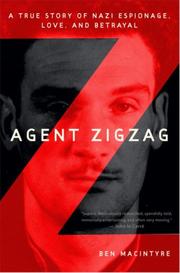
A single extraordinary double-agent biography that deepens the WWII picture with human drama, reinforcing the tradecraft concepts from Double Cross through one unforgettable character.
The Cold War: The Golden Age of Espionage
IntermediateExplore the ideological spy wars between the CIA and KGB — moles, defectors, covert operations, and the intelligence failures and triumphs that defined the superpower struggle.
▸ Study plan for this stage
Pace: 8–10 weeks, ~40–50 pages/day (approximately 2–3 weeks per book, accounting for dense Cold War history and espionage tradecraft)
- CIA vs. KGB structural differences: organizational culture, recruitment strategies, and operational philosophies during the Cold War
- The mole problem: how deep-cover Soviet agents infiltrated Western intelligence and the counterintelligence challenges they posed
- Defection as intelligence strategy: motivations, handling, and the intelligence value of high-level Soviet defectors
- Covert operations tradecraft: dead drops, surveillance, asset management, and the practical mechanics of espionage in divided Europe
- Ideological warfare and human motivation: how ideology, money, and personal grievance drove recruitment and betrayal
- Intelligence failures and successes: case studies of operations that worked and catastrophic breaches (e.g., mole hunts, blown networks)
- The human cost of espionage: the psychological toll on operatives, defectors, and their families caught between superpowers
- Cold War geopolitics reflected through intelligence: how espionage shaped superpower relations, arms control, and proxy conflicts
- What were the key structural and cultural differences between CIA and KGB operations, and how did these differences affect their effectiveness during the Cold War?
- Who were the major moles discussed in these books, what damage did they cause, and what made them difficult to identify?
- What motivated high-level Soviet defectors to betray their country, and what intelligence value did they provide to the West?
- Describe the practical tradecraft and operational security measures used in Cold War espionage, using specific examples from the books.
- How did intelligence successes and failures shape Cold War tensions and superpower decision-making?
- What personal and psychological factors drove individuals to become spies, moles, or defectors, and how did their personal circumstances influence their actions?
- Create a comparative timeline of major CIA and KGB operations across the three books, noting outcomes and intelligence impact.
- Write a detailed profile of 2–3 key moles or defectors (e.g., from Hood's 'Mole' and Macintyre's 'The Spy and the Traitor'), analyzing their motivations, methods, and the counterintelligence response.
- Map out a specific covert operation from one of the books (recruitment, handling, exfiltration), identifying tradecraft elements and potential vulnerabilities.
- Debate: Using evidence from Bearden's 'The Main Enemy,' argue whether CIA or KGB was more effective at Cold War espionage, and what factors determined success.
- Analyze a major intelligence failure or success from the books—what went wrong or right, and what systemic lessons did intelligence agencies learn?
- Write a fictional intelligence assessment memo (1–2 pages) as if you were a CIA or KGB analyst, using historical facts from the books to brief your superiors on a specific threat or opportunity.
Next up: This stage establishes the operational and human realities of Cold War espionage, preparing you to examine how these intelligence wars evolved into modern asymmetric threats, cyber espionage, and the post-Cold War intelligence challenges that followed.
A firsthand CIA insider account of the final decade of the Cold War spy war against the KGB, providing an authoritative operational view that anchors the entire era before you read more analytical works.

A precise, insider account of running a CIA asset inside Soviet intelligence, introducing the reader to the painstaking craft of human intelligence (HUMINT) and the moral weight of running agents.
The story of KGB colonel Oleg Gordievsky — the most important Western spy of the Cold War — synthesizes everything learned so far: recruitment, tradecraft, betrayal, and exfiltration in one definitive narrative.
Deeper Cuts: Covert Action, Failures & Controversies
IntermediateExamine the covert action side of intelligence — regime change, assassination plots, and catastrophic failures — and understand how secret operations have reshaped nations and sparked controversy.
▸ Study plan for this stage
Pace: 8–10 weeks, ~40–50 pages/day (accounting for dense historical narrative and case studies)
- The CIA's institutional culture of covert action and how it evolved from Cold War ideology into systematic intervention
- Specific regime-change operations (Iran 1953, Guatemala 1954, Cuba, Chile) and their long-term geopolitical consequences
- Assassination programs and targeted killing as intelligence policy, including the Church Committee revelations and legal/ethical frameworks
- Intelligence failures and blowback: how covert operations created unintended enemies and destabilized regions (Bay of Pigs, Afghanistan, Iran)
- The tension between plausible deniability and accountability in covert action—who knew what, and why did oversight fail
- The personal cost of espionage work: moral compromise, burnout, and the psychological toll on operatives in the field
- How classified operations remain hidden from public scrutiny and how whistleblowers/memoirs eventually expose them
- The relationship between intelligence gathering and covert action—how the same agencies blur the line between knowing and doing
- What were the major CIA covert operations during the Cold War, and what were their stated objectives versus their actual outcomes?
- How did the Bay of Pigs invasion exemplify both the ambitions and failures of CIA covert action, and what did it reveal about institutional dysfunction?
- What role did assassination plots play in U.S. intelligence policy, and how did the Church Committee investigations change the legal and ethical landscape?
- How did the CIA's intervention in Iran (1953) and Chile (1973) reshape those nations, and what long-term consequences did those operations have?
- What does 'blowback' mean in the context of covert operations, and what specific examples from these books illustrate how covert actions created new threats?
- How do operatives like Robert Baer justify or rationalize their involvement in morally ambiguous covert actions, and what personal costs did they bear?
- Create a timeline of 5–6 major CIA covert operations (Iran, Guatemala, Bay of Pigs, Chile, Afghanistan) with columns for: stated goal, actual methods, official outcome, and documented blowback. Use both books as sources.
- Write a 2–3 page analytical memo comparing two failed operations (e.g., Bay of Pigs vs. the Afghanistan Soviet invasion support) to identify common institutional failures and decision-making errors.
- Select one assassination program or targeted killing operation discussed in the books and research the Church Committee testimony or declassified documents about it; write a brief summary of what was authorized, what was denied, and what the evidence shows.
- Interview or write a reflective dialogue between two fictional characters: a CIA official defending a covert operation and a critic (journalist, historian, or affected citizen) questioning its legality and morality. Ground it in specific operations from the books.
- Map the geopolitical consequences of one major operation (e.g., CIA support for the Mujahideen in Afghanistan) across 20–30 years—how did it reshape regional alliances, create new enemies, and influence later U.S. policy?
- Compile a 'lessons learned' document: what institutional reforms, oversight mechanisms, or policy changes does Weiner argue should have prevented the failures he documents? Compare with Baer's implicit recommendations based on his field experience.
Next up: This stage exposes the covert machinery of Cold War intelligence and its catastrophic human and geopolitical costs, preparing you to examine how modern intelligence agencies have adapted their methods, legal authorities, and oversight in response to post-9/11 demands and technological change.

A Pulitzer Prize-winning critical history of the CIA from its founding to the War on Terror; it provides essential balance by documenting systemic failures alongside successes, deepening your analytical lens.
A veteran CIA case officer's memoir of covert operations in the Middle East, grounding abstract policy history in the gritty reality of field intelligence and showing how covert action plays out on the ground.
Advanced Analysis: Intelligence, Power & the Modern Era
ExpertThink critically and analytically about intelligence as a discipline — its theory, its limits, its ethics, and its evolution into the digital age — synthesizing everything learned into a coherent worldview.
▸ Study plan for this stage
Pace: 8–10 weeks, ~25–30 pages/day (with 2–3 reflection days per week)
- Intelligence as a strategic multiplier: how information advantage shapes military and political outcomes across historical periods
- The theory-practice gap: why intelligence assessments often fail despite sound methodology, and the role of human judgment and institutional bias
- Ethical dilemmas in intelligence work: balancing national security imperatives against moral constraints and democratic accountability
- The evolution from human intelligence (HUMINT) and signals intelligence (SIGINT) to the digital age: technological disruption and new vulnerabilities
- Intelligence failure analysis: Pearl Harbor, the Cuban Missile Crisis, Iraq WMDs—patterns of miscalculation and institutional learning
- The intelligence-policy nexus: how policymakers use, misuse, or ignore intelligence; the politicization of analysis
- Counterintelligence and deception: offensive and defensive strategies in the intelligence arena
- The future of intelligence: adapting to asymmetric threats, cyber warfare, and the democratization of information
- How does Keegan define the relationship between intelligence and military success, and what historical examples does he use to illustrate intelligence's limits?
- What are the key differences between how Crumpton approaches intelligence as a practitioner versus how Keegan analyzes it as a historian, and what does each perspective reveal?
- Identify and explain at least three major intelligence failures discussed in these books. What systemic or human factors contributed to each?
- How have digital technology and the internet fundamentally changed the nature of intelligence collection, analysis, and counterintelligence?
- What ethical tensions does Crumpton describe in his own operational experience, and how does he reconcile them with national security objectives?
- How should policymakers and the public evaluate intelligence assessments, given the inherent uncertainties and institutional pressures both books document?
- Comparative case study: Select one historical intelligence operation discussed in both books (or in one book in depth). Write a 2–3 page analysis examining what intelligence was available, what was missed, and why—then propose how modern digital tools might have changed the outcome.
- Intelligence assessment simulation: Using a complex geopolitical scenario (real or hypothetical), draft a 1–2 page intelligence brief as if you were an analyst. Then critique your own work: What assumptions did you make? Where could bias creep in? What would you need to verify?
- Ethical dilemma workshop: Select one controversial intelligence operation from Crumpton's memoir or Keegan's historical cases. Write a position paper (2–3 pages) arguing both for and against the operation's justification, then state your own reasoned conclusion.
- Timeline and synthesis: Create a visual timeline (poster, digital graphic, or detailed outline) tracing the evolution of intelligence methods and challenges from WWII through the digital age, using examples from both books. Annotate with key turning points and lessons learned.
- Debate preparation: Prepare arguments for a structured debate on one of these propositions: (a) 'Intelligence agencies should be subject to stricter democratic oversight, even if it reduces operational effectiveness,' or (b) 'The digital age has made traditional intelligence tradecraft obsolete.' Ground your arguments in specific examples from the books.
- Reflective essay: Write a 3–4 page personal reflection on how reading these two books has changed your understanding of intelligence work—its necessity, its dangers, and its role in a democratic society. Cite at least three specific passages or ideas from each book.
Next up: This stage synthesizes the historical, operational, and ethical dimensions of intelligence into a critical framework, preparing you to evaluate contemporary intelligence challenges—whether in policy analysis, national security studies, or informed citizenship—with nuance and intellectual rigor.
Keegan's rigorous historical analysis asks the hard question of whether intelligence actually changes the outcome of wars, forcing the reader to think critically rather than romantically about everything covered in earlier stages.
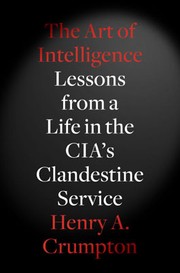
A senior CIA operations officer reflects on the post-Cold War and post-9/11 transformation of American intelligence, connecting historical lessons to modern counterterrorism and the digital revolution in spycraft.
Discussion
Keep reading
Paths that share books, cover the same subject, or open a related topic.