Craig Thompson Reading Order: Where to Start With His Graphic Memoirs
Craig Thompson has published six books in twenty-five years, so his shelf can be read in a month — the question is what order, and what to read afterwards. Blankets is the famous one and is not the best place to start; the small early fable does more to prepare you for it than any summary can. This path reads all six in publication order, then places him among the graphic memoirists he is usually shelved beside, including the ones whose work makes the criticism of his most contested book easier to weigh.
The Early Work and the Breakthrough
BeginnerRead the first three books in order and see the visual vocabulary — the brushwork, the wordless pages, the way snow and water are drawn — assembled before it is asked to carry a memoir.
▸ Study plan for this stage
Pace: Two to three weeks. Good-bye, Chunky Rice (128 pp) in an evening, Blankets (587 pp) in two or three sittings - it is long but reads fast, since a large share of its pages are near-wordless - and Carnet de Voyage (224 pp) over a few days. Blankets is autobiography: it recounts an evangelical childhoo
- Thompson's brush line and how the weight of a stroke does the emotional work his dialogue avoids
- Wordless sequence as the primary tool: whole pages with no text at the points of highest feeling
- Snow and water as the recurring visual motif across all three books
- The memoir contract - Blankets reconstructs remembered dialogue and compresses years, and says so in how it is drawn rather than in a note
- The fable register of Chunky Rice, and how a short allegory teaches you to read his page layouts before a 600-page memoir asks you to
- The sketchbook as unedited work: Carnet de Voyage is drawn on the road and reproduced with its false starts intact
- What does Chunky Rice establish about how Thompson uses panel borders and page space that Blankets then relies on?
- Where does Blankets go wordless, and what is happening in the story each time?
- How does Thompson draw the difference between remembered and present-tense scenes?
- What does Carnet de Voyage show about his working method that neither finished book does?
- Which parts of Blankets are clearly reconstructed rather than recalled, and how can you tell from the drawing?
- Count the wordless pages in Blankets and plot where they fall against the story's emotional peaks
- Go through Carnet de Voyage marking every piece of Arabic lettering, geometric ornament and Moroccan architecture that reappears in Habibi
- Compare how Thompson draws snow in Blankets with how he draws water in Chunky Rice - the same brush solving two different problems
- Reread the church camp sequence after finishing and separate what is dialogue, what is narration and what is neither
Next up: Chunky Rice, Blankets and the sketchbook show the visual vocabulary being assembled and then asked to carry a memoir; the next stage is what happens when the same tools are turned on material that is not his own.
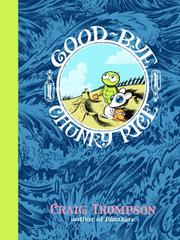
His first book, and a much better opening than Blankets: a short fable about a turtle leaving his best friend to go to sea. Under a hundred and thirty pages, and it teaches you to read his page layouts before you meet six hundred of them.
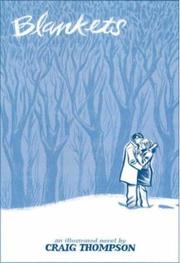
The memoir that made his name — an evangelical childhood in rural Wisconsin, a first love at church camp, and a slow separation from faith. Six hundred pages that read in an evening. Read it second, once Chunky Rice has established what his line does with quiet.
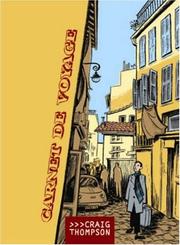
A sketchbook diary of the European and Moroccan book tour he took after Blankets, drawn on the road and reproduced as-is. Read it third, in sequence — it is where the research and the visual interest that became Habibi start showing up, and it is the most direct access to how he works.
The Big Books
IntermediateRead the three later books, including the most ambitious and the most criticised, and be able to state the objection to Habibi accurately.
▸ Study plan for this stage
Pace: Four to five weeks. Habibi (672 pp) is the slow one and deserves two to three weeks - the calligraphic pages ask to be looked at rather than read through. Space Dumplins (320 pp) is a children's book and reads in an afternoon. Ginseng Roots (448 pp) takes about a week. Habibi's story turns on slaver
- Arabic calligraphy as page architecture: letterforms structuring the panel grid rather than decorating it
- The shared Quranic and Biblical narrative material Habibi builds on, and how Thompson stages the same story twice
- The orientalism objection stated precisely - what it points at on the page, and what Thompson's stated intent was
- The register shift in Space Dumplins: full colour, digital-friendly line, a children's audience, deliberately slighter
- Ginseng Roots as documentary memoir - the ginseng farms of central Wisconsin, child labour, the trade route to Asia, his own hands and health
- The same Wisconsin drawn twenty years apart, in Blankets and in Ginseng Roots, by a very different draughtsman
- How do the calligraphic pages in Habibi function - what are they doing that a conventional panel could not?
- Which specific pages does the orientalism criticism point at, and can you state the objection without deciding whether it is right?
- What does Space Dumplins do with colour that none of the black-and-white books attempt?
- How does Ginseng Roots handle the family material differently from Blankets, and what has changed in his willingness to draw other people?
- Which of these three is closest in method to Carnet de Voyage, and why?
- Pick one full calligraphic page in Habibi and map how the letterforms are being used to lay out and sequence the panels
- Write one paragraph stating the orientalism objection to Habibi as strongly as you can, citing the specific pages it points at, and one paragraph stating the case for the book - without deciding between them
- Put the Wisconsin landscape pages of Blankets beside the farm pages of Ginseng Roots and list what changed in the line over twenty years
- Read Space Dumplins and identify the three or four page compositions that are recognisably the same devices as Blankets, working in colour
- In Ginseng Roots, track the ginseng root itself as an object through the book - farm, dealer, ship, pharmacy - and see how Thompson uses one physical thing to carry an economic argument
Next up: Having read all six Thompson books, the useful next move is to put Blankets next to the other memoirs it is always shelved beside, which is where its choices become visible as choices.

Seven years of work: a story of two escaped slaves in an invented Middle Eastern landscape, built around Arabic calligraphy, Quranic and Biblical narrative, and geometric ornament. It is the most beautiful object he has made and it drew serious criticism for orientalism — for staging a fantasy Middle East of harems, eunuchs and slave markets, drawn by an outsider. Read it, and read the criticism; both are part of the book's reception.

A full-colour children's science-fiction adventure about a girl searching for her father in a galaxy of space whales and garbage. A deliberate change of register after Habibi, and slighter than anything else here; read it as a palate cleanser.

His return to memoir, drawn over five years: the ginseng farms of central Wisconsin where he and his brother worked as children, the trade's route to Asia, and his own relationship with his family and his hands. The best thing he has done since Blankets and the natural place to finish.
The Memoirs Blankets Sits Beside
BeginnerPlace Thompson among the graphic memoirists who defined the form, and see three different solutions to the problem of drawing your own family.
▸ Study plan for this stage
Pace: Three to four weeks. Fun Home (235 pp) is short but the densest reading here - Bechdel's literary apparatus rewards slow work, so give it a week. Maus (295 pp for the first volume) in a few days; note that the catalogue holds volume one separately and the two parts are usually sold together as The C
- The memoirist's central problem: drawing family members who did not consent to be characters
- Bechdel's method - non-linear looping structure, literary annotation, deliberate unspontaneity - as the opposite pole from Thompson's fluidity
- Spiegelman's frame narrative: the book is about the interview as much as the events, and shows its own construction
- The animal metaphor in Maus and how Spiegelman complicates it rather than resting on it
- David B.'s emblematic imagery, where the illness is drawn as a literal creature
- Each book's total worldview - evangelical Christianity, a family secret, macrobiotics and occultism - and the child inside it
- Truth claims in graphic memoir: what each of the four authors does when they cannot remember
- How do Bechdel and Thompson each handle a parent they are still angry with, and which is more exposed?
- What does the frame narrative in Maus make possible that a straight retelling would not?
- How does Epileptic's drawing change when a seizure is on the page, and what is that change doing?
- Which of these four books is most controlled, which is most fluid, and what does each pay for it?
- Where do the three non-Thompson books admit uncertainty about their own memory, and does Blankets?
- Chart the timeline of Fun Home against the timeline of Blankets - Bechdel loops back over the same events repeatedly, Thompson runs largely forward - and count the returns
- Take one page where Spiegelman draws his father speaking in the present day and compare it with a page where Thompson draws his own parents; note who is allowed to be unsympathetic
- Count the pages of Epileptic that depict a seizure and describe how the drawing style shifts in each
- Write two paragraphs on the same childhood event from Blankets, first in Bechdel's annotated retrospective mode and then in David B.'s emblematic mode, to feel the difference in what each form can hold
Next up: These three define the memoir tradition Thompson works inside; the last stage goes wider, to books that push what a comic page can do formally, including the strongest available counterexample to Habibi.
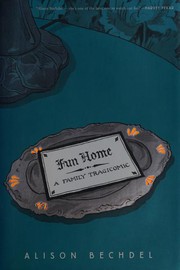
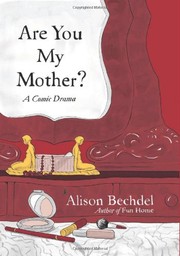
Bechdel's memoir of her father, published three years after Blankets and the other book people name when they name this genre. Read it first: it is the direct comparison, and it is far more formally controlled — annotated, literary, deliberately unspontaneous where Thompson is fluid.
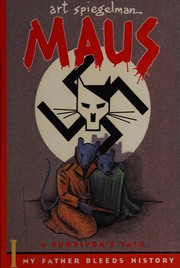
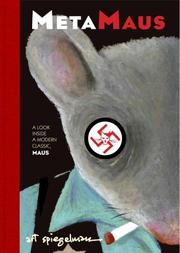
The book that made the form possible, and the one every memoir here is written after. The catalogue holds the first volume separately; the two are usually sold together as The Complete Maus. Read it second.

A French cartoonist on his brother's epilepsy and his family's search through every available belief system for a cure. The closest match to Blankets in subject — a childhood inside a total worldview — and completely different in drawing, which is why it is worth reading directly after.
Further Into the Form
IntermediateRead four books that extend graphic memoir and long-form comics in different directions, and understand what the medium can do that prose cannot.
▸ Study plan for this stage
Pace: Four to five weeks. The Complete Persepolis (352 pp) in under a week - only the collected edition resolves here; the individual volumes do not. Stitches (336 pp) in two evenings, since much of it is wordless. Jimmy Corrigan (380 pp) is the hard one and needs a week and a half; it is designed to be d
- Flat, unshaded black and white as an expressive choice, not a limitation (Satrapi)
- Silence as narration: Small tells the central sequences of Stitches with no words at all
- Diagrammatic layout in Jimmy Corrigan - the page as a designed object with its own reading path rather than a left-to-right sequence
- Style as characterisation in Asterios Polyp: a different drawing language per character's perception, converging when they do
- Colour used as argument rather than description across Persepolis, Jimmy Corrigan and Asterios Polyp
- What comics can do that prose cannot: simultaneity, the gutter, and the fixed page as a spatial unit
- Specificity versus invention - Persepolis's precisely located Iran against Habibi's invented Middle East
- What does Satrapi's refusal of shading buy her, and what does it cost?
- How does Small make a reader hear silence, and where does he break it?
- How do you actually read a Jimmy Corrigan page - what tells you where to go next?
- In Asterios Polyp, where do the two drawing styles merge, and what has happened in the story at that point?
- After Persepolis, what specifically do you notice about how Habibi renders place?
- Pick a two-page spread in Jimmy Corrigan and diagram the reading path with arrows, then check whether a second reader takes the same route
- Identify the drawing style assigned to each of the two leads in Asterios Polyp and find the exact page where the two languages fuse
- Read the hospital sequence in Stitches, write the dialogue that is not there, then reread it and note what your version destroyed
- Read Persepolis's Tehran chapters directly against Habibi's invented city and list, concretely, what is named in one and generic in the other
- Take one page from each of these four books and one from Blankets and rank them by how much information a single panel carries
Next up: This is the end of the path: six Thompson books read in order and seven of the works that surround them, which is enough context to argue about Habibi with the pages in front of you rather than the summaries.

Childhood in revolutionary Iran and exile in Europe, in a flat black-and-white style with no shading at all. The strongest possible counterexample to Thompson's lushness, and useful reading against Habibi's version of the Middle East. Only the collected edition resolves to a catalogue record; the individual volumes do not.
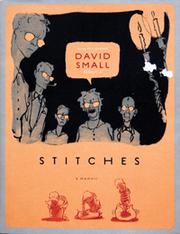
A childhood memoir of a surgery he was not told about, told almost silently — long stretches with no words at all. Read it for what Thompson does with wordless pages, done more severely.
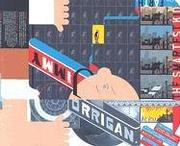
The most formally radical book on this list: diagrammatic, ruthlessly designed, and about a man meeting his father. Difficult, cold, and the standard against which ambition in the form is measured.
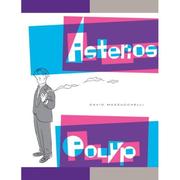
A single graphic novel by one of the great superhero draughtsmen, using a different drawing style for each character's perception. Read it last — it is the clearest demonstration on this path that in comics, the style is the argument.
Discussion
Keep reading
Paths that share books, cover the same subject, or open a related topic.