Alison Bechdel Reading Order: Where to Start and What Order to Read Her Books In
Bechdel's books divide cleanly into two bodies of work that are usually read in the wrong relation to each other. There are three graphic memoirs, and they form a genuine argument read in sequence: the father book, the mother book, and then the book about her own body, which turns out to be about the same two people. And there is Dykes to Watch Out For, the strip she drew for twenty-five years, which is not a warm-up for the memoirs but a separate achievement — a serialised novel about a group of friends running from Reagan to Obama. This path reads the memoirs first, in the order that makes the family argument legible, then the strip, which is best entered through the one-volume selection before the individual collections.
The Three Memoirs, in Order
IntermediateFollow the family argument across three books — father, mother, self — and see how each one revises what the last claimed to have settled.
▸ Study plan for this stage
Pace: Six to eight weeks for about 790 pages, and treat that page count as misleading — these are the densest comics on this path. Fun Home is 235 pages and takes two to three weeks read properly, because the panels are text-heavy and the book rereads its own evidence, so you will be turning back. Are You
- The three books as one argument: father, mother, self — and the third turns out to be about the first two
- Literary allusion as structure rather than decoration: Fun Home is organised through Joyce, Proust, Camus, Fitzgerald and Wilde, one per chapter, and the allusion is the chapter's thesis
- Documentary drawing — Bechdel redraws photographs, letters, diary pages and map fragments as panels, and the hand-copied document is a different kind of evidence from a reproduction
- The obsessive reread: each memoir returns to the same handful of scenes with new interpretations, which is the method all three share
- Are You My Mother? as a memoir about writing the previous memoir, and Winnicott's psychoanalysis as its interpretive frame
- Virginia Woolf, and specifically To the Lighthouse, running underneath the mother book as Joyce runs underneath the father book
- Colour arriving in the third book, and what full colour does to a cartoonist whose two previous books used a single wash
- The narrator's unreliability treated as subject matter — Bechdel keeps showing you her own doubt about her sources
- What is the specific literary text behind each chapter of Fun Home, and what does that text let Bechdel claim about her father that a direct statement could not?
- Fun Home returns to the same photograph of the babysitter several times. What changes each time, and what is Bechdel demonstrating about evidence?
- Why is Are You My Mother? unreadable on its own, and what exactly is it responding to in Fun Home?
- What does Winnicott's concept of the good-enough mother do for the second book — is it a genuine interpretive tool or a defence?
- The Secret to Superhuman Strength is organised by decade and by exercise fad. Where do the parents reappear in it, and what does the third book conclude that the first two left open?
- Track the Icarus and Daedalus motif through Fun Home: mark every panel where a falling figure, a flight, or a maze appears. The book opens and closes on it and the pattern between is the argument.
- Find every hand-drawn document in Fun Home — the letters, the diary pages, the dictionary entries, the map. List them and note what Bechdel's copying hand does to each that a photographic reproduction would not.
- Read chapter one and chapter seven of Fun Home consecutively, ignoring the five chapters between. They tell the same story twice with opposite conclusions, which is the clearest single demonstration of the book's method.
- In Are You My Mother?, mark each of the seven dreams that open the chapters and write one line on what the chapter then does with it. The dream-frame is the book's structural spine and it is easy to read past.
- After The Secret to Superhuman Strength, go back to the last ten pages of Fun Home. Both books end on a father, one in water and one on the page; write a paragraph on what fifteen years changed in how she draws him.
Next up: You have the memoirs and their method; the strip that occupied twenty-five years of the same career is a completely different achievement and is best entered through the volume that shows why.
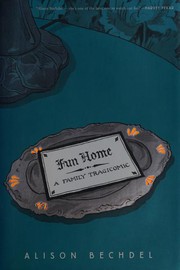
The father book and the obvious starting point: a closeted small-town funeral director, his daughter's coming out four months before his death, and a house restored to museum condition. It is built out of literary allusion — Joyce, Proust, Camus, Wilde — and rereads its own evidence obsessively, which is the method all three memoirs share. Note the year on this catalogue record is wrong; it was published in 2006.
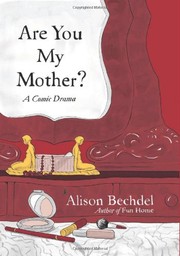
The mother book, and much stranger: a memoir about writing the previous memoir, threaded through Donald Winnicott's psychoanalysis and Virginia Woolf. It is widely called the difficult one and it is unreadable in isolation — it is a direct response to Fun Home and depends on it completely.

The body book: a decade-by-decade history of her exercise obsessions from the 1960s onward, in full colour, alongside Kerouac, Wordsworth and the transcendentalists. It reads as the lightest of the three and closes the argument the first two opened — read it last, when you can see the parents in it.
The Strip, in One Volume
IntermediateMeet Dykes to Watch Out For in the form that shows why it works — as a continuous serial rather than as a gag strip.
▸ Study plan for this stage
Pace: Three to four weeks for 416 pages. The Essential Dykes to Watch Out For collects around 390 strips arranged so that the running narrative reads continuously, plus a new introduction, and the right way to read it is in chunks of thirty or forty strips rather than as a novel — the material was seriali
- Dykes to Watch Out For as a serialised novel rather than a gag strip — continuity, ageing in real time, and consequences that arrive years later
- The ensemble: Mo, Lois, Clarice, Toni, Sparrow, Ginger, Sydney, and the bookshop as the setting that holds them together
- Real-time politics: the strip was drawn against the news, and its dates are legible from the placards, headlines and T-shirts
- The Bechdel test, which originates in a 1985 strip called The Rule and is included here — read it in situ, where it is a joke between two characters rather than a criterion
- Background text as a second channel: bookshelf spines, flyers, badges and newspaper headlines carry commentary the dialogue does not
- Bechdel's line developing across two decades, visible in a single volume because the selection is chronological
- Editing as authorship — this is a selection, and what was cut to make the serial read as a novel is part of what you are reading
- The strip as a record of a subculture that was largely undocumented elsewhere, which is a historical function separate from its literary one
- Where in The Essential does the strip stop being a joke format and become continuous narrative, and what changes on the page at that point?
- Find The Rule. What is the joke actually about in context, and how does the strip's own framing differ from how the Bechdel test is used now?
- Which political events can you date from the backgrounds alone, without reading the dialogue?
- What does Sydney's arrival do to the ensemble, and why does the strip need a character the others disapprove of?
- The Essential is a selection. What can you infer about what was left out, and does the volume ever feel edited?
- Read fifty consecutive strips reading only the backgrounds — signage, book spines, flyers, T-shirts. Write down what the strip is saying in that channel alone; it is usually a running argument with the foreground.
- Build a cast list as you go: name, first appearance, relationship to Mo. Bechdel reintroduces people hundreds of strips later without explanation and the list is what makes the second half legible.
- Locate The Rule and copy out its three criteria as the character states them. Then check the last twenty strips of the volume against those criteria — the strip passes its own test constantly and the exercise shows why the joke was pointed.
- Pick any four strips separated by roughly five years each and lay them side by side. The line weight, the panel density and the lettering all change measurably; describe the change in one paragraph.
Next up: Having seen the serial as a finished shape, the original collections let you watch that shape being discovered, which is a different and slower pleasure.
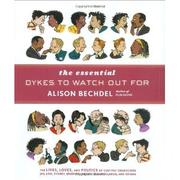
The definitive selection: around 390 strips arranged so the running narrative reads as one novel, from Mo's bookshop through two decades of American politics, plus a new introduction. Start the strip here rather than with the individual books — this is where the serial structure becomes visible. Note that our catalogue resolves the plain title Dykes to Watch Out For, the 1986 first collection, onto this same record.
The Early Collections
IntermediateGo back to the strip as originally published and watch the drawing, the cast and the continuity all arrive gradually across the late 1980s and early 1990s.
▸ Study plan for this stage
Pace: Three to four weeks for four thin books, about 500 pages in total. More dykes to watch out for is 108 pages, New improved! Dykes to watch out for 118, Spawn of dykes to watch out for 132 and Unnatural dykes to watch out for 142; each is an evening or two. Read them in publication order, because the
- The transition from standalone joke panels to recurring characters, which happens visibly inside the 1988 collection
- The core ensemble arriving one at a time — Mo, then Lois, then Clarice and Toni — and the strip reorganising around each addition
- Early line work: heavier, less confident, with fewer panels per strip and much less background information than the later run
- Politics as immediate rather than retrospective: these strips were drawn weeks after the events they respond to
- Clarice and Toni's decision to have a child in Spawn, which becomes one of the strip's longest and best plots and commits it to real-time ageing
- The alternative press context — these strips ran in queer and feminist papers, and the assumed reader is a member of the community being drawn
- Serial commitment: once characters age, the strip cannot reset, which is the constraint that turns it into a novel
- What a collection is as an object: cheaply produced, small-press, with introductions and marginalia that the Essential selection drops
- At what point in More dykes to watch out for does a character recur for the first time, and what does the strip immediately start doing that it could not before?
- How does the arrival of each new member of the ensemble change the strip's subject matter?
- What does Spawn commit the strip to, and what would it have cost Bechdel to reverse that decision later?
- Compare a 1988 strip with a 1995 strip on the page. What specifically has changed in the drawing, and what in the writing?
- Reading these after The Essential, what did the selection leave out, and can you see why?
- Count panels per strip across ten strips from each of the four collections. The number climbs steadily, and that single figure is the clearest measure of the strip becoming denser and more novelistic.
- Find at least three strips in these volumes that were cut from The Essential and write one line each on why you think they went. Editorial judgement becomes visible only by comparison.
- Track Clarice and Toni's plot from its first appearance through Spawn and into Unnatural, noting how many strips it takes to develop. Serial pacing over months is invisible in the collected volume unless you count.
- Take one political event handled in these collections and one handled in The Essential, and compare Bechdel's approach. The early strips argue; the later ones observe. Write a paragraph on when the shift happens.
Next up: The cast and the format are now fixed, which frees the middle run to do all three of its jobs — character, politics and drawing — at once.
The 1988 collection, and the point where recurring characters replace the standalone joke panels. Read it first among the individual books: it is where the strip decides to become a story.
Mo, Lois, Clarice and Toni settle into the ensemble the rest of the run depends on, and the political material sharpens. The line work is still visibly early.
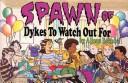
Clarice and Toni's decision to have a child, which becomes one of the strip's longest and best plots. This is the volume where the serial commits to real-time ageing.
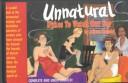
The mid-1990s strips, with the cast established and the pacing confident. A good place to check whether you want the whole run or were happier with the Essential selection.
The Middle Run
IntermediateRead the strip at its peak, when the panel density, the political commentary and the character work are all doing something at once.
▸ Study plan for this stage
Pace: Four weeks for four books, about 630 pages, and one of them is not a strip collection. Hot, throbbing dykes to watch out for (142 pages), Split-level dykes to watch out for (126) and Post-dykes to watch out for (144) are the late-1990s and turn-of-the-millennium serial and read at an evening or two
- The strip at full technical strength: panel density, background gags and character work all operating simultaneously
- The background as a joke delivery system — book spines, flyers, slogans and mugs, most of which are never referred to in the dialogue
- The Indelible as the bridge between the strip and the memoirs: it is Bechdel's first sustained autobiographical writing, and Fun Home is visible in it
- Process made explicit — the sketches and unpublished pages show how a strip is built, which changes how you read the finished ones
- The tension that runs through the last third: the characters get more comfortable while the strip's politics get angrier
- Domesticity as subject matter — houses, jobs, mortgages, custody — handled seriously rather than as a joke about settling down
- Continuity payoffs arriving years after their setup, which is what the earlier cast list was for
- A serial responding to national politics in near real time, and the specific problem that creates for rereading it decades later
- Pick one strip from Hot, throbbing and inventory its background text. How many separate jokes or references are running that the dialogue never mentions?
- What does The indelible Alison Bechdel tell you about her working method that changes how you read the strips around it?
- The strip's cast becomes materially more comfortable while its politics sharpen. Is Bechdel criticising them, herself, or the reader?
- Which plot in this stretch pays off something planted in the early collections, and how many years apart are the two ends?
- How much of the political material in Post-dykes still reads without a footnote, and what does that say about drawing to the news?
- Photograph or photocopy one dense strip and annotate every background element, then check which ones you had read past on the first pass. The gap is usually most of them.
- Read the process material in The indelible, then go back and reread five strips you have already read. Write a paragraph on what the sketches let you see in the finished versions.
- Choose one continuing plot — a job, a relationship, a house — and list every strip in this stage that advances it. Serials advance in increments too small to notice without the list.
- Take the autobiographical essay in The indelible and read it against the opening chapter of Fun Home. The same childhood is being told twice in two different forms; note what the comics version can do that the prose cannot.
Next up: Two collections remain, and they carry the strip to the point where Bechdel stopped it in order to make the book you started this path with.

The 1997 collection, with the drawing now fully developed and the background jokes — bookshelf spines, flyers, T-shirt slogans — carrying as much as the dialogue. Slow down and read the backgrounds.
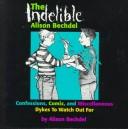
Not a strip collection but a scrapbook: character sketches, unpublished work, an autobiographical essay and Bechdel explaining her own process. Placed here because it is most useful once you already know the cast, and it is the closest thing to a bridge between the strip and the memoirs.
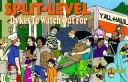
The late-1990s strips, with the characters moving into houses, jobs and midlife. Back to the serial after the scrapbook.
The turn of the millennium, and the volume where the strip's politics get angrier as its cast get more comfortable. That tension is the running subject of the last third of the run.
The Last Volumes
IntermediateFinish the run as originally collected, through the post-9/11 strips to the point where Bechdel stopped to write Fun Home.
▸ Study plan for this stage
Pace: Two weeks for two collections, 320 pages. Dykes and sundry other carbon-based life-forms to watch out for is 160 pages covering 2001 to 2003, and Invasion of the dykes to watch out for is 160 pages taking the run to 2005, when Bechdel paused the strip to make Fun Home. Read them in order and read th
- Drawing to the news with no hindsight — Bechdel did not know how any of this would turn out, and the strips are the better for it
- Disagreement kept unresolved inside the ensemble, which is the strip's mature political method: it argues with itself rather than at the reader
- Marriage, parenting, ageing parents and middle age as the run's closing subject matter, and the fact that these are exactly Fun Home's subjects
- The strip winding down: fewer strips, longer arcs, and a visible turning of Bechdel's attention elsewhere
- Why she stopped — Fun Home took seven years, and the strip could not run alongside it
- The complete run as a single work: two decades, one cast, real-time ageing, which almost nothing else in comics attempts
- What the strip taught her that the memoirs use: documentary detail, the reread, and a cast handled without hierarchy
- The end of an alternative-press era, which is the material condition underneath the strip's ending
- How does the strip handle September 11 in the weeks immediately after, and what does it refuse to do?
- Which character's political position does Bechdel appear to hold, and how can you tell she is not simply endorsing it?
- What are the last strips about, and does the run end or merely stop?
- Having read the whole strip, what specifically carries over into Fun Home — in method, in subject, and in drawing?
- Is Dykes to Watch Out For a warm-up for the memoirs or a separate achievement of comparable size? Make the case in either direction from evidence in these volumes.
- Date the strips in Dykes and sundry from their content alone, without checking, then verify. Bechdel embeds enough that most can be placed within a month, which is the exercise's point about drawing to the news.
- Find the last appearance of each major character and note what state they are left in. The run stops rather than concludes and the list makes that visible.
- Take the marriage, parenting and ageing-parent material from these two volumes and set it against Fun Home's treatment of the same subjects. Write two paragraphs on what changes when the family is her own.
- Write a one-page account of the complete arc: cast list from the early collections, the political spine, the plots that pay off decades later. This is the summary the Essential's arrangement was designed to make possible, and producing it yourself is the test of whether the whole run was worth reading over the selection.
Next up: This closes the path: the memoirs read as a family argument, the strip read as the twenty-five-year novel it is, and the two bodies of work in the relation that makes each explain the other.
The 2003 collection, covering the response to 9/11 and the run-up to the Iraq war in something close to real time. The strip's most direct political writing.
The last of the standalone collections before Bechdel paused the strip to make Fun Home. Ending here sends you back to the first stage of this path with the whole of the strip's marriage, parenting and ageing material in mind — which is exactly the material the memoirs turn on her own family.
Discussion
Keep reading
Paths that share books, cover the same subject, or open a related topic.