Maus Reading Order: Which Edition to Read and What to Read After It
Maus was published as two volumes, and the first question at the shelf is whether to buy them separately or as The Complete Maus, the single-volume edition that contains both. This path recommends the two volumes and explains why, then moves to MetaMaus and the critical literature, then to the rest of Spiegelman's work, then outward — first to the other memoirs by survivors and children of survivors that Maus made publishable, and finally to the comics journalism and criticism that treat Maus as the founding text of the form. One catalogue note before you buy: our record for the first volume is a French edition and the record for MetaMaus is a German one, which is why the first volume's page count looks closer to a combined edition than to the slim English Volume I. The works are the ones described here; check the language and the edition before ordering.
Read Maus
BeginnerRead the work itself in the order it was published and experienced, and understand what changes between the two volumes.
▸ Study plan for this stage
Pace: One week, or one long weekend. The catalogue records here run to 295 pages for Maus I and 136 for Maus II, and both read faster than a prose book of the same length — the constraint is not reading speed but the fact that you should not leave a gap between them. Read Maus I in one or two sittings, th
- The double timeline. Every chapter runs two stories at once: Vladek in Poland in the 1940s, and Art in Rego Park in the late 1970s and 1980s trying to get the first story out of him. Neither is a frame for the other — the argument of the book is that they are the same story.
- The animal conceit and its instability. Jews are mice, Germans cats, Poles pigs, Americans dogs. Watch for the places Spiegelman breaks his own rule: the mice in pig masks, Anja's drawn tail, and the human faces in Prisoner on the Hell Planet.
- Vladek as an unreliable and unlikeable narrator, and Spiegelman's refusal to fix him. The miserliness, the racism in the Maus II car scene, the destruction of Anja's diaries — all of it is left in, and the book's honesty depends on it being left in.
- Prisoner on the Hell Planet, the 1972 strip about Anja's suicide, reprinted whole inside Maus I in a different drawing style. It is the point where the book's two registers collide most violently.
- The eleven-year gap. Maus I ends on Art calling his father a murderer, in 1986; Maus II arrived in 1991. Volume II opens with Spiegelman drawing himself unable to work — that change in the book's confidence about its own project is the argument volume II is making.
- Auschwitz as procedure rather than symbol. Maus II is unusually concrete about tinsmithing, shoe repair, bribery, rations and the black market — survival as a series of transactions and skills, not as fate.
- Time-of-the-telling intrusions: the tape recorder, the interruptions about pills and errands, Art's arguments with Françoise. Vladek's story is always being interrupted by the conditions under which it is being collected.
- What does Art actually accuse his father of at the end of Maus I, and what has to happen in Maus II before that accusation can be answered — or is it never answered?
- Where does Spiegelman break the animal convention, and what is he signalling each time he does?
- Prisoner on the Hell Planet is drawn in a completely different style. Why is it reproduced rather than redrawn to match?
- Vladek destroyed Anja's diaries. What does that do to the book's claim to be a record, and how does Spiegelman handle the fact that his central source is gone?
- In the Maus II sequences where Art is drawn as a man in a mouse mask, what has changed about who is speaking?
- Which of Vladek's survival episodes turn on skill, which on money, and which on luck? Does the book rank them?
- Read Maus I once straight through, then go back and read only the present-day frame panels in order, skipping the wartime pages. You get a second, complete short book about a father and son and a tape recorder — write down what that book is about.
- Mark every page in both volumes where an animal head is wrong for the character wearing it (masks, pigs, human faces, Art's own head in Maus II). Put them in order and see whether the pattern accelerates.
- Take the Auschwitz chapters in Maus II and list, in order, every specific thing Vladek trades, hides, repairs or teaches himself. That list is the book's actual account of how he lived.
- Reread the last page of Maus I immediately after the last page of Maus II. Write one paragraph on what the eleven-year gap did to the ending.
Next up: You now have the questions the book deliberately leaves open — about the mice, about Anja's diaries, about whether the project was defensible at all — and MetaMaus exists to answer most of them in Spiegelman's own words.
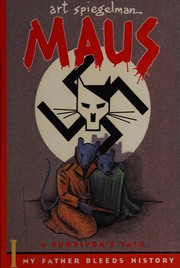
My Father Bleeds History: Vladek Spiegelman's account of Poland from the mid-1930s to the gates of Auschwitz, framed by his son's difficult attempts to record it. On editions — the two volumes and the one-volume Complete Maus contain identical material, and you should buy one or the other, not both. The two volumes are recommended here because the eleven-year gap between them is part of the work: volume I ends on an accusation, and Spiegelman did not have the answer to it yet.

And Here My Troubles Began: Auschwitz itself, and the far stranger second frame in which Spiegelman draws himself collapsing under the success of volume I. Read second and without a gap — the change in the book's confidence about its own project is the argument volume II is making.
The book about the book
BeginnerSee the archive underneath Maus — the interview tapes, the discarded drafts, the decisions about the animal metaphor — and read the critical debate the work started.
▸ Study plan for this stage
Pace: Two to three weeks. MetaMaus runs 298 pages but is an apparatus rather than a narrative — transcripts, sketchbook pages, family photographs, a long interview — so read it in sections rather than straight through, ideally one section per sitting with the relevant part of Maus open beside it. Consider
- Spiegelman's own three organising questions in MetaMaus — why the Holocaust, why mice, why comics — and the fact that he answers them as craft decisions rather than as moral positions.
- The Vladek interview transcripts. Seeing the raw tape next to the finished page is the single most useful thing in MetaMaus: it shows exactly how much shaping went into what reads as transcription.
- The family photographs. Maus contains three real photographs; MetaMaus supplies the rest of the archive, and the difference between a drawn mouse and a photographed face is a live problem for the book.
- The critical objections in Considering Maus, taken seriously: that the animal metaphor reinscribes the racial categories it means to expose, that the Polish pigs are a national slur, that comics is an inappropriate form for the Holocaust.
- The distinction between what Spiegelman intended and what the work does. Considering Maus is most useful where its contributors disagree with MetaMaus, and you should read the two against each other rather than treating the author as the last word.
- Deborah Geis's collection is a scholarly volume with the apparatus that implies — citations, competing theoretical frames, essays that assume familiarity with Holocaust-representation debates. It is not a general-reader companion, and MetaMaus is.
- Reception history: the Pulitzer, the New York Times bestseller-list reclassification from fiction to non-fiction, and Spiegelman's own discomfort with what the book's success did to him.
- From the transcripts in MetaMaus, name one thing Vladek said that Spiegelman cut, and one thing he moved. What does each choice do?
- How does Spiegelman answer the charge that Poles-as-pigs is a slur? Do the essays in Considering Maus accept his answer?
- What do the three photographs inside Maus do that the drawings cannot, and why does Spiegelman use so few of them?
- Which essay in Considering Maus makes the strongest case against the animal conceit, and what would Maus have to look like for that objection to be met?
- MetaMaus is Spiegelman's own account of his own book. Where should you distrust it?
- Pick one page of Maus you found difficult, find the corresponding interview transcript and sketchbook material in MetaMaus, and reconstruct the sequence of decisions from tape to panel.
- Take Spiegelman's stated reasons for the animal conceit in MetaMaus and write them out as a numbered defence; then read the essays in Considering Maus that attack it and mark which numbered points survive.
- Find the family photographs in MetaMaus of the people who appear as mice in Maus, then reread those characters' chapters. Note whether knowing the faces helps or interferes.
- Write a one-page answer to the question Considering Maus keeps circling: is the objection to the animal metaphor an objection to Maus, or to the reader's use of it?
Next up: MetaMaus keeps pointing back to the underground strips Spiegelman was drawing in the early 1970s, and the next stage puts the actual pages in front of you.
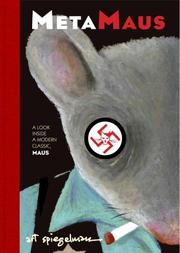
Spiegelman's own annotated apparatus: transcripts of the Vladek interviews, sketchbook pages, family photographs, and a long interview about why mice, why this frame, why this ending. Read immediately after the two volumes — it answers most of the questions Maus deliberately leaves open, and it is the single best companion to the work.
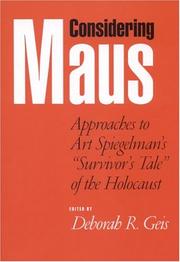
An academic essay collection on approaches to Spiegelman's survivor's tale of the Holocaust, and the standard scholarly entry point. Read after MetaMaus so you meet the critical arguments — about the animal metaphor, about representing the Holocaust in comics at all — once you already know what Spiegelman says about them.
The rest of Spiegelman
BeginnerPlace Maus inside a career, from the underground comix formal experiments that preceded it to the one major work that followed.
▸ Study plan for this stage
Pace: One week, and much of it spent looking rather than reading. Breakdowns is 57 pages and In the Shadow of No Towers 40 in these records — both are short, both are physically oversized objects designed to be read slowly, and both reward going through twice. Read Breakdowns first for the origins, then N
- The three-page Maus of 1972, printed in Breakdowns, which is where the mice and the conceit first appear. Comparing it with the book it became is the clearest lesson available in what expansion did to the idea.
- Formalist play as Spiegelman's actual native mode: the strips in Breakdowns treat panel grids, repetition and page architecture as the subject, and Maus is that training applied to content.
- Prisoner on the Hell Planet in its original context, drawn in a German-Expressionist idiom with human faces, published years before Maus began.
- In the Shadow of No Towers as the only major work Spiegelman completed after Maus, and its explicit subject: being unable to work in the shadow of the earlier book.
- The broadsheet format of No Towers and its reprinted early-twentieth-century newspaper strips — Spiegelman placing his own response inside the history of the American comic page rather than inside the history of Holocaust literature.
- The gap in the bibliography. Maus took thirteen years; almost nothing of comparable scale followed. That fact is part of what these two books are about.
- What is present in the 1972 three-page Maus that survives into the books, and what is absent that the books had to invent?
- Prisoner on the Hell Planet uses human faces. Having now seen it in both Breakdowns and Maus, what does the reprinting inside a mouse book do to it?
- Which formal experiments in Breakdowns turn up, domesticated, as ordinary storytelling technique in Maus?
- Why does In the Shadow of No Towers reproduce old newspaper strips alongside Spiegelman's own pages?
- No Towers is about being unable to work. Is it a successful book about failure, or a failed book? What would decide that?
- Put the three-page 1972 Maus beside the opening chapter of Maus I and annotate every element that was kept, dropped or reversed.
- Read Prisoner on the Hell Planet in Breakdowns, then in its place inside Maus I, and write down what the surrounding mice do to a strip drawn with human faces.
- Pick one formally experimental page from Breakdowns and find the page in Maus where the same device is used invisibly to serve the story.
- Read No Towers' oversized pages in the order printed, then read only the reprinted historical strips. Describe what argument the juxtaposition is making.
Next up: Having seen the whole of Spiegelman, the obvious next question is what other people did with the same material — and the strongest answers come from other survivors and other children of survivors.

The 1977 collection of Spiegelman's underground and formalist strips, including the three-page 1972 Maus that the book grew out of, and Prisoner on the Hell Planet, about his mother's suicide — a strip reprinted inside Maus itself. Read it to see how much of Maus's technique existed a decade early.
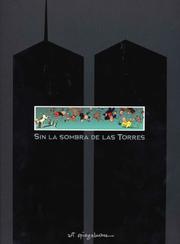
Spiegelman's response to 11 September 2001, drawn as oversized broadsheet pages, and the only major work he completed after Maus. Read last in this stage: it is explicitly about being unable to work in the shadow of the earlier book.
Other survivors, other children of survivors
BeginnerRead the graphic memoirs Maus made possible, particularly the second-generation and third-generation books that inherit its central problem of transmitted memory.
▸ Study plan for this stage
Pace: Three to four weeks. These are four short books — 129, 192, 223 and 145 pages in these records — and each is a different generational position relative to the same event, so read them in the order listed rather than by length: Katin first-hand, Eisenstein second-generation, Modan third-generation, K
- First-hand versus second-hand testimony. Katin was there and remembers almost nothing directly; Spiegelman was not there and has a tape recorder. Both books are about the unreliability of their own source, from opposite directions.
- The second-generation problem, which Eisenstein states most directly: inheriting a story you did not witness, and the guilt of finding it interesting.
- Modan's third-generation scepticism. The property is a comedy about heritage tourism, and it is the only book in this stage that treats the pilgrimage to Poland as potentially self-serving.
- Krug's perpetrator-side inquiry, and the specific documentary method she uses — archive requests, flea-market finds, denazification questionnaires — which makes her book a research procedure as much as a memoir.
- Drawing style as argument: Katin's soft graphite, Eisenstein's loose sketch and collage, Modan's ligne claire, Krug's scrapbook-and-photograph assemblage. None of them look like Maus, and each style is a claim about how this material should be handled.
- The absence of an animal conceit in all four, and what each author uses instead to solve the problem Spiegelman solved with mice.
- Generational distance as the variable the stage is built on. Read in order, these four books map an event receding from lived memory into research.
- Katin was a small child during the events she draws. How does she signal, on the page, the difference between memory and reconstruction?
- Eisenstein's book is about growing up inside a story. Where does she say, or show, that the story is not hers?
- The property is funny. What is it being funny about, and does the comedy cost it anything?
- Krug's investigation is of her own family's complicity. What does she find, and how does she avoid both exoneration and performance?
- Which of these four books could not have been made without Maus, and which would have existed anyway?
- For each of the four books, write down in one sentence the author's exact relation to the events drawn — witness, child of witness, grandchild, descendant of the other side — and then find the page where the book acknowledges that position most directly.
- Compare a single page of Katin's graphite with a single page of Modan's clean line, describing what each style permits and forbids on the same kind of scene.
- Take Krug's documentary inserts — the found objects, the forms, the photographs — and list what each is doing that a drawn panel could not.
- Reread the opening of Maus I after finishing Eisenstein. Write a paragraph on what the two books share about being the child of the person with the story.
Next up: These four books all descend from Maus in one way or another; the last stage puts that assumption under pressure by starting with a book that owes it nothing.
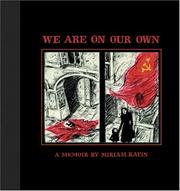
Katin's account, drawn in soft pencil, of fleeing Budapest as a small child with her mother in 1944. The closest thing to a survivor's own Maus, and the natural first step outward — a first-hand memoir where Spiegelman's is second-hand.
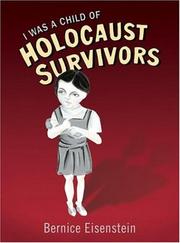
The second-generation counterpart, from a Canadian daughter of Auschwitz survivors, and the book that engages most directly with Maus's actual subject: what it is like to grow up inside a story you did not witness.

An Israeli grandmother and granddaughter go to Warsaw to reclaim family property, and nothing goes as either expects. The third-generation entry, and the funniest and most sceptical book here about heritage tourism and inherited memory.

A German artist investigating what her own family did during the war — the mirror image of Maus, written from the perpetrator side. Published in Britain as Heimat, which is a separate catalogue record for the same book, so buy only one.
What Maus opened up
IntermediateFollow the form Maus legitimised into war reportage and atomic-bomb testimony, and read the criticism that theorises comics as a medium of witness.
▸ Study plan for this stage
Pace: Four to five weeks. Three primary works and one work of scholarship, and the scholarship is the heaviest item: Chute's Disaster Drawn runs 348 pages of academic argument with full citation apparatus and should get its own two weeks at the end. The Complete Persepolis is 352 pages and Palestine 285,
- Barefoot Gen as the disproof of influence. Nakazawa began serialising in 1973, independently of Spiegelman and before Maus existed — comics testimony arrived twice, on two continents, without contact.
- The distinction between testimony, memoir and reportage. Nakazawa was there; Satrapi is remembering her own childhood; Sacco arrived with a notebook and interviewed strangers. All three put the drawing hand inside the story, for three different reasons.
- Sacco's method as the direct working-out of Spiegelman's: the interviewer on the page, his own interviewing as part of the subject, and the reader never allowed to forget who is drawing. Note that Palestine is committed reporting from a declared position, not a neutral survey.
- Satrapi's flat, high-contrast style and its relation to commercial breakthrough — Persepolis is the book that made graphic memoir a mainstream category after Maus made it respectable. The one-volume Complete Persepolis is the reliably catalogued edition.
- Chute's central claim in Disaster Drawn: that hand-drawn witness has a documentary force precisely because it is visibly made, and that this tradition runs from Goya's Disasters of War through Nakazawa, Spiegelman and Sacco.
- Disaster Drawn is a scholarly monograph and reads like one — theoretical vocabulary, archival argument, extended engagement with other critics. It is not the same kind of book as the three works it discusses, and it assumes you have read them.
- The archive question that runs through all four: what a drawing can record that a photograph cannot, and what it forfeits by not being one.
- Nakazawa and Spiegelman solved the same problem independently. What did each of them decide about how to draw an atrocity, and where do the decisions differ most?
- Sacco is visibly present in Palestine. Is that a claim to honesty, a claim to authority, or both?
- Persepolis sold on a scale Maus did not. What in Satrapi's approach made that possible, and what did it cost?
- What is Chute's argument for why hand-drawn witness is documentary rather than merely illustrative? Reconstruct it in your own words.
- Chute puts Goya at the head of the tradition. Does the line from Goya to Sacco hold, or is it a critic's retrofit?
- Having read all five stages: is there a single tradition here, or several that happen to use the same medium?
- Read the bombing sequence in Barefoot Gen Volume 1 and the arrival-at-Auschwitz sequence in Maus II back to back, and write down every formal decision each cartoonist makes about how much to show.
- In Palestine, mark every panel where Sacco draws himself. Then describe the composite portrait: what kind of reporter does the book present him as, and is that portrait flattering?
- Take Chute's central claim about hand-drawn witness and test it against one specific page from each of Maus, Barefoot Gen, Persepolis and Palestine — write a paragraph per page on whether the claim holds there.
- Build a one-page chronology of the works on this path by date of first serialisation rather than book publication. The resulting order is not the order of influence anyone assumes, and it is worth being able to state why.
- Return to the theory you formed after stage one about what Maus is for, and revise it in writing now that you have read what came before it and what came after.
Next up: The path closes here: with Chute's account of comics as documentary witness, you have the argument that connects every book above into one tradition, and the tools to judge whether it is really one.

Nakazawa's manga account of Hiroshima, drawn from his own survival of the bombing at age six, and serialised from 1973 — before Maus and entirely independent of it. Read it as the proof that Maus was not the first: comics testimony arrived twice, on two continents, without contact.

Satrapi's memoir of childhood in revolutionary Iran and exile in Europe, and the book that made graphic memoir a mainstream commercial category after Maus made it respectable. The one-volume Complete Persepolis is the edition that is reliably catalogued; the four original volumes are harder to find individually.
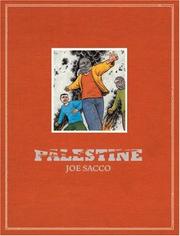
Sacco's 1990s reporting from the West Bank and Gaza, the book that turned Spiegelman's method into a working journalistic practice. Read it as the direct descendant: the interviewer is on the page, his interviewing is part of the subject, and the reader is never allowed to forget who is drawing.

The best scholarly account of comics as a form of documentary witness, running from Goya through Maus, Barefoot Gen and Sacco. Closes the path because it gives you the argument that connects every book above into one tradition.
Discussion
Keep reading
Paths that share books, cover the same subject, or open a related topic.