The Holocaust: The Best Books to Understand the Shoah, in Order
This curriculum moves from accessible narrative introductions through the machinery of genocide, into the intimate world of survivor testimony, and finally into the deeper historical and moral reckoning that scholars and philosophers have produced. Each stage builds the factual foundation, emotional literacy, and conceptual vocabulary needed to absorb the next — so that by the end the reader understands not just what happened, but how and why it was possible.
Foundations: The World Before the Catastrophe
BeginnerUnderstand the historical context of pre-war Europe, the rise of Nazi ideology, and the early persecution of Jews — building the essential vocabulary and timeline before encountering the horror directly.
▸ Study plan for this stage
Pace: 8–10 weeks, ~40–50 pages/day (accounting for dense historical material and reflective reading)
- The personal testimony as historical evidence: how Wiesel's *Night* anchors abstract history in lived experience
- Visual narrative and fragmented memory: how Spiegelman's *Maus* uses comics to represent trauma and family history across generations
- The structural rise of Nazi totalitarianism: the political, economic, and ideological conditions that enabled the Holocaust (from Shirer)
- Antisemitic ideology and its historical roots: pre-Nazi prejudice versus Nazi racial pseudoscience and systematic persecution
- The timeline of escalating persecution: from legal discrimination to ghettoization, showing how atrocity was normalized incrementally
- The role of ordinary institutions and people: how governments, churches, businesses, and citizens enabled or resisted the machinery of persecution
- The concept of testimony and bearing witness: why survivor accounts matter as both historical documents and moral imperatives
- What is Elie Wiesel's purpose in *Night*, and how does his account of Auschwitz illustrate the dehumanization process described in broader historical accounts?
- How does Art Spiegelman use the medium of comics in *Maus* to represent both his father's experience and his own struggle to understand and document that history?
- According to Shirer, what were the key political, economic, and social conditions in Germany and Europe that allowed Hitler and the Nazi Party to rise to power?
- What was the progression of Nazi persecution against Jews from 1933 to 1939, and how did each stage (legal exclusion, economic boycott, ghettoization) prepare the ground for genocide?
- How do the three books differ in their approach to the same historical period, and what does each genre (memoir, graphic novel, historical narrative) reveal that the others cannot?
- What role did institutions—government, military, churches, businesses—play in enabling persecution, and where did resistance occur?
- Timeline construction: Create a detailed chronological chart spanning 1920–1939 that integrates key events from all three books (e.g., Hitler's rise, Nuremberg Laws, Kristallnacht), noting which book(s) reference each event and from what perspective.
- Character mapping in *Maus*: Trace Vladek Spiegelman's journey through *Maus I* on a map of Eastern Europe, marking ghettos, labor camps, and safe houses mentioned. Cross-reference with Shirer's account of Nazi territorial expansion.
- Close reading: Select 3–4 pivotal passages from *Night* (e.g., the hanging scene, the selection at Auschwitz) and analyze how Wiesel uses language to convey psychological and physical degradation. Compare the emotional impact to how Spiegelman depicts similar moments visually.
- Comparative analysis essay: Write a 1,500–2,000 word essay comparing how *Night* and *Maus I* each use the author's relationship with his father to explore trauma, memory, and transmission of history. How does Shirer's third-person historical narrative complement or contrast with these intimate accounts?
- Institutional analysis: Research one institution mentioned in the three books (e.g., the Judenrat, the SS, a specific ghetto administration) and write a 1-page analysis of how it functioned within the Nazi system, using evidence from the texts.
- Vocabulary and terminology log: Maintain a running glossary of key terms encountered across all three books (e.g., Judenrat, Kristallnacht, Lebensraum, selection, ghettoization). For each term, note its historical origin, how it appears in each text, and its significance to understanding the period.
Next up: This stage establishes the historical scaffolding and emotional reality of pre-genocide persecution, preparing readers to understand how these conditions and ideologies directly led to the systematic murder of six million Jews—a transition that the next stage will examine through accounts of the camps, resistance, and survival itself.

The single most widely-read Holocaust memoir, written with devastating simplicity — it is the ideal first book because it gives the reader an immediate, human entry point into the experience without requiring prior historical knowledge.
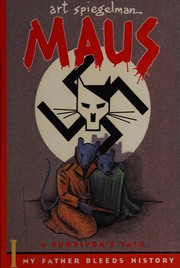
This Pulitzer Prize-winning graphic novel makes the Holocaust viscerally accessible to newcomers by framing it as a father-son story; its visual format eases readers into difficult material while introducing key events from ghettos to Auschwitz.

A landmark narrative history of Nazi Germany written by a journalist who witnessed it firsthand; it provides the sweeping political and ideological context — from Hitler's early career to the war's end — that all subsequent reading depends on.
The Machinery of Persecution: Ghettos, Camps, and the Final Solution
IntermediateUnderstand how the Nazi state systematically constructed and operated the apparatus of genocide — the ghettos, the Einsatzgruppen, the death camps — and how ordinary people became perpetrators.
▸ Study plan for this stage
Pace: 8–10 weeks, ~40–50 pages/day (with reflection breaks). Week 1–3: "Ordinary Men" (350 pages); Week 4–5: "The Diary of Anne Frank" (280 pages); Week 6–8: "Survival in Auschwitz" (220 pages); Week 9–10: synthesis and review.
- Ordinary perpetrators and the psychology of compliance: How Reserve Police Battalion 101 men—ordinary citizens—became mass murderers through incremental steps, peer pressure, and careerism rather than ideological conviction.
- The ghetto as a transitional killing apparatus: Anne Frank's hiding and the Amsterdam ghetto system reveal how ghettos functioned as concentration points for deportation and psychological control before mass murder.
- The industrialization of death: Auschwitz-Birkenau as a factory for systematic murder, with its division of labor, bureaucratic efficiency, and dehumanization processes that Levi documents firsthand.
- Dehumanization and the destruction of identity: How the Nazi system stripped prisoners of names, possessions, bodily autonomy, and dignity to make killing psychologically easier for perpetrators and survival harder for victims.
- Testimony and witnessing: The role of survivor accounts (Frank and Levi) as historical evidence and moral testimony against the perpetrators documented in Browning.
- The banality of evil: How genocide required not fanatics but ordinary administrators, guards, and bureaucrats following orders and rationalizing their participation.
- Resistance and agency within constraint: Moments of defiance, solidarity, and choice—even limited ones—in Frank's diary and Levi's account, contrasted with the choices of perpetrators in Browning.
- How did Christopher Browning explain the transformation of Reserve Police Battalion 101 from ordinary men into mass murderers? What were the primary mechanisms (careerism, peer pressure, authority, ideology) and which proved most significant?
- What does Anne Frank's diary reveal about the experience of hiding and the conditions of the Amsterdam ghetto that preceded deportation? How does her account of daily life humanize victims in contrast to the perpetrator perspective in Browning?
- Describe the structure and function of Auschwitz-Birkenau as Primo Levi experienced it. How did the camp's organization serve the Nazi goal of systematic murder while maintaining a veneer of order?
- How did the Nazi system use dehumanization as a tool for both perpetrators and victims? Provide specific examples from all three texts of how identity, dignity, and humanity were systematically stripped away.
- What is the significance of survivor testimony (Frank and Levi) as historical evidence? What do their accounts reveal that perpetrator records and Browning's analysis cannot?
- How do the three texts together illustrate the complete apparatus of genocide—from the decision to kill, to the construction of killing centers, to the experience of victims? What gaps or perspectives remain?
- Create a timeline of escalation: Map the progression from ghetto confinement → deportation → arrival at Auschwitz using specific dates and events from all three texts. Annotate with how each stage intensified dehumanization.
- Comparative character study: Select 3–4 perpetrators from Browning's Battalion 101 and 2–3 victims/witnesses from Frank and Levi. Create profiles analyzing their choices, constraints, and moral agency. How did their positions in the system shape their actions?
- Close reading exercise: Choose one passage from each text that crystallizes the dehumanization process. Analyze the language, imagery, and perspective. How do the perpetrator account and victim accounts differ in tone and what they reveal?
- Perpetrator psychology analysis: Using Browning's evidence, write a 2–3 page analysis of how ordinary men rationalized mass murder. Then read Frank and Levi's accounts and ask: What would these perpetrators have seen or not seen in the victims?
- Testimony and evidence exercise: Compile a list of specific facts, dates, and procedures that Levi and Frank provide about camp operations. Cross-reference with Browning's documentation of orders and logistics. What do survivor accounts add that bureaucratic records omit?
- Ethical reflection journal: After each book, write 1–2 pages reflecting on: What choices did individuals make? Where was agency possible? How might I have acted? Use specific scenes to ground your reflection.
Next up: This stage equips you with a granular understanding of how genocide was perpetrated and experienced—the machinery, the perpetrators, and the victims—preparing you to examine the broader contexts (political, economic, ideological) that enabled the Holocaust and to explore resistance, rescue, and liberation in the next stage.
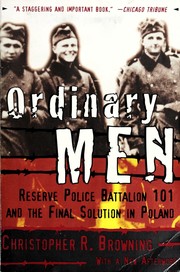
A groundbreaking study of Reserve Police Battalion 101, showing how ordinary middle-aged German men became mass murderers; it is essential for understanding the human mechanics of genocide and should be read before broader camp histories.

The world's most famous Holocaust diary grounds the abstract machinery of persecution in one family's daily reality of hiding; reading it after Browning makes the perpetrator and victim perspectives powerfully complementary.

Levi's precise, almost scientific account of life inside Auschwitz is the definitive insider testimony of the camp system; his analytical clarity makes it the ideal bridge between historical study and survivor memoir.
Survivor Voices: Memory, Trauma, and Witness
IntermediateEncounter a range of survivor experiences — from the Warsaw Ghetto to Treblinka — and grapple with what it means to bear witness, to remember, and to survive.
▸ Study plan for this stage
Pace: 4–5 weeks, ~25–30 pages/day for Frankl; ~1–2 hours/week for audiobook chapters of Szpilman
- Finding meaning in suffering: Frankl's logotherapy and the search for purpose even in the darkest circumstances
- Trauma and memory: How survivors process and articulate their experiences through narrative and reflection
- Witness and testimony: The moral and psychological weight of bearing witness to atrocity and choosing to speak
- Resilience and agency: How individual choices and inner freedom persist even when external freedom is stripped away
- The specificity of survival: Different paths through the Holocaust (ghettos, camps, hiding) shape distinct survivor perspectives
- Bearing witness as act of resistance: How survivor voices challenge denial and preserve historical truth
- Psychological aftermath: Trauma's long-term effects on memory, identity, and the ability to rebuild life
- What does Frankl mean by 'man's search for meaning,' and how does he argue that finding purpose can sustain a person through extreme suffering?
- How do Frankl's and Szpilman's survival strategies differ, and what role did their respective sources of meaning (purpose vs. art/music) play in their endurance?
- What is the difference between being a survivor and being a witness, and why does Szpilman's decision to document his experience matter historically?
- How do trauma and memory shape the way Szpilman recounts his experiences in the Warsaw Ghetto and during his hiding, and what gaps or silences appear in his testimony?
- What does it mean to 'bear witness' to the Holocaust, and what responsibility do survivors carry in speaking about their experiences?
- How do both Frankl and Szpilman demonstrate agency and choice within conditions of extreme constraint, and what does this reveal about human resilience?
- Close-read 2–3 key passages from Frankl (e.g., on the three paths to meaning, or his reflections on choice in the camps) and annotate them for how he constructs meaning from suffering.
- Create a timeline of Szpilman's experiences from the Warsaw Ghetto through his hiding, marking moments where he exercised choice or agency, and compare it to Frankl's account.
- Write a 500–750 word reflection: 'What does bearing witness mean?' using specific examples from both texts to ground your argument.
- Listen to 2–3 chapters of the Szpilman audiobook and take notes on how the narrator's voice, tone, and pacing affect your emotional response to the testimony.
- Conduct a comparative analysis: How do Frankl's psychological framework (logotherapy) and Szpilman's artistic/musical sensibility represent two different modes of survival and meaning-making?
- Interview a family member or community elder about a difficult experience they've survived, then reflect on how their narrative compares to the structure and emotional arc of Frankl's and Szpilman's accounts.
Next up: This stage establishes the power of individual survivor testimony and the psychological frameworks for understanding resilience; the next stage will likely expand to collective memory, historical documentation, and how survivor voices shape broader cultural and educational responses to the Holocaust.
![Man's Search for Meaning adapted for Young Adults [adaptation]](https://covers.openlibrary.org/b/id/11203708-M.jpg)
Psychiatrist and Auschwitz survivor Frankl's account of finding psychological meaning amid unimaginable suffering offers a unique philosophical lens that deepens the reader's understanding of human resilience and moral choice under extremity.

A vivid, firsthand account of survival in the Warsaw Ghetto and its ruins, this memoir adds the crucial Polish-Jewish urban experience and the complexity of bystanders and rescuers to the reader's picture of the Holocaust.
Deep History and Moral Reckoning
ExpertSynthesize the full historical record, understand the scholarly debates about how and why the Holocaust happened, and confront the lasting moral and philosophical questions it poses for humanity.
▸ Study plan for this stage
Pace: 10–12 weeks, ~40–50 pages/day. Allocate 3–4 weeks per book to allow for deep engagement with dense theoretical and historical arguments, plus time for reflection between texts.
- Goldhagen's 'eliminationist antisemitism' thesis: the claim that widespread, deeply rooted German antisemitic ideology—not just Nazi propaganda—motivated ordinary Germans to participate in genocide
- The distinction between structural/bureaucratic explanations of the Holocaust and ideological/cultural explanations, and how Goldhagen challenges the 'banality of evil' framework
- Arendt's concept of the 'banality of evil' and her analysis of Eichmann as an unreflective bureaucrat rather than a ideological fanatic, and the implications for understanding perpetrator psychology
- The role of the Wannsee Conference and Nazi administrative machinery in systematizing genocide, as examined through Arendt's trial analysis and Dwork's institutional history
- Dwork's emphasis on the lived experience of victims and the material conditions of camps—how microhistory and material culture illuminate what statistics and ideology alone cannot
- The debate over intentionalism vs. functionalism: did the Holocaust result from Hitler's long-held plan or from radicalization within the Nazi bureaucracy?
- Moral accountability and collective responsibility: how do we assign culpability when genocide involves millions of perpetrators, collaborators, and bystanders across a society?
- The philosophical question of how a modern, educated, culturally advanced nation could perpetrate systematic genocide, and what this reveals about civilization, rationality, and human nature
- What is Goldhagen's 'eliminationist antisemitism' thesis, and how does he argue it differs from earlier explanations of perpetrator motivation? What evidence does he present?
- How does Arendt's concept of the 'banality of evil' challenge or complicate Goldhagen's emphasis on ideological motivation? What does Arendt mean by Eichmann's 'thoughtlessness'?
- Trace the institutional and bureaucratic steps that led to the Holocaust as described across these three texts. How do Arendt and Dwork's accounts of Nazi machinery complement or complicate Goldhagen's cultural argument?
- What does Dwork's focus on victims' lived experience and material conditions add to the historical record that Goldhagen and Arendt's more top-down analyses may not capture?
- How do these three authors address the question of moral responsibility? Who bears culpability—ideological fanatics, bureaucratic functionaries, ordinary Germans, or all of these?
- What are the major scholarly disagreements between these authors, and what do they reveal about how historians interpret causation and agency in the Holocaust?
- Create a detailed timeline of the Holocaust's escalation (from 1933 to 1945) annotated with key moments each author emphasizes—Goldhagen's focus on antisemitic ideology, Arendt's focus on bureaucratic decisions, Dwork's focus on victims' experiences. Identify where their narratives converge and diverge.
- Write a comparative character study of Eichmann as portrayed by Arendt versus how Goldhagen might characterize him based on his thesis about German perpetrators. What does each author's interpretation suggest about how the Holocaust happened?
- Select one primary source document (e.g., Nazi correspondence, testimony from the Eichmann trial, survivor accounts) and analyze it through the lens of each author's framework. How would Goldhagen, Arendt, and Dwork each interpret the same evidence?
- Debate the intentionalism vs. functionalism question: prepare arguments for both sides using evidence from all three texts, then write a synthesis explaining which interpretation you find more convincing and why.
- Research and write a short essay (1,500–2,000 words) on one specific perpetrator or group of perpetrators (e.g., the Einsatzgruppen, camp commandants, or desk murderers) using all three texts. How do Goldhagen's, Arendt's, and Dwork's frameworks illuminate different aspects of their choices?
- Create a visual map or concept diagram showing how ideology, bureaucracy, and material conditions intersect in the Holocaust according to these three authors. Use different colors or symbols to represent each author's emphasis.
Next up: This stage synthesizes competing scholarly interpretations of the Holocaust's causes and perpetrators, preparing readers to move toward the next stage—whether that involves examining resistance and rescue, exploring post-Holocaust justice and memory, or investigating the Holocaust's global context and legacy—with a sophisticated, multi-perspective understanding of how and why genocide occurred.
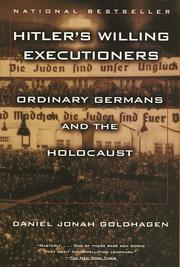
A controversial but essential scholarly argument that a deeply rooted eliminationist antisemitism in German culture enabled the Holocaust; reading it in dialogue with Browning's earlier work sharpens critical thinking about perpetrator motivation.
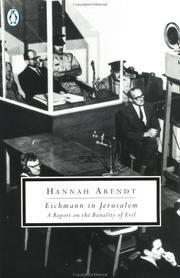
Arendt's report on the Eichmann trial introduced the concept of the 'banality of evil' and remains one of the most important and debated works of moral philosophy to emerge from the Holocaust — essential for any deep understanding of how genocide is organized.

A comprehensive, authoritative scholarly synthesis covering the full arc of the Holocaust from ideology to aftermath; it serves as a capstone that integrates everything the reader has learned into a coherent, evidence-based historical narrative.
Discussion
Keep reading
Paths that share books, cover the same subject, or open a related topic.