Guy Delisle Reading Order: Where to Start His Travel Comics
Delisle's travel comics are all built the same way — a Canadian animator ends up somewhere closed or difficult, notices small things, and declines to explain the country to you — but the method sharpens enormously between the first book and the fourth. This order follows that sharpening: the two short work trips first, then the two year-long postings where he stops being a tourist, then the parenting gag books that show the same observational eye turned domestic, then the two later books where the form changes entirely. It closes with the other cartoonists working this territory, because Delisle is best understood next to them.
The short trips
BeginnerMeet Delisle's method in its first, roughest form — a few weeks somewhere, drawn as it happens
▸ Study plan for this stage
Pace: Under a week. Shenzhen is 152pp and Pyongyang 184pp, both loosely drawn with a lot of white space — an evening each, and reading them on consecutive nights is the point. What matters here is not pace but knowing what you are reading: these are a Canadian animator's notes from a few weeks of a work c
- The travelogue-comic method: small noticed things, no research apparatus, no explanation of the country
- Deadpan as a stance — the absurd is set down without comment and the reader supplies the reaction
- The minder and the interpreter as structural facts of the Pyongyang book: almost everything he sees is what he was shown
- Loneliness and boredom as subject matter rather than as obstacles to the subject
- Animation outsourcing as the reason he is in either place, which quietly makes both books about globalised labour
- The limits of the form: what a foreigner on a short contract can and cannot know
- What does Delisle actually have access to in Pyongyang, and how does the book signal the boundaries of that access?
- Shenzhen is the rougher book. Where can you see him working out what the form is for?
- Where does Delisle let absurdity sit unremarked, and where does he editorialise? The exceptions are few and worth locating.
- What would a China correspondent or a Korea scholar say these books cannot tell you, and does the book itself concede that?
- How does the drawing style — thin, sketchy, unfussy — support the claim that these are notes rather than statements?
- Read Pyongyang once, then go back and mark every scene where a minder, guide or official is physically present in the frame. The proportion is the book's honest account of its own limits.
- Pick one recurring visual motif in Shenzhen — the hotel room, the restaurant menu, the walk to work — and follow it through the book. Delisle builds mood by repetition rather than by description.
- Compare the first ten pages of Shenzhen with the first ten of Pyongyang for how much is explained to the reader. The reduction between the two books is the craft development the path is tracking.
- Read one paragraph of a news report on North Korea alongside Pyongyang and note what each does that the other cannot. The point is not that one is better but that they are different instruments.
Next up: Two months in a country produces observation; a year in one produces something else entirely, and Burma Chronicles and Jerusalem are where Delisle stops being a visitor.

His first travelogue, supervising animation outsourcing in a Chinese boomtown. The loneliest of the books and the least assured, which is why it repays reading first — you can watch him work out what the form is for.

The book that made his name: two months in North Korea with a minder, drawn deadpan. Read it second and the leap from Shenzhen is obvious — he has learned to let the absurdity sit on the page without commentary.
The long postings
BeginnerSee what changes when Delisle stops visiting and starts living somewhere, accompanying his partner on Medecins Sans Frontieres missions
▸ Study plan for this stage
Pace: 2-3 weeks. Burma Chronicles is a full-length volume (the catalogue record here carries no page count) and Jerusalem is 334pp — much the longest of the travelogues and the one to read slowly, since its whole method is accumulation over a year rather than a series of set pieces. Both were made while a
- Duration changes the book: a year yields routine, seasons and repeated encounters rather than first impressions
- Domestic life and political observation sharing the page — the pram and the checkpoint in the same panel
- Censorship and aid work in Burma Chronicles, seen from inside an expatriate NGO household rather than reported on
- Jerusalem's restraint: checkpoints, settlements and religious calendars accumulate without an argument being stated, which is itself a position
- What an outsider attached to an NGO can see, and the specific class of things that access excludes
- The difference between a book that declines to editorialise and a book without a viewpoint
- What does Delisle's year in Jerusalem let him show that a two-week visit could not?
- Jerusalem avoids explicit commentary on the Israeli-Palestinian conflict. Is that neutrality, or is the selection of scenes itself an argument? Cite specific pages.
- How does the MSF connection shape whom he meets in both books, and which parts of each society are therefore invisible?
- Where does the parenting material in Burma Chronicles do work the political material could not?
- Both books are one outsider's observations rather than area studies. What would you need to read alongside them to have anything like a grounded view of Myanmar or of Jerusalem?
- In Jerusalem, keep a list of every place Delisle is physically prevented from going. The map of his restrictions is the closest the book comes to a thesis.
- Track the passage of the year in Jerusalem — religious holidays, weather, his children's ages — and note how much of the book's structure is calendar rather than plot.
- Find three moments in Burma Chronicles where a domestic scene and a political fact occupy the same page, and work out which one the composition puts first.
- Reread the Pyongyang minder scenes after finishing Jerusalem. The same observational method applied for a year rather than two months produces visibly different results; name two.
Next up: The eye that notices a checkpoint queue is the same eye that notices a child's negotiating tactics, and the parenting books are that method at one-page length with the stakes removed.

A year in Myanmar with a small child, and the first book where domestic life and political observation share the page. The censorship and aid-work material is more textured than anything in Pyongyang because he was there long enough.

His masterpiece — a year in East Jerusalem, drawn with almost no editorialising, letting checkpoints and settlements and religious calendars accumulate. Read it fourth; the restraint only reads as a technique once you have seen the earlier books.
The same eye, turned domestic
BeginnerRead the gag books, and see the observational method working at one-page length
▸ Study plan for this stage
Pace: A few evenings, no more. A User's Guide to Neglectful Parenting is 190pp and Even More Bad Parenting Advice 191pp, both single-page gag strips you can dip into; Albert and the Others is 72pp of wordless shorts and takes twenty minutes. Aline and the Others is its companion volume (the catalogue reco
- The one-page gag as a compositional unit — setup, turn, silent last panel
- Comic timing that predates the reportage entirely: Albert and Aline come from well before the travelogues
- Delisle's persona as a lazy and slightly cruel father, which is a construction rather than a confession
- Wordless strips as a formal constraint that forces the joke into the drawing
- Albert and Aline as a designed pair — men and women given the same treatment, and thinner read separately
- How little separates the observational method in Jerusalem from the method in these books
- What makes a Delisle gag land — where in the page is the turn, and how often is the punchline silent?
- How does the self-portrait in the parenting books differ from the self-portrait in the travelogues, and is either more honest?
- What does the wordlessness of Albert and Aline force him to do that the parenting strips do not?
- Why are Albert and Aline weaker read apart, and what does the pairing add?
- Is the observational eye in these books actually the same as in Jerusalem, or only similar? Argue it from a specific strip.
- Take five strips from the parenting books and mark the exact panel where the joke turns. Delisle is remarkably consistent about where it sits, and finding the pattern makes the timing visible.
- Read Albert and the Others and Aline and the Others in one sitting, alternating strips between the two books. The pair is designed to be read against itself.
- Redraw one wordless Albert strip as a strip with dialogue and see what dies. This is the fastest demonstration of what the constraint is doing.
- Find one gag in the parenting books that uses the same observational move as a scene in Jerusalem — a small noticed absurdity left unexplained — and put them side by side.
Next up: Having seen the method at its lightest, the two late books are where Delisle abandons it entirely — one for someone else's ordeal, one for his own past.
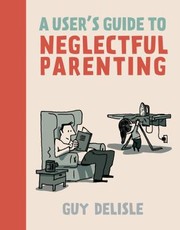
Single-page strips about being a lazy and slightly cruel father. Very short, very funny, and a useful palate cleanser between Jerusalem and the darker later work.
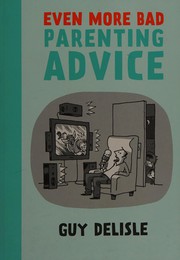
The follow-up collection, more of the same and no worse for it. Read the two together; they are one book split across two volumes.

Wordless, cruel, formally strict short strips about men, from well before the travelogues. Included because it shows how much of Delisle's comic timing predates the reportage.
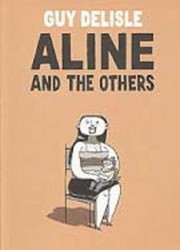
The companion volume, the same wordless-vignette structure applied to women. Read it directly alongside Albert — the pair is designed to be read as a pair, and separately each looks thinner than it is.
Where the form changes
IntermediateRead the two books where Delisle abandons the travelogue — one drawing someone else's experience, one drawing his own past
▸ Study plan for this stage
Pace: 2-3 weeks. Hostage is 434pp and is the outlier on this path in every way: it recounts the kidnapping of an MSF administrator in the Caucasus, almost entirely inside one room, and it is deliberately slow and repetitive because that is what the experience was. Read it in long sittings, not in fragment
- Drawing someone else's experience: Hostage is reconstructed from interviews, with Delisle absent from the page entirely
- Boredom, hunger and captivity rendered as duration rather than described — the book's central formal problem
- The single-location constraint and what it does to pacing across four hundred pages
- Memoir as the other departure: Factory Summers is his own adolescence at a Quebec paper mill where his father was an engineer
- The father-son material in Factory Summers as the quiet explanation of the temperament behind all the travelogues
- Colour and palette as tools — both late books make choices the earlier travelogues do not
- How does Hostage make three months in one room readable, and what specifically would a conventional thriller have cut?
- Delisle does not appear in Hostage at all. What changes about the reader's trust when the observer is removed?
- What does Factory Summers say about his father, and how much of it is said rather than drawn?
- Hostage is another person's account, mediated by Delisle. Where does the book acknowledge that mediation, and where does it not?
- Having read all six of his own books, what is the through-line — what does Delisle consistently find worth drawing?
- In Hostage, count the pages between significant events in one stretch of the middle. The interval is the book's argument about captivity, and it only registers if you measure it.
- Track the room's geography in Hostage — window, radiator, mattress, handcuff. Delisle draws the same space hundreds of times with small variations; identify what each variation is signalling.
- Read Factory Summers immediately after Shenzhen. The first travelogue and the memoir are both about a young man in an industrial workplace, thirty years and two continents apart; list what recurs.
- Compare the palette of Factory Summers with that of Jerusalem and note what each colour scheme is doing to the mood before a single word is read.
Next up: Delisle's deliberate detachment only reads as a choice once you have seen cartoonists who chose the opposite, which is what Sacco and Satrapi provide.

Four hundred pages of an MSF administrator's kidnapping in the Caucasus, told almost entirely inside one room. A total departure: no jokes, no Delisle on the page, and an extraordinary exercise in drawing boredom and fear. His most formally daring book.

Memoir — three teenage summers working at the Quebec paper mill where his father was an engineer. Read it last of his own books: it is the quietest, and it explains the temperament that produced all the others.
Where to go next
IntermediatePlace Delisle among the other cartoonists doing first-person reportage, and see the alternatives to his deliberate detachment
▸ Study plan for this stage
Pace: 3-4 weeks. Palestine is 285pp, Safe Area Gorazde 227pp and The Complete Persepolis 352pp. All three are denser on the page than Delisle — Sacco in particular packs heavy hatching and long transcribed interviews into every panel, so 227pp of Sacco takes considerably longer than 334pp of Jerusalem. Sa
- Comics journalism as a discipline: sourcing, interviewing, repeat visits, the reporter visibly present and visibly implicated
- Sacco's explicit commitment set against Delisle's withheld one — two defensible answers to the same problem
- Density as an ethical choice: the crowded Sacco page insists you cannot take it in at a glance
- The insider's account in Persepolis — Satrapi was raised in Iran, not visiting it, which changes what the book can claim
- Testimony and its handling: how each cartoonist signals what they were told versus what they saw
- Where the reportage comic sits between memoir and journalism, and why the label matters for how you read it
- How does Sacco establish his sources on the page, and what does Delisle do instead?
- Reading Palestine after Jerusalem, what does Sacco's method get at that Delisle's cannot — and what does it lose?
- Safe Area Gorazde is built on four visits over time. What does the returning structure allow that a single trip would not?
- Persepolis is by someone raised inside the country. Name two things it can do that no foreign observer's book on this path can.
- Which of these approaches would you trust most on a country you knew nothing about, and can you defend the answer against the obvious objection?
- Put a Sacco page and a Delisle page side by side and count panels, words and figures on each. The numbers make the difference in method concrete before you argue about it.
- In Safe Area Gorazde, mark the passages that are transcribed testimony versus Sacco's own observation. He distinguishes them consistently; finding how is the exercise.
- Read Satrapi's chapter on leaving Iran directly after Delisle's Jerusalem chapters on checkpoints, and write a paragraph on what changes when the person drawn is the person who lived it.
- Take one scene from Jerusalem and imagine how Sacco would have drawn it — whom he would have interviewed, what he would have added. This is the clearest way to see that Delisle's neutrality is a technique, not an absence.
Next up: This is the end of the path: Delisle now reads as one position among several in first-person comics reportage rather than as the whole of it.
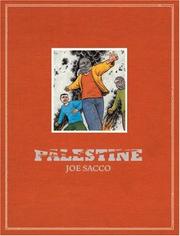
Sacco is the obvious next author and the direct opposite in method: dense, journalistic, explicitly committed. Reading it after Jerusalem shows just how much Delisle's neutrality is a stylistic decision rather than an absence of view.
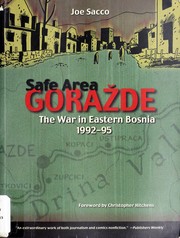
Sacco's Bosnia book and his best — a besieged town reported over four visits. Read it second because it is the fullest demonstration of comics journalism as a discipline rather than a novelty.

The insider's version of the same territory: not a foreigner observing a closed country but someone raised inside one. Catalogued only as the complete edition rather than as separate volumes, which is the edition to read anyway.
Discussion
Keep reading
Paths that share books, cover the same subject, or open a related topic.