Make comics: write and draw your own graphic novel
This curriculum takes a beginner from zero to finished comic creator across four tightly sequenced stages. It starts by building visual storytelling instincts through the masters, then layers in the craft of writing and drawing for sequential art, before tackling the full production pipeline needed to complete and publish your own book.
Foundations: Reading Like a Creator
BeginnerUnderstand what makes comics work — how panels, gutters, and visual language create meaning — by studying the form through the eyes of its greatest practitioners and theorists.
▸ Study plan for this stage
Pace: 8–10 weeks total: Week 1–3 — "Understanding Comics" (~20–25 pages/day, reading actively with pencil in hand to annotate McCloud's own visual arguments); Week 4–6 — "The Complete Persepolis" (~30–35 pages/day, pausing after each chapter to note panel choices and visual metaphors); Week 7–10 — "Blanke
- The 'invisible art' principle — how comics exploit the reader's imagination to fill gaps between panels (McCloud's core thesis)
- The six types of panel-to-panel transitions (moment-to-moment, action-to-action, subject-to-subject, scene-to-scene, aspect-to-aspect, non-sequitur) as defined and illustrated by McCloud
- The gutter as active storytelling space — closure as the reader's co-creative act
- The 'picture plane' spectrum: from iconic/abstract cartooning (Satrapi's bold, flat figures) to realistic rendering (Thompson's expressive linework) and how each choice shapes reader identification and emotional distance
- Visual vocabulary and iconography — how Satrapi uses simplified, symbolic imagery drawn from Persian miniature tradition to carry political and personal weight
- Page architecture and panel composition — how Thompson orchestrates full-page bleeds, irregular panel grids, and white space in 'Blankets' to mirror memory and emotion
- The relationship between word and image: McCloud's seven word-image combinations (duo-specific, additive, parallel, montage, interdependent, etc.) applied to real pages in Persepolis and Blankets
- Voice and autobiography as form — how both Satrapi and Thompson use the comics medium specifically (not prose, not film) to tell deeply personal stories
- According to McCloud, what is 'closure' and why is the gutter — not the panel — the true engine of comics storytelling? Find a specific sequence in Persepolis or Blankets that proves his point.
- Identify three different panel-transition types (from McCloud's six) in a single chapter of Persepolis. What effect does each transition create, and why might Satrapi have chosen it at that moment?
- Satrapi draws in a stark, flat, black-and-white style with minimal detail. Using McCloud's picture-plane spectrum, explain what this stylistic choice achieves emotionally and politically that a more realistic style could not.
- How does Craig Thompson use page layout — panel size, shape, bleed, and white space — to represent the experience of memory in Blankets? Give at least two specific page examples.
- McCloud describes seven types of word-image relationships. Find one example each of 'interdependent' and 'parallel' combinations in either Persepolis or Blankets, and explain how the meaning changes if you cover either the words or the images.
- All three books in this stage are, in different ways, about the act of remembering and telling one's own story. How does each creator use the specific tools of the comics medium — rather than prose or film — to make memory visible on the page?
- **The Transition Audit:** Choose any 10-page sequence from Persepolis. Label every panel-to-panel transition using McCloud's six categories. Tally the results and write a one-paragraph theory of why Satrapi's transition choices match her storytelling goals.
- **Gutter Scripting:** Pick a wordless two-page spread from Blankets and write out, in prose, everything you imagined happening in each gutter. Then reflect: how much of the story's emotional meaning lived in the space Thompson left blank?
- **Style Transplant Sketch:** Redraw the same simple 3-panel scene twice — once in Satrapi's flat, iconic style and once attempting Thompson's loose, detailed linework. Write a short note on how the style change alters the emotional tone, even with identical content.
- **Word-Image Decoupling:** Select a page from Persepolis that uses text and image together. Cover the text and describe what the images alone communicate. Then cover the images and read the text alone. Finally, write a paragraph on what meaning only exists when both are present — illustrating McCloud's 'interdependent' category.
- **Your Own Six-Panel Memory:** Script and thumbnail (rough sketch) a six-panel page from your own memory — a moment no longer than five minutes long. Apply at least three different transition types consciously, and choose a visual style (closer to Satrapi's or Thompson's) deliberately and justify the choice in a caption note.
- **Panel Architecture Map:** On a printed or hand-drawn grid, map the panel layouts of five consecutive pages from Blankets — recording panel count, relative size, and any bleeds or borderless panels. Annotate where Thompson 'breaks the grid' and hypothesize what emotional beat each break corresponds to.
Next up: Having internalized how comics create meaning at the panel, page, and visual-language level, the reader is now ready to move from analysis into active craft — studying how working cartoonists make deliberate decisions about writing, drawing, and structuring their own original stories.

The single most important book on comics theory; it teaches you to see the invisible grammar of the medium — time, space, closure, and icon — before you ever pick up a pen.

Read immediately after McCloud to see his concepts alive in a celebrated, accessible graphic memoir; its bold, simple linework proves you don't need technical complexity to tell a powerful story.
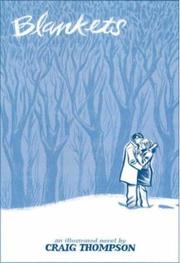
Expands your visual vocabulary with expressive, flowing linework and inventive page layouts, showing how drawing style and panel design can carry emotional weight.
Writing the Story: Script & Structure
BeginnerLearn how to develop a comics script — plotting, pacing, dialogue, and panel descriptions — so you can translate ideas into a workable blueprint before drawing a single page.
▸ Study plan for this stage
Pace: 4–5 weeks total: Week 1–2 — Read "Writing for Comics" by Alan Moore (~30–40 pages/day, including re-reading dense sections on panel description and internal monologue); Week 3–4 — Read "The DC Comics Guide to Writing Comics" by Dennis O'Neil (~25–35 pages/day, pausing to apply O'Neil's structural ex
- Moore's distinction between the 'full script' method (panel-by-panel descriptions written before the artist begins) vs. the 'plot-first' (Marvel) method, and when each is appropriate
- How to write precise, evocative panel descriptions that give an artist creative direction without over-directing — Moore's core craft in 'Writing for Comics'
- The role of internal monologue and caption boxes as a literary device unique to comics, as explored by Moore
- O'Neil's concept of the 'spine' of a story — the single core dramatic question or conflict that holds a script together
- Scene and sequence structure: how O'Neil breaks a comics story into acts, beats, and turning points, and how pacing is controlled through panel and page count
- Dialogue as action: O'Neil's principle that every line of dialogue must either reveal character, advance plot, or do both simultaneously — dead dialogue has no place in a script
- The page as a unit of storytelling — understanding the 'page turn' as a dramatic tool, and how both Moore and O'Neil treat the physical page as a pacing mechanism
- Translating a prose idea into a visual blueprint: moving from premise → outline → plot → full script, as synthesized across both books
- After reading Moore, can you explain the full-script method in your own words and write a single panel description that conveys mood, action, and composition without dictating every artistic choice?
- What does Moore mean when he says caption boxes and internal monologue must 'earn their place' on the page — how does this differ from prose narration?
- According to O'Neil, what is the 'spine' of a story, and how do you test whether your own story idea has one?
- How does O'Neil define a 'beat,' and how do beats accumulate into a scene, a sequence, and ultimately an act structure in a comics script?
- Both Moore and O'Neil address dialogue differently — what does each author prioritize, and where do their philosophies overlap or conflict?
- How would you use the page-turn as a deliberate dramatic tool, drawing on the pacing principles described by both authors?
- 'Panel Description Sprint' (Moore-based): Choose any single moment from a story you know well. Write a full-script panel description for it using Moore's method — specify the shot, the mood, the key visual elements, and any caption/dialogue. Then rewrite it twice: once over-directing the artist, once under-directing. Compare all three and identify the sweet spot.
- 'Spine Test' (O'Neil-based): Take three story ideas you've been considering for a comic. For each, write one sentence that states the spine — the central dramatic question. Use O'Neil's criteria to evaluate which idea has the strongest, most testable spine before committing to a full script.
- 'Three-Act Beat Sheet': Using O'Neil's act and beat structure, outline a 22-page single-issue comic story. Map out Act 1 (setup/inciting incident), Act 2 (escalation/midpoint/crisis), and Act 3 (climax/resolution) with approximate page counts and a one-sentence beat description for each major turn.
- 'Dialogue Autopsy' (O'Neil-based): Find 1–2 pages of dialogue from any comic you own. Apply O'Neil's test to every line: does it reveal character, advance plot, or both? Rewrite any line that fails the test so it earns its place on the page.
- 'Full Script Page' (Synthesis): Write a complete, formatted full-script page (1 page = 4–6 panels) for an original story idea, incorporating Moore's panel description style and O'Neil's dialogue and pacing principles. Include panel descriptions, captions, and all dialogue.
- 'Adaptation Exercise': Take a 1-page scene from a short story or a moment from your own life. Adapt it into a 1-page comics script using the full-script format. Then annotate each panel description, noting which choices were influenced by Moore and which by O'Neil.
Next up: Mastering the script and structure stage gives you a complete written blueprint — a full-script page, a beat sheet, and a working understanding of pacing — which is the essential foundation for the next stage, where you will learn to visually interpret that blueprint through panel layout, page composition, and sequential art fundamentals.

A concise, authoritative guide to scripting from one of the medium's greatest writers; it establishes professional habits around description, pacing, and collaboration with an artist (even when that artist is yourself).
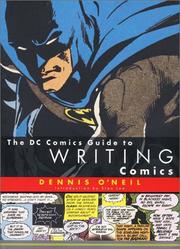
Complements Moore with a more structured, practical breakdown of plot, character, and dialogue specifically for sequential art, giving you concrete exercises to practice.
Drawing & Craft: Panel by Panel
IntermediateDevelop the hands-on drawing skills specific to sequential art — figure, expression, composition, and inking — and learn how to construct pages that guide the reader's eye.
▸ Study plan for this stage
Pace: 10–12 weeks total: Week 1–4 — "Making Comics" by Scott McCloud (~25–30 pages/day, revisiting diagrams and exercises); Week 5–8 — "Comics and Sequential Art" by Will Eisner (~20–25 pages/day, pausing to sketch responses to each chapter's examples); Week 9–12 — "Framed Ink" by Marcos Mateu-Mestre (~15
- The 'Big Triangle' of abstraction vs. realism vs. meaning (McCloud) — understanding where your visual style sits and why that choice affects reader identification
- The six steps of comics storytelling: choice of moment, frame, image, word, flow, and closure (McCloud) — every panel decision maps to one of these
- Closure and panel transitions — the six transition types (action-to-action, subject-to-subject, scene-to-scene, aspect-to-aspect, non-sequitur, moment-to-moment) and how gutters carry meaning (McCloud)
- Expressive anatomy and the 'body as instrument' — Eisner's principle that posture, gesture, and facial expression must work together to convey emotion without words
- Timing and rhythm on the page — Eisner's use of panel shape, size, and sequence to control the reader's sense of time passing
- The page as a single visual unit — Eisner's concept of the page spread as a stage, where every element (panel borders, lettering, negative space) is part of the composition
- Value, light, and shadow as storytelling tools — Mateu-Mestre's framework for using tonal contrast to direct the eye, establish mood, and define depth
- Compositional 'flow paths' and camera logic — Mateu-Mestre's methods for framing shots (close-up, wide, canted angle) and arranging elements so the reader's eye travels intentionally through a page
- According to McCloud, what is 'closure' and how does the gutter between panels exploit it? Give an example of three different transition types from your own reading.
- Eisner argues that the human body is an expressive instrument equal to the face. How would you draw a character conveying defeat using only posture and body language, with the face hidden?
- McCloud's 'Big Triangle' places every visual style somewhere between realistic, iconic, and abstract. Where does your own drawing style currently sit, and what storytelling trade-offs does that position carry?
- Using Eisner's concept of the page as a stage, how would you redesign a five-panel page so that its layout alone communicates urgency — without changing any of the drawn content inside the panels?
- Mateu-Mestre emphasizes that value contrast (light vs. dark) should guide the reader's eye before line does. Describe a specific compositional strategy from 'Framed Ink' that achieves this, and explain when you would use it.
- How do the panel-transition principles from McCloud and the compositional framing principles from Mateu-Mestre work together when planning a single action sequence? Where might they create tension, and how would you resolve it?
- Transition Mapping (McCloud): Pull three pages from any comic you own and label every panel-to-panel transition with McCloud's six types. Then redraw one page swapping two transition types and write a sentence on how the pacing changed.
- Expression Grid (Eisner): Draw a single character expressing the same emotion — grief, joy, suspicion — in six different ways: face only, body only, silhouette only, with a prop, in a crowd, and from behind. Compare which reads fastest and why.
- Thumbnail Page Redesign (McCloud + Eisner): Write a simple 8-panel script (one page, one scene). Thumbnail it three times using radically different panel layouts — grid, organic/irregular, and a single-image bleed with inset panels. Annotate how each layout changes the story's rhythm.
- Value Composition Studies (Mateu-Mestre): Choose five panels from 'Framed Ink' and reproduce them in grayscale using only three values (black, mid-gray, white). Then invert the value scheme and observe how mood and focal point shift.
- Shot-Type Sequence (Mateu-Mestre + McCloud): Script a 6-panel chase scene. Draw it twice — once using only wide/establishing shots, once using only close-ups and extreme close-ups. Write a reflection on what each version communicates that the other cannot.
- Ink a Full Page (All three books): Write and thumbnail a one-page, self-contained story (8–12 panels). Pencil it applying Eisner's body-language principles, lay out the page using McCloud's moment/frame/flow checklist, and ink it applying Mateu-Mestre's value-first lighting logic. Critique your own work against each book's framework.
Next up: By mastering panel construction, expressive drawing, and compositional flow, the reader now has the craft vocabulary to zoom out — making the transition to the next stage, which focuses on story structure, scripting, and the writer's toolkit for sustaining a full narrative across many pages.

McCloud's practical follow-up to Understanding Comics; it bridges theory and execution, covering character design, facial expression, panel transitions, and page flow in direct, actionable terms.

A master class from one of the medium's founding giants; Eisner goes deep on timing, body language, and the expressive use of the page as a stage — essential for intermediate craft.
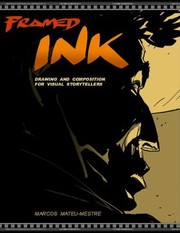
Focuses specifically on visual composition and cinematic staging within panels; reading it here sharpens your ability to direct the reader's eye and create mood through light and framing.
Finishing Your Book: Production & Publication
ExpertUnderstand the full pipeline from rough pages to finished book — lettering, color, self-editing, and publishing options — so you can complete and release your own graphic novel.
▸ Study plan for this stage
Pace: 8–10 weeks total: Week 1–2 — Eisner's "Graphic Storytelling and Visual Narrative" (~20–25 pages/day, re-reading key chapters on visual language and narrative flow); Week 3–5 — Chiarello's "DC Comics Guide to Coloring and Lettering Comics" (~15–20 pages/day with active practice sessions alongside rea
- Visual narrative economy (Eisner): every panel must earn its place — eliminating redundancy between image and word to create a seamless reading experience
- Expressive body language and 'acting' on the page (Eisner): characters communicate story through posture, gesture, and facial expression, not just dialogue
- Sequential flow and reader guidance (Eisner): panel composition, staging, and page layout direct the reader's eye and control pacing at the macro level
- Coloring as storytelling (Chiarello): color palettes, mood lighting, and color temperature are narrative tools, not decoration — they signal time, emotion, and genre
- Lettering fundamentals and hierarchy (Chiarello): balloon shape, font choice, caption placement, and sound-effect styling are integral parts of page design, not afterthoughts
- Production-ready file preparation (Chiarello): understanding bleed, trim, resolution (300+ DPI), CMYK vs. RGB, and file formats required by printers
- Self-publishing models and economics (Blaylock): comparing print-on-demand, offset printing, digital distribution, and crowdfunding — each with distinct cost structures and audience-reach trade-offs
- Building a publishing pipeline (Blaylock): ISBN acquisition, distributor relationships (Diamond, Ingram, direct sales), marketing basics, and launch strategy for an independent graphic novel
- After studying Eisner, can you identify three specific places in your own draft where image and text are redundant, and explain how you would cut or revise them?
- What does Chiarello's guide teach about the difference between coloring for print vs. digital, and how does that affect your file setup from the very first page?
- How does lettering hierarchy (per Chiarello) — the visual distinction between narration captions, speech balloons, thought balloons, and SFX — guide a reader's attention and reading order?
- According to Blaylock, what are the key financial and logistical differences between print-on-demand and offset printing, and which model is most appropriate for a first-time graphic novelist with a limited budget?
- How do Eisner's principles of visual storytelling inform the self-editing checklist you would apply before sending pages to a letterer or colorist?
- What steps does Blaylock outline for getting a graphic novel into distribution, and what materials (beyond the book itself) do you need to prepare before approaching retailers or platforms?
- Self-editing pass with Eisner's lens: Print 10 pages of your own work-in-progress (or a public-domain comic). Using Eisner's principles, annotate every panel where the caption/dialogue repeats what the image already shows. Rewrite or redraw at least five panels to let the image carry the weight instead.
- Color script exercise (Chiarello): Before coloring a single page, write a one-paragraph 'color script' for your entire book — defining the dominant palette for each act, the hue shifts that signal emotional turning points, and the color treatment for flashbacks or dream sequences. Then color one test page following that script.
- Lettering template build (Chiarello): Using free tools (Clip Studio, Affinity Publisher, or Illustrator), set up a master lettering template with correct balloon margins, a chosen font at proper point size, and guides for caption placement. Letter three consecutive pages of your script from scratch using this template.
- Print-ready file audit (Chiarello + Blaylock): Take one finished, lettered, colored page and run it through a production checklist — confirm 300 DPI resolution, CMYK color mode, correct bleed and trim dimensions, and flattened/exported PDF. Compare the result against the spec sheets of two real POD services (e.g., IngramSpark and Lulu).
- Publishing model comparison matrix (Blaylock): Build a spreadsheet comparing at least three publishing paths Blaylock discusses (POD, offset print run, digital-only, crowdfunding). For each, calculate estimated unit cost, retail price, royalty/margin, and break-even quantity using realistic numbers from current vendor websites.
- Mock pitch packet (Blaylock + Eisner): Assemble a one-page sell sheet for your graphic novel — including a logline, genre, page count, target audience, a sample interior spread, and a cover image. This mirrors what Blaylock describes as essential for approaching distributors, retailers, or crowdfunding backers, and forces you to articulate the visual storytelling identity Eisner's book helped you
Next up: Completing this stage gives you a finished, distributable graphic novel and a working knowledge of the full production pipeline, positioning you to move into advanced audience-building, licensing, and long-form career strategy — the natural next frontier for a publishing independent creator.

Eisner's companion volume zooms out to the narrative arc of a full book, helping you think about structure, genre, and audience as you move from individual pages to a complete work.
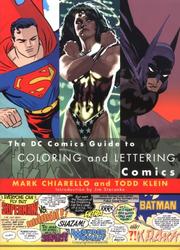
Covers the two most-overlooked finishing crafts — color theory for comics and professional lettering — giving you the technical knowledge to produce print- and screen-ready pages.
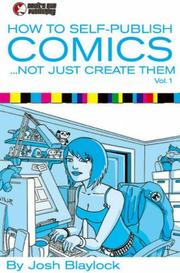
A practical, no-nonsense guide to printing, digital distribution, crowdfunding, and marketing your finished graphic novel — the final step from creator to published author.
Discussion
Keep reading
Paths that share books, cover the same subject, or open a related topic.