Best Books on Conversion Rate Optimization
This curriculum builds true CRO mastery across four tightly sequenced stages, starting from conversion-focused design principles and moving through funnel strategy, rigorous A/B testing statistics, and deep qualitative user research. Because the learner starts at an intermediate level, early books sharpen mental models rather than explain basics, and each stage unlocks the vocabulary needed for the next — so that by the end, the reader can design experiments, read results without fooling themselves, and diagnose leaks with both numbers and human insight.
Conversion-First Design & Landing Pages
IntermediateUnderstand how visitors think, how pages should be structured to convert, and what makes a landing page or funnel psychologically compelling — building the visual and copy intuition that underpins all CRO work.
▸ Study plan for this stage
Pace: 8–10 weeks, ~40–50 pages/day (mix of reading and annotation). Weeks 1–3: "Don't Make Me Think" (300 pages). Weeks 4–6: "Landing Page Optimization" (350 pages). Weeks 7–10: "Influence" (400 pages) with concurrent exercises and real-world application.
- Cognitive load and usability: How to eliminate friction by respecting how users actually scan, read, and decide (Krug's core principle)
- Visual hierarchy and information architecture: Structuring pages so the conversion path is obvious without conscious thought
- The testing mindset: Moving from opinion-based design to data-driven iteration (Ash's framework)
- Persuasion principles: Authority, social proof, scarcity, reciprocity, commitment, and liking as psychological levers in copy and design (Cialdini)
- Value proposition clarity: Communicating what you offer and why it matters in the first 3–5 seconds
- Funnel psychology: Understanding visitor intent at each stage and removing objections before they kill conversion
- Copy-design alignment: How words and visuals must work together to lower friction and build trust
- Behavioral triggers: Using urgency, specificity, and emotional resonance to move visitors from awareness to action
- Why does Krug argue that users don't read pages—they scan them? How should this change the way you structure information on a landing page?
- What is the difference between a good landing page and a great one according to Ash's testing methodology, and how do you know which is which?
- Name three of Cialdini's persuasion principles and give a concrete example of how each could be applied to a landing page for a SaaS product.
- How do cognitive load and visual hierarchy interact? What happens when a page violates both principles at once?
- What role does trust play in conversion, and what specific design and copy elements build it fastest?
- How would you structure a landing page funnel to address visitor objections at each stage before they leave?
- Annotate 5 real landing pages (competitors, successful campaigns, or your own) using Krug's usability heuristics. Mark every element that adds cognitive load and every element that clarifies intent.
- Redesign one existing landing page by applying Ash's testing framework: identify the primary conversion goal, list 3 hypotheses about what's blocking conversion, and sketch wireframes for 2 variations to test.
- Write two versions of a landing page headline and supporting copy—one without Cialdini's principles, one with at least 3 embedded (e.g., social proof, scarcity, authority). Compare them side-by-side.
- Create a 'friction audit' of a funnel you know well (signup → payment, for example). Map each step, identify where users drop off, and propose one design or copy change at each stage using insights from all three books.
- Conduct a 10-minute user test with a peer: have them think aloud while navigating a landing page. Record where they pause, what they skip, and what confuses them. Analyze the results against Krug's scanning behavior principles.
- Build a simple one-page landing page (or mockup) for a real or fictional product, intentionally applying at least 2 concepts from each book: usability clarity (Krug), testing-ready structure (Ash), and persuasion mechanics (Cialdini).
Next up: This stage builds the foundational intuition for *why* pages convert or fail, equipping you to diagnose problems and design solutions; the next stage will teach you how to measure, test, and optimize those designs at scale using analytics and experimentation frameworks.

Establishes the foundational principle that friction kills conversion; reading this first trains the eye to spot usability failures that silently destroy rates before any test is even run.
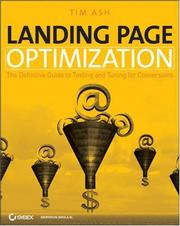
The most comprehensive canonical text on landing page anatomy, persuasion hierarchy, and funnel structure — read after Krug so you apply usability thinking directly to conversion-specific page design.
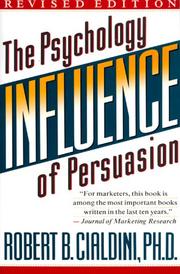
Provides the psychological principles (reciprocity, social proof, scarcity, authority) that explain *why* certain page elements convert; essential vocabulary for writing hypotheses in later testing stages.
Funnel Strategy & Persuasive Copy
IntermediateLearn how to architect full conversion funnels, write copy that moves people through each stage, and think about the customer journey as a system rather than a single page.
▸ Study plan for this stage
Pace: 8–10 weeks, ~40–50 pages/day (accounting for dense material and re-reading key sections)
- The five levels of awareness and how to match copy to where your prospect stands (Breakthrough Advertising)
- The customer's internal conversation and how to interrupt it with compelling copy (Breakthrough Advertising)
- The sales funnel as a system: lead magnet → sales page → upsell → core offer (Dotcom Secrets)
- The value ladder: how to structure offers to move customers from low-ticket to high-ticket (Dotcom Secrets)
- The role of story and narrative in persuasion across the entire funnel (Dotcom Secrets)
- Copy architecture: headlines, subheadlines, and body copy that guide the reader through a logical progression (Breakthrough Advertising)
- The bridge page and its function in warming cold traffic (Dotcom Secrets)
- Funnel psychology: understanding objections and addressing them systematically at each stage
- What are the five levels of awareness, and how would you write copy differently for a prospect at each level?
- Describe the customer's internal conversation and explain how Breakthrough Advertising teaches you to interrupt it.
- What is a value ladder, and how does it differ from a traditional sales funnel?
- Walk through a complete funnel from lead magnet to core offer: what happens at each stage, and what is the copy's job at each step?
- How does Russell Brunson use story and narrative to move prospects through a funnel, and why is this more effective than feature-based selling?
- What is a bridge page, when would you use one, and what should it accomplish?
- Analyze a sales funnel from a company in your industry: identify the five levels of awareness in their copy and note where they succeed or miss the mark.
- Write three versions of a headline for a lead magnet, each targeting a different level of awareness (unaware, problem-aware, solution-aware).
- Map out your own product or service as a value ladder with at least 4–5 price points, from free/low-cost to premium.
- Deconstruct a sales page from a successful funnel (e.g., a Clickfunnels example): identify the story structure, the objections being addressed, and how the copy moves the reader toward the CTA.
- Write a complete sales funnel sequence (lead magnet → bridge page → sales page → upsell) for a real or hypothetical offer, applying Schwartz's awareness levels and Brunson's narrative structure.
- Record yourself pitching your offer verbally, then transcribe and refine it into written copy—practice translating the natural rhythm of persuasive speech into page copy.
Next up: This stage equips you with the strategic architecture and persuasive language to build and optimize complete funnels; the next stage will focus on testing, analytics, and iteration—turning these funnels into data-driven conversion machines.

The definitive text on matching message sophistication to market awareness — understanding this is what separates surface-level CRO tweaks from deep funnel restructuring that produces step-change lifts.
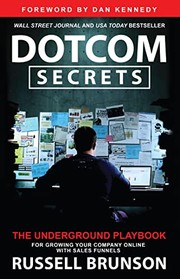
A practical, modern playbook for funnel architecture (value ladders, upsell sequences, traffic temperature); read after Schwartz to apply awareness-level thinking to concrete funnel blueprints.
A/B Testing Done Properly
IntermediateRun experiments that produce trustworthy, actionable results — understanding sample size, statistical significance, common pitfalls like peeking and novelty effects, and how to build a structured testing program.
▸ Study plan for this stage
Pace: 8–10 weeks, ~40–50 pages/day (mix of reading and active note-taking). Weeks 1–3: "You Should Test That" (foundational framework and case studies). Weeks 4–8: "Trustworthy Online Controlled Experiments" (statistical rigor and advanced methodology). Week 9–10: Integration, review, and capstone project
- The A/B testing framework: hypothesis formation, experiment design, execution, and analysis—and why each step matters for validity
- Statistical significance, p-values, and confidence intervals: what they mean, why they matter, and how to interpret them correctly
- Sample size calculation and power analysis: determining how many observations you need before running an experiment to ensure trustworthy results
- Common pitfalls that invalidate experiments: peeking at results early, novelty effects, multiple comparisons, and selection bias
- Structured testing programs: how to prioritize experiments, build a testing roadmap, and scale testing across an organization
- Experiment design best practices: randomization, control groups, metric selection, and avoiding confounding variables
- Online controlled experiments (A/B tests, multivariate tests) in practice: implementation, monitoring, and guardrail metrics
- The business context of testing: translating statistical results into actionable decisions and understanding when to stop testing
- What are the key stages of the A/B testing process, and why is proper hypothesis formation critical before running an experiment?
- How do you calculate the sample size needed for an experiment, and what factors (effect size, significance level, power) influence this calculation?
- What is statistical significance, and how do p-values and confidence intervals help you determine whether an experiment result is trustworthy?
- What is the 'peeking problem,' why does it invalidate results, and how do you prevent it in a structured testing program?
- How do novelty effects and other confounding variables bias experiment results, and what design choices mitigate these threats?
- How do you build and prioritize a testing roadmap for an organization, and what metrics should you track to measure testing program success?
- Design a hypothesis and experiment plan for a real or hypothetical website feature, including success metrics, expected effect size, and sample size calculation (use online calculators or formulas from the books)
- Analyze a published A/B test case study (from Goward's book or elsewhere) and identify the statistical design: sample size, significance level, power, and any potential pitfalls
- Calculate sample size for 3–4 different scenarios (varying effect sizes, significance levels, and power) to build intuition for how these parameters interact
- Conduct a mock experiment using a free A/B testing tool (e.g., VWO, Optimizely free tier, or a spreadsheet simulation) with synthetic data; analyze results and write a brief report interpreting p-values and confidence intervals
- Create a testing roadmap for a hypothetical company (e.g., an e-commerce site or SaaS product) with 5–8 prioritized experiments, including rationale and expected impact
- Identify and document 3–5 real-world testing pitfalls (peeking, novelty effects, multiple comparisons) in case studies or your own experience, and propose mitigation strategies
Next up: This stage equips you with the statistical rigor and experimental discipline to run trustworthy tests; the next stage will teach you how to scale testing insights across teams, optimize for long-term learning, and integrate testing into broader product strategy and organizational culture.

Introduces the LIFT model and a structured framework for prioritizing and designing tests; the ideal bridge between 'I have a hypothesis' and 'I know how to run a proper experiment.'
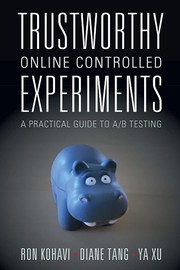
The gold-standard technical reference on A/B testing written by the team behind Microsoft's ExP platform — covers sample ratio mismatch, novelty effects, interaction effects, and the statistics of experimentation with real-world rigor.
User Research & Finding the Leaks
ExpertUse qualitative and quantitative research methods to diagnose *why* users drop off, prioritize the highest-impact leaks in a funnel, and generate the high-quality hypotheses that make every future test more likely to win.
▸ Study plan for this stage
Pace: 8–10 weeks, ~40–50 pages/day, with 1–2 week breaks between books for synthesis and exercises
- Growth leaks: identifying where and why users drop off in your funnel using both quantitative metrics and qualitative signals
- The Hacking Growth framework: combining viral loops, product-market fit signals, and data-driven hypothesis generation to prioritize optimization opportunities
- Observational research methods: conducting user interviews, usability tests, and ethnographic studies to uncover *why* users behave the way they do, not just *what* they do
- Funnel analysis and cohort segmentation: breaking down user journeys by behavior, demographics, and intent to isolate the highest-impact leak points
- Hypothesis formulation: translating research findings into testable, high-confidence predictions about what will move your conversion metrics
- Qualitative-quantitative integration: using quantitative data to spot the leak, then qualitative research to diagnose the root cause
- User mental models and friction points: understanding how users perceive your product, where they get confused, and what barriers prevent them from converting
- Prioritization frameworks: ranking leaks by impact and effort to focus testing resources on the highest-leverage opportunities
- What is a 'growth leak' and how do you identify one using both quantitative data and qualitative research?
- How would you use cohort analysis and funnel metrics to pinpoint where the biggest drop-off occurs in a user journey?
- What are the key differences between quantitative metrics (e.g., drop-off rates) and qualitative insights (e.g., user confusion), and why do you need both to diagnose a leak?
- Describe a user research method from Observing the User Experience that would help you understand *why* users are dropping off at a specific funnel stage, and explain how you'd conduct it.
- How do you translate findings from user research into a high-confidence hypothesis ready for testing?
- Given a real funnel with multiple leak points, how would you prioritize which one to investigate and test first, and what framework would you use?
- Map your own product's funnel (or a competitor's) using quantitative data: identify drop-off rates at each stage, segment by user cohort, and pinpoint the single biggest leak by impact.
- Conduct 5–8 user interviews or usability tests with people who dropped off at your identified leak point; use the observation techniques from Kuniavsky to uncover the root cause (confusion, friction, misalignment with mental models, etc.).
- Create a research synthesis document: compile quantitative metrics (drop-off %, cohort breakdowns) alongside qualitative themes (user quotes, behavioral observations) to tell a coherent story about *why* the leak exists.
- Write 3–5 testable hypotheses based on your research findings, following the format: 'If we [change X], then [metric Y] will improve by Z%, because [user insight from research].'
- Build a prioritization matrix for 5–10 potential optimization opportunities in your funnel, ranking by estimated impact (conversion lift) vs. effort (development/design cost); justify your top 3 picks using both data and research insights.
- Conduct a competitive teardown: research how 2–3 competitors handle the same funnel stage you're optimizing, then interview 3–4 users about their experience with those competitors to identify best practices and gaps.
Next up: This stage equips you with the diagnostic skills and high-confidence hypotheses needed to move into the testing and optimization phase, where you'll rapidly validate your assumptions and iterate on the highest-leverage changes.

Frames growth and CRO as a cross-functional, research-driven process with a repeatable loop; read first in this stage to understand how research feeds the experimentation engine systematically.
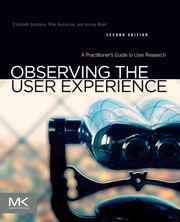
A thorough, practical guide to the full toolkit of user research methods — surveys, usability tests, interviews, and analytics — giving you the skills to find leaks that quantitative data alone can never explain.

Written by the founders of Conversion Rate Experts, this synthesizes everything — research, copy, design, and testing — into a battle-tested CRO process; the ideal capstone that ties all prior stages together.
Discussion
Keep reading
Paths that share books, cover the same subject, or open a related topic.