Blood: The Best Books on Transfusion, Donation and the Blood Supply, in Order
Blood is the one human tissue that ordinary people give away for free and that institutions then move, process, price and sell — which is why its history is simultaneously a medical story and a commercial one. This path starts with what blood physically is and what a transfusion does, then follows the invention of transfusion from seventeenth-century experiments to the industrial plasma trade, then takes the contaminated-blood disasters of the 1980s as the case study in how a safety system fails, and finally opens the clinical literature for anyone who wants the working detail. No science background is needed until the last stage.
What Blood Is
BeginnerUnderstand blood as a tissue — cells, plasma, clotting, groups — and get a sense of the scale of the modern donation and supply system.
▸ Study plan for this stage
Pace: 3 weeks. Hayes's Five Quarts is 290 pages of personal and cultural history and takes a week; George's Nine Pints is 368 pages of reported journalism across several countries and takes two. Both are trade non-fiction written for readers with no science background, and both are written in the first pe
- The components of blood — red cells, white cells, platelets, plasma — and roughly what proportion of volume each occupies
- ABO and Rh blood groups as antigen systems, and why compatibility is a matter of what the recipient's immune system will attack
- Haemostasis in outline: platelet plug, the clotting cascade, and why haemophilia is a failure of the second and not the first
- The modern supply chain George follows: donor recruitment, collection, testing, separation into components, and distribution to hospitals
- The distinction between whole-blood donation and plasma collection by apheresis, and why the second is paid in some countries and not others
- Blood-borne infection as the constraint that shapes every screening rule in the system
- The cultural and religious weight blood carries, which Hayes treats as historically continuous with the medical use of it
- What are the components of blood and what does each do?
- What determines whether a transfusion is compatible, in terms of antigens and antibodies?
- How does the modern supply chain get from a donor's arm to a transfused patient, in George's account?
- Why is plasma collected and paid for differently from whole blood, and in which countries?
- What does Hayes show about blood outside medicine that George's reporting does not cover?
- Draw the ABO compatibility table from George's account and check it against a second source; being able to reproduce it from memory is the minimum this stage should leave you with
- Follow one unit of blood through George's book from donor to recipient, listing every step and every test it passes through, and note where in the chain it is stored and for how long
- List the countries George reports from and what differs in each system — payment, screening, supply — and note which differences are regulatory rather than medical
- Take three of the cultural uses of blood Hayes describes and note which have a physiological basis and which do not
- Write down every technical term in Nine Pints you cannot define, and carry the list into the next stage
Next up: Knowing what blood is and how the supply runs, the next stage traces how transfusion was invented and why it took three centuries to become safe.

A personal and cultural history of the roughly five quarts in your body, mixing the biology with mythology, menstruation, phlebotomy and Hayes's own life with an HIV-positive partner. The gentlest entry, and it establishes almost every theme the path returns to.

The best modern reported book on blood: George follows donors, plasma sellers, hospital labs, menstrual-health campaigns and blood-borne disease across several countries. Read it second, as the current state of everything Hayes introduces.
How Transfusion Was Invented
BeginnerTrace the practice from animal-to-human experiments through blood typing to the industrial fractionation of plasma, and understand why it took nearly three centuries to become safe.
▸ Study plan for this stage
Pace: 4-5 weeks. Tucker's Blood Work is 304 pages of narrative history about the 1660s experiments and reads like a case; Starr's Blood is a 441-page epic history and is the essential book here — give it two to three weeks. Porter's Blood and Guts is a 224-page general history of medicine and is the faste
- The 1660s xenotransfusion experiments in Paris and London, and the death and trial that ended them
- Why transfusion was abandoned for roughly two centuries, and what specifically was not known that made it lethal
- Landsteiner's identification of blood groups and the transformation it made possible
- Anticoagulation and refrigerated storage as the two technical advances that made banking blood possible at all
- The wartime plasma programmes: why plasma rather than whole blood, and how war industrialised collection
- Cohn fractionation and the splitting of plasma into separate products, which created the commercial plasma industry
- The plasma trade as an international commodity market, and the sourcing practices that followed from paying donors
- Porter's wider frame: transfusion as one thread inside the history of surgery, anaesthesia, germ theory and the hospital
- What did the 1660s experimenters actually do, and what happened in the case that ended the practice?
- What did Landsteiner discover, and what became possible immediately afterwards that had not been before?
- Why did the world wars drive plasma rather than whole blood, and what did that require technically?
- What is fractionation, what products does it yield, and why did it create a commercial industry where whole blood had not?
- How does the plasma trade's donor sourcing differ from voluntary whole-blood donation, and what did Starr find that follows from it?
- What does Porter's general history supply that Starr assumes his reader already knows?
- Build a timeline from 1665 to 1990 with every technical advance Starr names and, beside each, the practice it made possible; the two-century gap in the middle is the thing the timeline is for
- Take Tucker's account of the murder trial and separate what is documented from what she reconstructs — she signals this, and following it is the point
- Diagram Cohn fractionation as Starr describes it: what goes in, what comes out, and which product goes to which patient population
- Read Porter's chapters on surgery and germ theory first and then reread Starr's account of the nineteenth century; note which of Starr's assumptions Porter has now supplied
- List the points in Starr's history where a commercial incentive and a safety consideration pull in different directions, and mark which way each was resolved
Next up: The last of those conflicts produced the contaminated-blood disasters, which the next stage takes as a worked case study.
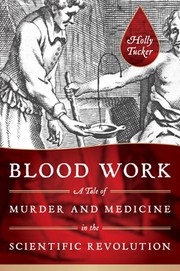
The 1660s experiments, in which physicians in Paris and London transfused animal blood into people and one of them was tried for murder. Start the history here — it is a genuinely strange story and it sets up why transfusion was abandoned for two hundred years.
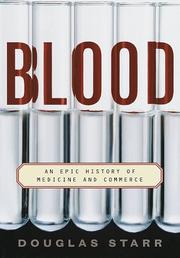
The essential history on this path: blood typing, the wartime plasma programmes that industrialised collection, the rise of the commercial plasma trade, and the arrival of HIV in the supply. Bare-titled in our catalogue; it is published as Blood: An Epic History of Medicine and Commerce.
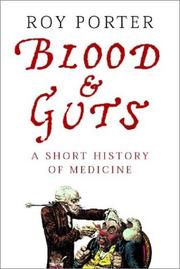
A very short general history of medicine by its best historian, useful here as context — it puts transfusion inside the broader story of surgery, hospitals and disease theory that Starr assumes you know.
A Gift, a Commodity, and a Disaster
IntermediateExamine what happens when a donated tissue enters a market, and work through the contaminated-blood catastrophes as a case study in institutional risk management.
▸ Study plan for this stage
Pace: 6-7 weeks. Lederer's Flesh and Blood is a 224-page academic history from a university press and is the scholarly backbone; Resnik's Blood Saga is 308 pages on the haemophilia community and the contamination of clotting-factor concentrates; Shilts's And the Band Played On is 656 pages of reporting on
- Titmuss's gift-versus-market framing of blood donation, which is the argument the whole stage is conducted inside
- The racial segregation of American blood banks in the twentieth century, which Lederer documents and most popular accounts omit
- Pooled clotting-factor concentrate: why it transformed haemophilia care, and why pooling thousands of donations turned one infected donor into thousands of infected recipients
- The specific decision points at which blood banks and manufacturers could have acted on early evidence and did not, as Shilts and Resnik each reconstruct them
- Surrogate testing, donor deferral and heat treatment as the three interventions available before an HIV test existed
- Institutional risk management under uncertainty: what the actors knew, when, and what each institution's incentives were
- Andrews and Nelkin's question about ownership: what a donor has consented to, and who holds property in tissue once it leaves the body
- Why blood is the hardest case for a market — voluntarily given, industrially processed, and sold
- What is the gift-versus-market argument about blood, and what evidence does each side use?
- What does Lederer document about segregated blood supplies, and on what grounds was the practice defended at the time?
- How does pooled factor concentrate turn one infected donation into a mass infection, arithmetically?
- What interventions were available before an HIV antibody test existed, and what were the stated reasons for not adopting them?
- Where do Shilts's and Resnik's accounts of the same events agree, and where do they emphasise different actors?
- What does Body Bazaar say a donor has actually consented to, and what follows for tissue that becomes a commercial product?
- Build a single timeline of 1981-1985 with Shilts's dates on one side and Resnik's on the other; the two books describe the same failure from the manufacturers' end and the patients' end, and the parallel columns are where the case study becomes legible
- For each decision point on that timeline, write down what was known, who decided, and what the alternative would have cost — this is the institutional-risk exercise the stage exists for
- Work the arithmetic of a pooled concentrate: given a pool size and an infection rate among donors, compute the probability that a given lot is contaminated, then check it against the figures Resnik reports
- Read Lederer's chapter on segregated supplies and write down every justification offered at the time, then note which were empirical claims and which were not
- Apply Andrews and Nelkin's ownership question to one case in Starr's history from the previous stage and state who, on their analysis, owned what
Next up: The history is now complete; the final stage moves from what happened to how the practice is actually carried out.

The academic history of blood and organ donation in twentieth-century America, including the segregation of blood supplies by race, which is the part of this history most popular accounts omit. Read it as the scholarly backbone of the stage.

The haemophilia community's story: how a treatment that transformed their lives — pooled clotting factor made from thousands of donors — became the mechanism that infected a large proportion of them with HIV and hepatitis C. The central case study for this stage.

Shilts's account of the early AIDS epidemic contains the definitive contemporaneous reporting on the blood banks' refusal to act on early evidence. Read the blood-supply chapters against Resnik; they are describing the same failure from opposite ends.
The wider legal and ethical question the previous books raise: who owns human tissue once it has left the body, and what a donor has actually consented to. The right closing argument for this stage.
The Clinical Subject
BeginnerMove from history to practice — blood groups and compatibility, component therapy, transfusion reactions and the running of a blood bank.
▸ Study plan for this stage
Pace: A semester, and this stage is a step change from everything before it. Hoffbrand's Essential Haematology is a 349-page undergraduate medical textbook and assumes working biochemistry and physiology — cell biology, protein structure, basic immunology — which none of the previous eleven books supply;
- Erythropoiesis, haemoglobin structure and function, and the iron cycle — Hoffbrand's foundation for everything else
- The anaemias by mechanism: deficiency, haemolytic, aplastic, and anaemia of chronic disease
- Coagulation in full: the cascade, its regulation, and the laboratory tests that interrogate each limb
- The leukaemias and lymphomas in outline, and the transfusion support their treatment requires
- Blood group serology beyond ABO and Rh: Kell, Duffy, Kidd, antibody screening and the crossmatch
- Component therapy: red cells, platelets, fresh frozen plasma and cryoprecipitate, with the indication and dose for each
- Transfusion reactions — acute and delayed haemolytic, febrile non-haemolytic, allergic, TRALI, TACO — and how each is recognised and investigated
- Apheresis, donor selection and screening, inventory management and the operation of a blood bank as an institution
- Trace the iron cycle from absorption to incorporation into haemoglobin and state where each of the deficiency anaemias breaks it
- Given a prolonged prothrombin time and a normal activated partial thromboplastin time, which limb of the cascade is implicated?
- What is the crossmatch actually testing, and what does an antibody screen add that ABO typing does not?
- For each of the four main components, state the indication, the expected increment and the storage constraint
- How would you distinguish TRALI from TACO at the bedside, and what does each require of the investigation?
- How does a blood bank manage inventory against expiry dates and unpredictable demand, in McCullough's account?
- Work every worked example and self-assessment question in Hoffbrand's chapters on anaemia and coagulation, including the ones with numbers — reading the chapters without doing them will not leave you able to interpret a count
- Take a full blood count with abnormal indices from one of Hoffbrand's cases and derive the differential from the indices alone before reading his answer
- Reproduce the coagulation cascade from memory, then mark on it which factor each of PT, APTT and thrombin time is sensitive to
- Work through McCullough's compatibility-testing chapter and construct three worked crossmatch scenarios, including one with a clinically significant antibody, and resolve each
- For each transfusion reaction McCullough lists, write a one-line recognition rule and the first investigative step, then check them against his table
- Return to the pooled-concentrate arithmetic from the previous stage and redo it with the screening and inactivation steps McCullough describes in place; the difference is what the last forty years of this specialty bought
Next up: This closes the path: you have the biology, the three-century history of how transfusion became possible, the case study in how its safety system failed, and the clinical detail of how the practice is run today.
The standard undergraduate haematology text, and the right place to acquire the underlying science: erythropoiesis, haemoglobin, coagulation, the anaemias and leukaemias. Assumes basic biochemistry and physiology. Read it before the transfusion text, not after.
The specialty's standard textbook — donor recruitment and screening, component preparation, compatibility testing, adverse reactions, apheresis and transplantation. This is what the practice in the first three stages actually consists of, written for people who do it.
Discussion
Keep reading
Paths that share books, cover the same subject, or open a related topic.