Blood has two literatures and they barely overlap. One is history and reportage: how a substance that could not be stored became an industry, a strategic national resource and a vector for infection. The other is clinical — haematology and transfusion practice, written for people who will be responsible for a patient's crossmatch. This path runs the histories first and puts the clinical books at the end, because those are reference works and they are far easier to navigate once you know how the system they describe was built.
Say the obvious thing once: nothing here is patient guidance. The two textbooks at the close are professional reference material for doctors and laboratory scientists, and the rest is history. Questions about donating, receiving a transfusion, or a specific diagnosis belong with a clinician.
Start with the popular histories
Bill Hayes's Five quarts braids a personal history — his partner's HIV diagnosis — with a cultural one, moving through bloodletting, vampires, menstruation and haemophilia. It is the most digressive book on the list and the gentlest entry point. Rose George's Nine pints is straight reportage and the better choice if you want the present tense: the British blood service, paid plasma collection in the American south, menstrual stigma in Nepal, and the international trade in plasma products, reported with the economics kept in view.
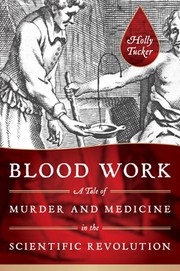
Holly Tucker's Blood Work narrows to a single episode — the animal-to-human transfusions attempted in Paris and London in the 1660s, and the death and murder trial that shut the practice down for roughly a century and a half. It is narrative history with a real argument about why the experiments stopped when they did.
How blood became an industry
Douglas Starr's Blood is the central book here: blood as a commodity, from wartime plasma programmes through the postwar commercial plasma trade to the contamination of the supply with hepatitis and HIV in the 1980s. If you read only one, read this. Roy Porter's Blood and guts is a short general history of medicine rather than a blood book, included to supply the surgical and hospital context Starr assumes.
Susan Lederer's Flesh and blood is academic history of how twentieth-century Americans came to accept the transfer of blood and organs between bodies — including the segregation of donated blood by donor race, which the American Red Cross practised into the 1950s. Susan Resnik's Blood Saga tells the haemophilia story from the community's side: a pooled-plasma treatment that transformed haemophilia care and then infected a large proportion of the people who depended on it.
Randy Shilts's And the Band Played on is the long journalistic account of the early American AIDS epidemic, blood banks included. Read it knowing that its Patient Zero thread has been overturned — genetic work published in 2016 established that Gaëtan Dugas was not the source of the North American epidemic, and Shilts's framing of him has been heavily criticised since. The reporting on institutional failure has held up considerably better than the epidemiology. Lori Andrews's Body bazaar then pushes the argument past blood into tissue, cell lines and genetic material, and the question of who owns a sample once it has left your body.
The clinical texts
Essential haematology — the Hoffbrand textbook, still known by that name across many editions — is the standard introduction for medical students and junior doctors: red cell and white cell disorders, coagulation, the laboratory tests and what their results mean. It assumes basic physiology and it leans heavily on its illustrations. Transfusion medicine, McCullough's textbook, is the specialist volume: donor recruitment and screening, component preparation, compatibility testing, transfusion reactions, and how a blood service is actually organised.
Both date, and that matters more here than in most fields. Pathogen screening changes with the technology, and transfusion thresholds have moved with trial evidence toward more restrictive practice. Check which edition you are holding and treat any specific protocol as something to confirm against current national guidelines rather than as current practice.
Related subjects sit on the blood and transfusion medicine hub.
Follow the full ordered path here: The Best Books on Blood and Transfusion Medicine, in Reading Order.