The Placebo Effect: The Best Books on Expectation, Belief and the Body, in Order
The placebo effect is real, well studied, and routinely made to carry claims it cannot support, so this path is arranged to separate the careful sources from the enthusiastic ones. It starts with the accessible reporting, then spends a stage on clinical-trial method — because most confusion about placebos is really confusion about what a control group measures — then goes to the neurobiology, then to the anthropological reframing that treats the effect as a response to meaning rather than to a sugar pill, and closes with the sceptics who show where the claims break down.
The accessible entries
BeginnerGet the phenomenon clearly in view: which conditions placebos measurably affect (pain, nausea, Parkinsonian motor symptoms, depression scores) and which they do not (tumours, infections, broken bones). Learn to hear the difference between a change in reported symptoms and a change in disease.
▸ Study plan for this stage
Pace: About four weeks for 848 pages, all three trade nonfiction and readable at 40 pages an evening. Vance's Suggestible You (288pp) first, ten days — it is the most disciplined of the three about saying where the evidence stops, and it covers the nocebo side that most popular accounts leave out. Marchan
- The distinction between a change in reported symptoms and a change in disease — the single idea the whole path rests on
- Which conditions show measurable placebo response: pain, nausea, Parkinsonian motor symptoms, depression scores
- Which do not: tumours, infections, fractures, and what that tells you about the mechanism
- The nocebo effect, and why it is the best evidence that expectation is doing real physiological work
- Expectation versus conditioning as two separate routes to a placebo response
- How to spot a good story doing the work of a study in popular science writing
- Name three conditions where placebo response is well documented and three where it is not. What distinguishes the two lists?
- What is the nocebo effect, and what is Vance's best evidence for it?
- Where do Vance and Marchant read the same finding differently, and which reading does the study support?
- What is Evans's narrower claim, and what would falsify it?
- When one of these books says the placebo effect helped a patient, what exactly was measured?
- Build the two-column list of conditions as you read, citing which book supplied each entry, and keep it for the rest of the path.
- Take one study described by both Vance and Marchant and write the two accounts side by side. Note every adjective one uses and the other does not.
- For three claims in Cure, write what the result would look like if it were noise — the question Marchant asks her sources.
- Find one place where Evans's narrower position rules out something the other two allow, and decide which you would bet on.
Next up: Every quantitative claim in these three books comes from a trial, and most confusion about placebos is really confusion about what a trial's control arm measures.

A science journalist's tour of expectation effects, including the nocebo side that most popular accounts skip, and unusually disciplined about saying where the evidence stops. The best single first book because it never lets the good stories outrun the studies.

Marchant reports from the labs doing mind-body research and consistently asks the researchers what their result would look like if it were noise. More willing than Vance to entertain optimistic interpretations, so read the two together and notice where they diverge.
Published as Placebo: Mind over Matter in Modern Medicine, this is the short sceptical primer, arguing that the effect works largely through the inflammatory and pain systems and not on everything. Older than the rest of the stage and useful precisely because its narrower claim has aged well.
What a controlled trial actually measures
IntermediateUnderstand the methodological point that most placebo writing gets wrong: the placebo arm of a trial measures placebo response plus regression to the mean plus natural history plus reporting bias, not the placebo effect alone. Finish able to explain why a trial without a no-treatment arm cannot isolate it at all.
▸ Study plan for this stage
Pace: About four weeks for 806 pages, and the shortest book here is the most important. Testing treatments is only 116pp — read it first, in two or three sittings, because it is the clearest explanation of randomisation and blinding written for a non-specialist and everything after assumes it. Goldacre's
- What the placebo arm actually contains: placebo response plus regression to the mean plus natural history plus reporting bias
- Why a trial with no untreated arm cannot isolate the placebo effect at all
- Randomisation, allocation concealment and blinding as three separate protections against three separate biases
- Regression to the mean, and why patients enrol when their symptoms are at their worst
- Subjective versus objective endpoints, and why placebo response looks larger on the former
- Publication bias and selective outcome reporting, which distort placebo estimates as much as drug estimates
- Why the placebo question is not academic in a field whose treatments have no plausible mechanism
- List everything the placebo arm of a trial measures besides the placebo effect.
- What is a three-armed trial and why is it the only design that can isolate placebo response?
- Why does regression to the mean inflate apparent placebo response, and how much?
- What does blinding protect against that randomisation does not?
- Take one therapy from Trick or Treatment? and state what the trials found and how the authors reached their verdict.
- Find a published placebo-controlled trial and write out, for each arm, what the patients received and what could have changed their outcome besides the treatment.
- Redo Goldacre's argument in your own words for a specific claim from stage one, showing exactly where the number came from.
- For two therapies covered by Singh and Ernst, list the trials they rely on and note the sample size and endpoint of each.
- Return to the two-column list you built in stage one and mark which entries rest on subjective endpoints.
Next up: Once you can say what a trial can and cannot show, you are ready for the evidence that placebo response has an identified biology rather than being an artefact of measurement.

A short, free-to-read primer on how clinical evidence is generated and how it goes wrong, written for patients and unusually clear on randomisation and blinding. Read it before anything that makes a quantitative claim about placebo response rates.
Goldacre's chapter on the placebo effect is the best short explanation in print of why the effect is both genuinely fascinating and constantly misused, and the rest of the book teaches the trial-reading skills the next stages assume.
Singh and Ernst work through the trial evidence for acupuncture, homeopathy, chiropractic and herbal medicine, where the placebo question is not academic. Explicitly a sceptical verdict and it says so; Ernst spent a career running these trials, which is the source of its authority and of the litigation it attracted.
The mechanism
IntermediateMove from whether to how. Placebo analgesia has an identified opioid pathway that naloxone blocks, and Parkinsonian placebo response shows dopamine release on imaging — these are the findings that make the effect a biology rather than a courtesy. This stage is technical; take the accessible books above as your glossary.
▸ Study plan for this stage
Pace: Seven to eight weeks for 735 pages, and this is the hardest reading on the path. Benedetti's Placebo effects (432pp) is a scientific monograph written for researchers — expect pharmacology, neuroanatomy and trial design assumed rather than explained, and budget five weeks at 15 to 20 pages a session
- Placebo analgesia's endogenous opioid pathway, and the naloxone-blockade experiments that identified it
- Dopamine release on imaging in Parkinsonian placebo response — a placebo effect visible without asking the patient anything
- Conditioning and expectation as distinct mechanisms with different pharmacological signatures
- Open-hidden administration: giving a real drug without the patient knowing, which measures the ritual's contribution directly
- System specificity — why there is no single placebo effect but a set of condition-specific responses
- The doctor-patient encounter as a measurable intervention rather than a courtesy
- Where Benedetti says the evidence is not yet good enough, and how often he says it
- Describe the naloxone experiment and say precisely what it establishes.
- What does the open-hidden paradigm measure that a placebo-controlled trial cannot?
- How do conditioning and expectation differ in their evidence, and can they be separated in a human study?
- Why does Benedetti insist on speaking of placebo effects in the plural?
- Name three places where Benedetti declines to draw a conclusion the popular books from stage one draw.
- Diagram the opioid pathway for placebo analgesia from Benedetti's account, marking each step with the experiment that supports it.
- Take one claim from Vance or Marchant and find the corresponding section in Placebo effects. Write down what the monograph adds and what it removes.
- For the Parkinsonian imaging findings, write out the design of the study and what the control condition was.
- Work through Patient's Brain and list every component of the clinical encounter that has been measured. Rank them by effect size where he gives one.
Next up: If the ritual of treatment is itself doing measurable work, then calling the sugar pill the active ingredient may be the wrong description entirely — which is the next stage's argument.

The standard scientific monograph by the neuroscientist who did much of the underlying work, covering conditioning, expectation and the specific neurochemistry system by system. Written for researchers and it shows, but nothing else in print is this rigorous or this cautious.

The companion volume on the neuroscience of the doctor-patient encounter itself — what the ritual of being treated does measurably to the patient. Shorter and more readable than Placebo Effects, and it sets up the anthropological argument in the next stage from the biological side.
The reframing: it was never about the sugar pill
IntermediateTake on the strongest revisionist argument in the field: that 'placebo effect' is a misnomer for a response to meaning, expectation and clinical ritual, which would make it a component of every treatment rather than a control condition. Assess how much this reframing explains and how much it merely renames.
▸ Study plan for this stage
Pace: Six weeks. Moerman's Meaning, Medicine and the 'Placebo Effect' — the catalogue renders the title with quotation marks around the last two words — is an academic monograph whose length our record does not carry, so budget by difficulty: two weeks, reading the cross-cultural trial-variation chapters
- The meaning response — Moerman's proposal to replace placebo effect with a term that names what is actually varying
- Cross-cultural variation in placebo arms of the same trial, and why pure pharmacology cannot account for it
- The consequence of the reframing: if it is a response to meaning, it is a component of every treatment, not a control condition
- The deception problem, and the evidence on open-label placebos given with full disclosure
- Informed consent and clinical honesty as constraints on any deliberate use of the effect
- Recurring narrative shapes in mind-body medicine, and how each era's version borrowed the prestige of its era's science
- Renaming versus explaining — the test to apply to Moerman's proposal
- What is Moerman's evidence from cross-cultural trial variation, and what alternative explanations does he rule out?
- Does calling it a meaning response explain anything a placebo account does not, or does it relabel it? Argue both sides.
- What do the open-label placebo studies show, and what are their weaknesses?
- What does Brody conclude a clinician may honestly do, and what does he rule out?
- Which of Harrington's recurring narratives fits the current wave of placebo enthusiasm best?
- How does Benedetti's work on the clinical encounter support or undercut Moerman?
- Take Moerman's central cross-cultural finding and write out the study designs behind it, then say what would have to be true for the variation to be an artefact.
- Write the clinical script for an honest open-label placebo, using Brody's constraints, and identify the point at which it stops being honest.
- Map each era Harrington covers onto the science it borrowed authority from, and add the present day.
- Return to your stage-one list of conditions and mark which entries the meaning-response account handles better than a pharmacological one.
Next up: The reframing makes the effect larger and more interesting, which is exactly when a path like this needs its sceptics.

The anthropologist's case for replacing 'placebo effect' with 'meaning response', supported by cross-cultural variation in trial results that a pure-pharmacology account cannot explain. The most intellectually important book on the path; the catalogue renders the title with quotation marks around 'Placebo Effect'.
A practising physician and bioethicist on what a clinician may honestly do with this knowledge — the deception problem, and whether an open-label placebo escapes it. The practical counterpart to Moerman's theory.
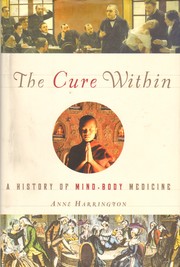
A historian of science tracing the recurring narratives Western medicine has told about mind and healing, from mesmerism to stress to positive thinking. It explains why placebo claims keep taking the same shapes, which is the best inoculation against the next round of them.
Where the claims break down
IntermediateFinish with the sceptics and the hard cases, and hold two conclusions at once: the placebo effect is smaller and narrower than popular writing implies, and it is large enough to have swallowed some real drug effects. Be able to say which of the books you have read overclaims, and on what specific point.
▸ Study plan for this stage
Pace: About five weeks. Bausell's Snake oil science has no length recorded in our catalogue, so budget a fortnight on difficulty: it is a biostatistician's account of why placebo-controlled results in alternative medicine are so often misread, blunt in tone in a way some readers will find overcorrects, an
- Why a placebo-controlled result in a field with no plausible mechanism is easy to misread, and the specific statistical routes by which it happens
- Effect size versus clinical significance — a real difference that no patient would notice
- Publication bias and the value of unpublished trial data, which is what makes Kirsch's meta-analysis unusual
- The severity-subgroup dispute in the antidepressant argument, and what each side actually claims
- Active placebos and unblinding by side effects, the standard objection to any drug-versus-placebo comparison
- The two conclusions to hold together: the effect is narrower than popular writing implies, and large enough to have absorbed some real drug effects
- Advocacy from a methodologically competent author — how to read Howick's recommendations against his own standards
- What did Kirsch's meta-analysis include that published analyses did not, and how did he obtain it?
- State the severity-subgroup objection and Kirsch's reply. Which do the data favour?
- What is an active placebo, and how would using one change the antidepressant results?
- Where is Bausell's statistical argument strongest, and where does the tone outrun the evidence?
- Which book on this whole path overclaims most, and on exactly which point?
- Howick argues for deliberately harnessing these effects. What would have to be true for that to be both effective and honest?
- Find two published rebuttals to Kirsch and write, for each, whether it attacks the data, the analysis, or the interpretation.
- Take one alternative-medicine trial Bausell discusses and identify every route by which its placebo arm could produce the reported result.
- Go back through the two-column list from stage one and grade each entry: well supported, contested, or overclaimed, naming the book that moved it.
- Write 800 words stating both conclusions of this stage at once, using evidence from at least four books on the path and no rhetorical hedging.
Next up: You can now read any placebo claim — in a trial report, a headline, or a clinic — and say what was measured, against what control, and how far the conclusion travels.

A biostatistician who ran alternative-medicine trials working through why placebo-controlled results in that field are so often misread. Blunt and dismissive in tone, which some readers will find overcorrects — the statistical argument stands regardless.

Kirsch's meta-analysis of antidepressant trial data, including unpublished data obtained under freedom-of-information law, arguing that most of the measured benefit is placebo response. Vigorously disputed by psychiatrists on its handling of severity subgroups and clinical significance, and one of the most consequential placebo arguments ever made — read the rebuttals too.

An evidence-based-medicine researcher arguing that clinicians should deliberately harness placebo and self-healing effects, which is the most optimistic position on this path held by someone with the methodological credentials to defend it. Closer to advocacy than the Benedetti volumes; read it last, once you can check its claims yourself.
Discussion
Keep reading
Paths that share books, cover the same subject, or open a related topic.