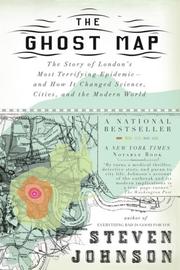
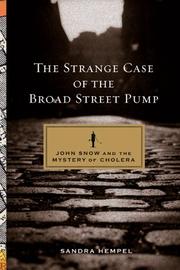
Start with The Ghost Map by Steven Johnson, which narrates the 1854 Soho outbreak and John Snow's investigation of the Broad Street pump. It is popular history, fast, and it gets you the founding story of the field. Follow it with The Strange Case of the Broad Street Pump by Sandra Hempel, a fuller biography of Snow that puts the famous week into the context of a career, and Cholera: The Biography by Christopher Hamlin, which is the short scholarly account of the disease itself across two centuries and several continents.
The facts underneath are not in dispute and should be stated plainly. Cholera arrived in Europe from the Ganges delta in the pandemic that began in 1817 and returned repeatedly through the century. Britain lost roughly 32,000 people in 1831 and 1832 alone; Hamburg lost around 8,600 in a matter of weeks in 1892. Death came fast, from dehydration, often within a day, and it was undignified in a way that shaped how the disease was written about. The methods that made sense of it — mapping cases, comparing populations supplied by different water companies, counting deaths against exposure — are the origins of modern epidemiology.
Snow, and reading him properly
On the Mode of Communication of Cholera is Snow's own monograph, and it belongs on this list as a primary source rather than as a history. Snow was arguing a case against the prevailing miasma theory, he assembled and presented the evidence himself, and the second edition of 1855 was published at his own expense to persuade a profession that was not convinced. That does not make him wrong — the water-borne argument was right — but the book is advocacy by an interested party, and it reads like it. Read a historian first so you can see what he chose to include.
Two useful corrections to the popular version: the Broad Street outbreak was already declining when the pump handle was removed, and the acceptance of Snow's explanation took decades rather than an afternoon. The Great Stink of London by Stephen Halliday covers what actually followed in London — Joseph Bazalgette's sewer system, built substantially on miasma reasoning and effective anyway.
Cholera as social history
Death in Hamburg by Richard Evans is the outstanding book on this list and probably the best single work on any cholera epidemic: it uses the 1892 outbreak to dissect a city's politics, class structure and government, and explains why Hamburg was devastated while neighbouring Altona was not. It is long and academic in method but readable throughout.
Cholera in Post-Revolutionary Paris by Catherine Kudlick does similar work on 1832 France, with attention to how the bourgeoisie interpreted a disease that killed the poor first. The cholera years by Charles Rosenberg, first published in 1962, tracks the United States across 1832, 1849 and 1866 and shows the same country responding to the same disease first as divine judgement and finally as a sanitation problem. It is still the standard American account.
Wider frames
Epidemics and society by Frank Snowden is the broad modern survey — a lecture course in book form, covering plague through to the present, with strong chapters on cholera. Contagion and the State in Europe, 1830-1930 by Peter Baldwin is the comparative political study, explaining why neighbouring countries adopted opposite quarantine policies against the same threat; it is a scholarly monograph and reads as one.
Plagues and Peoples by William McNeill is the 1976 book that put disease at the centre of world history. It remains worth reading for the framing, but a good deal of its specific epidemiology has been revised by later scholarship, so treat it as an argument of its period. The Blue Death by Robert Morris and Pandemic by Sonia Shah both bring the story forward to present-day water safety and emerging disease; Shah in particular uses cholera as the template for how a new pathogen spreads.
Follow the full path in order and the founding story of epidemiology stops being an anecdote about a pump handle.
Follow the full ordered path here: Cholera Epidemics: The Best Books to Read, in Order.
Ready to learn something deeply?
Build a reading path — free