Start with Things Fall Apart. This is one of the rare cases where the famous book, the first book and the best entry point are the same book. It is under two hundred pages, it establishes Igbo village life on its own terms for two-thirds of its length before the missionaries arrive, and its refusal to sentimentalise Okonkwo — a proud, violent, frightened man — is what makes the ending land rather than merely accuse.
The real ordering question comes next, and it is a genuine one. The African Trilogy has a publication order and an internal chronology, and they are different.
Publication order versus internal chronology
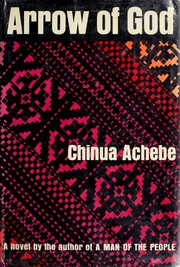
Achebe published Things Fall Apart in 1958, No Longer at Ease in 1960, and Arrow of God in 1964. But the stories run in a different sequence: Things Fall Apart is set in the 1890s with Okonkwo, Arrow of God in the 1920s with the priest Ezeulu, and No Longer at Ease in the 1950s with Obi Okonkwo, the grandson of the first novel's protagonist.
Our recommendation: read them in internal chronological order — Things Fall Apart, then Arrow of God, then No Longer at Ease. The trilogy is a family history across three generations of colonial encounter, and the arc from first contact to entrenched administration to independence-era Lagos is far more legible that way. The counter-argument is real: publication order shows Achebe's own development, and Arrow of God is the most demanding of the three, so putting it second raises the difficulty early.
Note that our catalogue holds No Longer at Ease only inside the omnibus The African Trilogy, which is the efficient purchase regardless of which order you choose.
The later novels
A Man of the People is the fourth novel and a sharp political satire of a newly independent African state, ending in a military coup. It was published in January 1966; Nigeria's first coup happened within weeks, and Achebe was briefly suspected of foreknowledge. It is the funniest and angriest of his fiction.
Anthills of the savannah is the last novel, from 1987, and the most formally ambitious — three narrators, a shifting perspective, and a much denser style. It was Booker-shortlisted and it is the one to read last. It is also, honestly, the one readers find hardest; the loose, transparent narration of Things Fall Apart is gone.
The essays
Morning yet on creation day and Hopes and impediments collect the criticism, and they matter more than most novelists' essays because Achebe was arguing about what African literature was for.
Hopes and impediments contains "An Image of Africa", his 1975 lecture calling Joseph Conrad a racist and Heart of Darkness a book that dehumanises Africans as scenery for a European moral crisis. It changed how that novel is taught, and it remains contested — some critics accept the charge fully, others argue it flattens Conrad's own irony. It is worth reading the lecture directly rather than the summaries of it.
The memoir
There Was a Country is his account of the Biafran war, published shortly before his death in 2013. It is part memoir, part history, and it is the most politically charged thing on this list: its assessment of Nigerian federal conduct during the war, and of particular figures in it, was sharply disputed in Nigeria on publication. Read it as testimony from a participant with a position, which is what it announces itself to be, and read the historians alongside it.
Where to stop
Things Fall Apart alone is a complete reading experience and always has been. If you want the full argument Achebe was making about colonialism, read the trilogy. Everything after that is for readers who want the writer rather than the single book — and there is a great deal there worth having.
More world literature paths are on Discover.
Follow the full ordered path here: Chinua Achebe Reading Order: Where to Start.