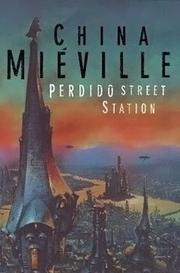
Start with The City & The City. The obvious alternative is Perdido Street Station, the book that made his name, and it is the wrong first Miéville: 710 pages, a deliberately vocabulary-heavy style, and an ending many readers experience as punishment rather than resolution. Plenty of people have bounced off him there and never come back.
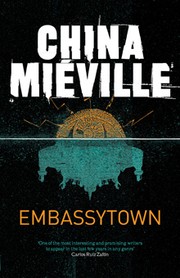
The City & The City is a real detective novel and reads at that speed once the premise lands. Two cities occupy the same ground and their citizens are trained from birth to unsee each other; crossing between them without going through the border is a crime called Breach, which is also the name of the force that polices it. Nothing in the book is supernatural, and it never grants you an easier explanation. Follow it with Embassytown, whose Language is spoken with two mouths at once and cannot refer to anything untrue, so its speakers must stage real events in the world before they can use them as similes. Treat its first fifty pages as their own sitting — the vocabulary arrives well before the definitions do, the disorientation is designed, and the correct response is to keep reading rather than to reread.
Bas-Lag, in order
Perdido Street Station, The Scar, Iron Council. Read them in that order, but know what they are: a shared setting, not a serial. No character carries over, nothing ends on a hook, and each book picks a different corner of the same world. Leave a day or two between them, or the later two read like sequels they are not.
New Crobuzon is written as a working city with an economy, a corrupt militia, a press and a labour movement, which is why the fantasy reads like reportage. Remaking — punitive surgical body modification handed down by courts — is the world's clearest statement that this is a fantasy about power rather than about magic. Miéville writes from an avowedly Marxist position and has been active in socialist politics; the strikes and revolutions are arguments he is making, not scenery, and the whole project is a deliberate rejection of the Tolkien-descended tradition. No returning king, no restoration of an order that was right all along.
The Scar is the most conventionally satisfying of the three, a shipboard adventure whose real subject is being lied to and used, narrated by a woman kept outside every decision that matters. Iron Council is the most openly political and the most formally difficult, with a fractured chronology and a long move backwards through its middle, which is why it belongs last. If you are going to abandon Perdido Street Station, note that almost everyone who does quits before the worldbuilding gives way to the thriller — keep a one-page glossary and push through.
The standalones
King Rat, Kraken, Un Lun Dun, Railsea. These four have nothing to do with each other or with Bas-Lag; the only continuity is a habit of taking one existing form and rebuilding it — a folk tale, a cult thriller, a portal quest, Moby-Dick.
Un Lun Dun and Railsea are written for younger readers and shelved that way. They are not lesser, but know what you are picking up. Un Lun Dun dismantles the chosen-one plot from inside it: the prophesied heroine is knocked out of the story early, her ordinary friend finishes the quest, and most of the prophesied steps get skipped on the grounds that they waste everyone's time. Miéville drew its illustrations himself, and several carry jokes the prose never repeats — check that your edition includes them, because some printings and most ebook conversions do not. King Rat is a first novel and reads like one, with a late-nineties London drum-and-bass scene that dates it in a way that is now part of its interest. Kraken is the comedy of the group.
The completist tail
Looking for Jake contains one Bas-Lag story about a figure the New Crobuzon novels treat mostly as rumour, so save it until after Iron Council. Its story Details is the cleanest demonstration of his method: one rule, applied without mercy, in a dozen pages. Three Moments of an Explosion is deliberately uneven — several pieces are trailers for films nobody made. The Last Days of New Paris runs on real artworks and carries an afterword identifying them; read the afterword alongside the novella rather than after it.
October is not a novel. It is a month-by-month narrative history of the Russian revolution of 1917, written from an openly declared socialist position that the book states rather than affecting neutrality about. Read a second account of 1917 if you want the argument tested.
Where to stop
The City & The City and Embassytown are enough for most readers. Go on to Bas-Lag only if you enjoyed holding an impossible premise on trust for a hundred pages. More fantasy reading orders are on Discover.
Follow the full ordered path here: China Mieville Reading Order: Where to Start.