Understand modern China
This four-stage curriculum moves from vivid narrative ground-level introductions, through the mechanics of Party rule and the economy, into the geopolitical fault lines of Taiwan and US-China rivalry, and finally to critical and dissenting perspectives that complicate the official story. Each stage builds the conceptual vocabulary — historical, political, and economic — needed to get the most out of the next, turning a beginner into a genuinely informed, multi-perspective reader of modern China.
Foundations: Getting a Feel for the Country
BeginnerBuild an intuitive, human-scale sense of modern China — its recent history, its people, and the sweeping changes of the last four decades — before tackling systems and structures.
▸ Study plan for this stage
Pace: 10–12 weeks total. Weeks 1–4: "Country Driving" (~30 pages/day, 5 days/week) — read leisurely, as travelogue; pause to look up places on a map. Weeks 5–12: "The Search for Modern China" (~25 pages/day, 5 days/week) — denser material, so slow down for chapters on the 20th century; re-read key passage
- The human texture of rural and urban China: how ordinary people — villagers, migrants, factory workers, entrepreneurs — experience rapid modernization firsthand, as seen through Hessler's three road journeys across wildly different Chinas
- The car and the road as metaphors for China's development: infrastructure expansion, individual freedom, and the collision of old and new in 'Country Driving'
- China's long historical arc from the late Ming through the Qing collapse, the Republic, Mao's revolution, and Deng's reforms, as narrated by Spence — understanding that 'modern China' is a process, not a moment
- The recurring tension between central state control and local/individual agency, visible both in Spence's political history and in Hessler's ground-level encounters with bureaucracy, land policy, and migration
- The Great Leap Forward and the Cultural Revolution as catastrophic ruptures that shaped the psychology and material conditions of every Chinese person Hessler meets decades later
- Deng Xiaoping's Reform and Opening-Up (1978–) as the hinge event connecting Spence's historical narrative to the living China Hessler documents in the 2000s
- Migration and urbanization: the floating population of rural migrants whose labor built modern Chinese cities, humanized in 'Country Driving' and contextualized historically in Spence
- The layered meaning of 'the village' in Chinese life — as administrative unit, cultural anchor, and site of transformation — explored on the ground in Hessler's Sancha chapters and in Spence's treatment of rural policy across dynasties
- After reading 'Country Driving,' how would you describe the lived experience of a rural Chinese villager and a factory migrant worker during the 2000s boom? What details from Hessler's three journeys (the Wall road, Sancha village, and the Lishui factory belt) support your answer?
- Spence traces China's search for a modern identity from roughly the 1600s onward. What are the two or three biggest turning points he identifies, and why does he frame the story as a 'search' rather than a linear progress?
- How do the Great Leap Forward and the Cultural Revolution, as described by Spence, help explain attitudes, behaviors, or silences you notice in the people Hessler encounters in 'Country Driving'?
- What does Deng Xiaoping's Reform era look like from the top (Spence's political and economic history) versus from the bottom (Hessler's roads and villages)? Where do the two accounts reinforce each other, and where do they create tension?
- How does the physical act of driving — and the explosion of car ownership — function in 'Country Driving' as a window into broader social changes like individualism, consumerism, and state infrastructure investment?
- By the end of both books, how would you define 'modern China' in your own words? What is modern about it, and what continuities with the pre-modern past does Spence help you see lurking beneath the surface Hessler describes?
- Map exercise (during 'Country Driving'): Print or pull up a detailed map of China. As Hessler travels each of his three routes, trace them in a different color. Mark every city, village, or region he names. Note which areas are coastal vs. interior, Han-majority vs. minority — this spatial intuition will be essential for Spence.
- Character journal (during 'Country Driving'): Keep a running list of every named Chinese person Hessler introduces. For each, jot down: home province, occupation, and one thing they want or fear. At the end, look at the list as a whole — what patterns emerge about aspiration, mobility, and constraint?
- Timeline construction (during 'The Search for Modern China'): Build a single-page visual timeline from 1600 to 2000. For each major event Spence covers, write one sentence on what it changed and one sentence on what it left unresolved. Pin Hessler's road trips (early 2000s) at the far right — this anchors the history to the human stories you already know.
- Connect-the-dots reflection (after finishing both books): Choose any three people from your 'Country Driving' character journal. Write one paragraph per person explaining how Spence's history — a specific policy, war, or movement — shaped the world that person was born into. This forces you to move fluidly between macro-history and micro-lives.
- Comparative reading note (after finishing both books): Find one scene in 'Country Driving' that illustrates a theme Spence discusses historically (e.g., land rights, state campaigns, migration). Write a short 'diptych' — one paragraph summarizing Spence's historical account, one paragraph quoting or paraphrasing Hessler's on-the-ground version. What does each mode of writing reveal that the other
- Vocabulary and concept glossary: As you read Spence, collect 15–20 terms (e.g., 'hukou,' 'danwei,' 'rectification campaign,' 'special economic zone,' 'household responsibility system'). For each, write a plain-language definition AND find a moment in 'Country Driving' where the real-world effect of that term is visible, even if Hessler never uses the word itself.
Next up: Having built an intuitive, human-scale feel for China's people and its historical sweep through Hessler's roads and Spence's narrative, the reader is now ready to examine the formal systems — political, economic, and social — that structure the country, moving from 'what does China feel like?' to 'how does China actually work?'
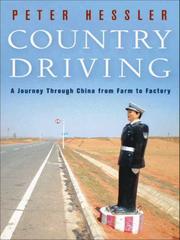
A ground-level, deeply readable portrait of rural and urban China during its transformation in the 2000s. Hessler's immersive journalism gives beginners vivid human context before any theory.
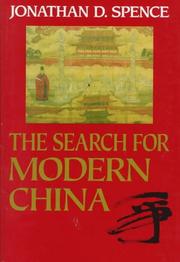
The canonical single-volume history from the late Ming to the present. Reading it second gives the beginner a solid chronological spine — from dynastic collapse through Mao to reform — on which everything else hangs.
The Party: How China Is Actually Governed
BeginnerUnderstand the structure, ideology, and survival logic of the Chinese Communist Party, and how it controls the state, the economy, and society.
▸ Study plan for this stage
Pace: 10–12 weeks total: ~3–4 weeks per book at roughly 20–25 pages/day. "The Party" (longest, densest) in weeks 1–4; "China's New Red Guards" (shorter, more focused) in weeks 5–7; "Surveillance State" (narrative-driven) in weeks 8–11; week 12 reserved for review, synthesis, and exercises.
- The CCP's organizational architecture: the Politburo Standing Committee, Central Committee, and the parallel party-state structure that sits above formal government institutions
- Nomenklatura system: how the Party controls elite appointments across government, military, state-owned enterprises, universities, and media to enforce loyalty
- Ideology as a tool of legitimacy: the evolution from Maoist doctrine through Deng's pragmatism to Xi Jinping Thought, and why the Party cannot fully abandon ideological justification
- The 'red resurgence' and neo-Maoist revival: Blanchette's account of how Xi Jinping mobilized leftist online movements and party hardliners to consolidate personal power
- Authoritarian resilience and adaptive governance: how the CCP survives by co-opting elites, managing information, and selectively responding to public grievances
- The surveillance state as political infrastructure: how Xinjiang's 'social credit' systems, predictive policing, and mass data collection serve CCP control objectives beyond mere crime prevention
- The tension between techno-utopianism and repression: how Chinese tech companies became instruments of the party-state, willingly or otherwise
- The Party's 'black box' problem: deliberate opacity in decision-making, the role of internal documents vs. public pronouncements, and what outsiders can and cannot know
- After reading McGregor, can you diagram the relationship between the CCP's internal organs (e.g., the Organization Department) and the formal Chinese state (e.g., the State Council and NPC)? Who actually holds power and why?
- What does Blanchette mean by 'China's New Red Guards,' and how did Xi Jinping's rise both exploit and then contain neo-Maoist online nationalism?
- How does the nomenklatura system, as described by McGregor, explain why Chinese CEOs of major state enterprises are effectively party cadres first and business executives second?
- Based on Chin's reporting in 'Surveillance State,' what distinguishes China's surveillance apparatus from that of liberal democracies — is it purely technical, or is the difference fundamentally political and institutional?
- How do all three books together explain the CCP's 'survival logic' — what threats does the party perceive, and what mechanisms does it use to neutralize them?
- What role does ideology play across all three books? Is it a sincere belief system, a cynical control tool, or something more complicated — and has that role changed over time?
- Org-chart exercise (after McGregor): Draw a two-column diagram — left column showing formal state institutions (President, State Council, NPC, courts), right column showing the parallel CCP organs (Politburo Standing Committee, Organization Department, Central Discipline Inspection Commission). Draw arrows showing where real authority flows. Keep it on one page and annotate it with one McGregor qu
- Timeline of ideology (after Blanchette): Build a chronological timeline from Mao's death (1976) to Xi's second term (2017+) tracking shifts in official CCP ideology. Use McGregor for the Deng–Jiang–Hu era and Blanchette for the neo-Maoist turn. Note which factions gained or lost power at each inflection point.
- Case study comparison (after Chin): Choose one technology described in 'Surveillance State' (e.g., the Integrated Joint Operations Platform in Xinjiang) and write a one-page memo as if you were briefing a policymaker: What does the system do? Who controls it? What does it reveal about the party-state's priorities?
- Comparative reading journal: After finishing each book, write a 200-word entry answering: 'What does this book say the CCP's single greatest vulnerability is?' Compare all three entries at the end — do the authors agree, and if not, why might they differ?
- Primary source pairing: Find and read one publicly available CCP document (e.g., a Party Congress work report or a People's Daily editorial on 'Xi Jinping Thought') and annotate it using concepts from all three books — identify where ideology, organizational control, and surveillance rationale each appear.
- Socratic discussion or written debate: Formulate and argue both sides of this proposition — 'The CCP's surveillance and ideological apparatus makes it more stable, not more brittle.' Use specific evidence from all three books to support each side, then write a concluding paragraph with your own assessment.
Next up: By internalizing how the CCP governs internally — its structures, ideology, and control mechanisms — the reader is now equipped to examine how that same party projects power outward, making the next stage on China's foreign policy, economic statecraft, and global ambitions a natural and well-grounded progression.

The definitive accessible account of how the CCP actually works — its hidden levers, its discipline system, and its grip on business and media. The natural first read at this stage because it demystifies the core institution.

Focuses on the rise of Maoist revivalism and Xi Jinping's ideological turn, building directly on McGregor's structural picture with a sharper look at the Party's current direction.
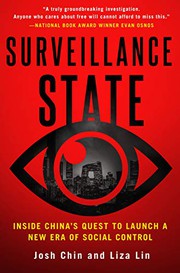
Examines how the Party uses technology — AI, big data, facial recognition — to govern and control its population, showing the 21st-century tools that give the system described in earlier books new power.
The Economic Miracle and Its Strains
IntermediateGrasp how China engineered the fastest large-scale development in history, what structural tensions and debt that growth created, and what the model looks like as it matures.
▸ Study plan for this stage
Pace: 6–7 weeks total: Weeks 1–3 cover "How China Escaped the Poverty Trap" (~25–30 pages/day, including time to annotate Ang's co-evolutionary framework); Weeks 4–6 cover "Red Flags" (~25 pages/day, pausing after each thematic chapter to map Magnus's warnings onto Ang's growth story); Week 7 is a synthes
- Co-evolutionary development: Ang's central argument that institutions and markets evolved together in China rather than markets waiting for 'good' institutions to appear first
- Directed improvisation: how Beijing set broad goals while local officials were given latitude to experiment, creating a decentralized yet goal-oriented growth engine
- Repurposing weak institutions: Ang's insight that China leveraged existing (even corrupt or informal) structures as scaffolding rather than replacing them before growing
- The four types of finance Ang identifies (access-finance, profit-finance, subsistence-finance, and patronage-finance) and how their mix shaped who benefited from growth
- Magnus's 'Four Traps': the middle-income trap, the debt trap, the aging/demographic trap, and the political trap — the structural ceilings that threaten continued expansion
- Shadow banking and local government financing vehicles (LGFVs): how off-balance-sheet debt funded infrastructure booms and why Magnus treats this as a systemic risk
- State capitalism's maturation dilemma: the tension between the Party's need for political control and the market's need for rule of law, property rights, and open capital flows
- Export-led growth to consumption-led rebalancing: why the old model is exhausting itself and how difficult the transition is proving to be
- According to Ang, why did China NOT need to establish Western-style institutions before achieving rapid growth, and what does her co-evolutionary model say about the sequencing of development?
- How did local government incentives — cadre evaluation systems, land sales, and fiscal federalism — function as the 'hidden engine' of China's growth miracle as described in 'How China Escaped the Poverty Trap'?
- Magnus identifies debt as perhaps the most acute near-term risk. What specific debt mechanisms (LGFVs, shadow banking, corporate leverage) does he highlight in 'Red Flags', and how did they arise from the same growth model Ang celebrates?
- How do Ang's four categories of finance map onto the inequality and regional divergence that Magnus points to as sources of social and political strain?
- What does Magnus mean by the 'middle-income trap', and what structural reforms does he argue China must make — and why does the political system make those reforms difficult to execute?
- Taken together, do Ang and Magnus contradict each other, or do they describe different phases and dimensions of the same story? What synthesis can you construct from both books?
- Dual-lens annotation: As you read 'Red Flags', keep a two-column running log — left column records a risk or strain Magnus identifies; right column records which part of Ang's growth mechanism directly produced that strain. This forces active dialogue between the two books.
- Institution-mapping exercise: After finishing Ang, draw a diagram of one specific Chinese industry (e.g., real estate, solar panels, or e-commerce) showing how weak or informal institutions were 'repurposed' to enable growth. Then, after reading Magnus, annotate the same diagram with the risks that repurposing created.
- Debt deep-dive: Using freely available data from the Bank for International Settlements (BIS) or IMF Article IV reports on China, build a simple table tracking China's total debt-to-GDP ratio from 2000 to the present. Overlay it with the timeline of policy events Magnus discusses (e.g., the 2008 stimulus, the 2015 stock crash). Write a one-page interpretation.
- Comparative development essay (500–700 words): Choose one other large developing economy (India, Brazil, or Indonesia). Using Ang's framework, assess whether that country has found its own 'poverty trap escape route' or is stuck waiting for ideal institutions. Use Magnus's traps as a checklist for that country's vulnerabilities.
- Debate preparation: Prepare a 5-minute argument for EACH of the following two positions — (1) 'China's growth model was brilliant and its problems are manageable,' drawing on Ang; (2) 'China's structural imbalances make a hard landing likely,' drawing on Magnus. Delivering both sides sharpens critical reading of each author's assumptions.
- Concept glossary: Build a personal glossary of 15–20 terms from both books (e.g., 'cadre incentive system,' 'LGFV,' 'patronage-finance,' 'hukou,' 'dual circulation'). For each term write: (a) the author's definition, (b) a real-world example, and (c) one open question it raises for you.
Next up: By understanding both how China's growth was engineered and where its structural fault lines lie, the reader is now equipped to examine China's external ambitions — the Belt and Road Initiative, trade conflicts, and great-power competition — as direct extensions of the same domestic political economy pressures explored in this stage.

A rigorous but accessible argument that China's development followed its own institutional logic rather than Western prescriptions — essential for understanding why the economy worked the way it did.

Lays out the structural headwinds — debt, demographics, the middle-income trap — that now threaten the growth model, making it the ideal follow-up that stress-tests Ang's more optimistic account.
Taiwan, Rivalry, and the World
ExpertAnalyze the US-China strategic competition, the Taiwan flashpoint, and China's global ambitions — with enough background from prior stages to evaluate competing arguments critically.
▸ Study plan for this stage
Pace: 10–12 weeks total (~25–30 pages/day, 5 days/week): Weeks 1–4 for "Chip War" (~464 pp), Weeks 5–8 for "Destined for War" (~384 pp), Weeks 9–12 for "World Turned Upside Down" (~400 pp). Reserve one weekend per book for review, annotation synthesis, and exercise completion.
- Semiconductor supply-chain geography and chokepoints: how Miller's 'Chip War' maps the physical and political nodes — TSMC, ASML, NVIDIA, and US export controls — that make chips the new oil of geopolitical competition
- The Thucydides Trap: Allison's framework for why rising-power/ruling-power transitions historically produce war, and the structural pressures it places on the US-China relationship over Taiwan
- Taiwan as the world's most dangerous flashpoint: the convergence of semiconductor dependency (Miller), great-power rivalry dynamics (Allison), and economic interdependence (Prestowitz) that makes the island uniquely explosive
- US industrial and technological decline: Prestowitz's diagnosis of how decades of offshoring, financialization, and trade policy failures hollowed out American manufacturing capacity and strategic autonomy
- China's 'Made in China 2025' and techno-nationalist strategy: Beijing's state-directed push for semiconductor self-sufficiency as both an economic and military-strategic imperative across all three books
- Deterrence vs. engagement debate: the tension between Allison's historically-grounded case for managed accommodation and Prestowitz's argument for competitive decoupling and industrial reinvestment
- Alliance architecture and multilateral leverage: how the US-Japan-South Korea-Taiwan semiconductor web, NATO, and Indo-Pacific partnerships factor into each author's prescriptions
- Economic interdependence as double-edged sword: how deep US-China trade and financial ties simultaneously reduce the incentive for war and constrain the tools available for strategic competition
- According to Miller in 'Chip War,' why is Taiwan Semiconductor Manufacturing Company (TSMC) effectively irreplaceable in the short-to-medium term, and what specific chokepoints in the global chip supply chain give the US, the Netherlands, and Japan asymmetric leverage over China?
- Allison identifies 16 historical Thucydides Trap cases in 'Destined for War' — in how many did war result, and what conditions characterized the cases where it was avoided? How robustly does this framework apply to the US-China case given nuclear weapons and economic interdependence?
- How do Miller and Prestowitz differ in their primary diagnosis of American strategic vulnerability — is it fundamentally a technology/supply-chain problem, an industrial policy failure, or both? Where do their prescriptions converge and diverge?
- Prestowitz argues in 'World Turned Upside Down' that the liberal international order's assumptions about trade and development were flawed from the start with respect to China. What is his core critique, and how does it challenge the engagement consensus that dominated US policy from Nixon through Obama?
- Synthesizing all three books: if China moved militarily on Taiwan tomorrow, what would be the cascading effects on global semiconductor supply, US alliance credibility, and the broader international order — and which author's framework best equips you to analyze those effects?
- All three authors implicitly or explicitly address the question of whether conflict is inevitable. Compare their levels of determinism: who is most fatalistic, who is most optimistic, and what variables does each identify as the key levers for avoiding catastrophe?
- Chip War supply-chain map: After finishing Miller, draw a physical map of the global semiconductor supply chain from raw materials (silicon, rare earths) to finished chips. Label each node with the dominant country/company, the US leverage point (if any), and China's current capability gap. Annotate with Miller's specific data points. Revisit and update the map after reading Prestowitz.
- Thucydides Trap case-study drill: Select two of Allison's historical cases (one where war occurred, one where it was avoided) and write a 500-word comparative memo. Then write a third 300-word memo applying those lessons explicitly to the Taiwan Strait scenario, noting where the analogy holds and where it breaks down.
- Competing-prescriptions debate brief: Draft a structured two-page policy brief in which 'Allison' and 'Prestowitz' argue opposite sides of the question: 'Should the US pursue strategic accommodation or competitive decoupling with China?' Use only evidence and arguments drawn from their respective books. Then write a one-paragraph verdict of your own.
- Taiwan contingency scenario analysis: Write a 600-word structured scenario memo titled 'Day 30 of a Taiwan Strait Crisis.' Draw on Miller for semiconductor/economic shock effects, Allison for escalation dynamics and great-power signaling, and Prestowitz for the industrial-base constraints on US military-economic response. Cite each book explicitly.
- Reading journal — argument tracking: Keep a running two-column log throughout all three books: Column A = 'Claim the author makes,' Column B = 'Evidence type (historical, quantitative, anecdotal) and its strength.' At the end of each book, identify the two strongest and two weakest arguments. Compare logs across all three books in a final synthesis entry.
- Current-events stress test: Identify one major news story per week during the reading period (e.g., new US chip export controls, a PLA military exercise near Taiwan, a US-Japan alliance announcement). Write a 150-word note explaining how each of the three authors would interpret that event, based on their frameworks. Collect these into a portfolio at the end of the stage.
Next up: By mastering the strategic, technological, and economic dimensions of US-China rivalry through Miller, Allison, and Prestowitz, the reader has built the analytical scaffolding needed to engage with China's domestic governance, ideological foundations, and long-term internal vulnerabilities — the logical next frontier for a complete picture of where China is headed.

Semiconductors are the central material battleground of US-China rivalry and the Taiwan question; this Pulitzer-winning book makes the technological stakes concrete and readable before moving to pure strategy.

Introduces the 'Thucydides Trap' framework for understanding great-power rivalry, giving the reader a strategic lens for the US-China relationship — best read after the economic and tech context is in place.

Offers a hawkish, US-centric critique of engagement policy and makes the case for a harder line — a necessary counterweight to Allison's more structural framing, ensuring the reader encounters genuine debate.