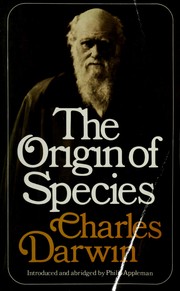
Start with The Voyage of the Beagle, not with the Origin. It is a travel book, it is by a wide margin the most enjoyable thing Darwin wrote, and it shows you the observer before he had a theory to defend — five years of geology, fossils, slavery in Brazil, Patagonian fossil mammals and a young man noticing things he could not yet explain. Then read On the origin of species by means of natural selection, which is where the argument lives.
The reason order matters here is that this shelf holds three completely different kinds of book. Darwin's own works are Victorian scientific prose, written for a specialist readership over 150 years ago, and they read slowly. The biographies are modern narrative history. The commentary books are arguments about what his ideas mean now. Readers who start with a modern book about Darwin and then open Darwin often find the primary sources heavier than expected; readers who start with the Origin cold often stop at chapter four.
His own books
The Voyage of the Beagle (1839) first, for the reasons above. On the origin of species by means of natural selection (1859) is what Darwin himself called one long argument: no equations, no jargon by modern standards, but relentless accumulation of evidence and pre-emptive answers to objections. The first edition is the leanest; by the sixth Darwin had added replies to critics and hedged some claims, so most readers prefer to start with the first.
The descent of man (1871) applies the theory to humans and introduces sexual selection, which is arguably its more lasting contribution. It also states Victorian assumptions about race and about women as settled fact, and there is no reading of it that makes that go away. The expression of emotions in man and animals (1872) is a short, strange, likeable book, one of the first scientific works illustrated with photographs. The formation of vegetable mould, through the action of worms (1881) was his last, forty years of patient experiments on earthworms and soil — proof, if you want it, that the same method worked at any scale.
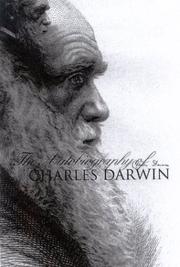
The Autobiography of Charles Darwin needs a warning. Darwin wrote it in 1876 for his family and never meant it for publication. The record we link is the 1929 family edition — the text his relatives issued with the passages on religion cut out. Nora Barlow, his granddaughter, restored the deleted material in 1958. Those cuts are still missing from this edition, so do not draw conclusions about his beliefs from what is or is not in it.
Lives
The Reluctant Mr. Darwin by David Quammen is short and built around one question: why the twenty-one year delay between the idea and the book. It is the best single evening on this list.
Janet Browne's two-volume life is the standard modern biography, and only the first volume, Charles Darwin : Voyaging Vol. 1, is reachable in our catalogue. It ends in 1856, before the Origin was written; the second volume, titled The Power of Place, is not in this list. Darwin by Adrian Desmond and James Moore is the political biography, placing him in Whig England, Chartist unrest and scientific patronage. Annie's Box by Randal Keynes, a descendant, is built around a real box of his daughter's belongings; Annie died at ten in 1851, and the book is largely about that. Darwin's sacred cause is Desmond and Moore arguing that hatred of slavery drove his work on human descent — a genuine thesis, and one other historians consider more suggestive than proven.
What came before and after
Darwin's ghosts by Rebecca Stott recovers the evolutionary thinkers who preceded him. The origin then and now by David Reznick is a chapter-by-chapter companion that reads the Origin against current evidence — use it alongside Darwin, not instead. The beak of the finch by Jonathan Weiner follows Peter and Rosemary Grant measuring selection in Galápagos finches in real time, and is the book that makes the theory concrete. Darwin's dangerous idea by Daniel Dennett is philosophy, not biology, and deliberately combative; his attacks on Stephen Jay Gould are contested, and reading Gould separately is fair.
Work through the full path in order and the primary sources stop feeling like homework.
Follow the full ordered path here: Charles Darwin Books: What to Read First, and in What Order.