Carl Sagan Reading Order: Where to Start
Sagan's books are not a series and were not written to be read in sequence, so the useful order is by what each one is trying to do rather than by publication date. Start with the two that are pure astronomy for a general reader, move to the two about how to think — which are the books people most often come back to — then the ones about the human animal, and finish with the fiction and the posthumous collections. Almost nothing here requires the ones before it, but the path gets steadily further from the night sky and closer to argument.
Start Here: Looking Outward
BeginnerGet the scale of the universe and Sagan's central move — the shift of perspective from Earth outward and then back again.
▸ Study plan for this stage
Pace: 4 weeks, ~30 pages a day. Cosmos (354 pages) in about two weeks — it is thirteen self-contained essays, so one chapter per sitting is the natural unit. Pale Blue Dot (429 pages) in the two weeks after. Neither is technical; your pace will be set by how often you stop to look something up.
- Cosmos is thirteen essays rather than a narrative. Each stands alone, so a chapter is the right unit and skipping one costs you nothing later.
- The central move in both books is a change of vantage — outward until the Earth is a single pixel, then back with the perspective still attached. Almost everything else he wrote is a specialisation of that move.
- Some of the astronomy has dated, and specifically so. Cosmos is from 1980: before a single exoplanet had been confirmed, before Galileo and Cassini and every modern Mars mission, and before precision cosmology settled numbers the book treats as open.
- Pale Blue Dot's tour of the solar system, written in 1994 from the Voyager encounters, has been overtaken in detail. The outer moons in particular are far better understood now than the book can tell you.
- What has not dated is the argument and the prose. Read the superseded passages as a snapshot of what was confidently known then — watching a field get revised is itself part of the education these books offer.
- Pale Blue Dot is an argument, not a survey. It wants humans off this planet, and the famous photograph is entered as evidence for that case rather than as a mood piece.
- He writes in sentences built to be read aloud. That is a decision about audience, not a side effect of the television series.
- Cosmos travels from the library of Alexandria to the edge of the observable universe. What recurring argument makes those thirteen essays one book rather than an anthology?
- Pick one claim in Cosmos about a specific planet and check where it stands today. What changed, what held, and what does the ratio suggest about reading any popular science book forty years on?
- What is Pale Blue Dot's actual case for human spaceflight, and does any part of it rest on a fact that has since moved?
- Where does Sagan use the size of the universe as a moral argument rather than a physical one, and is he entitled to the move?
- Which of these two would you hand to someone who says astronomy is cold and impersonal, and why that one?
- Read the pale blue dot passage aloud. It was written to be heard and it is a measurably different piece of writing on the tongue.
- For one chapter of Cosmos, note every specific number and date, then check three of them. You will hit both untouched facts and superseded ones, which is the calibration this whole path depends on.
- Keep a running list of the questions Sagan describes as open, then find out how many have been answered. The ones about other stars having planets have.
- Write down what you believed about the scale of the solar system before Cosmos and after. The gap is what the book is for.
Next up: Having watched him describe what was known in 1980, read the two books about how he decided what to believe in the first place.
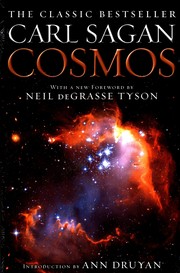
The obvious and correct first book: thirteen essays sweeping from the library of Alexandria to the edge of the observable universe, written alongside the television series. It sets the voice, and everything else he wrote is a specialisation of something raised here.

The sequel in spirit, written fourteen years later and organised around the Voyager photograph of Earth as a single pixel. Read it second: it takes the perspective Cosmos establishes and turns it into an argument about why we should leave the planet.
How to Think
BeginnerLearn the baloney detection kit and the case for scientific scepticism as a civic skill, not just a laboratory habit.
▸ Study plan for this stage
Pace: 5 weeks, ~25 pages a day. The Demon-Haunted World (472 pages) over three weeks — slower than Cosmos on purpose, because you should be testing the method against your own beliefs as you go. Broca's Brain (398 pages) in two weeks; it is an essay collection and can be read out of order.
- The Demon-Haunted World has dated least of anything he wrote, because it is about a procedure rather than a set of findings. Nothing in it needed the last thirty years of discovery to stay true.
- The baloney detection kit is one short chapter and is the practical core of the book: a checklist of common fallacies plus the harder discipline of arguing against your own conclusion.
- The alien abduction and faith healing chapters are training material, not the subject. He deliberately picks claims you already reject so you can watch the reasoning with your loyalties disengaged.
- Broca's Brain is the rough first version of the same instinct, from 1979. Its planetary science essays predate the missions that resolved several of the questions it treats as live, which makes it a useful record of an argument in progress rather than a reference.
- The scepticism is not contempt. He is explicit that pseudoscience answers a real human need that institutional science serves badly, and that dismissing the need does not work.
- The book's largest claim is civic: a society dependent on technology and unable to evaluate a claim is in danger. That is the part people quote now, and it was the part reviewers found overheated in 1995.
- Read Broca's Brain after rather than before. Seeing which of his own bets paid off is the sharpest available demonstration that the method is worth more than the conclusions.
- Apply the baloney detection kit to a claim you currently hold. Where does it strain, and what do you do about that?
- Sagan insists the same evidence standard must apply to claims you like. Find a place in either book where he does not quite manage it himself.
- Which chapters of Broca's Brain are about method and which are about what was unknown in 1979? The two age completely differently — sort them.
- What does Sagan think pseudoscience gives people, and does anything he offers actually compete with it?
- The Demon-Haunted World was written before the internet was a mass medium. Which of its warnings transfer directly, and which need translating first?
- Copy the baloney detection list onto one page and keep it. That page is the takeaway; the rest of the book is worked examples of using it.
- Take one question Broca's Brain treats as open and find out where it stands now. Doing this two or three times gives you the calibration for every older science book you will read.
- Pick a currently circulating health or science claim and write the two-paragraph Sagan treatment, including the part where he explains why people want it to be true.
- Read the chapter on the decline of public discourse and mark which specific complaints have simply gone away. There are some.
Next up: With the method in hand, the next stage is where you will need it most — the books on human origins, which are the ones that have aged hardest.
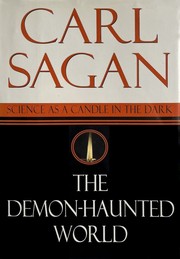
His most durable book and, for many readers, the one worth reading first of all: alien abductions, faith healing and recovered memories used as a training ground for evaluating claims. The baloney detection kit chapter alone justifies the book.
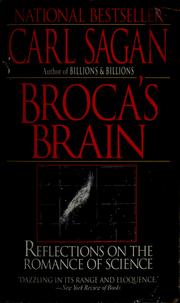
The earlier, rougher version of the same instinct — essays taking on Velikovsky, astrology and the fringe, along with pieces on planetary science. Read it after The Demon-Haunted World to see the argument in its first draft.
The Human Animal
IntermediateFollow Sagan away from astronomy into evolution, brains and deep time, where the science is older and needs reading with more care.
▸ Study plan for this stage
Pace: 6 weeks, ~30 pages a day. The Dragons of Eden (271 pages) in nine days, Shadows of Forgotten Ancestors (505 pages) over three weeks as the longest and densest book here, and Comet (398 pages) in about ten days — it is heavily illustrated and reads faster than the page count suggests.
- The Dragons of Eden is built on the triune brain, the reptilian and limbic and neocortical layering, and that model is no longer how neuroscientists describe the evolution of the brain. It won a Pulitzer and the writing is genuinely superb; it is also the clearest case on this path of a book to read
- Placing it directly after How to Think is deliberate. You now have the tools to enjoy an argument while noticing that its foundation has moved, which is a far more useful skill than avoiding the book.
- Shadows of Forgotten Ancestors, written with Ann Druyan, is the better book on the same question and has aged much more gracefully, because it argues from primatology and evolutionary biology rather than from an architecture of the brain.
- Both are doing what Cosmos did, pointed inward: place the human in deep time until what looked like specialness starts looking like continuity.
- Comet is the outlier — one class of object treated exhaustively, again with Druyan. The historical chapters on Halley and on comets as omens are untouched by time; the spacecraft material is not.
- This is the stage where Sagan writes about violence, sex and hierarchy, and where a reader is most likely to mistake speculation for finding. He usually flags it explicitly; notice each time he does and each time he does not.
- None of the dating here means the books are wrong to read. It means reading them with the date in mind, which is the exact habit the previous stage was training.
- Where in The Dragons of Eden does the argument actually depend on the triune model, and how much of the book survives if you remove it?
- Shadows of Forgotten Ancestors reaches similar conclusions by a different route. Which route holds up, and what does that tell you about the conclusions themselves?
- Track where Sagan marks a claim as speculation. Is the marking consistent, or does it thin out where he is more invested?
- What is Druyan's contribution? Compare a chapter of Shadows with a chapter of a solo book and describe the difference in the prose.
- Comet restricts itself to one kind of object. What does that constraint let him do that the sweeping books cannot?
- Before starting The Dragons of Eden, read one current summary of how brain evolution is described today. Then read the book. The comparison is the exercise, and it takes ten minutes to set up.
- Keep a two-column note through Shadows of Forgotten Ancestors: claims presented as established, claims presented as likely. The ratio is the honest measure of the book.
- Read Comet's history chapters and its mission chapters in separate sittings and note which one felt older.
- Write one paragraph on what The Dragons of Eden still does well without mentioning anything it gets wrong. If you cannot manage it, you have over-corrected.
Next up: The last stage is where the arguing stops and the voice turns personal — the novel that dramatises everything so far, and the two books finished as he was dying and after.
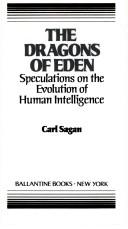
His Pulitzer winner, speculating about the evolution of human intelligence. It leans on the triune brain model, which neuroscience has since abandoned, so read it as a brilliant period piece rather than current science — that caveat is exactly the habit The Demon-Haunted World was teaching.
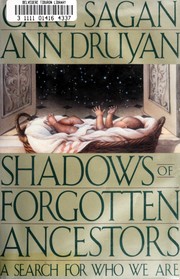
Written with Ann Druyan, and the better book on the same subject: where humans come from, told through primatology and evolutionary biology. It has aged far more gracefully than The Dragons of Eden and belongs right after it.
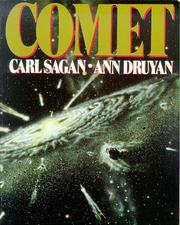
Also with Druyan, and a genuine oddity — a whole illustrated book about one class of object, from Halley's records to the chemistry of the tail. Read it if the astronomy in Cosmos was the part you wanted more of.
The Fiction and the Late Work
IntermediateFinish with the novel, the final essays and the lectures published after his death, where the tone turns personal.
▸ Study plan for this stage
Pace: 5 weeks, ~30 pages a day. Contact (432 pages) in a fortnight, and probably faster since it is a novel and pulls. Billions and Billions (292 pages) in about ten days. The Varieties of Scientific Experience (300 pages) in ten more, one lecture per sitting — it is edited lectures with a long question-a
- Contact is the Cosmos argument dramatised: what would actually happen, institutionally and politically, if a signal arrived. The pleasure is procedural rather than adventurous, and that is the point of the book.
- It differs from the film in the ways that matter, especially in the ending and in how it handles religious claim-making. Knowing the film is not knowing the novel.
- Ellie Arroway is the only place in his work where a scientist gets an inner life. The non-fiction gives you the argument; the novel gives you the person carrying it.
- Billions and Billions was assembled as he was dying, and its final chapter is written from the illness that killed him. It is the only place the public register drops.
- Its chapters on climate and nuclear weapons are 1996 policy arguments. The framing holds up better than the numbers, and reading them is a fair record of what was foreseeable at the time.
- The Varieties of Scientific Experience is the 1985 Gifford Lectures, edited by Druyan and published a decade after his death. It is his most sustained statement on religion, and it is more careful and less combative than his reputation would lead you to expect.
- The question-and-answer sections of those lectures are the best thing in the book. He is being pushed in real time, and it shows the method running unscripted.
- Contact spends most of its length on committees, funding and governments rather than on aliens. What is Sagan arguing by making that the subject?
- What position does Contact take on faith, and how does it sit beside the position argued in The Varieties of Scientific Experience?
- The last chapter of Billions and Billions was written by a man who knew he was dying and expected no afterlife. What does it ask of a reader, and does it earn it?
- In the Gifford Lectures, where does Sagan concede something real to religious thinking, and is the concession genuine or rhetorical?
- Across nine books, state Sagan's actual subject in one sentence — a sentence that is not simply astronomy.
- Read Contact's ending, then reread the pale blue dot passage from the first stage. They make the same argument by opposite means.
- In the Gifford Lectures, read the audience questions and his answers first, before the lectures themselves. It is the fastest way to find where his position is soft.
- List the predictions in Billions and Billions about the following thirty years and check them. He was right more often than not, and the misses are the instructive part.
- Choose the one Sagan book you would give someone today and write the two-sentence case for it. Many readers who finish this path do not choose Cosmos, and working out why is the real exercise.
- Go back to one dated passage you flagged in the first stage and write what a reader in 1980 could reasonably have believed. That is the charitable reading these books deserve.
Next up: That is the whole shape of him — the sky, the method, the animal and the ending — and you can now read the essays, the interviews and the Druyan collaborations knowing exactly which Sagan you are getting and how old the science in front of you is.
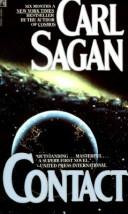
His only novel: a rigorous, unsentimental account of what receiving an alien signal would actually involve, institutionally and politically. It is better read after the non-fiction, because half its pleasure is recognising the arguments from Cosmos being dramatised.

The last book he worked on, ranging over climate, nuclear weapons and abortion, and ending with an essay written from the illness that killed him. Read it late; its force depends on knowing the voice well.
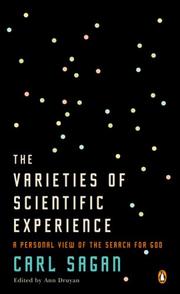
His 1985 Gifford Lectures on science and religion, edited by Druyan and published a decade after his death. The most sustained statement of his position on belief, and the right place to stop.
Discussion
Keep reading
Paths that share books, cover the same subject, or open a related topic.