Think straight: logic & critical thinking
This curriculum builds from everyday reasoning intuition to rigorous formal logic, then arms the learner against manipulation and cognitive bias in the modern information environment. Each stage assumes the vocabulary and habits of mind built in the previous one, so reading in order matters — skipping ahead will make later books harder to absorb and apply.
Foundations: How Arguments Work
BeginnerUnderstand what an argument is, how to identify claims and evidence, and recognize the most common informal fallacies in everyday speech and media.
▸ Study plan for this stage
Pace: 8–10 weeks total (~25–30 pages/day, 5 days/week). Weeks 1–5: "Thinking, Fast and Slow" — read roughly 50 pages per sitting, 3 sittings per week, pausing at the end of each major part to review notes. Weeks 6–10: "The Demon-Haunted World" — slightly lighter density, ~30 pages per sitting, 3–4 sitting
- System 1 vs. System 2 thinking (Kahneman): fast/intuitive vs. slow/deliberate reasoning, and why System 1 is the root of most reasoning errors
- Cognitive biases and heuristics (Kahneman): anchoring, availability, representativeness, and how they distort judgment without our awareness
- The anatomy of an argument: distinguishing a claim (conclusion) from the evidence (premises) used to support it
- Informal fallacies in everyday speech: ad hominem, straw man, appeal to authority, false dichotomy, and post hoc reasoning — illustrated throughout Sagan's media and political examples
- The 'Baloney Detection Kit' (Sagan, Ch. 12): a practical checklist of skeptical tools for evaluating any claim encountered in speech or media
- Pseudoscience vs. science (Sagan): how unfalsifiable claims, anecdotal evidence, and motivated reasoning masquerade as legitimate argument
- Confirmation bias (both books): the tendency to seek evidence that supports existing beliefs and ignore disconfirming evidence
- Calibrated confidence: understanding that strong feelings of certainty (System 1) are not the same as having a well-supported argument
- In Kahneman's framework, which cognitive system is most responsible for generating the intuitive leaps that lead to fallacious reasoning, and why is it so difficult to override?
- What is the difference between a heuristic and a bias according to Kahneman, and can you give one real-world example of each drawn from the book?
- Using Sagan's Baloney Detection Kit as your guide, what are at least five questions you should ask before accepting a claim you encounter in the news or on social media?
- How does Sagan distinguish a genuinely scientific claim from a pseudoscientific one, and what role does falsifiability play in that distinction?
- Identify and name the informal fallacy present in this statement: 'You can't trust her argument about climate policy — she once got a parking ticket.' (Hint: Kahneman and Sagan both discuss how we evaluate sources.)
- How do confirmation bias and the availability heuristic work together to make people more susceptible to the fallacies Sagan catalogs in media and political discourse?
- Argument mapping (ongoing): Each week, pick one opinion article or editorial. Underline every claim and circle every piece of evidence. Draw arrows from evidence to the conclusion it is meant to support. Note any gaps where a claim is made with no supporting evidence.
- Bias journal (Kahneman weeks): Keep a small notebook. Each day, record one moment where you caught yourself — or someone else — using System 1 when System 2 was needed. Label the heuristic or bias involved (anchoring, availability, etc.) using Kahneman's vocabulary.
- Baloney Detection Kit drill (Sagan weeks): Choose one viral claim or advertisement per week and run it through every item on Sagan's checklist from Chapter 12. Write a one-paragraph verdict: does the claim survive scrutiny?
- Fallacy hunt in media: Watch or read one news segment, podcast, or political speech per week. Tally every informal fallacy you spot, name it, and write one sentence explaining why it qualifies. Aim to find at least three distinct fallacy types across the stage.
- Rewrite the argument: Find a flawed argument (from the fallacy hunt or bias journal). Rewrite it so it is logically sound — replace the fallacy with a legitimate premise. This forces you to understand what a valid argument actually requires.
- Socratic discussion (partner or self-reflection): After finishing each book, spend 30 minutes answering aloud — or in writing — the question: 'What is one belief I currently hold that I have never seriously tried to falsify? What evidence would change my mind?' Use Sagan's falsifiability standard as your benchmark.
Next up: By internalizing how intuition misleads us (Kahneman) and how to apply a systematic skeptical toolkit (Sagan), the reader is now equipped to move from recognizing flawed arguments to constructing and evaluating formally valid ones — the core skill of the next stage on deductive and inductive logic.

Opens the curriculum by showing how the mind actually works — intuitive vs. deliberate thinking — giving the learner a vivid mental model of where bad reasoning comes from before they study how to fix it.

Introduces the 'baloney detection kit' — a practical toolkit for evaluating claims — and motivates why rigorous thinking matters in a world full of misinformation and pseudoscience.
Fallacies & Cognitive Traps
BeginnerName, recognize, and counter the full spectrum of informal fallacies and cognitive biases that derail real-world arguments.
▸ Study plan for this stage
Pace: 6–7 weeks total. Weeks 1–4: "You Are Not So Smart" (~20–25 pages/day, reading 1–2 chapters per sitting; McRaney's short, self-contained chapters make daily reading natural). Weeks 5–7: "Crimes Against Logic" (~15–20 pages/day; Whyte's denser philosophical prose rewards slower, annotation-heavy readi
- Self-serving bias & confabulation (McRaney): the brain's tendency to construct post-hoc narratives that protect the ego, making us unreliable witnesses to our own reasoning
- Cognitive biases as systematic errors (McRaney): distinguishing random mistakes from predictable, repeatable mental shortcuts gone wrong — including confirmation bias, the Texas Sharpshooter fallacy, and the Dunning-Kruger effect
- Priming, availability heuristic, and the illusion of transparency (McRaney): how easily-recalled or recently-encountered information distorts probability judgments and self-assessment
- The structure of an argument vs. its emotional packaging (Whyte): separating what is actually being claimed and supported from rhetoric, tone, and social pressure
- Informal fallacies in everyday speech (Whyte): ad hominem, appeal to authority, tu quoque, circular reasoning, and the no-true-Scotsman move — identified by their logical form, not just their labels
- Motive attribution as a fallacy (Whyte): why attacking a speaker's reasons for holding a belief says nothing about whether the belief is true
- Vagueness and equivocation (Whyte): how shifting or undefined terms allow bad arguments to masquerade as coherent ones
- Intellectual honesty as a practice (both books): recognising that fallacies and biases are not just tools for catching others — they are traps the reader falls into too
- After reading McRaney, can you explain in plain language what confirmation bias is, give a real-life example from your own experience, and describe one concrete strategy to counteract it?
- McRaney covers the 'Texas Sharpshooter Fallacy' and clustering illusions — how do these relate to the human tendency to find patterns, and why does this matter for evaluating statistical claims?
- Whyte argues that exposing someone's motive for making a claim does not refute the claim itself. Can you construct a short dialogue that illustrates this error and then correct it?
- What is the difference between a legitimate appeal to authority and a fallacious one? Using Whyte's criteria, evaluate a real advertisement or news headline that invokes an expert.
- Both McRaney and Whyte address self-deception, but from different angles (psychological vs. logical). How do their perspectives complement each other in explaining why smart people hold bad beliefs?
- Can you identify and name at least five distinct informal fallacies from Whyte's examples, write a one-sentence definition of each, and produce an original example sentence for each?
- Bias journal (throughout McRaney): Keep a daily log for two weeks. Each day, record one moment where you notice a potential bias in your own thinking or in something you read/watched. Label the bias using McRaney's chapter titles and write two sentences on what a more accurate assessment would look like.
- Fallacy hunting in the wild (throughout Whyte): Collect 10 real arguments from op-eds, social media, or political speeches. For each, apply Whyte's framework to identify the conclusion, the premises, and any informal fallacy present. Write a one-paragraph rebuttal that addresses the logic — not the person.
- Steel-manning practice: For each major fallacy Whyte covers, find or invent a weak argument that commits that fallacy, then rewrite it as the strongest possible version that avoids the fallacy. Compare the two versions and note what changed.
- Bias vs. fallacy mapping exercise: Create a two-column table. On the left, list 8 cognitive biases from McRaney; on the right, match each to the closest informal fallacy from Whyte (e.g., confirmation bias ↔ selective evidence / cherry-picking). Write a sentence explaining each pairing.
- Debate audit: Watch or read a recorded debate (political, philosophical, or a podcast disagreement). Pause every 5 minutes and annotate: who committed a fallacy, which one, and what a logically sound response would have been. Aim to catch at least 6 distinct errors in a single session.
- Teach-back summary: After finishing both books, write a one-page 'cheat sheet' — without looking at the books — listing every named bias and fallacy you remember, a one-line definition, and a real-world trigger phrase that signals it (e.g., 'Everyone knows that…' → appeal to popularity). Then check it against the books and fill in the gaps.
Next up: By being able to name and neutralize the informal errors that corrupt everyday arguments, the reader has cleared the ground for the next stage, which builds the positive skill of constructing and evaluating formally valid, well-evidenced arguments from the bottom up.
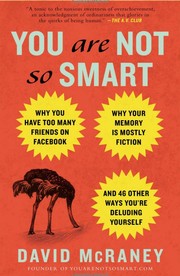
A highly readable tour through dozens of cognitive biases and self-delusions; builds directly on Kahneman's framework and makes the traps concrete with vivid everyday examples.
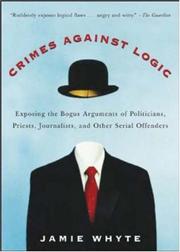
Focuses specifically on the fallacies most common in public discourse — politics, advertising, and media — training the reader to spot bad arguments in the wild immediately after learning to name them.
Argument Analysis & Rhetoric
IntermediateReconstruct and evaluate complex arguments in full, understand the structure of persuasion, and distinguish legitimate rhetoric from manipulation.
▸ Study plan for this stage
Pace: 10–12 weeks total: Week 1–2 — "A Rulebook for Arguments" (~20–25 pages/day; it's short and dense, so re-read each chapter twice); Weeks 3–6 — "Thank You for Arguing" (~25–30 pages/day; read once for enjoyment, then re-read with annotations); Weeks 7–12 — "How to Read a Book" (~20 pages/day; slow, de
- Argument reconstruction: identifying premises, conclusions, and inferential links (Weston's rules for each argument type — deductive, inductive, analogical, causal)
- Argument evaluation criteria: truth of premises, validity/strength of inference, and relevance — the three-legged stool Weston builds throughout his rulebook
- The rhetorical triangle — Ethos, Pathos, and Logos — and how Heinrichs shows each is deployed strategically in real persuasion
- Kairos: the art of timing and context in argument, a central concept in Heinrichs' treatment of classical rhetoric
- Distinguishing legitimate persuasion from manipulation: Heinrichs' taxonomy of rhetorical moves versus Weston's logical standards as a cross-reference
- Syntopical and analytical reading: Adler's four levels of reading (elementary, inspectional, analytical, syntopical) and how analytical reading applies directly to dissecting arguments in the other two books
- The author's terms, propositions, and arguments: Adler's framework for X-raying a book's logical skeleton — directly extending Weston's argument forms to book-length reasoning
- Rhetorical vs. dialectical discourse: understanding when an author is persuading versus demonstrating, a distinction threaded through all three books
- Given a paragraph-length argument, can you identify its conclusion, list each premise, name the argument type (deductive, inductive, analogical, or causal), and apply Weston's corresponding rules to judge its quality?
- How does Heinrichs define the three branches of rhetoric (forensic, deliberative, epideictic), and how do Ethos, Pathos, and Logos function differently within each branch?
- What is the difference between a rhetorical move that is legitimate and one that is manipulative, and which specific tools from 'Thank You for Arguing' (e.g., the 'Yoda technique', 'commonplaces', 'concession') sit on each side of that line?
- How do Adler's four levels of reading change the way you approach a persuasive text versus an expository one, and how does 'coming to terms' with an author's language relate to Weston's demand for clear, consistent premises?
- Can you write a full analytical outline — in Adler's sense — of either 'A Rulebook for Arguments' or 'Thank You for Arguing', stating the author's central question, thesis, and the logical order of their supporting arguments?
- How does Kairos (from Heinrichs) interact with Weston's caution against hasty generalization and weak analogies — i.e., can a well-timed argument compensate for a logically weak one, and what are the ethical implications?
- Argument mapping (Weston-based): Choose three op-ed articles. For each, write out every premise and conclusion in standard form, label the argument type, then apply Weston's relevant rules to give it a pass/fail with written justification.
- Rhetorical autopsy (Heinrichs-based): Watch or read one political speech or advertisement. Annotate it for every rhetorical device Heinrichs names — identify Ethos, Pathos, and Logos moves; spot any use of Kairos, concession, or commonplaces; then write a one-page verdict on whether the rhetoric is legitimate or manipulative.
- Cross-book translation drill: Take one argument you mapped in Exercise 1 and rewrite it as a persuasive paragraph using at least three techniques from Heinrichs. Then swap back — take a rhetorical passage from 'Thank You for Arguing' and reduce it to bare logical form using Weston's templates. Note what is gained and lost in each direction.
- Analytical reading report (Adler-based): Apply Adler's full analytical reading procedure to 'A Rulebook for Arguments' — write the book's structural outline (Stage 1), state Weston's terms and propositions in your own words (Stage 2), and evaluate whether his arguments succeed by Adler's criteria of truth, completeness, and clarity (Stage 3).
- Steelmanning practice: Find an argument you personally disagree with (political, ethical, or scientific). First, reconstruct the weakest version and critique it with Weston's rules. Then reconstruct the strongest possible version, using Heinrichs' techniques to make it as persuasive as possible. Write a reflection on the difference.
- Staged debate journal: Over two weeks, pick one ongoing public controversy. Each day, log one new argument you encounter about it — reconstruct it (Weston), annotate its rhetoric (Heinrichs), and rate how deeply you now understand the issue using Adler's scale of 'uninformed → informed disagreement'. Track how your evaluation skills sharpen across entries.
Next up: Mastering argument reconstruction and rhetorical awareness here equips the reader to engage with domain-specific reasoning — whether in science, ethics, law, or philosophy — where the next stage's texts will demand applying these analytical tools to more specialized and technically complex forms of argument.
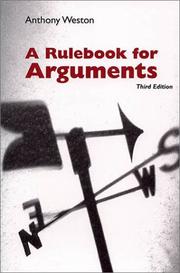
A concise, practical manual for building and dissecting arguments step by step; bridges the gap between recognizing fallacies and doing the harder work of full argument analysis.
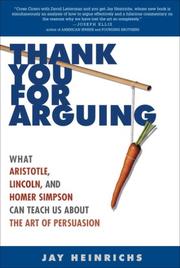
Teaches classical rhetoric (ethos, pathos, logos) from the inside out, showing how persuasion works so the reader can both use it ethically and defend against its misuse.
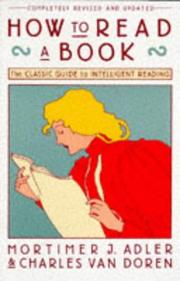
Trains the reader to extract, evaluate, and challenge the arguments inside any text — an essential meta-skill for the advanced logic and philosophy books ahead.
Formal Logic
IntermediateMaster the rules of deductive and inductive logic — propositional logic, syllogisms, and probabilistic reasoning — so that argument evaluation becomes systematic rather than intuitive.
▸ Study plan for this stage
Pace: 10–13 weeks total. Weeks 1–3: "Introducing Logic (Introducing)" by Dan Cryan (~20–25 pages/day, reading the full book as an accessible on-ramp). Weeks 4–13: "The Logic Book" by Merrie Bergmann (~15–20 pages/day, working chapter by chapter with pauses for problem sets — this is a dense, exercise-rich
- Propositions, truth values, and the anatomy of an argument (premises → conclusion) as introduced in Cryan's graphic overview
- Propositional (sentential) logic: connectives (¬, ∧, ∨, →, ↔), well-formed formulas, and truth-table construction from Bergmann Ch. 1–3
- Logical equivalence, tautologies, contradictions, and contingent sentences — distinguishing semantic from syntactic properties
- Natural deduction and formal proof systems: introduction and elimination rules for each connective (Bergmann's SD and SD+ systems)
- Predicate (first-order) logic: quantifiers (∀, ∃), predicates, individual constants, and translating natural-language sentences into PL notation (Bergmann Ch. 7–9)
- Validity vs. soundness in deductive arguments, and the distinction between deductive and inductive strength (Cryan's framing + Bergmann's semantic definitions)
- Syllogistic reasoning: categorical propositions (A, E, I, O forms), Venn diagram tests, and the rules of the traditional syllogism (Cryan's historical treatment)
- Probabilistic and inductive reasoning: degrees of support, base-rate sensitivity, and why inductive conclusions are defeasible — bridging Cryan's intuitive account with Bergmann's formal semantics
- Can you define a well-formed formula in propositional logic and identify whether a given string of symbols qualifies — using the recursive definition in The Logic Book?
- How do you construct a complete truth table for a complex formula such as (P → Q) ↔ (¬Q → ¬P), and what does the result tell you about logical equivalence?
- What is the difference between a valid argument and a sound argument, and why can a valid argument have false premises and a false conclusion?
- Using Bergmann's natural-deduction system SD, can you produce a formal proof of modus tollens from the axioms, citing each rule applied?
- How do universal and existential quantifiers interact with negation in predicate logic, and what is the logical form of 'Not all swans are white'?
- What makes an inductive argument strong rather than valid, and how does sensitivity to base rates affect the rational degree of belief we should assign to a conclusion?
- Truth-table drills: For every connective introduced in The Logic Book Ch. 1–2, build truth tables from scratch for at least five compound formulas per connective, then check for tautology, contradiction, or contingency without looking at the answer key first.
- Symbolization practice: Take 20 complex English sentences (from newspaper editorials or Cryan's examples) and translate them into both propositional and predicate logic notation, then reverse-translate a partner's symbolizations back into natural language to test accuracy.
- Formal proof construction: Work every odd-numbered proof exercise in The Logic Book's SD and SD+ chapters; after completing each proof, write a one-sentence justification in plain English for why each rule application was legitimate.
- Syllogism Venn-diagram tests: Draw Venn diagrams for 15 categorical syllogisms sourced from Cryan's historical examples, classify each as valid or invalid, then articulate which of the traditional syllogism rules (if any) is violated in the invalid cases.
- Argument mapping: Select three opinion articles and reconstruct each argument in standard form (numbered premises, explicit conclusion); annotate each premise as deductive or inductive, and rate inductive premises for strength on a 1–5 scale with written justification.
- Weekly self-quiz: At the end of each week, write — without notes — definitions of the five most important terms encountered that week (e.g., 'logical consequence,' 'scope of a quantifier,' 'contrapositive'), then compare against Bergmann's glossary and Cryan's illustrated definitions to identify gaps.
Next up: Mastering the formal machinery of deductive proof and the limits of inductive support in this stage equips the reader to spot exactly where real-world arguments break down, making the transition to applied fallacy analysis and rhetorical reasoning — where those same logical structures appear in disguised, incomplete, or deliberately misleading forms — both natural and rigorous.
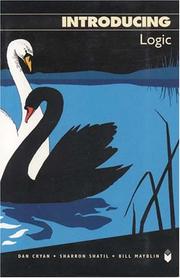
A visually guided introduction to formal logic that eases the transition from informal to symbolic reasoning without overwhelming the learner with notation too early.
The canonical undergraduate logic textbook covering propositional and predicate logic with exercises; provides the rigorous, systematic foundation that separates trained from untrained reasoners.
Thinking Clearly in a Manipulative World
ExpertApply everything learned to navigate propaganda, epistemic bubbles, disinformation, and motivated reasoning in the modern information environment.
▸ Study plan for this stage
Pace: 8–10 weeks total: Weeks 1–5 for "How Minds Change" (~25–30 pages/day, including 2–3 reflection days per week); Weeks 6–10 for "A Field Guide to Lies" (~20–25 pages/day, with slower, analytical reading for statistical and data-heavy sections).
- Identity-protective cognition: how deeply held beliefs become fused with self-concept, making rational updating feel like a personal threat (How Minds Change)
- The science of belief change: why facts and arguments alone rarely shift minds, and what actually works — deep canvassing, motivational interviewing, and empathetic dialogue (How Minds Change)
- Epistemic bubbles vs. echo chambers: the distinction between being merely unexposed to opposing views versus being actively insulated and distrustful of outside sources (How Minds Change)
- Motivated reasoning and confirmation bias: how the brain acts as a lawyer for pre-existing conclusions rather than a judge weighing evidence (How Minds Change)
- Evaluating numerical and statistical claims: spotting misleading averages, base rates, sample size problems, and cherry-picked data (A Field Guide to Lies)
- Vetting sources and logical structure: identifying faulty analogies, false equivalences, and the difference between correlation and causation in media and public discourse (A Field Guide to Lies)
- The architecture of disinformation: how misleading visuals, out-of-context quotes, and plausible-sounding but unverifiable claims are constructed and spread (A Field Guide to Lies)
- Calibrated skepticism: applying rigorous but fair scrutiny — being neither gullible nor reflexively contrarian — as a sustainable epistemic habit (A Field Guide to Lies)
- According to McRaney, why do direct factual corrections so often backfire, and what conversational techniques are more effective at genuinely shifting someone's beliefs?
- How does McRaney distinguish an epistemic bubble from an echo chamber, and why does that distinction matter for choosing a strategy to counter misinformation?
- What does motivated reasoning look like in practice, and how can you recognize it in your own thinking versus in others'?
- Using Levitin's framework, what are the key questions you should ask when encountering a statistical claim in a news headline or social media post?
- How does Levitin advise readers to assess the credibility of a source, and what red flags indicate that a seemingly authoritative claim deserves deeper scrutiny?
- How do the psychological insights from McRaney and the analytical tools from Levitin complement each other when confronting a piece of propaganda or a viral disinformation narrative?
- 'Belief Autopsy' journal: Each week, identify one belief you hold that you've never seriously questioned. Apply McRaney's framework — ask what experiences formed it, what identity it protects, and what evidence would theoretically change your mind. Write 1–2 pages.
- Deep canvassing simulation: Find a willing partner who holds a different view on a low-stakes topic. Practice the non-confrontational, question-led dialogue McRaney describes. Debrief afterward: what worked, what felt unnatural, and where did you feel the urge to argue instead of listen?
- News claim audit (Levitin method): Select 5 statistical or data-driven claims from news sources across the political spectrum this week. For each, identify the sample size, the source of the data, whether a comparison baseline is given, and whether causation is being implied from correlation.
- Disinformation deconstruction: Find one viral claim or misleading graphic (fact-checking sites like Snopes or PolitiFact are good sources). Reverse-engineer it using Levitin's checklist: What true fact is being distorted? What is omitted? What emotional trigger is being exploited?
- Echo chamber mapping: Draw a rough map of your own information diet — news outlets, podcasts, social feeds, and trusted people. Label each node by its ideological lean and whether it ever challenges your priors. Identify at least two credible sources outside your current bubble and read them for two weeks.
- Synthesis essay: Write a 600–900 word analysis of a real-world propaganda campaign or misinformation episode (e.g., a health scare, an election narrative, a corporate PR crisis). Use McRaney's psychological concepts to explain why it spread and Levitin's analytical tools to dissect the specific misleading techniques used.
Next up: Mastering how minds resist change and how data can be weaponized equips the reader with both the psychological self-awareness and the analytical rigor needed to engage with formal epistemology, philosophy of science, or advanced rhetoric — the natural next frontier for a critical thinker operating at this level.

Synthesizes psychology, neuroscience, and rhetoric to explain why people resist evidence and how genuine persuasion and self-correction actually happen — the capstone on cognitive bias work.
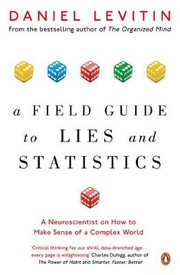
Applies formal and informal logic to statistics, media claims, and data manipulation — the final practical toolkit for a critical thinker operating in an information-saturated world.
Discussion
Keep reading
Paths that share books, cover the same subject, or open a related topic.