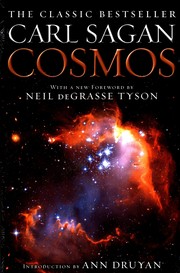
Start with Cosmos. It is thirteen self-contained essays rather than a narrative, so a chapter is the natural unit and skipping one costs you nothing later — which makes it the easiest of his books to try without committing. It also establishes the move everything else specialises: pull the vantage point outward until the Earth is a single pixel, then come back with the perspective still attached.
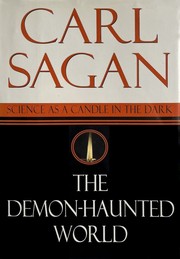
The obvious alternative is The Demon-Haunted World, which has dated least of anything he wrote and is the book people press on friends now. Read it second. Cosmos shows you what Sagan believed and how he described it; The Demon-Haunted World shows you how he decided what to believe, and it is far more interesting once you have watched the method produce something.
Be honest with yourself about the dating. Cosmos is from 1980 — before a single exoplanet had been confirmed, before Galileo and Cassini and every modern Mars mission, and before precision cosmology settled numbers the book treats as open. Pale Blue Dot, written in 1994 out of the Voyager encounters, has been overtaken in detail on the outer moons in particular. What has not dated is the argument and the prose. Read the superseded passages as a snapshot of what was confidently known then; watching a field get revised is part of the education these books offer.
Looking outward
Cosmos, then Pale Blue Dot. The second is an argument rather than a survey: it wants humans off this planet, and the famous photograph is entered as evidence for that case rather than as a mood piece. Read the pale blue dot passage aloud. He wrote in sentences built to be heard, and it is a measurably different piece of writing on the tongue.
How to think
The Demon-Haunted World, then Broca's Brain. The first is about a procedure rather than a set of findings, which is why nothing in it needed the last thirty years of discovery to stay true. The baloney detection kit is one short chapter and is the practical core: a checklist of common fallacies plus the harder discipline of arguing against your own conclusion. The chapters on alien abduction and faith healing are training material, not the subject — he picks claims you already reject so you can watch the reasoning with your loyalties disengaged. He is also explicit that pseudoscience answers a real human need that institutional science serves badly, and that dismissing the need does not work.
Broca's Brain, from 1979, is the rough first version of the same instinct, and its planetary science essays predate the missions that resolved several questions it treats as live. Read it after rather than before: seeing which of his own bets paid off is the sharpest demonstration that the method is worth more than the conclusions.
The human animal, and the hardest dating problem
The Dragons of Eden, Shadows of Forgotten Ancestors, Comet. The first won a Pulitzer and the writing is genuinely superb, but it is built on the triune brain — reptilian, limbic and neocortical layers — and that is no longer how neuroscientists describe the evolution of the brain. It is the clearest case on this path of a book to read as a period piece, which is exactly why it comes after the two books on method rather than before them.
Shadows of Forgotten Ancestors, written with Ann Druyan, is the better book on the same question and has aged much more gracefully, because it argues from primatology and evolutionary biology rather than from an architecture of the brain. Comet, also with Druyan, treats one class of object exhaustively; the historical chapters on Halley are untouched by time and the spacecraft material is not.
The fiction and the late work
Contact is the Cosmos argument dramatised: what would actually happen, institutionally and politically, if a signal arrived. The pleasure is procedural, and it differs from the film in the ways that matter, particularly in the ending and in how it handles religious claim-making. Billions and billions was assembled as he was dying, and its final chapter is written from the illness that killed him — the only place the public register drops. The Varieties of Scientific Experience is the 1985 Gifford Lectures, published a decade after his death, and it is more careful and less combative than his reputation suggests; the audience questions and answers are the best thing in it.
Where to stop
Two books will do it for most readers: Cosmos and The Demon-Haunted World. Add Pale Blue Dot if the vantage-point argument landed. More science reading paths are on Discover.
Follow the full ordered path here: Carl Sagan Reading Order: Where to Start.