How to Become a Solutions Architect: The Best Books, In Order
This curriculum takes an intermediate technologist and builds them into a well-rounded solutions architect across four progressive stages. It starts by cementing system design fundamentals, moves into cloud-native patterns and AWS/Azure depth, then tackles enterprise architecture thinking, and closes with the soft skills and strategic mindset that separate senior architects from engineers. Certifications and hands-on labs complement every stage.
System Design Foundations
IntermediateBuild a rigorous mental model of distributed systems: scalability, reliability, trade-offs, and the vocabulary every solutions architect must speak fluently.
▸ Study plan for this stage
Pace: 8–10 weeks, ~40–50 pages/day. Allocate 5–6 weeks to "Designing Data-Intensive Applications" (900 pages), then 2–3 weeks to "Machine Learning System Design Interview" (300+ pages). Include 1 week for review and integration exercises.
- Scalability patterns: vertical vs. horizontal scaling, load balancing, and database sharding strategies
- Reliability and fault tolerance: replication, consensus algorithms (Raft, Paxos), and failure modes
- Consistency models: strong vs. eventual consistency, CAP theorem, and ACID vs. BASE trade-offs
- Data storage and retrieval: relational databases, NoSQL paradigms, indexes, and query optimization
- System design trade-offs: latency vs. throughput, consistency vs. availability, complexity vs. maintainability
- ML system architecture: data pipelines, feature engineering, model serving, and monitoring in production
- Distributed communication: message queues, event streaming, and asynchronous processing patterns
- How would you design a system to handle 1 million concurrent users? What scaling strategies would you apply and why?
- Explain the CAP theorem and describe a real-world scenario where you must choose between consistency and availability.
- What is the difference between strong consistency and eventual consistency? When would you choose each?
- How do replication and consensus algorithms (Raft, Paxos) ensure reliability in distributed systems?
- Design a data pipeline for an ML system: how would you handle data ingestion, feature engineering, model training, and serving?
- What are the key trade-offs when choosing between a relational database and a NoSQL database for a given use case?
- How would you monitor and debug a distributed system in production? What metrics matter most?
- Design a scalable e-commerce backend: define your data model, sharding strategy, caching layer, and replication approach. Document trade-offs.
- Implement a simple consensus algorithm (Raft or Paxos) in pseudocode or a programming language to understand leader election and log replication.
- Build a mini data pipeline: ingest CSV data, apply transformations, store in a database, and query it. Reflect on bottlenecks and optimization opportunities.
- Create an architecture diagram for a real-world ML system (e.g., recommendation engine, fraud detection): include data sources, feature store, model serving, and monitoring.
- Write a detailed comparison of PostgreSQL vs. MongoDB for a specific use case (e.g., user profiles, time-series data). Justify your choice with trade-offs.
- Design a message queue-based system for asynchronous processing: define producers, consumers, and failure handling. Explain why this pattern improves reliability.
- Analyze a production outage case study (from the books or public postmortems): identify the root cause and propose architectural changes to prevent recurrence.
- Implement a basic load balancer or caching layer (e.g., LRU cache) to understand how these components improve system performance.
Next up: This stage equips you with the distributed systems vocabulary, mental models, and design patterns necessary to tackle advanced topics like cloud architecture, microservices orchestration, and real-world system optimization at scale.

The single most important book for any architect — it explains databases, streams, consistency, and distributed systems trade-offs with unmatched depth. Read this first to build the conceptual bedrock everything else rests on.

Translates abstract distributed-systems concepts into concrete, interview-style walkthroughs of real systems (URL shorteners, YouTube, etc.). Reading it second turns Kleppmann's theory into practiced architectural reasoning.
Cloud Patterns & Architecture
IntermediateMaster cloud-native design patterns, understand how major cloud providers structure their services, and learn to map business requirements to cloud solutions.
▸ Study plan for this stage
Pace: 8–10 weeks, ~40–50 pages/day (mix of dense technical content and hands-on labs)
- Cloud-native design patterns: stateless services, asynchronous messaging, caching, and circuit breakers
- Distributed systems fundamentals: eventual consistency, CAP theorem, and failure modes in cloud environments
- Service-oriented architecture (SOA) and microservices decomposition aligned with cloud provider capabilities
- Scalability patterns: horizontal scaling, load balancing, auto-scaling, and database sharding strategies
- Resilience and fault tolerance: retry logic, bulkheads, timeouts, and graceful degradation
- Data consistency patterns: eventual consistency, saga patterns, and distributed transactions in cloud systems
- Cloud provider service mapping: understanding AWS, Azure, and GCP service categories and when to use each
- Cost optimization through architectural choices: right-sizing, reserved capacity, and serverless trade-offs
- What are the core differences between stateless and stateful service architectures, and why does cloud-native design favor stateless services?
- How do you apply the circuit breaker pattern to prevent cascading failures in distributed systems, and what are the trade-offs?
- Explain eventual consistency and describe a real-world scenario where it is preferable to strong consistency in a cloud system.
- What patterns from 'Cloud Architecture Patterns' would you use to design a system that needs to scale from 1,000 to 1 million concurrent users?
- How do you map a monolithic business domain to microservices using cloud provider primitives (e.g., AWS Lambda, SQS, DynamoDB)?
- What is the relationship between distributed system patterns (from Burns) and cloud architecture patterns (from Wilder), and how do they reinforce each other?
- Design a three-tier web application using Wilder's patterns: implement stateless web tier, asynchronous job queue, and caching layer; document trade-offs for cost vs. latency.
- Build a distributed system simulation (using Docker Compose or Kubernetes) with 3–4 microservices that demonstrates circuit breaker, retry, and bulkhead patterns from Burns.
- Map a provided monolithic application to cloud services: identify service boundaries, choose appropriate cloud primitives (serverless, containers, managed databases), and justify choices against Wilder's cost/performance framework.
- Implement a data consistency scenario: design a saga pattern or event-sourcing solution for a multi-service transaction (e.g., order processing) and test failure scenarios.
- Conduct a cloud provider comparison exercise: take a specific workload and architect it on AWS, Azure, and GCP using each provider's native services; compare cost, latency, and operational complexity.
- Create a resilience testing plan: design chaos engineering experiments (network delays, service failures, resource exhaustion) for a distributed system and document how Burns' patterns mitigate each failure mode.
Next up: This stage equips you with the foundational patterns and distributed systems thinking needed to move into implementation-focused topics like containerization, orchestration, and operational excellence—where you'll apply these architectural principles to real infrastructure and deployment pipelines.
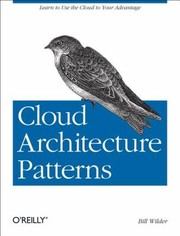
A concise, pattern-oriented introduction to cloud architecture that bridges on-premise thinking and cloud-native design — the right entry point before diving into provider-specific depth.

Written by a Kubernetes co-creator, this book formalizes reusable distributed-system patterns (sidecars, ambassadors, scatter/gather) that appear constantly in cloud-native solutions architecture.
Enterprise Architecture & Microservices
ExpertDesign large-scale, production-grade systems using microservices, event-driven architecture, and domain-driven design — the toolkit of a senior solutions architect.
▸ Study plan for this stage
Pace: 12–14 weeks, ~40–50 pages/day (mix of dense technical content and pattern catalogs; allow extra time for architecture diagrams and pattern review)
- Microservice decomposition strategies: domain boundaries, service granularity, and avoiding distributed monoliths
- Asynchronous communication patterns: message queues, event-driven architecture, and eventual consistency trade-offs
- Enterprise integration patterns: routing, transformation, correlation, and choreography vs. orchestration
- Resilience and failure handling: circuit breakers, bulkheads, timeouts, and graceful degradation in distributed systems
- Domain-driven design (DDD) fundamentals: bounded contexts, ubiquitous language, and aligning architecture with business domains
- Architectural characteristics and trade-offs: scalability, reliability, performance, security, and deployability in microservice systems
- Data management in distributed systems: database per service, saga patterns, and eventual consistency
- Observability and operational concerns: monitoring, logging, tracing, and debugging across service boundaries
- How do you determine the right boundaries for microservices, and what are the consequences of services that are too fine-grained or too coarse?
- Compare choreography and orchestration approaches to distributed transactions; when would you use each, and what are their trade-offs?
- Design an event-driven system for an e-commerce platform: identify key domain events, event producers/consumers, and how you'd handle eventual consistency.
- What resilience patterns would you implement to prevent cascading failures in a microservice architecture, and how do circuit breakers and bulkheads differ?
- Given a monolithic application, walk through the process of identifying bounded contexts and planning a migration to microservices.
- How do architectural characteristics (scalability, security, reliability) influence your choice of communication patterns and deployment topology?
- Decompose a real or fictional monolithic application into microservices: define service boundaries using domain-driven design, justify granularity choices, and document the ubiquitous language for each bounded context.
- Design an asynchronous event-driven workflow (e.g., order processing, user onboarding) using enterprise integration patterns; map out message flows, transformations, and error handling.
- Implement a simple microservice communication scenario with both synchronous (REST/gRPC) and asynchronous (message queue) paths; measure latency, throughput, and failure behavior under load.
- Build a resilience test harness: simulate service failures (timeouts, crashes, cascading failures) and verify that circuit breakers, bulkheads, and retry logic prevent system collapse.
- Create an architecture decision record (ADR) for a microservice system: justify your choice of communication pattern, data consistency model, and deployment strategy with trade-off analysis.
- Sketch the observability strategy for a multi-service system: design logging, metrics, and distributed tracing to diagnose a slow transaction across 5+ services.
Next up: This stage equips you with the patterns, trade-offs, and design principles needed to architect large-scale distributed systems; the next stage will likely focus on implementation details, cloud platforms, and operational excellence (CI/CD, infrastructure as code, cost optimization) to move from design to production deployment.

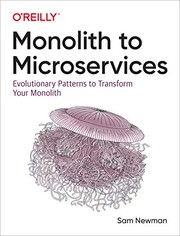
The definitive guide to decomposing systems into services, covering communication, deployment, security, and organizational alignment. Essential reading before architecting any multi-service cloud solution.
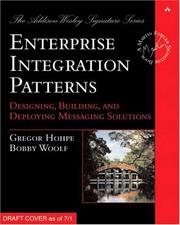
Provides the canonical vocabulary for messaging, routing, and integration — patterns that appear in every enterprise cloud migration and event-driven architecture. Read after microservices to understand how services talk.

Broadens the lens from system design to architectural styles, decision-making frameworks, and the architect's role in an organization — critical for moving from technical expert to trusted advisor.
Architect Mindset & Strategic Thinking
ExpertDevelop the communication, decision-making, and leadership skills that distinguish a solutions architect from a senior engineer — including how to influence stakeholders and navigate trade-offs at scale.
▸ Study plan for this stage
Pace: 8–10 weeks, ~40–50 pages/day with 2–3 reflection days per week. Start with "Software Architect Elevator" (4–5 weeks), then move to "Accelerate" (3–4 weeks), with 1 week for integration and synthesis.
- The Architect Elevator metaphor: moving fluidly between business strategy and technical implementation, translating between executive and engineering languages
- Stakeholder influence and communication: framing technical decisions in business terms, building consensus across organizational silos
- Trade-off analysis at scale: balancing speed, quality, cost, and risk when decisions affect multiple teams and systems
- Organizational dynamics and change leadership: understanding how architecture decisions ripple through culture, process, and team structure
- Measuring and communicating impact: using metrics and data (deployment frequency, lead time, stability) to justify architectural choices and demonstrate value
- Decision-making frameworks: moving from individual technical judgment to systematic approaches that account for organizational constraints and strategic goals
- Continuous improvement and feedback loops: embedding learning into architectural practice to reduce cycle time and increase organizational velocity
- How does the Architect Elevator model help you navigate between business and technical domains, and what specific communication techniques does Hohpe recommend for each level?
- What are the four key metrics from 'Accelerate' (deployment frequency, lead time, change failure rate, MTTR), and how would you use them to evaluate whether an architectural decision improved organizational performance?
- Describe a complex trade-off you might face as a solutions architect (e.g., monolith vs. microservices, custom vs. COTS). How would you structure the decision-making process to account for both technical and business factors?
- How do organizational structure and communication patterns influence architectural choices, and what role does the architect play in shaping culture and process?
- What does it mean to 'architect for flow' in the context of 'Accelerate', and how does this differ from traditional architecture focused on system properties?
- How would you influence a skeptical stakeholder or executive to support an architectural initiative that requires upfront investment but delivers long-term organizational benefits?
- Elevator Pitch Exercise: Take a recent architectural decision you've made or studied. Write three versions: one for engineers (technical depth), one for product/business leaders (business impact), and one for executives (strategic alignment). Practice delivering each in 2–3 minutes.
- Metrics Mapping: Choose a system or team you know well. Map current deployment frequency, lead time for changes, change failure rate, and MTTR. Propose one architectural change and estimate how each metric would shift. Document your assumptions and reasoning.
- Stakeholder Influence Plan: Identify a contentious architectural decision (real or hypothetical). Map all stakeholders, their concerns, and their influence. Design a communication and decision-making process that builds consensus while maintaining technical integrity.
- Trade-off Analysis Workshop: Present a significant architectural choice (e.g., scaling strategy, technology selection, team structure) with at least 3 options. For each, evaluate against 5–7 criteria (cost, speed, risk, team capability, maintainability, etc.). Justify your recommendation in writing.
- Organizational Archaeology: Interview 3–5 people across different levels (engineer, team lead, manager, executive) about a past architectural decision. Document how it was communicated differently to each group, what constraints were invisible to some, and what you'd do differently.
- Feedback Loop Design: Design a system for gathering and acting on feedback about an architectural decision over 6–12 months. Include metrics, check-in cadence, decision gates, and how you'd communicate results back to stakeholders.
Next up: This stage equips you with the mindset, communication, and data-driven decision-making skills needed to architect at organizational scale; the next stage will focus on concrete architectural patterns, technology selection, and domain-specific design that you'll now be able to advocate for and implement with stakeholder buy-in.
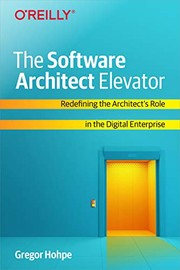
Directly addresses the solutions architect's unique challenge: translating between the boardroom and the engine room. It reframes architecture as communication and organizational influence, not just technical design.

Backed by rigorous research, this book quantifies what high-performing engineering organizations do differently — giving architects the data-driven language to justify architectural decisions to business stakeholders.
Discussion
Keep reading
Paths that share books, cover the same subject, or open a related topic.