Becoming a business analyst is less about a single credential than about a stack of overlapping skills: eliciting what stakeholders actually need, writing requirements a developer can build from, and holding the room when priorities collide. Read about those skills in the wrong order and they blur together. Read them in sequence and each one makes the next easier.
The honest caveat first: books build the craft, but they complement rather than replace on-the-job experience and a certification like the IIBA's ECBA or CBAP. Treat this path as the reading that makes your practice and your exam prep click, not a substitute for either.
Start with the map
Begin with Business Analysis For Dummies, which lays out the whole role across a project lifecycle without assuming you have done any of it yet. Follow it with The business analyst's handbook, a practical reference that walks through the deliverables and templates you will actually produce, so the overview's abstractions become concrete artifacts you can picture yourself creating.
Learn the core craft: requirements
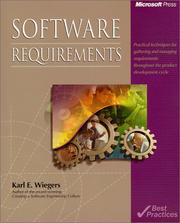
Requirements are the heart of the job, and Software Requirements by Karl Wiegers is the standard text on getting them right — how to elicit, specify, and manage them so a project does not quietly drift. Pair it with Mastering the requirements process, which gives you a repeatable method for turning vague stakeholder wishes into testable requirements. Together they cover the skill that separates a BA who merely documents from one who genuinely reduces risk.
Anchor to the body of knowledge
When you are ready to formalize, A Guide to the Business Analysis Body of Knowledge — the BABOK — is the profession's reference framework, defining the knowledge areas every BA is expected to know. Because it is dense, read it alongside the BABOK Study Guide, which restructures the same material for exam preparation and makes the framework navigable rather than intimidating.
Round out the human side
The last stage is the part beginners underrate: a BA lives or dies by facilitation and trust. Collaboration explained teaches how to run working sessions that actually produce decisions. Crucial Conversations gives you tools for the high-stakes, emotionally charged discussions where requirements really get negotiated. And How to Win Friends and Influence People, old as it is, still teaches the everyday relationship skills that make stakeholders want to work with you.
Read in this arc — role, requirements, framework, people — and the pieces of the job stop competing for your attention. If the analytical side pulls you toward systems, the solutions architect path is a natural next door. Follow the full path to build the layered skill set the role rewards.
Follow the full reading path →
Ready to learn something deeply?
Build a reading path — free