Fixing back and neck pain: the best books to move and heal better
This curriculum builds from understanding why back and neck pain happens, through practical movement and posture fixes, to the deeper science of chronic pain and long-term self-management. Each stage equips the reader with the vocabulary and mental models needed for the next, moving from accessible "why does this hurt?" books to evidence-based rehabilitation and pain-science frameworks.
Foundations: Understanding Why It Hurts
BeginnerGrasp the basic anatomy of the spine, understand common causes of back and neck pain, and dispel the most harmful myths (e.g., 'rest is best', 'pain = damage').
▸ Study plan for this stage
Pace: 4–5 weeks, ~25–30 pages/day (approximately 2 weeks for "Back Mechanic," 2–3 weeks for "Crooked")
- Spinal anatomy: the vertebrae, discs, ligaments, and muscles that make up the spine and how they interact
- The difference between structural damage and pain: why imaging findings don't always correlate with symptoms
- Common mechanical causes of back and neck pain: disc herniation, facet joint irritation, muscle guarding, and postural stress
- The 'pain ≠ damage' principle: understanding that pain is a protective signal, not always a sign of tissue injury
- Why rest and immobilization are often counterproductive: the role of movement and load management in recovery
- Individual variability in spine structure and pain response: why one person's 'bad disc' causes no pain while another's causes severe symptoms
- The biopsychosocial model of pain: how fear, beliefs, and lifestyle factors amplify or reduce pain perception
- Foundational principles of spine mechanics: neutral spine, load distribution, and how movement patterns affect pain
- Explain the basic anatomy of a spinal segment (vertebra, disc, facet joints, ligaments) and how these structures work together
- Why is it possible to have significant spinal degeneration or disc herniation without experiencing pain, and conversely, why can minor structural changes cause severe pain?
- What are the main mechanical causes of back and neck pain discussed in these books, and how do they differ from catastrophic injury?
- Describe the evidence against the 'rest is best' approach to back and neck pain recovery—what do McGill and Ramin suggest instead?
- How do fear, beliefs about pain, and lifestyle factors influence the experience of back and neck pain according to these authors?
- What is meant by 'load management' and why is it preferable to complete rest or immobilization?
- Create a labeled diagram of a spinal segment from memory, identifying the vertebra, intervertebral disc, facet joints, ligaments, and major muscle groups
- Document your own posture and movement patterns throughout a typical day (sitting, standing, bending, lifting) and identify which positions or movements trigger or worsen any existing discomfort
- Research and compare 2–3 MRI or X-ray reports (your own or public examples) with the actual symptoms described; note the disconnect between imaging findings and pain levels
- Write a 1–2 page reflection on your personal beliefs about back/neck pain before reading these books, then revise it after finishing both books to show how your understanding has changed
- Practice identifying your own neutral spine position while sitting and standing, and spend 5 minutes daily maintaining this position while performing light tasks (e.g., reading, typing)
- Interview someone with chronic back or neck pain and ask them about their beliefs regarding rest, movement, and recovery—compare their answers to the myths debunked in these books
Next up: This stage establishes the scientific foundation—understanding *why* pain occurs and debunking harmful myths—so that the next stage can confidently introduce specific assessment techniques and evidence-based movement strategies without the reader defaulting to outdated 'rest and avoid' thinking.

A clear, jargon-light starting point from a leading spine researcher. It teaches readers to identify their own pain triggers and introduces the concept of spine hygiene before any other intervention.

A journalist's rigorous investigation into the back-pain industry. Reading this second builds healthy skepticism and helps beginners avoid costly or harmful treatments before they understand their options.
Posture & Movement: Building Better Habits
BeginnerLearn how daily posture, sitting, standing, and movement patterns contribute to pain, and begin replacing harmful habits with protective ones.
▸ Study plan for this stage
Pace: 4–5 weeks, ~25–30 pages/day (approximately 2 weeks for Gokhale, 2–3 weeks for Starrett, plus review and integration)
- Stacked spine alignment and the 8 steps framework (Gokhale's core method for neutral posture)
- How modern sitting and standing habits create postural dysfunction and chronic pain
- The role of anterior pelvic tilt, rib cage position, and head posture in spinal health
- Desk ergonomics and movement breaks as tools to interrupt pain-causing patterns (Starrett's approach)
- Glute activation, hip mobility, and core engagement as foundations for protective movement
- How to assess your own postural patterns and identify which habits are causing problems
- Practical daily habit replacement: swapping harmful positions for pain-free alternatives
- The mind-body connection: how conscious movement practice rewires motor patterns
- What are the 8 steps to a pain-free back according to Gokhale, and how does each one contribute to spinal alignment?
- How does anterior pelvic tilt differ from neutral pelvic alignment, and why does this distinction matter for pain prevention?
- What are the main postural problems Starrett identifies in desk workers, and how do they cascade into pain?
- How can you modify your sitting, standing, and sleeping positions using the principles from both books to reduce pain risk?
- What is the relationship between hip mobility, glute activation, and lower back pain according to these authors?
- How do movement breaks and positional variety interrupt the pain cycle, and what frequency does Starrett recommend?
- Complete Gokhale's postural self-assessment: photograph yourself from the side in your normal standing and sitting posture, then compare to her alignment photos to identify deviations
- Practice the 8 steps daily for 2 weeks: spend 5–10 minutes each morning performing each step in sequence (stretchsitting, elongation, tucking, etc.) until they feel natural
- Perform Starrett's desk audit: photograph your workspace from multiple angles, measure monitor height and chair position, then implement his ergonomic fixes one by one
- Set hourly movement reminders for one week: every hour, stand, perform 3 glute squeezes, take 5 deep breaths, and change position; track which movements feel most relieving
- Sleep position experiment: try Gokhale's recommended sleeping positions for 3 nights each (side-lying with elongation, back-lying with support) and journal how your back feels upon waking
- Create a personal 'postural habit map': list your top 3 pain-triggering positions (e.g., slouched at desk, rounded shoulders while standing) and write one specific replacement behavior for each using principles from both books
Next up: This stage establishes the foundational awareness and daily habits needed to prevent pain; the next stage will deepen this by introducing targeted corrective exercises, mobility work, and strategies for managing acute flare-ups when they occur.
Introduces the Gokhale Method of primal posture with rich photographic instruction. It is best read after McGill so the reader already understands spinal load and can evaluate the advice critically.

Directly addresses the modern sedentary lifestyle that drives most neck and back pain. It builds on posture basics with practical mobility routines designed for people who sit for long hours.
The Pain Science Revolution
IntermediateUnderstand the neuroscience of pain — why chronic pain persists even after tissue heals — and shift from a purely structural view to a biopsychosocial model.
▸ Study plan for this stage
Pace: 6–8 weeks, ~25–30 pages/day (alternating between both books; start with "Explain Pain" for 3–4 weeks, then transition to "The Mindbody Prescription" for 3–4 weeks)
- Pain is a conscious experience produced by the brain, not simply a signal from damaged tissue — nociception (tissue damage signals) and pain perception are distinct processes
- The nervous system can become sensitized, causing pain to persist long after tissue has healed (central sensitization and neuroplasticity)
- The biopsychosocial model: pain is shaped by biological factors (nervous system state), psychological factors (beliefs, emotions, stress), and social factors (relationships, work environment, cultural narratives)
- Fear-avoidance cycles perpetuate chronic pain — avoidance of movement reinforces the brain's protective response and deconditioning
- Emotions, stress, and unconscious psychological conflicts (tension myositis syndrome/TMS) can trigger and maintain physical pain without structural pathology
- Pain education and changing beliefs about pain are therapeutic tools — understanding pain neuroscience can reduce threat perception and facilitate recovery
- The role of the sympathetic nervous system in pain: chronic stress and 'fight-or-flight' activation maintain pain states
- Recovery requires reconceptualizing pain as a protective alarm that can be reset through movement, stress reduction, and addressing underlying psychological factors
- Explain the difference between nociception and pain. Why can someone have significant tissue damage without pain, or pain without detectable tissue damage?
- What is central sensitization, and how does it explain why pain persists after tissue healing?
- How does the biopsychosocial model differ from a purely structural/biomechanical view of back and neck pain?
- Describe a fear-avoidance cycle and explain how it perpetuates chronic pain. How can understanding this cycle help break it?
- According to Sarno's model, what is the relationship between emotional stress and physical pain? What is tension myositis syndrome (TMS)?
- How can pain education and changing beliefs about pain contribute to recovery from chronic pain?
- What role does the nervous system's threat detection play in chronic pain, and how can you reduce threat perception?
- Create a personal pain timeline: map when your pain started, what you believed about it at each stage, and how your beliefs changed. Identify moments when fear-avoidance may have intensified symptoms.
- Practice the 'explain pain' conversation: teach someone else (friend, family member) the key concepts from Butler's book in your own words. Record yourself or write it out to identify gaps in understanding.
- Conduct a stress-emotion audit: for one week, track your daily stress levels, emotional state, and pain intensity. Look for correlations between psychological factors and physical symptoms.
- Perform graded movement experiments: choose a movement you've been avoiding (e.g., bending forward, turning your neck). Do it very gently in small increments while monitoring pain and fear. Record observations to challenge catastrophic beliefs.
- Write a 'pain narrative reframe': describe your pain story using the old structural model, then rewrite it using the biopsychosocial model and pain neuroscience concepts from the books.
- Practice sympathetic nervous system downregulation: implement a daily 10–15 minute stress-reduction practice (deep breathing, progressive muscle relaxation, meditation) and track its effect on pain levels over 2 weeks.
Next up: This stage shifts your understanding from 'something is structurally broken' to 'my nervous system is overprotective,' preparing you to move into the next stage where you'll learn specific, evidence-based interventions (movement, rehabilitation, and integrated treatment strategies) to retrain your nervous system and rebuild function.

The landmark accessible text on modern pain neuroscience. Reading it here, after structural and postural foundations, reframes everything the reader has learned and explains why movement and mindset are both essential.
A classic and provocative argument that psychological tension drives much chronic back pain. Placed after Butler so readers have the pain-science vocabulary to engage with Sarno's ideas critically rather than uncritically.
Rehabilitation & Strength: Moving Well for Life
IntermediateApply evidence-based exercise and rehabilitation principles to build a resilient spine, reduce recurrence, and return to full activity safely.
▸ Study plan for this stage
Pace: 8–10 weeks, ~25–30 pages/day, with 2–3 days per week dedicated to practicing exercises and movement patterns
- Core tension and anti-movement patterns as the foundation for spinal stability and injury prevention
- The Z-Health R-phase assessment framework for identifying movement restrictions and asymmetries
- Mobility as a prerequisite to strength: systematic joint-by-joint assessment and targeted mobility work
- Position-dependent stability: how proper posture and positioning enable safer, more effective strength training
- The concept of 'supple' movement: combining mobility, stability, and motor control for resilient function
- Progressive loading and exercise regression/progression strategies for safe return to full activity
- Movement quality over intensity: how to identify and correct compensatory patterns before adding load
- Lifestyle integration: embedding corrective movement into daily routines to sustain long-term spinal health
- What are the core anti-movement patterns described in Foundation, and why are they critical for spinal stability?
- How does the Z-Health R-phase assessment help identify movement restrictions, and what does a full assessment look like?
- What is the relationship between mobility and strength, and why must mobility work precede heavy loading?
- Describe the joint-by-joint approach to mobility work: which joints should be mobile, and which should be stable?
- How do you identify compensatory movement patterns, and what strategies does Becoming a Supple Leopard recommend for correcting them?
- What is the difference between position-dependent stability and general strength, and how does this change exercise selection?
- Perform the Foundation core tension exercises daily (e.g., standing core engagement, breathing patterns) for 2 weeks to establish baseline stability awareness
- Complete a full Z-Health R-phase assessment on yourself, documenting mobility restrictions in hips, thoracic spine, shoulders, and ankles; repeat weekly to track progress
- Practice the mobility sequences from Becoming a Supple Leopard for your identified problem areas (e.g., hip 90/90 stretch, thoracic rotations, shoulder pass-throughs) 3–4 times per week
- Film yourself performing 3–5 functional movement patterns (e.g., a bodyweight squat, hinge, push-up, lunge) and analyze for compensations; correct and re-film weekly
- Build a personalized 15–20 minute daily movement routine combining Foundation core work with Supple Leopard mobility drills; track adherence and movement quality improvements
- Progress one compound movement (squat, deadlift, or push-up) using the regression/progression framework from both books, documenting position quality at each stage before advancing load
Next up: This stage equips you with the assessment tools, mobility foundations, and movement quality standards needed to progress safely into sport-specific training, advanced loading protocols, or return-to-sport programming in the next stage.

Introduces Foundation Training, a targeted system of posterior-chain exercises widely used in back rehabilitation. It is best read after pain-science books so the reader understands that loading the spine correctly is therapeutic, not dangerous.
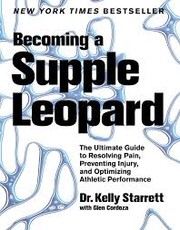
A comprehensive movement and mobility manual. Placed last in this stage, it rewards readers who already understand pain science and basic rehab, giving them a full toolkit for maintaining a healthy spine long-term.
Chronic Pain Mastery: Long-Term Self-Management
ExpertDevelop a sustainable, whole-person strategy for living well with or recovering fully from chronic back and neck pain, integrating mind, movement, and lifestyle.
▸ Study plan for this stage
Pace: 4–5 weeks, ~40–50 pages/day with reflection breaks; allow extra time for integration of mind-body concepts
- Tension Myositis Syndrome (TMS) as a psychosomatic condition rooted in repressed emotions and unconscious conflict
- The role of fear, catastrophizing, and attention-focusing in perpetuating chronic pain cycles
- How the brain uses pain as a distraction from emotional distress and unresolved psychological material
- The necessity of conscious awareness and emotional acknowledgment to interrupt the pain-emotion feedback loop
- The distinction between structural abnormalities (herniated discs, arthritis) and functional pain driven by tension and neural patterns
- Personality traits and behavioral patterns (perfectionism, people-pleasing, suppressed anger) that predispose individuals to TMS
- The power of belief and expectation in healing: how changing your understanding of pain can change the pain itself
- Integration of physical activity, reassurance, and psychological work as a unified healing approach
- What is Tension Myositis Syndrome (TMS) and how does it differ from structural back and neck injuries?
- How do repressed emotions and unconscious psychological conflicts contribute to chronic pain according to Sarno's model?
- What role does fear and catastrophizing play in maintaining chronic back and neck pain?
- Which personality traits and emotional patterns are most commonly associated with TMS?
- How can changing your belief about the cause of your pain influence the pain itself?
- What is the relationship between attention, distraction, and the persistence of chronic pain?
- What practical steps does Sarno recommend for addressing the psychological roots of pain?
- Daily journaling: Write for 10–15 minutes about stressors, conflicts, emotions, and unresolved issues; note any patterns between emotional intensity and pain flare-ups
- Emotional awareness practice: Identify suppressed or avoided emotions (anger, resentment, guilt, fear) and practice naming and expressing them safely in writing or conversation
- Gradual activity resumption: Systematically increase physical activity (walking, light exercise) while consciously rejecting the fear-based narrative that movement will cause harm
- Pain-emotion mapping: Create a timeline or chart correlating pain intensity with life stressors, emotional events, and periods of high anxiety or conflict
- Cognitive reframing exercises: Practice replacing catastrophic pain thoughts ('This is structural damage,' 'I will never recover') with Sarno-aligned thoughts ('This is TMS, my brain is protecting me through pain')
- Guided self-talk and affirmations: Develop and repeat personalized affirmations that reinforce the mind-body connection and your capacity to heal (e.g., 'My pain is a signal, not a sentence')
- Mindfulness and body scanning: Practice 10–15 minute daily sessions to observe pain and tension without judgment, noticing how attention and emotion modulate sensation
- Reflection dialogue: Write letters to your pain or your unconscious mind, exploring what emotional work or life changes the pain might be signaling
Next up: This stage establishes the foundational mind-body paradigm and emotional awareness needed to recognize pain as a whole-person phenomenon; the next stage will build on this psychological literacy by introducing specific somatic, movement, and lifestyle practices that operationalize these insights into daily healing routines.
Introduces Clinical Somatic Education and the role of the nervous system in chronic muscular tension. It synthesizes movement, awareness, and neuroscience into a practical long-term self-care approach.
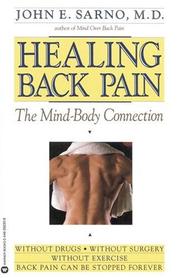
Sarno's most focused and widely read work, best saved for last when the reader can integrate its psychological insights with everything learned about anatomy, movement, and pain science across the whole curriculum.
Discussion
Keep reading
Paths that share books, cover the same subject, or open a related topic.