Inheritance Cycle books in order: where to start with Christopher Paolini
The Inheritance Cycle has exactly one reading order and no ambiguity about it: Eragon, Eldest, Brisingr, Inheritance. What people actually need help with is everything around those four — where the later short-story collection and the Murtagh novel fit, whether the science-fiction books are connected (they are not), and whether the films are worth accounting for (they are not; the 2006 adaptation covers part of the first book and the story continues far past it). This path takes the cycle in order, then the Alagaësia material published since, then Paolini's separate SF work, then the fantasy he was openly writing under the influence of, and finally where to go once Alagaësia is finished.
The Inheritance Cycle, In Order
BeginnerRead the four core novels in sequence — there is no alternative order and each one begins where the last stopped.
▸ Study plan for this stage
Pace: Three to four months. Start with Eragon — there is no other entry point and no alternative order. The four books escalate steeply in length: Eragon is around 500 pages, Eldest around 670, Brisingr around 750 and Inheritance around 850, so the last two take roughly twice as long as the first. Read th
- The magic system's governing rule: magic is spoken in the Ancient Language, cannot be used to lie, and costs the caster exactly the energy the task would take by hand — the constraint that makes the later books' problem-solving work
- The Rider bond between Eragon and Saphira as the structural centre, with shared thought, shared sensation and a hard limit on how far apart they can be
- Brom's function in Eragon, and the reason his early chapters carry so much exposition that later books can move without stopping
- The Roran and Carvahall strand introduced in Eldest, which is where Paolini's writing first gets genuinely good — an ordinary man with no magic solving problems by nerve and logistics
- The Eldunarí and what Brisingr reveals about where a dragon's power actually resides, which retroactively explains Galbatorix's strength and is the best world-building in the cycle
- Galbatorix as an antagonist defined by a stated philosophical position rather than by malice, and the way the final confrontation is resolved by argument as much as by force
- Inheritance's ending, which deliberately declines the tidy resolution the structure has been promising and is the single most-argued-about decision in the series
- The cycle's openly traditional construction — the orphan, the mentor, the destiny, the dark lord — assembled with enthusiasm rather than subverted, which is the honest way to read it
- State the three rules of magic in the Ancient Language as Brom explains them in Eragon. Then find a later scene that is only solvable because of one of them.
- What does the Roran strand of Eldest do that the Eragon strand cannot? Name a specific problem Roran solves without magic.
- What are the Eldunarí and what do they explain about the balance of power in the first two books that you had accepted without explanation?
- Brisingr was half of a planned final volume. Identify the material you think would have been cut, and say what would have been lost with it.
- Inheritance ends the way it does on purpose. What is the argument for that ending, and what is the argument that it is a failure of nerve?
- Paolini was a teenager when he wrote Eragon. Where in the four books can you actually see the writing improve — point to a specific chapter.
- Keep a running glossary of Ancient Language words as they appear, with the effect each one produces. By Inheritance there are enough that Paolini expects you to recognise a spell before it is explained, and the list turns those moments into payoffs.
- Read the Roran chapters of Eldest consecutively, skipping the Eragon strand, then go back and read the Eragon chapters the same way. The two halves have different pacing and reading them separated makes visible how Paolini interleaves them.
- At the end of Eldest, write down every explanation you can construct for the twist and which chapter of Eragon foreshadowed it. Almost all the groundwork is in book one.
- Track the energy cost of magic across the four books: log five significant spells and what each cost the caster. The system is more consistent than casual readers give it credit for and the log proves it.
- After finishing Inheritance, write 300 words defending the ending, then 300 words attacking it. This is the argument the whole fandom has and you should be able to run both sides.
Next up: The war is over and the world is not finished with, which is exactly the position the material published since the cycle was written to occupy.
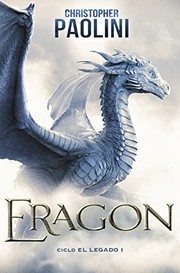
The starting point, written when Paolini was a teenager and self-published before Knopf picked it up. A farm boy finds a dragon egg; the plot beats are deliberately traditional and the book is best read as a competent, enthusiastic assembly of the genre's furniture.

Splits the narrative between Eragon's training with the elves and Roran's defence of Carvahall, and the Roran half is where Paolini's writing first gets genuinely good. The ending contains the series' one real twist, so avoid summaries.
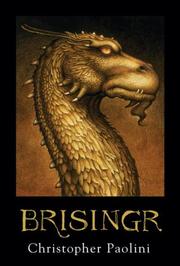
Originally planned as the final volume and split in two when it outgrew itself, which is why it is the slowest of the four. Push through the middle — the material on how the dragon riders' magic actually works is the best world-building in the cycle.
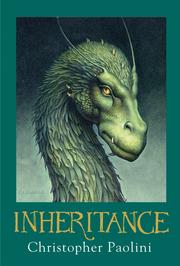
The conclusion, and the longest book of the four. It resolves the war and deliberately declines to give the tidy ending the structure has been promising, which is the single most-argued-about decision in the series.
Back to Alagaësia
BeginnerPick up everything published in the world since the cycle ended, in the order it should be read.
▸ Study plan for this stage
Pace: Four to five weeks, and the order within this stage matters. Read The Fork, the Witch, and the Worm first — three novellas of about 250 pages total, set a year after Inheritance and framed by Eragon in the east; it is a bridge rather than a bonus, and the Angela story was co-written with Paolini's s
- The post-war problem the cycle left: Eragon founding a new order of Riders somewhere else, and the fact that the story's centre of gravity has moved off the map
- The novella form as a way to write around the edges of a finished series — three separate stories, each doing something the four-book structure could not accommodate
- Angela the herbalist as the cycle's deliberate anomaly, and what it means that her chapter was written with the person the character is based on
- Murtagh as a protagonist rather than an antagonist, and the way the novel rereads the cycle's events from the position of the person who was compelled
- Coercion, oaths and culpability, which is Murtagh's actual subject — he did what he did under an Ancient Language oath, and the book refuses to let that settle the moral question
- Tone shift: Murtagh is bleaker, slower and more interior than any of the four cycle books, and readers who wanted more Eragon frequently report finding a different kind of novel
- The gazetteer as a category — in-world reference material with no narrative, which is a real publishing form in fantasy and worth recognising as such before buying
- What does each of the three novellas add — one about the future, one about the past, one about Angela? Which of the three most needed to exist?
- How does Murtagh's account of his own actions during the cycle differ from Eragon's reading of them, and which do you find more persuasive?
- The Ancient Language oath means Murtagh was compelled. Does the novel treat that as exculpating? Where does it push back?
- Murtagh is markedly darker in tone. Is that a change in Paolini's audience, in his ambition, or in the material?
- What does the gazetteer actually give you that the novels do not, and would you recommend it to a reader who wants only story?
- Before starting Murtagh, write a one-page summary of everything you remember Murtagh doing in the cycle and why. Read the novel. Then annotate your summary with what it got wrong. The book is designed to do this to you.
- Read the Angela novella and then find three Angela scenes in the cycle. Write two sentences on whether the novella is consistent with them or is quietly retconning her.
- Map Murtagh's route on the gazetteer's maps or on the endpaper map from the cycle. The novel goes to places the four books only named, and following it geographically is most of the pleasure.
- Compare an interior monologue from Inheritance with one from Murtagh, side by side, and note what has changed in the prose. This is the clearest measurement of Paolini's development available.
- List the threads Inheritance left open and mark which of them The Fork, the Witch, and the Worm and Murtagh actually close. The remainder is the shape of whatever comes next.
Next up: With Alagaësia exhausted for now, the next stage is Paolini writing for a different reader entirely, in a genre with no connection to any of this.

Three novellas set a year after Inheritance, framed by Eragon in the east. Read it directly after the cycle: it is a bridge rather than a bonus, and the Angela story was co-written with Paolini's sister, on whom the character is based.

A full novel following Murtagh and Thorn after the war, and much darker than the cycle. It is the proper continuation and it assumes you remember Inheritance in detail, so do not read it as a standalone.
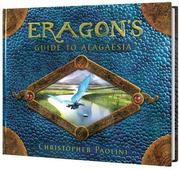
An illustrated in-world gazetteer with pull-outs and inserts rather than a story. A gift book, not a novel — worth having if you want the maps and the dragon anatomy, skippable otherwise.
Paolini Off Alagaësia
IntermediateRead the Fractalverse science fiction, which shares no continuity with the fantasy and is written for an older reader.
▸ Study plan for this stage
Pace: Five to six weeks. To Sleep in a Sea of Stars is a very long first-contact space opera — comfortably over 800 pages — and needs a month; it is written for adults rather than for the young-adult market and contains extended body horror and a high casualty rate among named characters. Fractal Noise is
- The Fractalverse as a hard-ish SF setting with worked-out FTL, cryo, relativistic constraints and a colonial economy — an entirely different engineering problem from a magic system
- Kira Navárez as a xenobiologist protagonist, so that the novel's problem-solving is scientific procedure rather than combat competence
- The symbiote premise: an alien technology bonded to a human body, which is the one structural echo of the Rider bond and is worth noting precisely because everything else differs
- Scale and pacing in space opera versus epic fantasy — the same appetite for length, deployed on travel time, fleet actions and biology rather than on training sequences
- Fractal Noise's reduction of the setting to four people walking toward an anomaly, and the way a smaller book can be more oppressive than a larger one
- Existential rather than martial stakes: the prequel is about meaninglessness and attrition, with no antagonist to defeat
- The career move itself — a writer who grew up in public with one world proving he can build another, for a different audience, in a genre with different rules
- How does the Soft Blade constrain and enable Kira? Compare it directly with the Eragon-Saphira bond: what does each cost its host?
- Where does To Sleep in a Sea of Stars use actual biology to solve a plot problem, and does the science hold up?
- The novel is written for adults. Point to three specific things in it that would not have appeared in the Inheritance Cycle.
- Fractal Noise has no villain. What supplies the pressure instead, and does it work over 300 pages?
- Having read both, is the Fractalverse a better fit for Paolini's strengths than Alagaësia was? Argue from prose and structure, not preference.
- Write out the rules of the Soft Blade as the book establishes them, exactly as you wrote out the rules of the Ancient Language in stage one. Doing both makes clear that Paolini writes hard systems regardless of genre.
- Track the ship-time versus objective-time in To Sleep in a Sea of Stars across the voyage sections. The relativistic and cryo bookkeeping is deliberate and following it is how the scale becomes felt rather than stated.
- Read the opening chapter of Eragon and the opening chapter of To Sleep in a Sea of Stars back to back and write 200 words on what changed in eighteen years of writing.
- After Fractal Noise, place it correctly on a Fractalverse timeline with the novel and note precisely what it tells you that the novel had left ambiguous.
- Recommend one of the two books to a specific person you know and write the two-sentence pitch. Being able to say who each is for is the practical outcome of this stage.
Next up: Having seen what Paolini does when he is not working from a template, it becomes far more interesting to go back and read the templates themselves.

A long first-contact space opera with a xenobiologist protagonist and an alien symbiote. Entirely unconnected to Eragon and pitched at adults; it is the book that showed Paolini could write outside the world he grew up in.
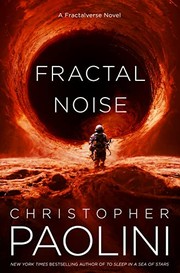
A prequel novella set over a century earlier, much smaller and bleaker — four people walking toward an anomaly. Read it after the novel, not before; it works as a coda rather than an introduction.
What Eragon Is Made Of
IntermediateRead the books Paolini has repeatedly named as sources, which is the most interesting thing to do with a series this openly derivative.
▸ Study plan for this stage
Pace: Four to five weeks, and the lightest reading on the path. The Hobbit is around 300 pages and can be read in a week; Dragonflight is a similar length and just as quick; Pawn of Prophecy is shorter still, around 260 pages, and reads in a few evenings. Read them in that order — chronological by publica
- The Hobbit as the most-cited ancestor: a small protagonist, a long journey and a dragon who talks and negotiates — Smaug's conversation is the specific thing Eragon inherits and changes
- What Eragon does with Tolkien's furniture — elves, dwarves, a dark lord, an ancient language — and where it deviates, notably in making the dragon a partner rather than an obstacle
- Dragonflight's establishment of the telepathically bonded dragon-and-rider pair, along with Impression, dragon colour hierarchies and the weyr as an institution — nearly every convention of the Rider bond runs back through here
- Pern's status as science fiction dressed as fantasy, which is a genre lesson worth having before reading the Fractalverse books again
- The Belgariad's opening as the purest version of the farm-boy-with-a-destiny structure: Garion, the hidden guardians, the stolen object, the quest party assembled by role
- Eddings's openness about using a formula — he wrote about it directly — which makes Pawn of Prophecy the fastest way to see the structure plainly rather than to infer it
- Derivativeness as a describable property rather than an insult: what is borrowed, at what level (plot beat, institution, image, sentence rhythm), and what the borrowing is for
- Compare Smaug's conversation with Bilbo to Saphira's early exchanges with Eragon. What did Paolini take, and what did he have to invent because his dragon is on the protagonist's side?
- List the elements of the Rider bond in Eragon that appear first in Dragonflight. Then list what Paolini adds. Which list is longer?
- Set the first fifty pages of Pawn of Prophecy against the first fifty of Eragon and mark the beats that correspond. How closely does the correspondence run?
- Eddings used the formula knowingly. Does knowing it change the value of the book, or only the way you read it?
- After all three, what in Eragon is actually Paolini's own? Name three things and defend them.
- Build a three-column table — The Hobbit, Dragonflight, Pawn of Prophecy — and fill in the rows: protagonist's origin, mentor, inciting theft or discovery, first journey, dragon's role. Then add a fourth column for Eragon. The finished table is the honest answer to the derivativeness question.
- Take the opening chapter of Pawn of Prophecy and the opening chapter of Eragon and mark the corresponding beats with matching numbers in the margins. Nothing else on this path is as instructive in twenty minutes.
- Write the scene in Eragon where Saphira hatches as McCaffrey would have written it — Impression, the weyr, the colour hierarchy. The differences are where Paolini made a choice.
- Find one image or sentence rhythm in Eragon that is straightforwardly Tolkien's and one that is not. Being able to tell them apart is the actual skill.
- Write 400 words on whether Eragon's traditionalism is a weakness or a genre convention correctly executed. You now have the evidence to argue it either way.
Next up: Knowing the formula makes it much easier to choose the next series well — you can now tell what a fantasy sequence is doing structurally from its first chapter.
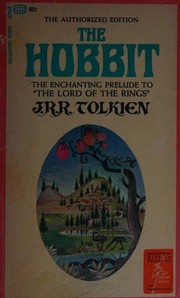
The obvious ancestor and the one Paolini cites most: a small protagonist, a long journey, and a dragon who talks. Reading it makes clear what Eragon takes and what it changes.

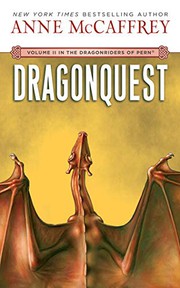
The Pern novel that established the telepathically bonded dragon-and-rider pair as a fantasy fixture. Almost every convention of the rider bond in Eragon runs back through here.
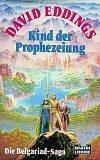
The Belgariad's opening, and the purest example of the farm-boy-with-a-destiny structure Eragon follows almost beat for beat. Eddings was frank that he was using a formula; reading him is the fastest way to see the formula plainly.
Where to Go Next
BeginnerMove on to the fantasy series that a reader who finished Inheritance is most likely to want, from lightest to heaviest.
▸ Study plan for this stage
Pace: Open-ended, but plan on two months minimum and much longer if the last book takes. Read them in the order given, which runs from lightest to heaviest. The Ruins of Gorlan is short — around 250 pages — and the Ranger's Apprentice books that follow it are the same, so the whole series moves fast. Sabr
- Ranger's Apprentice as the closest match to Eragon in age and register: an apprenticeship, a taciturn mentor, short chapters, fast books and low-magic problem-solving
- Apprenticeship as a plot engine — the training-montage structure Eldest uses at length, executed here across a whole series
- Sabriel as the quality step: Nix's necromancy runs on seven bells and a river of Death with defined precincts, a magic system as rigorous as anything in Alagaësia and considerably stranger
- A young-adult protagonist with real competence and real grief, which is the tonal difference between Sabriel and the Eragon of book one
- The Wheel of Time's opening as a deliberate Tolkien echo that then expands into something enormous: an invented cosmology, a channelling system with a gendered structure, and hundreds of viewpoint characters
- Series length as a design problem — the Wheel of Time's middle books are notorious for slowing, and knowing that before starting is part of choosing it
- Reading up a difficulty gradient on purpose: light and fast, then well-written and strange, then long and demanding, which is the actual argument this stage makes
- What each series offers a reader who liked Inheritance specifically: more mentorship, better prose, or more scale
- What does Ranger's Apprentice do with the mentor relationship that Eldest does not have room for?
- State the rules of Nix's necromancy — the bells, the gates, the precincts of Death — as precisely as you stated the rules of the Ancient Language. Which system is more constrained?
- How does Sabriel handle its protagonist's competence differently from Eragon? Who is more capable at the start of their book, and what does that do to the plot?
- The Eye of the World opens with an unmistakable Tolkien pastiche. When does it stop being one, and what does it become?
- Of the three, which is the right recommendation for a reader who finished Inheritance and wanted more of the same, and which for a reader who wanted something better? Defend both.
- Read the first chapter of each of the three and rank them for prose quality before reading any further. Then finish all three and see whether the first-chapter judgement held. This is a genuinely useful reading skill and this stage is a controlled test of it.
- Diagram Sabriel's bells and gates as a reference sheet while reading. Nix expects you to keep track and the book is much better when you can.
- Apply the four-column table from the previous stage to The Eye of the World: origin, mentor, inciting event, party assembly. Then say what Jordan does with the formula that Eddings and Paolini do not.
- Before committing to the Wheel of Time, read a description of its publication history and length and write down, honestly, whether you intend to finish it. Deciding deliberately is part of the exercise.
- Write the recommendation you would give a fourteen-year-old who has just finished Inheritance, naming one of these three and saying why. You have now read enough of the tradition to make that call properly.
Next up: You have read Paolini complete, seen the books he was built from, and lined up three plausible destinations — which means you are choosing your next fantasy series on structural grounds rather than on a cover.
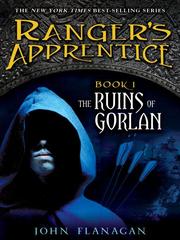
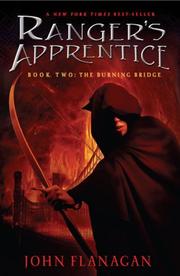
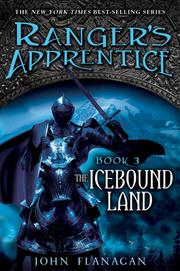
First of the Ranger's Apprentice books, and the closest match in age and register to Eragon — an apprenticeship, a mentor, and short, fast books. The natural immediate next series.

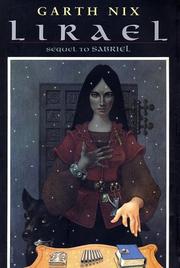
A step up in quality and strangeness: necromancy, bells, and a border between the living and the dead. It gives a reader who liked Eragon a much better prose stylist without leaving the young-adult shelf.
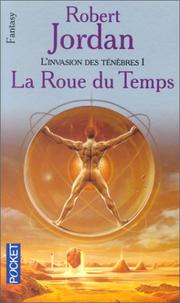
The Wheel of Time's first volume, and the big commitment. Paolini has named it as a formative influence, and it is the obvious destination for a reader who wants more of what Inheritance was reaching for at fourteen volumes' length.
Discussion
Keep reading
Paths that share books, cover the same subject, or open a related topic.