Bodybuilding basics: an ordered reading list to build muscle
This curriculum takes a beginner from zero knowledge to a deep, evidence-based understanding of bodybuilding across four progressive stages. It starts with practical, accessible guides to build vocabulary and habits, then layers in the science of hypertrophy and nutrition, and finally reaches advanced programming and research-level thinking — ensuring each book's concepts are fully grounded before the next one demands more of the reader.
Foundations: Mindset, Movement & First Principles
BeginnerUnderstand what bodybuilding actually is, learn safe movement patterns, and develop the beginner habits (consistency, progressive overload, basic nutrition) that everything else builds on.
▸ Study plan for this stage
Pace: 8–10 weeks, ~40–50 pages/day. Start with "Starting Strength" (weeks 1–4, ~350 pages), then "The New Encyclopedia of Modern Bodybuilding" (weeks 5–10, ~600 pages). Allocate 1–2 days per week for practical application and form review.
- The barbell as the primary tool for strength development: understanding why compound movements (squat, bench press, deadlift, overhead press) form the foundation of all training
- Safe movement patterns and proper form: the importance of neutral spine, hip hinge mechanics, and progressive loading to prevent injury
- Progressive overload as the core driver of muscle growth: adding weight, reps, or sets systematically over time rather than random variation
- The role of recovery, sleep, and basic nutrition in muscle development: protein intake, caloric surplus for growth, and the relationship between training stimulus and adaptation
- Consistency and habit formation over perfection: establishing a sustainable training routine and mindset that prioritizes showing up regularly
- The distinction between strength training (Starting Strength focus) and hypertrophy training (Encyclopedia focus): how different rep ranges, volume, and exercise selection serve different goals
- Beginner-specific advantages: exploiting newbie gains through proper programming before advanced techniques become necessary
- Exercise selection and variation: understanding which exercises are foundational versus supplemental, and why certain movements are non-negotiable for beginners
- Why does Mark Rippetoe emphasize the barbell squat, bench press, deadlift, and overhead press as the core of a beginner program, and what makes these compound movements superior to isolation exercises for a novice?
- What is progressive overload, and how do you apply it practically across the programs described in both books?
- Describe the proper form for at least three of the main lifts from Starting Strength (squat, bench press, deadlift, overhead press): what are the key checkpoints and common mistakes?
- How does Arnold's approach to exercise selection and volume in the Encyclopedia differ from Rippetoe's Starting Strength program, and when would each approach be appropriate?
- What role do nutrition, sleep, and recovery play in muscle growth according to both authors, and what are the minimum requirements for a beginner?
- How should a beginner structure their training week for consistency, and what does 'showing up' mean in the context of building long-term habits?
- Film yourself performing the squat, bench press, deadlift, and overhead press with an empty bar or light weight. Compare your form against the detailed descriptions and photos in Starting Strength. Identify 2–3 form issues and drill corrections for 1 week.
- Run a 4-week Starting Strength novice program (or similar linear progression): track every workout in a notebook or app, recording weight, reps, and sets. Document when you hit PRs and when you stall, noting what you changed.
- Calculate your daily protein and caloric needs based on Arnold's nutrition guidelines in the Encyclopedia. Plan and log 3 full days of meals that meet these targets, then eat according to that plan for 1 week.
- Create a written training schedule for your first 8 weeks: specify which days you'll train, which lifts you'll do each session, and your target progression (e.g., add 5 lbs to squat each session). Review it weekly and adjust based on actual performance.
- Read and annotate the chapters on form and technique in Starting Strength (squat, bench, deadlift, press). Summarize the key cue for each lift in one sentence, then teach that cue to a training partner or friend.
- Compare two different beginner programs: one from Starting Strength and one from the Encyclopedia. Create a side-by-side table showing exercise selection, rep ranges, volume, and frequency. Explain why the differences exist.
Next up: This stage establishes the unshakeable foundation of proper form, progressive overload, and consistent habit-building; the next stage will layer in periodization, advanced exercise variations, and specialized programming to target specific weak points and accelerate progress beyond beginner gains.
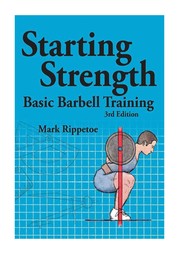
The single best introduction to barbell mechanics and the logic of progressive overload — the core engine of all muscle building. Reading this first gives you the movement vocabulary and 'why lift heavy' intuition every later book assumes you have.

A comprehensive, beginner-friendly survey of bodybuilding history, exercises, split training, and competition culture. Reading it second broadens your exercise library and shows how the sport's greats applied the principles Rippetoe introduced.
The Science of Hypertrophy & Nutrition Basics
BeginnerUnderstand the biological mechanisms that cause muscles to grow, learn how to structure calories and macros for muscle gain, and connect scientific evidence to practical training decisions.
▸ Study plan for this stage
Pace: 4–5 weeks, ~25–30 pages/day (approximately 150–180 pages total for the core hypertrophy and nutrition chapters)
- Muscle hypertrophy is driven by mechanical tension, metabolic stress, and muscle damage—the three primary mechanisms Matthews outlines
- Progressive overload (gradually increasing weight, reps, or volume) is the fundamental principle for consistent muscle growth
- Caloric surplus is necessary for muscle gain; the body requires excess energy to build new tissue
- Macronutrient distribution matters: adequate protein (0.7–1g per lb bodyweight), sufficient carbs for training energy, and fats for hormone production
- Rep ranges and training frequency interact with nutrition; moderate rep ranges (6–12 reps) combined with adequate volume produce optimal hypertrophy
- Recovery and consistency trump perfection; sleep, stress management, and adherence to a plan matter as much as the plan itself
- Individual variation exists; tracking personal metrics (strength gains, scale weight, body composition) reveals what works for your body
- What are the three primary mechanisms of muscle hypertrophy according to Matthews, and how does each one contribute to growth?
- Why is a caloric surplus necessary for muscle gain, and what happens if you try to build muscle in a deficit?
- How much protein should you consume daily for muscle growth, and why is this amount important?
- What is progressive overload, and why is it the cornerstone of long-term muscle development?
- How do rep ranges, training frequency, and recovery interact to optimize hypertrophy?
- What role do carbohydrates and fats play in supporting muscle growth beyond just calories?
- Calculate your daily caloric needs using the formulas Matthews provides, then determine your surplus (typically 300–500 calories above maintenance)
- Plan a week of meals hitting your target macros (protein, carbs, fats) using real foods; track one day in a food app to verify accuracy
- Design a simple 4–6 week training split that incorporates progressive overload—write down starting weights and target increases
- Track your bodyweight, strength metrics (lifts), and subjective energy levels daily for 2 weeks to establish your baseline and identify patterns
- Read the hypertrophy chapter twice: first for overview, second to annotate the specific mechanisms and how they apply to your current training
- Create a one-page reference sheet summarizing the three hypertrophy mechanisms, your calorie/macro targets, and your progressive overload strategy
Next up: This stage establishes the scientific foundation and nutritional framework for muscle growth, preparing you to apply these principles through a structured training program and learn how to adjust variables (volume, intensity, frequency) based on individual response in the next stage.
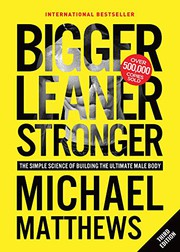
A highly accessible, evidence-cited guide that bridges the gap between gym floor and sports science — covering hypertrophy, progressive overload, and flexible dieting in plain language. It consolidates Stage 1 habits into a coherent, research-backed system before you dive into deeper science.
A rigorous, hierarchy-driven breakdown of nutrition for physique athletes — calories, macros, meal timing, and supplementation ranked by importance. Reading it here teaches you to prioritize what actually moves the needle before advanced programming books assume nutritional competence.
The companion training volume that formalizes volume, intensity, frequency, and periodization using the same evidence-based pyramid framework. It should follow the Nutrition volume so you can integrate both sides of the equation simultaneously.
Deep Science: Mechanisms of Muscle Growth
IntermediateDevelop a research-level understanding of hypertrophy mechanisms — mechanical tension, metabolic stress, muscle damage, fiber types, and how to manipulate training variables with precision.
▸ Study plan for this stage
Pace: 8–10 weeks, ~40–50 pages/day (Schoenfeld: weeks 1–6; Delavier: weeks 7–10)
- The three primary mechanisms of hypertrophy: mechanical tension, metabolic stress, and muscle damage—how each drives growth and their relative contributions
- Fiber type classification (Type I, Type IIa, Type IIx) and how training variables (load, volume, tempo) preferentially recruit and stimulate each
- Dose-response relationships: how rep ranges, rest periods, exercise selection, and training frequency affect hypertrophy outcomes
- Periodization and autoregulation strategies to manipulate training variables with precision and prevent plateaus
- Sex-specific anatomical and physiological differences in muscle architecture and how women's training must account for biomechanical leverage and hormonal context
- Exercise selection and movement patterns: how joint angles, range of motion, and exercise order optimize tension and metabolic stress on target muscles
- The role of progressive overload, volume accumulation, and recovery in sustaining hypertrophy across training cycles
- Explain how mechanical tension, metabolic stress, and muscle damage each contribute to hypertrophy, and why no single mechanism is sufficient on its own
- How do Type I and Type II fibers respond differently to various rep ranges and rest periods, and what training protocols best maximize hypertrophy in each?
- What is the dose-response relationship between training volume and hypertrophy, and how do you determine optimal volume for an individual?
- How do anatomical differences between men and women (lever length, muscle attachment points, hormonal profiles) influence exercise selection and loading strategies?
- Design a 12-week training cycle that manipulates mechanical tension, metabolic stress, and exercise selection to drive hypertrophy in a specific muscle group, justifying each variable choice
- What role does range of motion, exercise order, and tempo play in maximizing hypertrophy, and how do you adjust these for different exercises?
- Create a detailed analysis of 3–4 exercises (e.g., barbell squat, leg press, leg extension) using Delavier's anatomical illustrations: identify the prime movers, leverage points, and how each exercise creates different tension profiles across the muscle
- Design a 6-week hypertrophy block for a specific muscle group (chest, back, legs) that systematically manipulates rep range, rest periods, and exercise selection to target all three hypertrophy mechanisms; document the rationale for each variable
- Conduct a literature-style review: select one hypertrophy mechanism (e.g., mechanical tension) and write a 2–3 page synthesis of how Schoenfeld's research supports specific training recommendations
- Compare two different training programs (e.g., high-frequency, moderate-load vs. low-frequency, high-load) using the dose-response framework from Schoenfeld; predict hypertrophy outcomes and explain trade-offs
- Perform a movement analysis: film yourself or a training partner performing 2–3 exercises and annotate using Delavier's anatomical concepts (muscle fiber direction, joint angles, range of motion); identify optimization opportunities
- Create sex-specific programming templates for a hypothetical male and female trainee with the same goal; explain how Delavier's anatomical insights justify the differences in exercise selection, loading, and positioning
Next up: This stage equips you with the mechanistic and anatomical foundation to design evidence-based, individualized hypertrophy programs; the next stage will translate these principles into periodized, sport-specific, or goal-specific training systems that account for recovery, nutrition, and long-term progression.
The definitive academic textbook on hypertrophy, written by the field's leading researcher. Placed here, after you have practical and nutritional foundations, you can finally decode the mechanisms behind what you've already been doing and refine your program with real scientific precision.
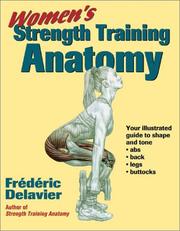
A visually detailed anatomical atlas of every major exercise, showing exactly which muscles are recruited and how. Reading it alongside Schoenfeld's science lets you map cellular mechanisms onto real anatomy and make smarter exercise selection decisions.
Advanced Programming, Recovery & Long-Term Mastery
ExpertDesign sophisticated, periodized training programs; optimize recovery, sleep, and stress management; and think like a coach who can troubleshoot plateaus and adapt plans over a multi-year career.
▸ Study plan for this stage
Pace: 8–10 weeks, ~25–35 pages/day (mix of dense theory and practical application)
- Periodization models (linear, undulating, block) and how to structure macrocycles, mesocycles, and microcycles for long-term strength and hypertrophy gains
- Periodization principles specific to bodybuilding: variation in volume, intensity, and exercise selection to prevent adaptation plateaus and overtraining
- Recovery as a training variable: sleep architecture, circadian rhythm optimization, and how sleep deprivation impairs muscle protein synthesis and hormonal balance
- Stress management and autonomic nervous system regulation (parasympathetic activation) as critical recovery tools alongside nutrition and supplementation
- Monitoring and assessment tools (HRV, resting heart rate, subjective readiness scales) to detect overtraining and adjust program intensity in real time
- Periodized deload strategies and active recovery protocols to maintain long-term training consistency and prevent burnout
- Individual variability in recovery capacity based on genetics, age, training age, and lifestyle factors—coaching mindset for program customization
- Multi-year career planning: how to structure training blocks over months and years to peak for competitions or maintain sustainable progress
- What are the key differences between linear, undulating, and block periodization models, and when would you use each for a bodybuilder seeking hypertrophy?
- How do macrocycles, mesocycles, and microcycles relate to each other, and what typical durations would you assign to each in a 12-month bodybuilding program?
- Explain the relationship between sleep quality, muscle protein synthesis, and hormonal recovery. What specific sleep metrics matter most for a bodybuilder?
- What are the main mechanisms by which chronic stress impairs recovery, and what parasympathetic activation techniques does Hausswirth recommend?
- How would you use HRV, resting heart rate, or subjective readiness scales to detect overtraining and modify a periodized program mid-cycle?
- Design a deload week within a periodized mesocycle: what variables change (volume, intensity, exercise selection), and why?
- Map out a full 12-month periodized training plan for a hypothetical bodybuilder: define macrocycle goal, break into 3–4 mesocycles with distinct focuses (accumulation, intensification, realization), and specify microcycle structure for each
- Audit your own sleep for one week: track sleep duration, quality, wake-ups, and timing relative to training. Identify one sleep optimization strategy from Hausswirth and implement it for 2 weeks, then measure changes in training performance or HRV
- Create a recovery protocol template that integrates sleep, stress management, and active recovery. Include specific techniques (e.g., breathing exercises, mobility work, nutrition timing) and assign them to different days of a microcycle
- Conduct a case study: take a training plateau scenario (e.g., stalled bench press for 6 weeks) and design a periodized intervention using Bompa's principles—explain how variation in volume, intensity, and exercise selection will break the plateau
- Track your own HRV or resting heart rate for 2–3 weeks alongside your training log. Identify patterns: which training intensities or volumes correlate with elevated RHR or depressed HRV? Use this data to propose one program adjustment
- Interview or survey 2–3 experienced lifters about their long-term periodization strategies and recovery habits. Compare their approaches to Bompa's and Hausswirth's frameworks—identify what works for different individuals and why
Next up: This stage transforms you from a program-follower into a program-designer and coach, equipping you to build sustainable, periodized training systems and troubleshoot plateaus—preparing you to integrate nutrition science, supplementation strategy, and competition-specific peaking into a holistic, long-term bodybuilding career plan.
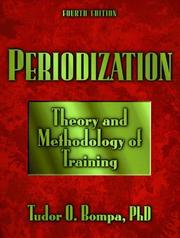
The foundational text on periodization used by strength coaches worldwide — covering macrocycles, mesocycles, and microcycles in depth. After mastering hypertrophy science, this book teaches you to orchestrate all variables across months and years, not just individual sessions.
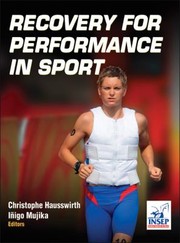
A research-grounded deep dive into sleep, nutrition timing, active recovery, and stress management as performance variables. It closes the curriculum by making recovery a first-class citizen alongside training and nutrition — the final piece serious bodybuilders often neglect.
Discussion
Keep reading
Paths that share books, cover the same subject, or open a related topic.