The Best Books for Future Lawyers and Law School
This curriculum takes an aspiring lawyer from zero legal knowledge to a confident, practice-ready mindset across four progressive stages. It begins with honest, big-picture portraits of the legal profession, builds rigorous analytical and writing skills, then dives into the intellectual core of law school itself, and finally prepares the reader for the realities of legal practice and professional identity.
Is Law Right for Me?
BeginnerGain an honest, ground-level understanding of what lawyers actually do, what law school demands, and whether a legal career fits your goals and personality.
▸ Study plan for this stage
Pace: 6–8 weeks, ~40–50 pages/day (alternating between both books; start with Herrmann, then Turow)
- The reality of legal practice: billable hours, client management, and the gap between law school ideals and actual work
- Law school as an intense, competitive, and psychologically demanding experience that reshapes how you think
- The personality traits and work habits that make lawyers successful (attention to detail, tolerance for ambiguity, resilience under pressure)
- The financial realities of law school debt and different career paths (BigLaw, small firms, government, in-house) with varying earning potential
- How law school teaches you to 'think like a lawyer'—analyzing cases, spotting issues, and constructing arguments
- The emotional and social toll of legal training and practice, including burnout, imposter syndrome, and work-life balance challenges
- Self-assessment: identifying whether your values, learning style, and personality align with legal work
- What does a typical day or week look like for a practicing lawyer, according to Herrmann, and how does it differ from what you imagined?
- What are the main sources of stress and dissatisfaction in law school (Turow) and in legal practice (Herrmann)?
- How do lawyers develop the skill of 'thinking like a lawyer,' and what does Turow reveal about this process?
- What financial realities should you consider before attending law school, and what are the pros and cons of different legal career paths?
- What personality traits and work habits does Herrmann suggest are essential for success and satisfaction in legal practice?
- Based on both books, what are your honest answers to: Do I want to spend 3 years in law school? Do I want to practice law for 10+ years?
- Create a 'day-in-the-life' comparison chart: list what you imagined a lawyer's day would be like before reading, then fill in what Herrmann and Turow actually describe. Identify the biggest surprises.
- Write a personal reflection (2–3 pages) on whether you have the personality traits Herrmann identifies as essential (e.g., attention to detail, comfort with ambiguity, ability to manage client expectations). Use specific examples from your own life.
- Interview a practicing lawyer (ideally in a field that interests you) and ask them: What surprised you most about law school? What surprised you most about practice? What would you tell your younger self? Compare their answers to Herrmann and Turow.
- Calculate your potential law school debt and compare it to starting salaries in different legal fields (BigLaw, government, small firm, in-house). Create a simple spreadsheet showing break-even timelines.
- Annotate key passages from both books that resonate with you or concern you. Write a one-sentence summary for each: Why does this matter to my decision?
- Take a practice LSAT diagnostic test (or review sample questions) and reflect: Do I enjoy this type of analytical thinking? Can I sustain it for 3 years?
Next up: This stage gives you a clear-eyed, honest picture of what lawyers actually do and what law school demands, preparing you to move forward into the next stage—whether that's deeper exploration of specific legal fields, LSAT/application preparation, or a decision to pursue a different path entirely.
A candid, witty insider's look at what law firms actually expect — reading this first prevents costly misconceptions about the profession before you invest three years and six figures.

Turow's memoir of his first year at Harvard Law School is the definitive account of the emotional and intellectual shock of 1L year — essential context before any prep begins.
Thinking Like a Lawyer
BeginnerMaster the foundational vocabulary of legal reasoning — rules, cases, arguments, and analysis — so that law school coursework feels familiar rather than foreign from day one.
▸ Study plan for this stage
Pace: 4–5 weeks, ~25–30 pages/day (approximately 150–180 pages total)
- The 'maybe' framework: how lawyers identify and articulate uncertainty in legal arguments rather than seeking absolute answers
- Rule-based reasoning: understanding how legal rules are structured, applied, and distinguished across different fact patterns
- Case analysis and precedent: learning to extract holdings, reasoning, and distinguishing factors from judicial decisions
- Argument construction: building multi-sided legal arguments that acknowledge counterarguments and competing interpretations
- Fact sensitivity: recognizing how small factual differences can change legal outcomes and require different analytical approaches
- The hierarchy of legal authority: distinguishing between statutes, regulations, case law, and how they interact
- Spotting issues: developing the skill to identify legal problems embedded in fact patterns before jumping to conclusions
- What does 'Getting to Maybe' mean by the 'maybe' framework, and why is embracing uncertainty central to legal thinking?
- How do you extract and apply a legal rule from a case, and what role does distinguishing play in legal argument?
- When analyzing a fact pattern, what are the key steps to identify which legal issues are actually in play?
- How do you construct a multi-sided legal argument that acknowledges the strongest counterargument to your position?
- Why are small factual differences significant in legal analysis, and how do you use them to distinguish cases?
- What is the relationship between rules, cases, and arguments in legal reasoning, and how do they work together?
- Read a simple appellate case (provided or chosen) and write a one-page summary identifying: the rule, the facts that mattered, the court's reasoning, and the holding—then explain how a different fact might have changed the outcome
- Take a hypothetical fact pattern and write out 3–4 competing legal arguments (pro and con) on the same issue, explicitly noting which facts support each side
- Practice 'spotting' exercises: given 2–3 short scenarios, identify all the legal issues present and rank them by importance without immediately trying to resolve them
- Rewrite a legal argument you've drafted to include the strongest counterargument and your rebuttal—practice the 'maybe' mindset by showing why the other side has a point
- Analyze two similar cases and write a 1–2 page explanation of how they differ factually and why those differences matter legally
- Create a 'rule map' for a legal concept from the book (e.g., contract formation, negligence) showing how the rule breaks down into sub-rules and how cases illustrate exceptions or applications
Next up: By internalizing the 'maybe' framework and learning to spot issues, construct multi-sided arguments, and reason from rules and cases, you'll be ready to apply these foundational skills to specific doctrinal areas (like contracts, torts, or criminal law) where you'll deepen your understanding of how legal reasoning operates in practice.
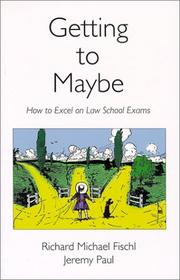
The single best guide to how law school exams actually work; it teaches issue-spotting and argument construction and should be read before classes start, not after the first exam.
Law School Survival & Legal Writing
IntermediateDevelop the practical skills that determine law school success: case briefing, legal research, and the precise written and oral communication that defines professional legal work.
▸ Study plan for this stage
Pace: 8–10 weeks, ~25–30 pages/day. Start with "Law School Confidential" (2 weeks), move to "Plain English for Lawyers" (2–3 weeks), then "Legal Writing in Plain English" (3–4 weeks) to allow time for writing practice and revision cycles.
- Case briefing methodology: how to extract holdings, reasoning, and facts systematically from judicial opinions
- Legal research fundamentals: understanding primary vs. secondary sources and navigating case law databases
- Plain English principles: eliminating legalese, using active voice, and structuring sentences for clarity in legal documents
- Precision in legal writing: the importance of word choice, defined terms, and unambiguous phrasing in contracts and memos
- Oral communication in legal contexts: presenting arguments clearly and responding to questions under pressure
- Document structure and formatting: organizing legal memoranda, briefs, and opinions for maximum persuasiveness and readability
- Common legal writing pitfalls: recognizing and correcting redundancy, throat-clearing, and archaic language
- Audience awareness: tailoring legal writing to judges, clients, opposing counsel, and other stakeholders
- What are the essential components of a case brief, and how do you distinguish between holding and dicta?
- How do you conduct efficient legal research using both print and digital resources, and when should you use each?
- What are the main principles of plain English for lawyers, and why does clarity matter more than formality in legal writing?
- How do you structure a legal memorandum or brief to guide a reader through your argument logically?
- What are common mistakes in legal writing (throat-clearing, redundancy, passive voice), and how do you eliminate them?
- How do you adapt your writing and speaking style depending on your audience—judge, client, or opposing counsel?
- Brief 5–10 real appellate opinions (from a court database or casebook) using the methodology from 'Law School Confidential,' then compare your briefs with published case summaries
- Conduct a legal research exercise: locate a statute, find three relevant cases interpreting it, and identify secondary sources that discuss the issue
- Rewrite 10–15 passages of dense legal writing (from actual contracts, statutes, or old legal opinions) into plain English following Wydick's principles
- Draft a 2–3 page legal memorandum on a hypothetical issue, then revise it using Garner's techniques: eliminate passive voice, define key terms, and restructure for clarity
- Record yourself giving a 5-minute oral argument on a legal issue, then listen back and identify instances of unclear phrasing, filler words, or rushed delivery
- Analyze a poorly written legal document (provided or found) and create a marked-up revision showing how to apply plain English and Garner's principles
Next up: Mastery of case briefing, legal research, and clear written communication forms the foundation for the next stage—whether that's substantive law courses, advanced legal writing, or practical skills like negotiation and client counseling—because every legal task depends on understanding precedent, finding authority, and expressing your analysis with precision and persuasion.
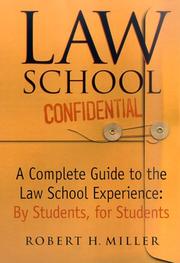
A comprehensive, step-by-step guide to every stage of law school — from orientation through bar prep — providing the tactical roadmap that One L inspires but doesn't supply.
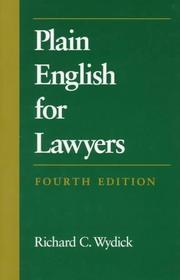
The classic short guide to clear legal writing; reading it early instills habits of precision and brevity that will improve every memo, brief, and exam answer you write.
Garner is the foremost authority on legal style; this book deepens Wydick's lessons with structured exercises and is the standard reference used by law schools and courts alike.
The Deeper Life of the Law
IntermediateEngage with law as an intellectual discipline — its history, philosophy, and social power — and develop the professional identity and ethical compass needed for a long career.
▸ Study plan for this stage
Pace: 8–10 weeks, ~40–50 pages/day. *The Common Law* (2–3 weeks, dense philosophical text); *The Bramble Bush* (2–3 weeks, more accessible); *To Kill a Mockingbird* (2–3 weeks, novel with embedded legal themes). Allow 1 week for integration and reflection.
- Law as evolutionary product of history and experience, not abstract logic—Holmes's thesis that the life of the law is experience, not reason
- The gap between formal legal rules and their real-world application—Llewellyn's concept of law-in-action versus law-in-books
- The lawyer's dual role as both technician and moral agent—balancing professional duty with ethical responsibility
- How social context, prejudice, and power dynamics shape legal outcomes—illustrated through Atticus Finch's struggle against systemic racism
- The relationship between precedent, custom, and social necessity in legal development—Holmes's evolutionary view of common law
- Legal realism: understanding law as a human institution shaped by judges, juries, and society, not as neutral rules
- The professional identity and ethical compass required to navigate law's moral ambiguities—preparation for career-long ethical challenges
- What does Holmes mean by 'the life of the law has not been logic: it has been experience'? How does this challenge traditional views of law?
- How does Llewellyn distinguish between 'law-in-books' and 'law-in-action,' and why does this distinction matter for practicing lawyers?
- In *To Kill a Mockingbird*, how does Atticus Finch embody the tension between legal duty and moral conviction? What does his approach teach about professional ethics?
- How do Holmes, Llewellyn, and Lee each illustrate the ways that social power, prejudice, and context shape legal outcomes?
- What is legal realism, and how do all three texts support or complicate a realist understanding of law?
- How should a lawyer balance fidelity to the law as written with recognition that law is a human institution shaped by experience and social forces?
- Close-read 3–4 key passages from *The Common Law* (e.g., the opening chapter on experience vs. logic) and write a 2-page reflection on how Holmes's historical method challenges your prior assumptions about law.
- Create a two-column chart for a specific legal doctrine discussed in *The Common Law* (e.g., liability, contract, property): list the formal rule on one side and the historical/experiential reasoning Holmes provides on the other.
- Read Llewellyn's chapters on the lawyer's role and the gap between rules and reality; then interview a practicing lawyer about a time when law-in-books differed from law-in-action in their own work. Write a 3-page case study.
- Analyze the trial scene in *To Kill a Mockingbird* (chapters 17–20): identify moments where legal procedure, social prejudice, and individual conscience collide. Write a memo from Atticus's perspective on his ethical reasoning.
- Debate exercise: Divide into two groups—one arguing that lawyers must strictly follow the law as written, the other that lawyers must account for justice and social context. Use examples from all three texts to support your position.
- Write a personal reflection (2–3 pages) on your own emerging professional identity as a lawyer: What ethical commitments are you making? How do Holmes, Llewellyn, and Lee inform your understanding of what it means to practice law responsibly?
Next up: This stage grounds you in law's intellectual foundations and ethical complexity, preparing you to engage with the practical skills, institutional structures, and specialized doctrines of the next stage with a mature understanding that law is both a rigorous discipline and a deeply human enterprise shaped by history, power, and moral choice.
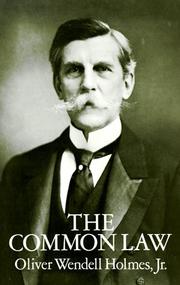
Holmes's foundational text shows how law evolves through experience rather than pure logic; reading it mid-curriculum reveals why cases are taught the way they are in every 1L class.

A classic series of lectures on what law school is really teaching you — legal method, professional judgment, and the gap between rules on paper and law in action.

No book better captures the moral weight of legal representation and the lawyer's duty to the client and to justice — a timeless reminder of why the profession matters.
Discussion
Keep reading
Paths that share books, cover the same subject, or open a related topic.