Import and export is a business with a rulebook — customs regulations, standardized trade terms, financing instruments, and a thicket of documents. Skip the fundamentals and a single misread shipping term or customs form can wipe out a deal's margin. So the reading order runs from friendly overviews to the official rules to the machinery of moving goods and getting paid.
This path is built for someone starting from zero. It gets you oriented, then hands you the authoritative sources on customs and terms, then teaches the logistics and finance that make trade actually work. Along the way it keeps sight of the bigger picture: why global trade exists and where it's heading.
Get oriented
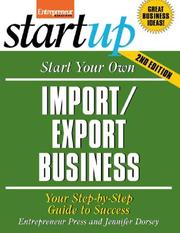
Start with Import/export kit for dummies by John Capela, the friendliest complete introduction to how the business operates. Then Start Your Own Import/Export Business adds an entrepreneur's playbook for launching, and The Ultimate Guide to Dropshipping covers a low-inventory model many newcomers use to test the waters before committing to containers.
Learn the official rules
Now the authoritative sources. Importing Into the United States, published by Customs and Border Protection, is the government's own guide to bringing goods in. A basic guide to exporting, from the Department of Commerce, is its export counterpart. And Incoterms® 2020 from the International Chamber of Commerce defines the standardized terms — who pays, who insures, who bears risk — that every contract uses. These three are non-negotiable reading.
Move the goods
With the rules in hand, learn the logistics. The handbook of logistics and distribution management is the comprehensive reference on getting goods from origin to destination efficiently — the operational backbone of any trade business.
Get paid, then zoom out
Finally, the money and the meaning. Trade Finance Guide, another Commerce Department resource, explains how international payments and financing actually work — the part that trips up beginners most. Export-Import Theory, Practices, and Procedures by Belay Seyoum is the deeper academic treatment, and Building an import/export business by Kenneth Weiss ties the practical threads together. Close with The World Is Flat by Thomas Friedman for the sweeping context on why global trade has become what it is.
Read in order, cross-border commerce turns from intimidating to systematic. Follow the full path to keep the sequence.
Follow the full reading path →
Ready to learn something deeply?
Build a reading path — free