Start with Cryptonomicon, not Quicksilver. This is the one real decision in Neal Stephenson's cycle, and publication order wins it. Cryptonomicon is set in the Second World War and the late 1990s, it is the more approachable book by a distance, and the three Baroque Cycle novels are effectively a seventeenth-century prequel to it. Names, families and an obsession with gold and cryptography recur; if you have met the Waterhouses and Shaftoes in their modern form, their ancestors land as revelation rather than homework.
If you have already read Cryptonomicon, or you refuse on principle to start a historical series with the modern book, then begin with Quicksilver and know what you are getting into: roughly three hundred pages of Royal Society natural philosophy before the plot machinery engages.
The sequence
The cycle proper is three volumes: Quicksilver, The Confusion (published as The Confusion, volume two of the cycle), and System of the World. Each was later split into paperback thirds — eight sub-volumes with titles like Odalisque and Solomon's Gold — so if you see eight books rather than three, they are the same text. Buy the three-volume form.
Reading order across everything, then: Cryptonomicon, Quicksilver, The Confusion, System of the World.
The chronological-order argument
The case for reading in internal chronological order — the 1600s first, then the twentieth century — is that history reads forward and the family saga makes more sense. It is not a stupid position. But Cryptonomicon was written to stand alone and does; the cycle was written afterwards for readers who already knew it. Deliberate references to earlier material are planted throughout the historical books. Reading them first turns the payoffs into throwaway details.
Recommendation: publication order, firmly. This is not one of those series where the two orders are equally good.
Honest warnings
Quicksilver has one of the slower openings in modern fiction. Daniel Waterhouse walks around Cambridge and Newton does experiments, and Stephenson is more interested in the invention of calculus than in getting anywhere. The Jack Shaftoe and Eliza sections that begin later are much faster; if you are struggling, know that the picaresque half is coming.
The Confusion is the most entertaining volume and also the most sprawling, with two interleaved narratives spanning three continents. System of the World resolves the plot and spends a great deal of its length on monetary policy and the Trial of the Pyx. Stephenson does not do endings so much as he does eventual stopping. Expect that.
Historical liberties are constant and cheerful. This is not a novel to trust on the details of Leibniz's biography.
Where to stop
There is no good early exit. The three volumes are one book split for binding reasons, and abandoning after Quicksilver means quitting before the story starts. Either commit to all three or read Cryptonomicon alone and be content.
Reading around the cycle
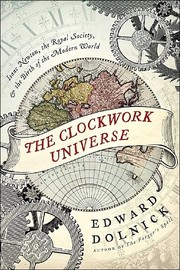
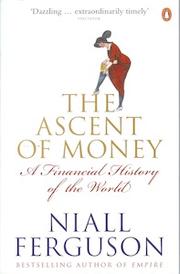
For the real history, Edward Dolnick's The Clockwork Universe covers the Royal Society generation in accessible narrative form, and Thomas Levenson's Newton and the Counterfeiter tells the true story of Newton's years at the Royal Mint hunting a forger — which is, more or less, a plot strand of System of the World. Niall Ferguson's The Ascent of Money explains the financial revolution the cycle dramatises, though its politics are contested. Simon Singh's The Code Book is the cryptography primer.
For the primary sources, Leibniz's Discourse on Metaphysics is the philosophy Stephenson puts in his character's mouth, and Voltaire's Candide is the satirical register the picaresque half is written in.
Follow the full ordered path here: The Baroque Cycle Reading Order and Guide.