Caravaggio: The Best Books to Read, in Order
Caravaggio is the rare Old Master whose life story competes with his paintings for attention, and most readers arrive wanting both. This path starts with two full modern biographies, moves to the books that actually look at the pictures, then puts the painter back into the Rome that commissioned him, and ends with the seventeenth-century sources and one modern detective story about how a lost Caravaggio gets authenticated. Note before you start: several of these books are catalogued under the bare display title "Caravaggio", so the author is the thing to check when buying.
The Life, Twice
BeginnerGet the shape of the biography — Milan, Rome, the patrons, the killing, the flight south — from two writers who disagree about the man.
▸ Study plan for this stage
Pace: 5–6 weeks at roughly 30 pages a day. Graham-Dixon's Caravaggio runs 529 pages and Langdon's 436, and both are continuous narrative biography rather than reference. Read Graham-Dixon straight through first, then Langdon; do not interleave them, because the point of the stage is to see one complete ac
- The Milan apprenticeship under Simone Peterzano and the arrival in Rome around 1592 — the years for which the documentary record is thinnest and the biographical invention is heaviest
- The Del Monte household as the hinge: the point at which Caravaggio stops being a jobbing painter of fruit and half-lengths and becomes a painter with commissions
- The Contarelli Chapel as the public breakthrough, and what it meant to put life-size figures in contemporary dress into a church
- The 1606 killing of Tomassoni and the bando capitale — what a capital sentence pronounced in absentia actually meant for a man's ability to work
- Naples, Malta and Sicily as a working career under sentence rather than a collapse: the exile years produced some of the largest commissions
- Graham-Dixon's method — reading the paintings as evidence about the life — and Langdon's standing objection to it
- The difference between an archival document and a biographer's inference, which is the permanent problem of this subject
- What is actually documented about the fight that killed Tomassoni, and where do Graham-Dixon and Langdon each stop reporting and start reconstructing?
- What competing accounts of Caravaggio's death in 1610 do these two biographies give, and what evidence does each rest on?
- How did the Del Monte connection change the kind of picture Caravaggio was asked to make?
- Why were some of the altarpieces refused by the churches that commissioned them, and what do the refusals tell you about the arguments over naturalism?
- Where does Graham-Dixon use a painting as biographical evidence, and would Langdon accept that inference?
- Take the 1606 killing and write the two accounts out in parallel columns — Graham-Dixon's on the left, Langdon's on the right. Mark each sentence as document, contemporary report, or inference. The proportion of the third column is the finding.
- Do the same, much more briefly, for the 1610 death. Note which specific documents each author cites and which they do not mention at all.
- List every painting Graham-Dixon uses as evidence about Caravaggio's character or sexuality, then check what Langdon says about the same picture. Keep the list — you will use it again in the next stage.
- Build a one-page chronology from Milan to Porto Ercole with only dated events both books agree on. Everything that does not survive that test is contested, and knowing which parts those are is the point of reading two lives.
Next up: You now have the biography twice over and a list of places where the pictures were used as evidence about the man — which is exactly the habit the next stage sets out to break.

The best-selling modern biography and the natural entry point: Graham-Dixon walks the Roman streets the models came from and reads the paintings as evidence about the life. Published as Caravaggio: A Life Sacred and Profane, but only the bare title resolves in our catalogue.
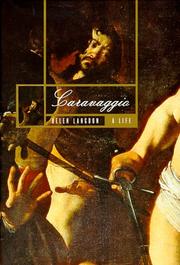
Langdon's biography, published as Caravaggio: A Life, is the more restrained and more archivally cautious of the two, and reading it second shows you how much of the standard story is inference. Where the two disagree — especially about the 1606 killing of Ranuccio Tomassoni and about how Caravaggio died in 1610 — the dispute is real and unsettled, not a failure of one author.
Looking at the Paintings
IntermediateStop reading the pictures as autobiography and start reading them as paintings — tenebrism, the studio method, the sequence of commissions.
▸ Study plan for this stage
Pace: 5–6 weeks. Hibbard's Caravaggio is a 404-page critical study from 1983 and reads slowly because it argues rather than narrates; Puglisi's Caravaggio is a 448-page monograph with a catalogue of the paintings and the documents behind each, and is meant to be consulted as much as read; Schütze's Carava
- Tenebrism as a working studio method — a single high raking light source and a dark ground — not a mood
- Painting from the posed live model without preparatory drawings, and the incisions in the ground that stand in for underdrawing
- The sequence of the great chapel cycles: Contarelli, Cerasi, and the altarpieces that followed
- The difference between a critical study that argues a thesis (Hibbard) and a catalogue that assembles the evidence (Puglisi)
- Attribution, replica and copy — why the catalogue entries in Puglisi and Schütze disagree with each other on particular pictures
- Hibbard's psychoanalytic reading, now dated, and how to tell when a critic is interpreting rather than reporting
- The early half-length pictures — the Bacchus, the Musicians, the Lute Player — as a distinct commercial category rather than confession
- What does Hibbard claim the paintings reveal about Caravaggio, and what kind of evidence is that claim built on?
- Where do Puglisi's catalogue entries record a documentary date, and where do they record a scholarly consensus that could shift?
- How does the lighting actually work in the Calling of Saint Matthew, and what is it doing to the composition?
- Which pictures exist in more than one version, and how do these books distinguish autograph from copy?
- What changes between the Roman altarpieces and the Maltese and Sicilian ones, in handling as well as in subject?
- Take the list of biographically-read paintings you made in the last stage. For each, read Hibbard's entry and Puglisi's catalogue entry and record what documentary evidence exists independent of the picture itself.
- Choose one picture reproduced full-page in Schütze — the Supper at Emmaus or the Death of the Virgin — and write 300 words describing only what is physically there: light direction, edges, where the ground shows through, what is left unfinished. No interpretation. Then read Hibbard on it and mark where his reading exceeds your description.
- Use Puglisi's chronology to build a list of the commissions in order, with patron and location. Where a picture was refused, note who refused it and on what stated grounds.
- Compare Puglisi's and Schütze's catalogue positions on two disputed attributions. Write one sentence on what each is treating as decisive.
Next up: Having looked at the pictures as objects made for particular walls, the next stage puts the patrons, the competitors and the Roman art market back around them.
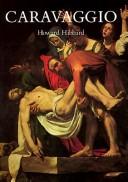
The critical study that shaped the modern academic view, going picture by picture with a psychoanalytic bent that is now dated but still bracing. Read it after the biographies so you can see where a critic is arguing rather than reporting.
Puglisi's monograph is the workhorse — a chronological account with a catalogue of the paintings and the documentary evidence for each. This is the volume you keep open beside the others.

A large-format complete catalogue with full-page plates and details. Any serious reading of Caravaggio needs the images at a size where the brushwork and the black are legible, and this is the affordable way to get them.
The Rome That Paid For It
IntermediatePlace Caravaggio inside the patronage, the competition and the argument about naturalism that produced him.
▸ Study plan for this stage
Pace: 4–5 weeks. The Genius of Rome 1592–1623 is a 384-page exhibition catalogue — essays plus entries, and the cheapest route to first-rate scholarship on the milieu; read the essays and dip into the entries. Gilbert's Caravaggio and His Two Cardinals is a 322-page scholarly monograph on Del Monte and Gi
- Patronage as a specification — what a cardinal's collection was for, and what it asked a painter to supply
- Del Monte and Giustiniani as distinct collectors with distinct tastes, against the habit of treating them as one 'protector'
- The Roman art world as a competitive market: Annibale Carracci, Adam Elsheimer, Rubens's Roman years, the Cavaliere d'Arpino
- Naturalism as a contested position in a live argument, not a personal quirk
- The physical picture — ground preparation, incisions, pigments, the studio and its lighting — as evidence about how the work was made
- The exhibition catalogue as a scholarly form: what it can do that a monograph cannot, and what it cannot
- Why the early half-length pictures should be read as products of a specific collecting taste rather than as private testimony
- What did Del Monte and Giustiniani each actually own, and what does the difference between the two collections tell you?
- Who else was competing for the same Roman commissions, and what were they offering that Caravaggio was not?
- What does Varriano establish about the physical making of the paintings, and how does that evidence get gathered?
- How does The Genius of Rome place Caravaggio among his contemporaries, and does he look less singular there?
- What is Gilbert's argument against reading the early pictures as confession, and how strong is it?
- Reconstruct Del Monte's and Giustiniani's Caravaggio holdings from Gilbert, then find each of those pictures in Schütze's plates and look at them as a group. Write down what the two groups have in common and where they differ.
- Take the incisions and the ground preparation as Varriano describes them and find them in the Schütze reproductions — some are visible in the large plates. Note which pictures show them and which do not.
- Pick one Genius of Rome catalogue entry for a non-Caravaggio painter working on the same subject and set it beside Caravaggio's treatment. Write 200 words on what each is doing with the same story.
- Return to the refusal cases you listed in the previous stage and re-read them with Gilbert's account of what patrons expected. Does the stated ground for refusal look different now?
Next up: With the commissions, the patrons and the studio method in place, the next stage takes on the critics who argue about what the paintings are doing beyond any of that.
The Royal Academy exhibition catalogue for the show that put Caravaggio back among his contemporaries — Annibale Carracci, Elsheimer, Rubens in Rome. Exhibition catalogues are the cheapest route to first-rate scholarship, and this one is the best single account of the milieu.
A focused scholarly study of Del Monte and Giustiniani and what their patronage actually asked for. It is the corrective to reading the early half-length pictures as private confession.
Published as Caravaggio: The Art of Realism, this one is about materials and method — the ground, the incisions in the preparation, the live models, the food and bodies he painted. Read it here, once you know the commissions it is describing.
The Arguments
IntermediateMeet the serious interpretive disagreements about what these paintings are doing, rather than a single settled reading.
▸ Study plan for this stage
Pace: 4–5 weeks, and this is the hardest stage on the path. Fried's The Moment of Caravaggio is his Mellon Lectures — an extended, demanding art-historical argument that assumes you know the pictures well and can follow a sustained theoretical case; give it three weeks and expect to reread chapters. Bersa
- Fried's central claim that the paintings are about the act of painting and the painter's own body — an argument, contested, not a consensus
- Absorption and address: whether a figure is sealed inside the picture or turned outward at the viewer, and why that distinction organises Fried's whole case
- Bersani and Dutoit on what the figures want from the person looking at them
- The difference between an argument about paintings and a narrative about a painter, which Prose's book makes visible by being the second kind
- How much of the popular Caravaggio is a story constructed after the fact — the thing both Fried and Bersani are trying to get out from under
- Reading a theoretical text: locating the claim, the evidence offered, and the pictures on which it would fail
- What exactly is Fried claiming about the relation between the painter's body and the painted figure, and which pictures does that claim depend on?
- What do Bersani and Dutoit mean by the address of the paintings, and how is their reading incompatible with a biographical one?
- Where would you say Fried's argument is weakest — which paintings does it fit badly?
- What does Prose's short life do that the theoretical books deliberately refuse to do, and what does she gain and lose by it?
- After all three, is the biographical Caravaggio you got from Graham-Dixon a description or a construction?
- Write Fried's thesis in three sentences of your own without using his vocabulary. If you cannot, you have not got it yet — go back to the lecture where he first states it.
- Take one picture Fried treats at length and one he barely mentions. Apply his reading to the second one yourself and note where it strains.
- Read Bersani and Dutoit on the address of a specific painting, then look at the same plate in Schütze and write down whether you can see what they are describing. Recording a disagreement is a legitimate result.
- Read Prose's book last and, as you go, mark every claim about Caravaggio's character that Graham-Dixon or Langdon also makes. That accumulated list is the popular Caravaggio, and it is what the previous two books are arguing against.
- Return to your parallel-column notes on the 1606 killing and ask what, if anything, Fried and Bersani would say those notes have to do with the paintings.
Next up: Every book so far has been built on a handful of seventeenth-century texts and on a body of attributions — the final stage reads those texts directly and watches an attribution being made.

Fried's Mellon Lectures, and the most demanding book here: an argument that the pictures are about the act of painting and the painter's own body. Contentious, and worth the effort only once you know the paintings well.
A short critical study, co-written with Ulysse Dutoit, on the address of the paintings — who the figures are looking at and what they want from the viewer. A useful counterweight to biographical reading.
A brief, well-written life by a novelist. Placed here deliberately as a palate cleanser: it makes plain how much of the popular Caravaggio is a story we tell, which is exactly what Fried and Bersani are trying to get away from.
The Sources and the Rediscovery
IntermediateRead the seventeenth-century accounts every modern biography is built on, then see how a Caravaggio is authenticated today.
▸ Study plan for this stage
Pace: 2–3 weeks, and much lighter than the last stage. Lives of Caravaggio collects the three near-contemporary biographies by Giulio Mancini, Giovanni Baglione and Giovanni Pietro Bellori in 112 pages with an introduction by Helen Langdon — read all three in a couple of sittings, then reread with your ch
- Mancini, Baglione and Bellori as the three seventeenth-century sources every modern biography rests on, and the specific interests each of them had
- Baglione's libel suit against Caravaggio, and what it means that one of the earliest lives was written by the man who brought it
- Bellori's classicising position and his objection to naturalism as the frame for his hostile account
- How a modern biography converts these short, partisan texts into continuous narrative — and what gets added in the conversion
- Provenance, archival research, restoration and connoisseurship as the four things that together make an attribution
- The Taking of Christ case as a worked example: how a picture goes from unattributed to accepted
- Why the catalogues you used in stage two disagree, once you have watched one attribution being argued
- What does each of the three seventeenth-century lives actually claim, and where do they contradict each other?
- Which specific incidents in Graham-Dixon and Langdon can you now trace to Mancini, Baglione or Bellori, and how much has been elaborated?
- Given Baglione's lawsuit, on what grounds should any of his testimony be believed?
- In the Taking of Christ case, what was the decisive evidence — documentary, technical, or connoisseurial?
- Having seen one attribution made, how much confidence do you now put in the disputed entries in the Puglisi and Schütze catalogues?
- Read the three Lives, then go back to your one-page agreed chronology from stage one and mark every entry that ultimately derives from one of these three texts. What is left is the archival record.
- Take one anecdote that appears in all three seventeenth-century lives and set the three versions side by side. Note which modern biographer preferred which version, and whether either said why.
- Follow the Taking of Christ through Harr's account and write out the attribution as a numbered chain of evidence, in the order it was actually assembled rather than the order Harr tells it.
- Look up The Taking of Christ in Puglisi and in Schütze and compare what each catalogue says about it, given that both were published after the Dublin attribution.
Next up: You now have the modern biographies, the paintings, the patronage, the theoretical arguments and the seventeenth-century sources they all rest on — enough to read any new book on Caravaggio and place it immediately.

The three near-contemporary biographies — Mancini, Baglione and Bellori — collected in one volume with an introduction by Helen Langdon. Baglione was a rival who sued him and Bellori disapproved of him, which is precisely why these are worth reading directly rather than through a modern paraphrase.
The narrative account of the hunt for The Taking of Christ and its attribution in Dublin. It ends the path because it shows the machinery — archives, provenance, restoration, connoisseurship — that decides whether the paintings in the earlier books are Caravaggios at all.