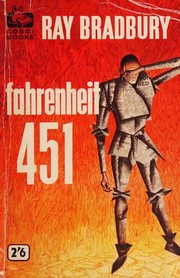
Start with Fahrenheit 451. It is short, it is the book most people already half-know, and Ray Bradbury's own account of it undercuts the comfortable version of the story: nobody in his novel had to ban anything, because the public had already stopped reading, and the state only finished a job the public began. That is a more uncomfortable opening than a martyr's tale, and it sets the right tone for everything after it.
Do not start with Gender Queer or The Bluest Eye. Both sit near the top of every recent challenge list, and both are where the argument is actually being fought — which is exactly why reading them cold turns them into exhibits rather than books. This path is ordered by difficulty and by how the grounds for objection have shifted, never by year.
What a challenge actually is
A challenge is a formal request that a book be removed or restricted. A ban is a decision to do it. The American Library Association has tracked both since the 1980s, and the shape of the record changed sharply in the 2020s: challenge numbers reached the highest ever recorded, most are now filed by organised campaigns rather than individual parents, most name lists rather than single titles, and a large majority of the books named have LGBTQ+ content or authors of colour.
The legal position is narrower than either side usually admits. In Island Trees v. Pico the Supreme Court held that a school board may not remove library books simply because it dislikes the ideas in them — and left curriculum choices largely alone. Library shelf and required syllabus are not the same fight.
The classics that set the pattern
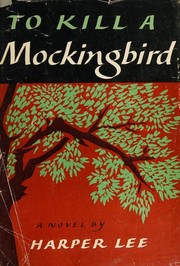
After Bradbury, read To Kill a Mockingbird. It has been challenged continuously since the 1960s from opposite directions: first for its sexual content and its rape trial, later for its racial slurs and its white-saviour framing. One book, two incompatible objections, fifty years apart. That is the single most useful fact to carry into everything else here.
Then Of Mice and Men, short enough for one sitting and near the top of the challenged list in almost every decade — for profanity, for racial slurs, for its treatment of disability, and for its ending. Grounds accumulate. They are almost never retired.
Challenged for what they say about power
The Handmaid's Tale is challenged mainly on sexual content and hostility to religion; Margaret Atwood's standing reply is that she included nothing that had not already happened somewhere. The Bluest Eye is the hardest book on this path to defend by claiming the objections are exaggerated — the incest and child sexual abuse are there, described plainly, and Toni Morrison meant them to be unbearable. The Complete Maus is the clearest recent demonstration of what a removal does in practice: a Tennessee board pulled it over eight words and a small drawing, and sales multiplied within days.
The current front line
Speak drew a public accusation of being soft pornography and produced one of the first organised online defences of a challenged book. The Absolutely True Diary of a Part-Time Indian is challenged for masturbation, profanity and alcohol, and is further complicated by later allegations against Sherman Alexie — read it knowing that, and let the question of whether a book survives its author stay open rather than settling it in advance.
Gender Queer has been the single most challenged book in the United States for several consecutive years, usually by way of a handful of panels reproduced at board meetings without the pages around them. All Boys Aren't Blue has attracted criminal complaints as well as library challenges in several states.
The argument itself
Finish with the three books about suppression rather than books caught in it. Burning the Books, by the head of the Bodleian, covers three thousand years of deliberate destruction of libraries and archives — Alexandria, Sarajevo, the Windrush landing cards — and establishes that removal is an ancient technique rather than a new one. Free Speech is a global history of the idea written by a lawyer who is candid about the cases where absolutism produces results its own defenders dislike. Dangerous Ideas follows censorship of sex, blasphemy and political heresy, and how reliably the censors lost while being certain they would not.
Read the books first and the arguments second. The objections deserve to be understood accurately, and that is hard to do without having read what is being objected to.
Follow the full ordered path here: The Most Banned Books in America: What to Read, and in What Order.