Read the discovery story before the crisis story. Antibiotic resistance sounds like a modern failure until you understand how compressed and how lucky the discovery era was: most classes of antibiotic in use today were found in a roughly twenty-year window in the middle of the twentieth century, and almost nothing structurally new has arrived since. The resistance books make a different kind of sense once that is in place.
One honest caveat up front. The most recent title on this list is from 2019, and several newer trade books on the subject could not be sourced for it. Everything here is reliable on mechanism, history and the shape of the problem; nobody should treat the specific numbers, the named drugs in development or the regulatory picture as current. Treat every figure as accurate to its publication date. And none of this is clinical guidance — decisions about a specific infection belong to a clinician with a culture result.
How the era began
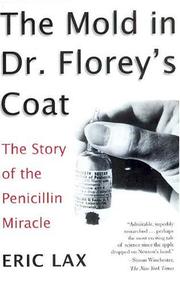
Eric Lax's The Mold in Dr. Florey's Coat is the best opening: the Oxford story of turning Fleming's observation into an actual drug, which took Howard Florey, Ernst Chain, Norman Heatley and a wartime scale-up effort, and which Fleming mostly did not do. William Rosen's Miracle Cure widens the frame to the sulfa drugs, streptomycin and the commercial industry that formed around them, and it is the better book on why the pipeline was ever full.
The alarm, raised early
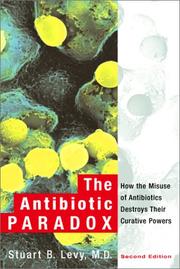
Stuart Levy's The antibiotic paradox is the foundational warning, first published in 1992 and revised in 2002. It is dated in its specifics and remains the clearest explanation of the core logic: use selects for resistance, and the selection pressure includes agricultural and household uses that have nothing to do with treating sick people. Brad Spellberg's Rising plague follows in 2009 from an infectious-disease physician's chair, and is the sharpest account of why the drug pipeline dried up — the economics of a drug you want prescribed as rarely as possible.
Reporting from inside the problem
Maryn McKenna is the strongest reporter on this beat and has two books here. Superbug is the MRSA book: how a hospital organism moved into the community, and what containment actually costs. Big chicken is the agricultural one, tracing routine antibiotic use in American poultry from growth promotion in the 1940s to the reforms that followed, and it is the more surprising of the two.
Martin Blaser's Missing microbes argues something broader and more contested — that repeated early-life antibiotic exposure disturbs the microbiome in ways implicated in obesity, asthma, allergy and other modern conditions. Blaser presents animal evidence and epidemiological association; critics point out that the human causal evidence is much thinner than the argument needs. Read it as a well-argued hypothesis by a serious researcher, not as settled science.
Katherine Eban's Bottle of Lies is adjacent rather than central: it is an investigation of data fraud in generic drug manufacturing, principally at Ranbaxy. It belongs here because a substandard antibiotic delivers a sub-therapeutic dose, which is a resistance-generating machine. Matt McCarthy's Superbugs returns to the clinic, following a trial of a new agent and the patients in it.
Cases, and the long view
The Perfect Predator by Steffanie Strathdee and Thomas Patterson is the phage-therapy account: an epidemiologist whose husband contracted a pan-resistant Acinetobacter infection assembles an experimental bacteriophage treatment. It is a single dramatic case and should be read as one — it is not evidence that phage therapy is ready. Michael Shnayerson and Mark Plotkin's The killers within, from 2002, is the older survey of the same landscape.
The last three widen out from antibiotics to infectious disease as a whole. Dorothy Crawford's Deadly Companions is a short, clear account of how microbes have shaped human history. William McNeill's Plagues and Peoples is the 1976 book that founded that whole way of writing history; parts of it have been superseded by later genetic and archaeological evidence, and it remains the origin of the framework. Sonia Shah's Pandemic uses cholera as the spine for a modern account of how new diseases emerge.
Work the full path in order, and pair it with something current — a recent surveillance report will tell you what the numbers are now.
Follow the full ordered path here: Antibiotic Resistance and Superbugs: The Best Books, in Reading Order.