Best Books on Anthropology, in Reading Order
This curriculum takes you from the foundational stories and concepts of anthropology all the way through its most contested intellectual debates, mirroring how the discipline itself developed. Each stage builds on the last: you first absorb the classic fieldwork narratives that defined anthropology, then master its core theoretical and biological frameworks, and finally engage with the paradigm-shifting critiques that reshaped the field into what it is today.
Foundations: The Fieldwork Classics
BeginnerUnderstand what anthropology is, how ethnographic fieldwork works, and why immersive observation of human cultures became the discipline's defining method.
▸ Study plan for this stage
Pace: 8–10 weeks, ~40–50 pages/day, with 1–2 weeks per book for careful reading and reflection
- Ethnographic fieldwork as participant-observation: the anthropologist's immersion in a culture to understand it from within
- Structural analysis and cultural relativism: how Lévi-Strauss reveals hidden patterns in myth, kinship, and thought across cultures
- The life course and cultural variation: how Mead demonstrates that adolescence, sexuality, and social roles are culturally constructed rather than biologically fixed
- Kinship systems as windows into social organization: how Evans-Pritchard shows that marriage and descent rules encode a society's fundamental values and power structures
- The ethnographer's reflexivity: awareness of how the observer's presence, assumptions, and identity shape fieldwork and interpretation
- The relationship between individual experience and cultural pattern: how immersive observation reveals both the rules people follow and the creative ways they navigate them
- What does Lévi-Strauss mean by 'the savage mind,' and how does his structural approach differ from earlier evolutionary theories of culture?
- How does Mead's study of Samoan adolescence challenge Western assumptions about puberty and sexuality, and what does this reveal about the power of culture to shape human development?
- What are the key features of Nuer kinship and marriage systems as described by Evans-Pritchard, and what do these systems tell us about Nuer values and social organization?
- How does the method of participant-observation work in practice across these three ethnographies, and what are its strengths and limitations?
- What is cultural relativism, and how do these three authors use it to interpret practices that might seem strange or wrong from an outsider's perspective?
- How do these three ethnographies collectively demonstrate that anthropology is a science of human cultural variation, not a collection of exotic curiosities?
- Create a detailed fieldwork journal: choose a subculture or community you have access to (workplace, religious group, online community, etc.) and conduct 2–3 weeks of participant-observation. Record your observations in the style of an ethnographer, noting rituals, kinship-like bonds, taboos, and unwritten rules. Reflect on how your presence shapes what you observe.
- Comparative kinship mapping: after reading Evans-Pritchard, diagram the Nuer kinship system, then compare it to your own family's kinship terminology and marriage rules. What does your kinship system reveal about your culture's values?
- Myth and structure analysis: select a myth or folk tale from your own culture and apply Lévi-Strauss's structural method. Identify binary oppositions (nature/culture, male/female, etc.) and explain what underlying tensions or values the myth resolves.
- Cultural relativism case study: identify a cultural practice from one of the three ethnographies that initially seems strange or wrong to you. Write a 2–3 page analysis explaining how cultural relativism helps you understand it on its own terms, without judgment.
- Ethnographic interview: conduct 3–4 in-depth interviews with people from a culture different from your own (or a subculture within your own society). Use open-ended questions to explore their life experiences, values, and social roles. Write up your findings in ethnographic prose.
- Reflexivity memo: after each book, write a 1–2 page reflection on how your own background, assumptions, and identity might shape your interpretation of the ethnography. What blind spots might you have? What does the ethnographer's background reveal about their perspective?
Next up: This stage establishes ethnographic fieldwork and structural analysis as anthropology's core methods and reveals how cultural variation challenges universal claims about human nature—preparing you to explore how anthropologists apply these insights to specific domains like economics, politics, religion, and language in the next stage.

A beautifully written memoir-meets-philosophy that introduces the anthropological gaze — what it feels like to encounter radically different societies — making it the perfect entry point for any newcomer.
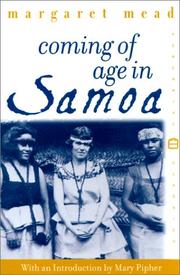
One of the most famous ethnographies ever written, it establishes the core anthropological question of nature vs. nurture and shows how fieldwork can challenge Western assumptions about human development.

A landmark of classic British social anthropology that teaches you how to read a society through kinship, time, and political structure — essential vocabulary for everything that follows.
Core Theory: Culture, Society, and Human Nature
BeginnerBuild a solid theoretical toolkit covering the major schools of cultural anthropology — functionalism, structuralism, interpretivism — and understand how anthropologists construct arguments about culture.
▸ Study plan for this stage
Pace: 8–10 weeks, ~40–50 pages/day (with 2–3 days per week for reflection and exercises). Geertz (4 weeks), Malinowski (3 weeks), Benedict (2–3 weeks).
- Thick description: Geertz's method of interpreting culture through dense, context-rich observation and analysis of meaningful symbols and practices
- Functionalism: Malinowski's framework showing how cultural institutions and practices serve biological, psychological, and social needs within a society
- Participant observation: The ethnographic fieldwork method of immersing oneself in a culture to understand it from within, as demonstrated in Argonauts
- Cultural patterns and configuration: Benedict's concept that cultures are integrated wholes with distinctive psychological patterns that shape individual behavior and values
- Interpretivism vs. positivism: Understanding culture as a system of meanings to be interpreted rather than laws to be discovered, central to Geertz's critique
- The Kula ring: Malinowski's analysis of a complex gift-exchange system that reveals how economic, social, and ceremonial functions interweave in non-Western societies
- Ethos and worldview: How a culture's emotional tone (ethos) and cognitive framework (worldview) create coherent, patterned ways of being across individuals
- The anthropologist's role: Reflexivity about the observer's position, biases, and relationship to the culture being studied
- What does Geertz mean by 'thick description,' and how does his analysis of the Balinese cockfight exemplify this method?
- How does Malinowski use the Kula ring to demonstrate that economic exchange in non-Western societies cannot be understood through Western rational-actor models alone?
- What is functionalism, and how does Malinowski argue that cultural practices serve multiple levels of human need (biological, psychological, social)?
- How do Benedict's concepts of cultural patterns and psychological configuration help explain consistency in behavior across members of a culture?
- What are the key differences between Geertz's interpretive approach and Malinowski's functionalist approach to understanding culture?
- How does participant observation, as practiced by Malinowski in the Trobriand Islands, shape the kinds of knowledge an anthropologist can produce?
- Close reading: Select one essay from Geertz (e.g., 'Deep Play: Notes on the Balinese Cockfight') and annotate it for instances of thick description—mark where he moves from observation to interpretation and identify the layers of meaning he uncovers.
- Functional analysis: Choose a cultural practice from Argonauts (e.g., the Kula ring or a specific ritual) and write a 2–3 page analysis identifying the biological, psychological, and social functions it serves, following Malinowski's framework.
- Comparative patterns: Read Benedict's descriptions of three cultures (Zuni, Dobu, Kwakwaka'wakw) and create a chart comparing their ethos, worldview, and psychological configuration; write a short reflection on how these patterns shape individual behavior differently.
- Ethnographic vignette: Write a 500-word thick description of a contemporary cultural practice you observe (a family dinner, a workplace ritual, a social media interaction) using Geertz's method—move beyond surface observation to interpret the symbols and meanings at play.
- Methodological reflection: After reading Malinowski's introduction and field methods sections in Argonauts, write a 1–2 page reflection on the advantages and limitations of participant observation as a way of knowing culture.
- Synthesis essay: Write a 4–5 page essay comparing how Geertz, Malinowski, and Benedict each answer the question 'What is culture and how do we study it?' Identify points of agreement and productive disagreement.
Next up: This stage equips you with the foundational theoretical frameworks and methodological awareness needed to critically engage with contemporary ethnographic debates, specialized regional studies, and advanced critiques of anthropology's history and ethics.

Geertz's concept of 'thick description' and his interpretive approach to culture is the single most influential theoretical framework in 20th-century cultural anthropology; reading it here gives you the lens for all advanced work.

The founding text of participant-observation fieldwork, showing in rich detail how exchange, ritual, and meaning are intertwined — a perfect companion to Geertz's theory.
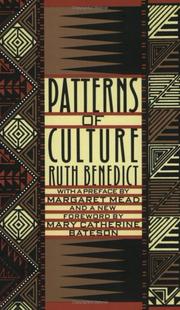
Introduces the concept of cultural configuration and the idea that each culture has a distinct 'personality,' bridging the beginner classics with deeper comparative theory.
Biological Anthropology: The Human Animal
IntermediateUnderstand the biological dimension of humanity — human evolution, primatology, and the relationship between genes, culture, and behavior — to see anthropology as a truly four-field discipline.
▸ Study plan for this stage
Pace: 6–7 weeks, ~40–50 pages/day (approximately 3–4 hours of reading per day). Week 1–3: "The Third Chimpanzee" (400+ pages); Week 4–7: "Grooming, Gossip and the Evolution of Language" (250+ pages), with 1–2 days for review and integration between books.
- Human-chimpanzee genetic similarity (98–99%) and what it reveals about our evolutionary origins and animal nature
- The role of sexual selection, infanticide, and warfare in human evolution as discussed in Diamond's framework
- Language evolution as a biological adaptation rooted in primate social behavior, particularly grooming and coalition-building
- The Dunbar Number (150) and its implications for understanding group size, social networks, and the cognitive constraints on human relationships
- The continuity between animal communication systems and human language, challenging the notion of a sharp divide
- How genes, culture, and behavior interact across evolutionary time scales to shape human societies
- Neoteny (retention of juvenile features) and its role in human evolution and extended childhood dependency
- The biological basis of human uniqueness: tool use, cooking, art, and moral systems emerging from our primate heritage
- What does Diamond mean by calling humans 'the third chimpanzee,' and what are the key biological similarities and differences between humans and our closest living relatives?
- How do sexual selection and infanticide feature in Diamond's explanation of human evolution, and what evidence does he present?
- According to Dunbar, what is the Dunbar Number, how was it derived, and what does it tell us about the cognitive limits of human social groups?
- How does Dunbar explain the evolution of language from primate grooming behavior, and what role does gossip play in this account?
- What is the relationship between brain size, social group size, and language complexity in primates and humans, as presented in 'Grooming, Gossip and the Evolution of Language'?
- How do Diamond and Dunbar each address the question of what makes humans biologically unique, and where do their arguments overlap or diverge?
- Create a comparative anatomy chart mapping genetic, skeletal, and behavioral similarities between humans, chimpanzees, and bonobos using evidence from 'The Third Chimpanzee'; annotate with page references.
- Map out your own social network using the Dunbar Number framework: identify your inner circle (5 people), sympathy group (15), and extended network (150), then reflect on how language and gossip maintain these layers.
- Write a 2–3 page essay tracing one human behavior (e.g., pair-bonding, cooperation, aggression) from its primate roots through Diamond's evolutionary account to modern human society.
- Analyze a recorded conversation (podcast, interview, or your own recording) and identify instances of 'grooming talk' (gossip, social bonding) versus information transfer; calculate the ratio and discuss what Dunbar's theory predicts.
- Create a visual timeline of human evolution highlighting Diamond's key turning points (tool use, cooking, language, art, moral systems) and note which Dunbar connects to social cognition and language.
- Conduct a mini-ethnographic observation: spend 2–3 hours in a social setting (café, classroom, online group) and document how language functions as a grooming substitute; write a 1–2 page reflection connecting observations to Dunbar's theory.
Next up: This stage grounds anthropology in our biological reality—establishing that humans are animals shaped by evolution—which prepares you to examine how culture, society, and meaning-making emerge from and interact with these biological foundations in the next stage.

An accessible yet rigorous exploration of what makes humans biologically and behaviorally unique, bridging evolutionary biology and cultural anthropology in a way that is ideal at this stage.

Dunbar's social brain hypothesis connects primate behavior, group size, and the origins of human language, adding a crucial evolutionary layer to the cultural frameworks already established.
Debates That Reshaped the Discipline
IntermediateEngage with the major intellectual controversies — the crisis of representation, postcolonial critique, and the reflexive turn — that forced anthropology to question its own methods, ethics, and authority.
▸ Study plan for this stage
Pace: 8–10 weeks, ~40–50 pages/day, with 1–2 week breaks between books for consolidation
- Orientalism as a discourse of power: how Western knowledge production constructs and dominates the 'Orient' as an object of study
- The crisis of representation in ethnography: the problem of authorial authority and how anthropologists' written accounts shape and distort cultural realities
- Reflexivity and positionality: the necessity for anthropologists to examine their own role, biases, and power dynamics within fieldwork and representation
- Postcolonial critique of anthropology: how the discipline emerged from and perpetuated colonial structures of knowledge and domination
- The relationship between writing and authority: how ethnographic texts construct truth claims and legitimize anthropological expertise
- Structuralism and universal patterns of thought: Lévi-Strauss's argument that human minds operate through binary oppositions and structural logic across cultures
- Bricolage and the savage mind: how non-Western peoples think through concrete, mythological reasoning rather than abstract scientific logic
- The politics of cultural translation: tensions between fidelity to indigenous meaning and the constraints of Western academic discourse
- How does Said define Orientalism as a discourse, and what are the mechanisms by which it produces knowledge about the Orient while simultaneously justifying Western dominance?
- What is the 'crisis of representation' discussed in Writing Culture, and why do Clifford and other contributors argue that ethnographic authority is fundamentally unstable?
- How does reflexivity function as a methodological and ethical response to anthropology's colonial past, and what are its limitations?
- What does Lévi-Strauss mean by 'the savage mind,' and how does his structuralist approach challenge the evolutionary hierarchy between Western and non-Western thought?
- How do the three books collectively argue that anthropology must interrogate its own practices of representation, authority, and knowledge production?
- What are the differences between Said's postcolonial critique, Clifford's literary-textual analysis, and Lévi-Strauss's structuralist universalism, and how do they complement or contradict each other?
- Close reading exercise: Select one chapter from Orientalism and map out Said's argument about how a specific Western text constructs the Orient. Identify the rhetorical strategies, binary oppositions, and power dynamics at work.
- Ethnographic analysis: Take a published ethnographic excerpt (from any anthropological monograph) and apply Clifford's critique—identify moments where authorial authority is asserted, where representation becomes problematic, and where reflexivity is absent.
- Comparative concept mapping: Create a visual diagram showing how Said, Clifford, and Lévi-Strauss each conceptualize the relationship between Western knowledge and non-Western cultures. Where do they align or diverge?
- Reflexive fieldnote exercise: Write a brief (500-word) fictional fieldnote from an anthropologist's perspective, then rewrite it applying reflexive critique—expose your own assumptions, positionality, and the power dynamics embedded in your observation.
- Discourse analysis: Examine a museum exhibit label, documentary voiceover, or academic article about a non-Western culture. Identify Orientalist tropes, representational choices, and unstated assumptions about authority and authenticity.
- Structural analysis: Choose a myth or cultural practice from Lévi-Strauss's examples and trace his argument about binary oppositions and structural logic. Then critically assess: does this framework illuminate or flatten the cultural meaning?
Next up: This stage equips you with the critical vocabulary and reflexive tools to recognize how knowledge about cultures is constructed and contested; the next stage will move from critique to practice, exploring how contemporary anthropologists navigate these debates through new methodologies, collaborative fieldwork, and engaged ethnography.
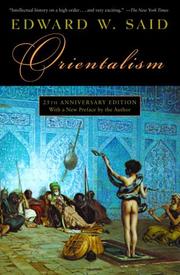
Said's postcolonial critique of how the West constructs 'the Other' is essential reading for understanding why anthropology had to radically rethink its relationship to power and representation.

This landmark collection crystallized the 'crisis of representation' in anthropology, arguing that ethnographic texts are rhetorical constructions — a direct challenge to everything the fieldwork classics assumed.
Lévi-Strauss's structuralist masterpiece argues that 'primitive' thought is as rigorous as scientific thought, making it both a theoretical high point and a key text in the debate over cultural relativism.
Advanced Synthesis: Contemporary Frontiers
ExpertSynthesize the entire arc of the discipline by engaging with contemporary anthropology's most provocative arguments about globalization, identity, and what it means to be human in the modern world.
▸ Study plan for this stage
Pace: 4–5 weeks, ~40–50 pages/day (approximately 250–300 pages total)
- Globalization as a multisited, interconnected phenomenon requiring ethnographic attention to flows, networks, and disjunctures across borders
- The relationship between global processes and local contexts: how global forces are interpreted, resisted, and transformed at the ground level
- Identity formation in the context of transnational migration, diaspora, and cultural hybridity—moving beyond essentialist notions of culture and ethnicity
- The role of technology, media, and consumption in shaping contemporary human experience and social relations across geographical distances
- Anthropology's methodological adaptations for studying globalization: multi-sited ethnography, virtual ethnography, and following people, objects, and ideas
- Power asymmetries and inequality embedded in global structures: how globalization produces winners and losers, centers and peripheries
- The concept of 'scapes' (ethnoscapes, technoscapes, financescapes, mediascapes, ideoscapes) as frameworks for understanding global cultural flows
- What it means to be human in an era of unprecedented interconnection, deterritorialization, and the blurring of boundaries between 'us' and 'them'
- How does Inda define globalization as an anthropological object, and what makes the ethnographic approach essential to understanding it?
- What are the key mechanisms through which global processes shape local identities and social practices, and how do local actors negotiate or resist these forces?
- How has migration and diaspora transformed concepts of belonging, citizenship, and cultural identity in the contemporary world?
- What role do technology, media, and consumer goods play in creating new forms of social connection and inequality across the globe?
- How can anthropologists study globalization using multi-sited ethnography, and what are the methodological challenges and opportunities?
- What does Inda argue about the relationship between globalization and human agency—are people passive victims or active agents in global processes?
- Map a global commodity chain (e.g., coffee, clothing, electronics): trace its production, distribution, and consumption across at least three countries, identifying the actors, power dynamics, and cultural meanings at each node
- Conduct a mini multi-sited ethnography: interview 3–5 people from different geographical locations (in person or virtually) about a shared global phenomenon (e.g., social media use, fast fashion, streaming services), documenting how they experience and interpret it differently
- Analyze a transnational migrant or diaspora community: research their networks, practices, and identity negotiations across home and host countries using secondary sources and interviews; write a 2–3 page ethnographic sketch
- Create a 'scapes' analysis of a global brand or cultural product (e.g., K-pop, Netflix, Starbucks): identify how it flows through ethnoscapes, technoscapes, mediascapes, and ideoscapes, and how it is localized in different contexts
- Document your own position in global flows: trace the origins of five everyday objects you use, reflect on the labor, technology, and ideology embedded in them, and write a reflexive essay on your complicity in global inequality
- Design a multi-sited ethnographic research project on a contemporary global issue (migration, climate change, digital activism): outline your research questions, sites, methods, and ethical considerations in a 3–4 page proposal
Next up: This stage equips you with a sophisticated understanding of how anthropology addresses the most pressing questions of our interconnected world, positioning you to either conduct your own ethnographic research on globalization, engage in applied/public anthropology, or critically evaluate contemporary social phenomena through an anthropological lens in professional or academic contexts.
Graeber, a practicing anthropologist, uses the full toolkit of the discipline — history, ethnography, economic theory — to make a sweeping argument about human society, showing what mature anthropological thinking looks like.

A rigorous reader that brings together the discipline's contemporary debates around transnationalism, identity, and power, serving as a capstone that connects everything learned across the curriculum.
Discussion
Keep reading
Paths that share books, cover the same subject, or open a related topic.