Understanding Claude Levi-Strauss: books to read, in order
Claude Levi-Strauss imported the method of structural linguistics into anthropology and argued that the human mind everywhere works by the same combinatorial logic — which made him for two decades the most famous intellectual in France and, eventually, the figure the discipline defined itself against. This path opens with short and secondary books because the primary work ranges from a beautiful travel memoir to a four-volume analysis of Amerindian myth. It then takes the programme in the order the arguments depend on each other: the memoir and the method, then kinship and totemic classification, then the mythologies. Everything primary here is translated from French, and several records show French or garbled metadata; the notes say which.
Ways in
BeginnerUnderstand what structuralism claimed — that meaning lies in relations and oppositions rather than in the terms themselves — and get an outside account of both the achievement and the collapse of its authority, before reading any of the difficult primary work.
▸ Study plan for this stage
Pace: Three weeks for 568 pages, and by far the gentlest stage on the path. Myth and meaning is 54 pages of transcribed radio talks and can be read in a single evening — it is primary text but reads like an introduction, and it is the best fifty-four pages anyone has written about structuralism. Read it f
- Structuralism's founding move: meaning lies in relations and oppositions, not in the terms themselves
- The transfer from structural linguistics — phonemes defined by contrast — to social and symbolic material
- Binary opposition and mediation as the machinery of mythical thought
- The unconscious as a formal, combinatorial structure rather than a repository of repressed content
- The distinction between the anthropologist's model and the participants' account of their own practice
- Why the programme both transformed anthropology and eventually lost it, which is Leach's and Wilcken's shared subject
- What does it mean to say a phoneme has no content of its own, and what is the analogy Levi-Strauss draws from it?
- Where does Leach think the method genuinely works, and where does he think it becomes unfalsifiable?
- In Myth and meaning, what does Levi-Strauss claim mythical and scientific thought have in common?
- What did wartime exile in New York contribute to the programme, on Wilcken's account?
- If structures are unconscious, what evidence could ever count against a structural analysis?
- Take a short familiar story and write out its oppositions as Levi-Strauss does in Myth and meaning. Then ask what your analysis would have looked like if you had chosen different oppositions.
- List Leach's specific objections in order of force. You will be testing them against the primary work for the rest of the path.
- From Wilcken, build a timeline of the career and mark where each book on this path falls. The mythologies at the end are separated from the kinship thesis by most of a working life.
- Write the difference between a model that describes practice and a model that generates it, in your own words. Bourdieu's whole objection turns on this and so does half of Leach's.
Next up: You have the claim and its critics; the next stage is the memoir that made the reputation and the essays that state the method.
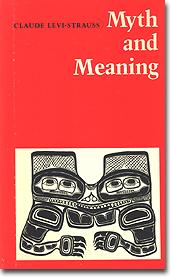
Five short radio talks in which Levi-Strauss explains his own project in plain spoken language, unlike anything else he wrote. Under a hundred pages and the single best starting point; it is primary text but reads like an introduction.
Secondary literature by a British social anthropologist who admired the method, used it, and was sharply sceptical of its more sweeping claims. Short, critical and written at the height of the structuralist moment, so it shows what was actually at stake in the discipline.

Secondary, and the standard modern biography — the fieldwork in Brazil, the wartime exile in New York where structural linguistics reached him, the fame, and the long decline of the programme. Read it now for the shape of the career, and again later for the books you will have read.
The memoir and the programme
IntermediateRead the book that made his public reputation and the two texts that state the method — including his debt to Marcel Mauss's theory of exchange, which is the concept the kinship work runs on.
▸ Study plan for this stage
Pace: Five weeks for 930 pages, and the two long books here read at completely different speeds. Tristes Tropiques is 416 pages and is one of the great books of the century in any genre — read it as literature, at whatever pace it carries you, and expect to finish it faster than you planned; a fortnight i
- The Nambikwara and Bororo fieldwork, and Levi-Strauss's own scepticism about what short fieldwork can yield
- Mauss's gift as an obligatory system of exchange, reread as an unconscious structure rather than a conscious practice
- The mana problem and the floating signifier — Levi-Strauss's most philosophically influential few pages
- Kinship terms treated as phonemes: defined by their contrasts within a system
- The mytheme and the claim that a myth's units are relations rather than events
- The Oedipus analysis as the demonstration piece, and the standard complaint that its selection of variants is unconstrained
- The anthropologist's melancholy in Tristes Tropiques — that the discipline studies what its own civilisation is destroying
- Why does Tristes Tropiques open by announcing that its author hates travelling? What position is being staked out?
- What does Levi-Strauss add to Mauss, and what does the addition cost in terms of what participants know about their own practices?
- Set out the Oedipus analysis. Which variants does he use, and would a different selection give a different structure?
- In what sense are kinship terms like phonemes, and where does the analogy break down?
- What is the floating signifier meant to explain, and why has that passage travelled so much further than the rest of the essay?
- Read the Oedipus essay in Structural anthropology and then attempt the same analysis on a myth of your choice. Keep a note of every decision you made that the method did not dictate.
- Take the account of the Nambikwara in Tristes Tropiques and check it against what Structural anthropology claims a structural analysis needs. Is the memoir doing the same work as the essays?
- Summarise the Mauss essay in one page. Then write the sentence in it you think Bourdieu is attacking in Outline of a theory of practice.
- Return to Leach's objections from stage one and mark which ones the essays already anticipate.
Next up: The method stated, the next stage is its two greatest applications and the argument with Sartre that they were building toward.
The 1955 memoir of fieldwork among the Nambikwara and Bororo, and one of the great books of the century in any genre — it opens by announcing that the author hates travelling. Read it for the sensibility rather than the theory; the catalogue record carries a translator's name in the author field, which is metadata noise, not a different book.

A short essay reinterpreting Mauss's theory of gift exchange as an unconscious structure rather than a conscious practice. Placed here because it is the clearest statement of what Levi-Strauss thought he was adding to the French tradition, and it is very short.

The programmatic essay collection, including the famous analysis of the Oedipus myth and the argument for treating kinship terms like phonemes. This is where the method is actually stated. A second collection, Structural Anthropology Volume Two, appeared later and is not on this path.
Kinship, totemism and the savage mind
BeginnerFollow the two great applications of the method — marriage rules as systems of exchange, and totemic classification as logic rather than superstition — and reach the closing chapter where Levi-Strauss attacks Sartre's philosophy of history and denies that historical consciousness gives the West any privileged standpoint.
▸ Study plan for this stage
Pace: Seven weeks. Our record for The elementary structures of kinship carries no page count; it is the doctoral thesis and it is a very long, technical book of marriage rules, diagrams and algebra, so budget it as the largest object on the path and read it selectively rather than to a target. Take the in
- The incest prohibition as the rule that forces exchange between groups, making kinship a system of communication
- Elementary versus complex structures of kinship, and what the distinction is actually classifying
- Restricted and generalised exchange, and why generalised exchange involves a wager on reciprocity
- Totemism dissolved: what looked like mysticism is a system for thinking difference, using natural species as a code
- The science of the concrete — classification with what is at hand, as rigorous as scientific thought and differently applied
- Bricolage against engineering as two modes of intellectual production
- The attack on Sartre's Critique of Dialectical Reason: historical consciousness gives the West no privileged standpoint
- The claim that the mind's constraints are the same everywhere, which is the humanist core of the programme and its most contested claim
- Why is the incest prohibition, on this account, a positive rule rather than a negative one?
- What is at stake in the difference between restricted and generalised exchange, and why does the second require trust?
- How does Totemism dissolve its own category? Reconstruct the argument in five steps.
- State the Sartre argument precisely. What is Levi-Strauss denying about history, and what is he not denying?
- If so-called primitive thought is as rigorous as scientific thought, what does the difference between them consist of?
- Which of Leach's objections from stage one bite hardest here?
- Draw one of the marriage-exchange diagrams from The elementary structures of kinship yourself and check that the rule generates the pattern claimed for it.
- Take a classification system from your own culture — of wines, of music genres, of dog breeds — and analyse it as a science of the concrete. Note where the analysis is illuminating and where it is merely restatement.
- Read the final chapter of The savage mind, then read a summary of Sartre's position from any source you have, then decide whether Levi-Strauss has described his opponent fairly.
- Write the strongest case that structural analysis cannot be falsified, and then the strongest reply on Levi-Strauss's behalf. This is the argument the last stage will test.
Next up: The programme is now fully stated and fully attacked; the final stage is Levi-Strauss spending twenty years running it at a scale nobody had attempted.
The vast doctoral thesis arguing that the incest prohibition is the rule that forces exchange between groups, making kinship a system of communication. Technical and long; read selectively, but it is the foundation of his professional reputation as opposed to his public one.
A short book dissolving totemism as a category: what looked like primitive mysticism is a system for thinking about difference. It is the compact rehearsal for the next book and should be read immediately before it.
The central theoretical work: the science of the concrete, bricolage, and the claim that so-called primitive thought is as rigorous as scientific thought and differently applied. The final chapter is the direct assault on Sartre's Critique of Dialectical Reason and is the argument the job of this path most turns on.
The mythologies
BeginnerEnter the late project in which myths across the Americas are treated as transformations of one another, and see both what the method reveals and why critics concluded it could never be falsified. This stage assumes everything before it.
▸ Study plan for this stage
Pace: Six weeks for 912 pages, and the reading strategy matters more here than anywhere else on the path. The raw and the cooked is 387 pages, the first volume of Mythologiques, and it is the book people abandon — deliberately so, since it is structured like a piece of music, opens from a single Bororo my
- Myths as transformations of one another rather than as separate objects with separate meanings
- The culinary triangle — raw, cooked, rotten — as a code for the relation between nature and culture
- The musical analogy: overture, movements, and the claim that myth and music are alone in requiring time to be abolished
- Transformation groups: a mask's or a myth's meaning depends on what it inverts in its neighbours
- Twinship and constitutive asymmetry in The story of Lynx, and the reading of the arrival of Europeans that closes it
- The falsifiability objection in its final form — the method can absorb any datum as another transformation
- What the mythologies establish that the earlier work only asserted, and what they merely restate at greater length
- What does the culinary triangle claim, and is it a discovery about myth or a template imposed on it?
- Why does Levi-Strauss say myth and music are related, and does the analogy do argumentative work or only structural work?
- In The way of the masks, how is a mask's meaning established? Reconstruct one case fully.
- By the end of The story of Lynx, what does Levi-Strauss think Amerindian myth had already worked out about the encounter with Europeans?
- Having read the whole path, is structuralism a method, a hypothesis about the mind, or a style of reading? Defend your answer against the other two.
- Read the Overture to The raw and the cooked twice and write out its statement of method in your own words. Everything after it is an application.
- Trace a single transformation across three myths in The raw and the cooked and write it out as a table of oppositions. This is the only reliable way to read the book.
- In The way of the masks, take two masks Levi-Strauss pairs and write what each asserts by inverting the other. Then find a pairing he does not make and try it.
- Reread Myth and meaning from stage one, now, in one sitting. Write down everything in those 54 pages you did not previously understand you were being told.
- Write a 600-word verdict on the programme, citing at least one book from each stage and answering Leach directly.
Next up: This is the end of the path: you have followed the method from a radio talk to a four-volume analysis of a continent's myths, and can now say for yourself what it proved.
The first volume of Mythologiques, opening from a single Bororo myth and moving by transformation across hundreds of others, structured like a piece of music. Overwhelming by design; read the overture and the first movement carefully rather than trying to finish it.

A far more contained late study of Northwest Coast masks, where a mask's meaning depends on the neighbouring masks it inverts. The best demonstration of the transformational method on a scale one can actually hold in mind.
A late, short and elegant book on Amerindian myths of twinship and asymmetry, ending on the arrival of Europeans. The right place to close: it is the mature method used lightly, by an author with nothing left to prove.
Discussion
Keep reading
Paths that share books, cover the same subject, or open a related topic.