Learn Greek: ordered books from alphabet to reading
This curriculum takes a complete beginner from zero knowledge of Greek script all the way to reading authentic modern Greek texts. Each stage builds directly on the last: you first crack the code of the alphabet and sound system, then internalize core grammar through a structured method, then consolidate with graded reading practice, and finally graduate to real Greek literature and media.
Foundations: Core Grammar & Everyday Language
BeginnerMaster essential modern Greek grammar (nouns, verbs, cases, tenses) and build a working vocabulary of ~1,000 words sufficient for everyday conversation and reading.
▸ Study plan for this stage
Pace: 8–10 weeks, ~40–50 pages/day (alternating between Colloquial Greek and grammar reference)
- The three genders (masculine, feminine, neuter) and how they determine article and adjective agreement
- The four cases (nominative, genitive, accusative, vocative) and their functions in sentences
- Regular and irregular verb conjugations in present, past (imperfect and simple past), and future tenses
- Essential vocabulary (~1,000 words) organized by frequency and thematic categories (greetings, food, travel, family, daily routines)
- Sentence structure and word order in modern Greek (SVO patterns and flexibility with cases)
- Pronouns (personal, possessive, reflexive) and their case forms
- Common prepositions and how they govern case endings
- Present participles and basic infinitive constructions for expressing ongoing or future actions
- How do the three genders affect article and adjective agreement, and can you identify the gender of common nouns?
- What are the four cases in Greek, and what grammatical role does each one play (subject, object, possession, address)?
- Can you conjugate regular verbs in the present, imperfect, and simple past tenses, and recognize common irregular verbs?
- How do you form and use pronouns in different cases, and when do you use possessive pronouns versus genitive constructions?
- Can you construct simple sentences using correct word order and case agreement, and understand how prepositions govern case endings?
- What are the ~1,000 most frequent words in everyday Greek, and can you use them in context across common topics?
- Complete all dialogues and exercises in Colloquial Greek (Chapters 1–15), speaking aloud and recording yourself to build pronunciation and fluency
- Create a personal vocabulary journal organized by gender and case, with example sentences from Colloquial Greek for each word
- Work through all grammar drills in Greek: an essential grammar (noun declensions, verb conjugations, case usage) and write out full paradigms by hand
- Translate 5–10 short sentences daily from English to Greek, focusing on correct case endings and verb forms, then check against answer keys
- Conduct weekly 10–15 minute speaking practice using dialogues from Colloquial Greek, varying roles and adding personal details (name, family, preferences)
- Create flashcards for irregular verbs and high-frequency prepositions with their case requirements, and drill them 3–4 times per week
- Write short personal narratives (5–10 sentences) in Greek about daily routines, using present and past tenses, then self-correct using grammar reference
- Listen to audio files from Colloquial Greek and transcribe key phrases, then practice shadowing to internalize natural rhythm and intonation
Next up: By mastering core grammar structures and building a 1,000-word foundation, you will be ready to move into the next stage—reading authentic texts, expanding specialized vocabulary, and developing fluency in real-world contexts—where you can apply these grammatical tools to more complex and varied discourse.
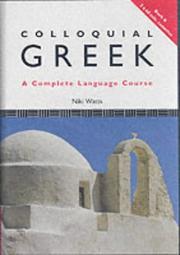
A widely used, structured course that introduces grammar and vocabulary in realistic dialogues. It is the ideal first full course because it balances spoken and written Greek from the very first lesson.

A concise but authoritative reference grammar to read alongside your coursebook. Using it here lets you look up and truly understand every grammatical point Colloquial Greek introduces, building solid intuition rather than rote memory.
Building Fluency: The Assimil Method
BeginnerAbsorb natural, idiomatic Greek through the proven Assimil passive-then-active wave method, dramatically expanding vocabulary and internalizing sentence patterns.
▸ Study plan for this stage
Pace: 8–10 weeks, ~25–30 minutes daily (lessons 1–50 of Assimil Ancient Greek)
- The Assimil passive wave: listening repeatedly to lessons without active production to absorb pronunciation, rhythm, and sentence patterns naturally
- Greek phonetics and accentuation: mastering the three accent types (acute, grave, circumflex) and their effect on meaning and pronunciation
- Core nominal morphology: recognizing and internalizing the three Greek cases (nominative, genitive, accusative) and their functions in simple sentences
- Present tense verb conjugation: absorbing regular -ω verbs and common irregular verbs (εἰμί, ἔχω) through repeated exposure
- Vocabulary acquisition through context: building a foundation of 300–400 high-frequency words by encountering them repeatedly across lessons
- Transition to active reproduction: moving from passive listening (weeks 1–4) to speaking and writing responses (weeks 5–8) without conscious grammar analysis
- Idiomatic expressions and cultural context: internalizing natural Greek phrasing and understanding the cultural assumptions embedded in Assimil dialogues
- What are the three Greek accent marks, and how do they affect pronunciation and word meaning?
- Can you listen to a lesson and identify the main grammatical structures (subject, verb, object) without translating word-for-word?
- How do the nominative, genitive, and accusative cases function in simple Greek sentences, and can you recognize them by ear?
- What is the Assimil method's 'passive wave,' and why does it prioritize listening and repetition over explicit grammar rules?
- Can you reproduce 5–10 common phrases from the lessons in natural speech without conscious translation?
- What are the present tense endings for regular -ω verbs and the principal forms of εἰμί and ἔχω?
- Daily passive listening: Play one lesson (5–7 minutes) twice daily without reading the text; focus on intonation and rhythm for the first week
- Shadowing practice: After the passive phase (week 2 onward), listen and repeat each sentence aloud, mimicking pronunciation and stress patterns exactly
- Vocabulary cards: Create flashcards for 10–15 new words per lesson; review using spaced repetition (Anki or physical cards) to reinforce high-frequency vocabulary
- Transcription exercises: Listen to short dialogue segments and write down what you hear in Greek, checking against the book to train ear-to-script recognition
- Active reproduction drills: From week 5 onward, pause the audio and attempt to answer simple questions in Greek (e.g., 'Τί ἐστιν;' — What is it?) before hearing the answer
- Dialogue memorization: Memorize 2–3 short dialogues per week by repetition, then perform them aloud with natural intonation to internalize sentence patterns
- Grammar observation journal: After each lesson, note one grammatical pattern you noticed (e.g., how genitive is used for possession) without formal study—let patterns emerge naturally
Next up: This stage builds a solid foundation of passive comprehension, natural pronunciation, and intuitive grammar recognition that prepares you to move into explicit grammar study and written composition, where you'll consciously apply the structures you've absorbed and begin reading authentic ancient Greek texts.

Assimil's Greek course presents 100+ short, authentic-feeling dialogues with gradual difficulty increase — the most effective tool for moving from studied grammar to intuitive language feel. Read it after Colloquial Greek so the grammar is already familiar and you can focus on absorption.
Authentic Greek: Literature & Living Language
ExpertRead genuine modern Greek literature and engage with contemporary language, developing a feel for style, register, and cultural depth.
▸ Study plan for this stage
Pace: 8–10 weeks, ~40–50 pages/day (with close reading and linguistic annotation)
- Kazantzakis's philosophical prose style: metaphor, rhythm, and untranslatable cultural resonance in modern Greek
- Register and voice: the narrator's intellectual distance versus Zorba's raw, colloquial speech patterns
- Idiomatic expressions and colloquialisms embedded in Zorba's dialogue—how they reveal character and social class
- The tension between written literary Greek and spoken vernacular (demotic) as reflected in the text
- Cultural and existential themes: freedom, passion, and the Greek relationship to fate and mortality
- Narrative structure and digression as a stylistic device reflecting Greek oral storytelling tradition
- Lexical and syntactic patterns that signal emotional intensity, philosophical reflection, and lived experience
- How does Kazantzakis use metaphor and poetic language to convey philosophical ideas, and what Greek cultural assumptions underpin these choices?
- What linguistic and tonal differences exist between the narrator's voice and Zorba's speech, and what do these reveal about their worldviews?
- Identify and explain 5–10 key idiomatic or colloquial expressions from Zorba's dialogue; what do they communicate about his character that standard Greek would not?
- How does the novel's treatment of demotic (spoken) versus more formal Greek reflect broader cultural and linguistic tensions in modern Greece?
- What role does digression and narrative wandering play in the novel's structure, and how does this mirror Greek oral and literary traditions?
- How would you describe the novel's register and style in Greek, and what specific linguistic choices make it feel 'authentic' to contemporary Greek life?
- Read 2–3 key passages aloud in Greek (or listen to an audiobook recording); note how rhythm, stress, and intonation carry meaning beyond the words themselves.
- Create a glossary of 30–40 idiomatic expressions and colloquialisms from Zorba's dialogue, with their literal translations and cultural/emotional significance.
- Rewrite one scene from the novel in more formal, written Greek; compare it to Kazantzakis's original and analyze what is lost and gained.
- Write a 500-word character sketch of Zorba based solely on his speech patterns, vocabulary choices, and syntax—without reference to plot.
- Identify 3–4 passages of philosophical reflection; analyze the metaphors, sentence structure, and word choice Kazantzakis uses to build emotional and intellectual intensity.
- Listen to a native Greek speaker discuss the novel (podcast, lecture, or interview if available); note which passages they emphasize and what linguistic or cultural nuances they highlight.
Next up: This immersion in Kazantzakis's layered prose—its philosophical depth, idiomatic richness, and cultural specificity—prepares you to engage with more challenging contemporary Greek literature that assumes familiarity with both literary sophistication and the living vernacular.

One of the most celebrated modern Greek novels, written in vivid, accessible prose. Reading it in the original Greek at this stage rewards all prior study with a rich, culturally immersive experience.
Discussion
Keep reading
Paths that share books, cover the same subject, or open a related topic.