Air Pollution: The Best Books on What We Breathe, in Order
Air pollution kills several million people a year and is almost entirely invisible, which is why the literature has to do two jobs at once: explain what particulates and nitrogen dioxide actually do inside a body, and explain why societies tolerated visible smoke for a century before acting on it. This path starts with three recent reported books that between them cover the current global picture, moves back to the disasters that produced the first clean air laws, then follows two cities — London and Los Angeles — through their long cleanups, and finishes with the physical and engineering science underneath. The good news buried in it is that this is a solved problem in the places that decided to solve it.
What You Are Actually Breathing
BeginnerLearn the pollutants by name — PM2.5, nitrogen dioxide, ozone, black carbon — what each does to a body, and where they come from in a modern city.
▸ Study plan for this stage
Pace: Six to seven weeks. All three are reported books for a general reader and assume no science background beyond a willingness to read a number: Choked is 312 pages, The Invisible Killer 224 and Clearing the Air 320, each about two weeks. Read them in that order. The health chapters cover deaths, child
- The pollutants by name and source: PM2.5 and PM10 as size fractions rather than substances, nitrogen dioxide from combustion and especially from diesel, ground-level ozone as a secondary pollutant formed in sunlight, sulphur dioxide from coal, and black carbon from incomplete combustion.
- PM2.5 matters because of size, not chemistry — particles below 2.5 micrometres reach the deep lung and cross into the bloodstream, which is why a mass concentration in micrograms per cubic metre is the standard metric.
- Ozone is not emitted. It is produced by reactions between nitrogen oxides and volatile organic compounds in sunlight, which is why it peaks downwind of a city on hot afternoons and why controlling it is harder than controlling a directly emitted pollutant.
- Gary Fuller runs air quality monitoring at King's College London, so The Invisible Killer is the practitioner's account: how monitors work, what a network measures and misses, where the numbers in every other book come from, and how standards were arrived at.
- Standards are negotiated, not derived. The gap between WHO guideline values and legal limit values in most countries is a political quantity, and knowing it is what makes a headline number readable.
- The diesel episode — a fuel promoted on carbon grounds that raised nitrogen dioxide and particulate exposure in European cities, compounded by manufacturers defeating emissions tests — is the case study all three books return to.
- Tim Smedley's Clearing the Air is built around cities that have measurably improved: congestion charging, low emission zones, the shift off solid fuel. It is only convincing once you know the baseline, which is why it is read third.
- What does PM2.5 mean, and why is the metric defined by size rather than by composition?
- Where does ground-level ozone come from, and why does it peak away from the source of its ingredients?
- How is a fixed-site monitor sited, and what does a single city monitor fail to capture about what an individual actually breathes?
- What is the difference between a WHO guideline value and a legal limit value in your own country, and by what factor?
- Which of the interventions in Clearing the Air produced the largest measured improvement, and how was the improvement measured?
- Find the nearest official monitoring station to where you live, pull its annual mean PM2.5 and NO2, and compare both against the local legal limit and the 2021 WHO guideline of 5 micrograms per cubic metre annual mean for PM2.5. Write down all four numbers.
- Using Fuller's explanation of monitoring, work out what your nearest station does not measure — distance to the nearest busy road, height of the inlet, whether it is a background or roadside site.
- Track your local station's hourly ozone across one hot day and one cool day and see whether the diurnal pattern matches the photochemical mechanism the books describe.
- Take one city from Clearing the Air, find its before and after concentrations, and calculate the percentage reduction yourself rather than accepting the book's characterisation.
- List every number quoted in Choked's health chapters that you could not verify from a source, then check three of them against the cited studies.
Next up: Knowing what the pollutants are and how they are measured makes it possible to read the history of why anybody bothered to regulate them.

A journalist's global tour — London, Delhi, Poland, California — reported around the science of fine particulates and the politics that keeps them in the air. The best single entry point: it covers the health evidence, the diesel scandal and the regulatory fights in one narrative.

Fuller runs air quality monitoring at King's College London, so this is the practitioner's version — how measurement works, what the numbers mean and where the standards came from. Read it second: it gives you the technical grounding to be sceptical about numbers quoted elsewhere.

The solutions-focused counterpart, built around cities that have measurably improved — congestion charging, low emission zones, the shift off solid fuel. Read it third, because it is only convincing once you already know how bad the baseline is.
The Disasters That Made the Law
BeginnerUnderstand that clean air legislation is almost always reactive, written after a specific killing event, and see the two events that mattered most.
▸ Study plan for this stage
Pace: Six to seven weeks. When Smoke Ran Like Water is 316 pages, part memoir and part scientific argument, written for a general reader — two weeks. The Big Smoke is 185 pages and is a scholarly history: dry, densely referenced, and assuming you will tolerate quantitative estimates of historical coal con
- Clean air law is almost always reactive, written after a specific killing event. Donora produced the first serious American federal interest; the 1952 London smog produced the 1956 Clean Air Act.
- A temperature inversion traps emissions under a warm layer instead of letting them disperse. Both Donora and London are inversion events, and the meteorology is what turns chronic pollution into an acute mass casualty.
- Devra Davis grew up in Donora and became an epidemiologist. When Smoke Ran Like Water is both a memoir and a participant's account of how hard it was to make health evidence stick against organised industry opposition — she is an advocate in the fights she describes.
- Peter Brimblecombe's The Big Smoke is the standard scholarly reference on London's air from the medieval period onward, and it is the source most later popular accounts draw on.
- The delay is the real subject. London's air was known to be lethal for centuries before the 1956 Act, and Christine Corton's London Fog explains that delay culturally: Dickens, Whistler, Jack the Ripper, and the transformation of a public health failure into an atmosphere.
- Mortality from these events is established statistically rather than case by case — excess deaths over an expected baseline — which is the same evidentiary form that all modern air pollution health claims take.
- The move from smoke you can see to particles you cannot is the single hardest political transition in this history, because the visible nuisance was what produced public demand for action.
- What is a temperature inversion, and why does it convert an ordinary bad-air day into a fatal one?
- What was actually being emitted at Donora, and how was the death toll established?
- Why did it take until 1956 for Britain to legislate, given that London's fogs had been documented for three centuries?
- How does Corton's cultural account explain a delay that Brimblecombe documents but does not explain?
- What tactics did industry use against the health evidence, on Davis's account, and how closely do they match tactics used since in other fields?
- Reconstruct the Donora timeline hour by hour from Davis's account — when the inversion set in, when deaths began, when the mill stopped — and mark the point at which the event was recognised as an event.
- Take Brimblecombe's estimates of London coal consumption and per-capita emissions for two centuries and plot them. The curve explains the 1952 event better than any narrative does.
- Find three literary or painted representations of London fog discussed by Corton and describe what each one does with a substance that was killing people.
- Compare the 1956 Clean Air Act's actual provisions with the scale of the 1952 event. What did the law regulate, and what did it leave alone?
- Write a paragraph on what the modern equivalent of an invisible mass casualty event would look like, and why it would be harder to legislate against than a visible one.
Next up: With the disasters and the first laws in place, the next stage follows two cities through the decades-long cleanups that followed.
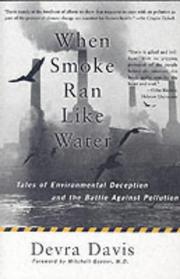
Davis grew up in Donora, Pennsylvania, where a 1948 smog inversion killed twenty people in four days, and she became an epidemiologist. Part memoir, part account of how hard it was to make the health evidence stick against industry opposition — the human entry into the regulatory story.
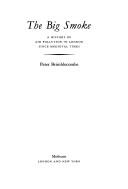
The scholarly history of London's air from the medieval period onward, and the standard reference on the 1952 Great Smog that killed thousands and produced the 1956 Clean Air Act. Dry, thorough, and the source most later popular accounts draw on.

A cultural history of the same fog — Dickens, Whistler, Jack the Ripper, and how a lethal public health failure was romanticised into an atmosphere. It explains the delay Brimblecombe documents, which is the part that transfers to the present day.
Two Cities That Cleaned Up
IntermediateFollow the full arc of a cleanup in detail — who resisted, what technology and what law did the work — using the two best-documented cases.
▸ Study plan for this stage
Pace: Seven to eight weeks. Smokestacks and Progressives is a 270-page academic urban and environmental history — it assumes an interest in municipal politics and reads like a monograph rather than a narrative; two to three weeks. Smogtown is 384 pages of popular narrative journalism, genuinely funny, and
- The first American smoke abatement movement ran from the 1880s to 1950 and was municipal, not federal — engineers, women's civic organisations and city ordinances, decades before the Clean Air Act. Stradling's book shows the fight is a century older than most people assume.
- Smoke abatement was framed as an efficiency problem as much as a health one: visible smoke was unburnt fuel, which gave engineers and industrialists a reason to cooperate that health arguments alone did not.
- Los Angeles is the key case because its pollution was novel: not coal smoke but photochemical smog, produced from vehicle exhaust in sunlight, and initially misdiagnosed because it did not resemble anything anyone had regulated.
- Arie Haagen-Smit identified the photochemical mechanism in the early 1950s, which is the moment the field acquired the atmospheric chemistry the fourth stage covers in technical form.
- The catalytic converter is the single most consequential piece of control technology in this history, and Smogtown follows the industry resistance that preceded it.
- Barbara Freese's Coal follows the fuel behind almost everything in the two previous stages, from Roman Britain through the Industrial Revolution to Chinese power generation. It is the common cause linking London, Donora and the current global picture.
- Smogtown is catalogued as one word; the spaced form does not resolve here.
- Who drove American smoke abatement before 1950, and what arguments did they use?
- Why did Los Angeles smog initially defeat the existing regulatory framework?
- What did Haagen-Smit actually demonstrate, and what did the finding require in the way of new controls?
- What resisted the catalytic converter, on what grounds, and what changed the outcome?
- How does Freese connect a fuel's chemistry to its political history? Where is that connection strongest and where is it stretched?
- Comparing London and Los Angeles: which cleanup was harder, and was the difficulty technical or political?
- Build a two-column timeline of London and Los Angeles from 1880 to 2000, marking each event, law and technology. The offsets between the columns are the most instructive thing in this stage.
- Take one municipal smoke ordinance described by Stradling and work out what it actually required a factory to do, and how it would have been enforced.
- Find historical and current ozone and NO2 data for Los Angeles and plot the trend against the regulatory dates in Smogtown. The measured improvement is large and specific.
- Using Freese, trace the coal supply chain for one nineteenth-century city — mine, transport, use, emission — and identify at which point regulation could have intervened.
- Write a short comparison of the two cleanups by mechanism: how much was fuel switching, how much was end-of-pipe control, how much was moving the industry elsewhere.
Next up: Every reported book so far has described controls without explaining them; the next stage is the chemistry and the engineering underneath.

The first American smoke abatement movement, from the 1880s to 1950 — engineers, women's civic groups and municipal politics, long before the federal Clean Air Act. The book that shows this fight is a century older than most people assume.
Los Angeles from the 1943 gas attack scare through Haagen-Smit's discovery of photochemical smog to the catalytic converter — a genuinely funny book about a serious cleanup. Note the title is one word: the spaced form does not resolve in our catalogue.
The fuel behind almost everything in the two previous stages, followed from Roman Britain through the Industrial Revolution to Chinese power generation. Read it here because coal is the common cause linking London, Donora and the present global picture.
The Science and the Engineering
BeginnerMove from reported narrative to the technical material — atmospheric chemistry, dispersion, and the control equipment that actually removes pollutants from a stack.
▸ Study plan for this stage
Pace: Twelve weeks or more, and this stage is a genuine step up. Caesar's Last Breath is 384 pages of popular science and needs no background — two weeks, and it is the bridge. Fundamentals of Air Pollution is a 996-page comprehensive textbook covering sources, atmospheric chemistry, transport and deposit
- Atmospheric composition and mixing, which Sam Kean covers narratively: where each gas came from, how the atmosphere circulates, what a single breath actually contains. It is the only enjoyable book in this stage and it exists here to make the textbooks approachable.
- Gaussian plume dispersion: the standard model for how a stack's emissions spread downwind, parameterised by wind speed, stack height and atmospheric stability class. Both textbooks develop it, and it is the calculation that connects an emission rate to a ground-level concentration.
- Atmospheric stability classes and the mixing height are the technical form of the inversion that killed people at Donora, which is why this stage retroactively explains stage two.
- Particle collection physics: settling velocity from Stokes' law, inertial impaction in a cyclone, and the Deutsch equation for electrostatic precipitator efficiency. De Nevers develops each with worked examples and the derivations are followable with calculus.
- The main control technologies and what each is for — cyclones for coarse particulate, baghouses and electrostatic precipitators for fine, scrubbers for soluble gases, catalytic converters and selective catalytic reduction for nitrogen oxides.
- Efficiency and cost scale non-linearly: removing the last few per cent of a pollutant can cost more than removing the first ninety, which is the quantitative fact behind every policy argument in the earlier stages.
- Vallero's Fundamentals is broad and shallow per topic and is best used as a reference; De Nevers is narrow and deep and is best used by working its problems. Using either the other way round wastes the book.
- Write the Gaussian plume equation and say what each term represents physically.
- How does atmospheric stability class change a ground-level concentration for the same emission rate?
- Derive or reproduce the Deutsch equation and explain why precipitator efficiency depends on collection area exponentially rather than linearly.
- Which control device would you specify for fine particulate from a coal boiler, and what does your choice cost in pressure drop and energy?
- Why does the cost of removal rise steeply at high efficiencies, and what does that imply for a standard set at very low concentrations?
- Where do Vallero's health and regulation chapters simplify material that the reported books in stage one handled better?
- Work a full Gaussian plume calculation from De Nevers with the book's own numbers: given an emission rate, stack height, wind speed and stability class, compute the maximum ground-level concentration and the distance downwind at which it occurs. Then rerun it for a different stability class and compare.
- Reproduce a worked cyclone example from De Nevers and calculate the cut diameter, then check what fraction of PM2.5 that device would fail to capture. This is the calculation that explains why cyclones are never the last stage of a control train.
- Apply the Deutsch equation to size an electrostatic precipitator for 99 per cent and then for 99.9 per cent efficiency, and compare the required collection areas. The ratio is the cost curve made concrete.
- Use Vallero's chapters on measurement to write down the actual method behind the PM2.5 number you looked up in stage one — filter, flow rate, averaging period, and its known biases.
- Take one control technology and follow it across both textbooks — Vallero for the context, De Nevers for the design equations — and note exactly where the reference book stops and the engineering book starts.
- Return to Donora with the dispersion model in hand and estimate, roughly, what mixing height and wind speed the event implies.
Next up: Having seen what removing pollution physically involves, the last stage places the whole subject inside the environmental health argument it grew out of.
Popular science on the atmosphere itself — where each gas came from, how mixing works, what a breath contains. The gentlest possible bridge from the reported books to the technical ones, and the only fun book in this stage.

The standard comprehensive textbook: sources, atmospheric chemistry, transport and deposition, measurement, health effects and regulation in one volume. Use it as a reference rather than reading it straight through.
The engineering half — scrubbers, electrostatic precipitators, baghouses, catalytic converters, and the calculations behind them. It answers the question every earlier book raises and none of them address: what does removing the pollution physically involve, and what does it cost.
The Tradition This Comes Out Of
BeginnerPlace air pollution inside the wider environmental health argument, and see the rhetorical template that every book in the first stage is still using.
▸ Study plan for this stage
Pace: Four to five weeks. Silent Spring is 336 pages and is written for a general reader, though its chemistry chapters expect patience with names of compounds — two to three weeks. Living Downstream is 379 pages by an ecologist and assumes more comfort with epidemiological reasoning than anything else in
- Silent Spring is about pesticides rather than air, and it is on this path because it established the form: careful science aimed at a general reader, against an industry that attacked the author rather than the evidence. Every writer in stage one is working in Carson's shadow.
- The rhetorical template Carson invented — the arresting opening fable, the accumulation of documented cases, the refusal to demand a ban outright — is visible in Choked and The Invisible Killer sixty years later.
- Carson was a working scientist writing as an advocate, and the campaign against her was personal and organised. The pattern recurs in Davis's Donora account and in every fight over a health standard since.
- Sandra Steingraber is an ecologist and a cancer survivor, and Living Downstream is both a scientific review and a personal account. She is an advocate and says so.
- The hardest problem in this whole field: proving that a diffuse environmental exposure caused a particular person's illness. Attribution works statistically at population level and almost never at individual level, and Steingraber sits precisely on that gap.
- Cancer registries, exposure records and the difference between a cluster and a coincidence — the epidemiological machinery that all air pollution mortality claims depend on, made concrete in one Illinois county.
- The precautionary principle, and the argument about whether the burden of proof should sit with the exposed or with the emitter, is the policy question this stage leaves you with.
- What was the actual scientific argument of Silent Spring, as distinct from its reputation?
- How was Carson attacked, and by whom? Compare it with the opposition Davis describes at Donora.
- Why can epidemiology establish that an exposure causes excess deaths in a population but not that it caused a particular death?
- What does Steingraber's own case add to her scientific argument, and what does it cost her in credibility with a sceptical reader?
- Where should the burden of proof sit for a suspected environmental carcinogen, and what does your answer imply about air quality standards?
- Looking back over the whole path: is air pollution best understood as a scientific problem, an engineering problem or a political one?
- Read Silent Spring's opening chapter and the opening chapter of Choked back to back and mark the structural parallels. Carson's template is being used sixty years later almost move for move.
- Take one health claim from Steingraber and identify its study design, its comparison group and its main confounder. Then decide what would have to be true for the claim to be wrong.
- Find your own region's cancer registry or air quality health impact estimate and read it with Steingraber's cautions in hand — what is measured, what is modelled, and what is inferred.
- Write out, in a page, the argument you would make to a local council for a low emission zone, using the epidemiology from stage one, the historical precedent from stage two, the cleanup evidence from stage three and the cost curve from stage four. That page is what the whole path was for.
Next up: This is the end of the path: the pollutants, the history, the cleanups, the engineering and the argument about proof, with the good news that this is a solved problem wherever it has been solved.
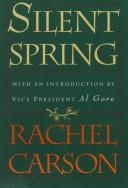
About pesticides rather than air, and included because it is the book that established the form — careful science aimed at a general reader, against an industry that attacked the author rather than the evidence. Every writer in stage one is working in Carson's shadow.
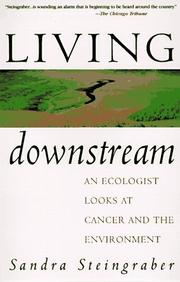
Steingraber is an ecologist and a cancer survivor writing about environmental carcinogens in her own Illinois county. The best modern demonstration of the hardest problem in this whole field: proving that a diffuse exposure caused a particular person's illness.
Discussion
Keep reading
Paths that share books, cover the same subject, or open a related topic.