Best Books on Atmospheric Chemistry and Air Pollution
Air quality is a chemistry problem: smog is not emitted, it is manufactured in the atmosphere out of nitrogen oxides and hydrocarbons by sunlight, and the same reasoning explains stratospheric ozone loss and the behaviour of aerosols. This path separates the popular accounts from the textbooks deliberately, because the jump between them is large and unsigned. The first two stages assume nothing. From the third stage onward you need first-year university chemistry — kinetics, equilibria, photochemistry — plus calculus, and the final stage assumes differential equations, some fluid mechanics and comfort with numerical methods. Read the popular books first even if you have the maths; they tell you which problems the textbooks are solving.
What Dirty Air Actually Is
BeginnerUnderstand what particulate matter, ozone and nitrogen dioxide do to people and where they come from, without any chemistry.
▸ Study plan for this stage
Pace: Three to four weeks for about 1,020 pages of trade non-fiction. Choked is 312 pages, Clearing the Air 320 and Caesar's Last Breath 384 — all three are popular books written for a general reader, with no mathematical or chemical prerequisites whatsoever. Read Gardiner first, Smedley second and Kean w
- The pollutants that matter and where they come from: PM2.5 and PM10, nitrogen oxides, ground-level ozone, sulphur dioxide, carbon monoxide
- Ozone as a secondary pollutant — it is manufactured in the air rather than emitted, which is the single idea the whole path is built on
- Why diesel produced a NOx and particulate problem that petrol did not, and how emissions testing was gamed
- What the epidemiology can and cannot support: association, exposure estimation, confounding, and the difference between attributable deaths and identified deaths
- Indoor air and solid-fuel cooking as a large share of global exposure, which the outdoor-focused coverage understates
- The atmosphere as a composed thing with a history — Kean's contribution, and the concept the textbooks open on
- Interventions that measurably worked, and the fact that the evidence for most of them is quasi-experimental rather than controlled
- What is PM2.5, why is the 2.5 micrometre cut-off used, and what does the size have to do with the health effect?
- Ground-level ozone is not emitted by anything. Where does it come from, in words, before you meet the chemistry?
- How does an attributable-mortality figure get produced, and what would you need to know to judge one?
- Which specific interventions does Smedley find evidence for, and what kind of evidence is it?
- Why did European diesel policy produce an air quality problem while intending to solve a climate one?
- Look up your own location on a public air quality monitoring network and record PM2.5, NO2 and ozone hourly for a week. You now have a dataset you will reinterpret three more times on this path, and the diurnal ozone pattern will make sense in stage three.
- Take one attributable-mortality figure quoted by Gardiner or Smedley, find the study behind it, and write down the exposure metric, the population and the concentration-response function used.
- From your week of data, plot NO2 and ozone on the same axis. The anticorrelation during the day is the NOx titration effect and you will derive it from the chemistry in stage three — write down now what you think is happening.
- List every source of the particles in the air where you live and rank them by your own guess at contribution. Keep the list; a source apportionment study for your region will tell you how wrong you were.
Next up: You know what the pollutants are and why they matter; the ozone case study shows how a claim about atmospheric chemistry actually gets settled.

The best reported book on air pollution — a journalist tracing PM2.5 and diesel NOx from London to Delhi to the Polish coalfields, with the epidemiology handled carefully. Start here because it establishes why any of the chemistry matters.

The companion volume, more focused on what cities have actually tried and which interventions measurably worked. Read it after Gardiner for the policy half of the same story.
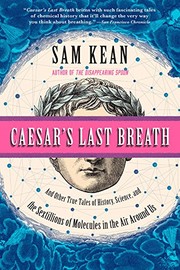
A popular-science history of the atmosphere itself, gas by gas. It is the gentlest possible introduction to the idea that the air has a composition with a history, which is the concept the textbooks open on.
The Ozone Case Study
BeginnerFollow one atmospheric chemistry problem end to end — laboratory kinetics to global treaty — and see how the field's arguments are actually settled.
▸ Study plan for this stage
Pace: Three weeks for about 570 pages. Ozone Crisis is 270 pages of contemporaneous journalism from 1989, written close enough to the events that the chemistry still reads as contested; Ozone Diplomacy is 300 pages by Richard Benedick, who was the chief US negotiator of the Montreal Protocol — he is a par
- The catalytic cycle as a concept: one chlorine atom destroying many thousands of ozone molecules because it is regenerated, which is why a trace species matters at all
- The Rowland-Molina hypothesis, its reception, and the decade between publication and policy
- The Antarctic ozone hole as an observation nobody's model predicted, and what its discovery did to the argument
- Heterogeneous chemistry on polar stratospheric clouds — the reason the hole is polar and seasonal, and the first appearance on this path of chemistry happening on surfaces rather than in the gas phase
- How the field's arguments actually get settled: laboratory kinetics, field measurement, model prediction, and an anomaly that forces a revision
- Montreal as a negotiated instrument with adjustment mechanisms, funding for developing countries and scheduled phase-outs — read from the negotiator's own account and therefore favourable to it
- The gap between a scientific finding and a treaty, and what closed it in this case and has not in others
- Write out the basic chlorine catalytic cycle for ozone destruction. Why is chlorine regenerated rather than consumed?
- Why is the ozone hole over Antarctica and why in spring, given CFCs are emitted mostly in the northern hemisphere?
- What did the discovery of the hole change about the scientific argument that the theory alone had not?
- Benedick is describing a negotiation he ran. Where is his account most likely to be self-serving, and what would you want to check against another source?
- Which features of the ozone problem made a treaty achievable, and which of those features are absent in air quality and climate?
- Write the Chapman cycle and the chlorine catalytic cycle side by side as balanced reactions. This is the first real chemistry on the path, and you will derive the steady-state version of the Chapman cycle in stage three.
- Build a timeline of the ozone story: laboratory result, publication, industry response, hole observation, treaty, adjustments. Then mark on it where each of the two books' authors was standing.
- Take Benedick's account of one negotiating position and find a second source on the same episode. Note the differences — this is the standard way to read a participant's history.
- Look up current stratospheric ozone column data for the Antarctic spring and compare it with the values Roan quotes from the 1980s. The recovery is real, slow, and measurable, and seeing it in the data closes the case study properly.
Next up: You have one chemistry problem end to end in narrative form; the first textbook gives you the vocabulary and the quantitative tools to do that reasoning yourself.

The contemporaneous account of the CFC-ozone controversy, written close enough to the events to capture how contested the chemistry was before the Antarctic hole was measured. The best available narrative of a catalytic cycle becoming a political fact.

By the chief US negotiator of the Montreal Protocol, and the standard account of how the science was translated into an agreement. Read it second; it assumes you know the chemistry story Roan tells.
The First Textbook
IntermediateAcquire the working vocabulary — mixing ratios, lifetimes, box models, the OH radical as the atmosphere's detergent, the NOx-VOC-ozone system — at a level that assumes first-year chemistry and calculus but nothing more.
▸ Study plan for this stage
Pace: Three to four months, and this is where the path changes character completely. These are textbooks with problem sets, not popular accounts. Prerequisites, stated plainly: first-year university general chemistry — kinetics, equilibria, thermodynamics, basic photochemistry — plus single-variable calcu
- Mixing ratio versus number density versus mass concentration, and converting between them at a given temperature and pressure — the single most-used skill in the whole field
- Lifetime, residence time and the one-box model, and why a lifetime is a ratio of a burden to a loss rate
- The OH radical as the atmosphere's detergent: its sources, its extremely low concentration, and why almost every trace gas budget reduces to a reaction with OH
- The NOx-VOC-ozone system, the ozone isopleth diagram, and why cutting NOx can raise urban ozone
- The Chapman mechanism and its steady state, and why it overpredicts stratospheric ozone without catalytic cycles
- Photolysis rates, quantum yields, absorption cross-sections and actinic flux — where photochemistry becomes quantitative
- Box models and back-of-envelope estimation as the field's actual working method, which is Jacob's pedagogical point
- Which textbook is which: Jacob for the model-building instinct, Wayne and Holloway for mechanism at undergraduate level, Chemistry of Atmospheres for graduate-level photochemistry
- Convert 40 ppb of NO2 to micrograms per cubic metre at 298 K and 1 atm. Then explain why an air quality standard expressed in one unit is not directly comparable with one expressed in the other.
- Given a global methane burden and a rate constant for reaction with OH at a stated OH concentration, compute the methane lifetime. Why does this calculation dominate methane's climate accounting?
- Derive the steady-state ozone concentration from the Chapman mechanism. By how much does it differ from observation, and what closes the gap?
- Under what conditions does reducing NOx emissions increase ozone concentration? Explain using the isopleth diagram.
- Why is OH concentration so low, and what would happen to the composition of the troposphere if it doubled?
- What does Wayne's Chemistry of Atmospheres assume that Jacob does not — name three specific pieces of background.
- Work every problem in the first six chapters of Jacob. The book is built around them; skipping them leaves you with vocabulary and no method.
- Reproduce Jacob's two-box model of the troposphere with his own numbers — hemispheric exchange time, source and sink rates — and then perturb one source by 50% and compute the new steady state.
- Do the full unit-conversion set for your own week of monitoring data from stage one: convert every PM2.5, NO2 and ozone reading between mass concentration and mixing ratio using the recorded temperature.
- Derive the Chapman steady state on paper, then recompute it including a chlorine catalytic cycle at a stated ClO concentration. This is the stage-two narrative turned into the calculation it was always describing.
- Take the NO2-ozone anticorrelation you plotted in stage one and explain it quantitatively with the NO + O3 titration reaction and its rate constant. If the numbers work out, you have connected the popular stage to the chemistry.
- Read Wayne and Holloway's treatment of one mechanism Jacob states without deriving — the methane oxidation chain is the natural choice — and write out the full sequence of elementary steps.
Next up: With the working chemistry in hand you can read the engineering and policy texts, which apply it to emission sources, control technology and standards.
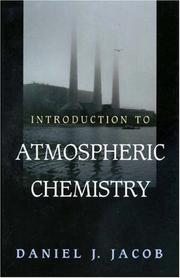
The right first textbook and by a distance the shortest: under 300 pages, built around simple box models and back-of-envelope estimates rather than machinery. Assumes general chemistry and calculus. If you can work its problems you can read anything else on this path.

A compact tutorial text co-written with Richard Wayne, pitched at an undergraduate chemistry course and stronger than Jacob on the reaction mechanisms themselves. Our record credits Wayne first; it is the same book. Read it alongside Jacob rather than after.
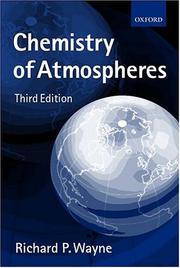
Wayne's full graduate treatment, and the one that takes photochemistry seriously — including the atmospheres of other planets, which is the best way to see which of Earth's chemistry is contingent. Assumes physical chemistry; go here once Jacob is comfortable.
Pollution as an Engineering and Policy Problem
IntermediateConnect the chemistry to emission sources, regulation and control technology, and be able to reason about why a given standard was set where it was.
▸ Study plan for this stage
Pace: Four to five months for about 1,430 pages of textbook. Prerequisites differ sharply within this stage and it is worth knowing which is which before you buy. Jacobson's Air Pollution and Global Warming is 406 pages and is the most policy-facing serious textbook here — it assumes the chemistry from st
- Emission inventories and source apportionment: how a region's pollutant burden is attributed to transport, industry, domestic combustion and agriculture
- Regulatory architecture — ambient standards versus emission limits versus technology mandates — and what each instrument can and cannot achieve
- Where a numerical standard comes from: concentration-response functions, exposure assessment, averaging periods and the political choice of an acceptable risk
- Monitoring in practice: reference methods, siting, low-cost sensor limitations, and the difference between a measurement and an estimate
- Indoor air quality as a distinct problem with distinct sources — radon, combustion, volatile organics, ventilation rates — which Godish handles best
- Control technology and its physics: cyclones, electrostatic precipitators, fabric filters, wet scrubbers, catalytic converters and selective catalytic reduction
- Sizing a control device from a mass balance and a collection-efficiency relation, which is what De Nevers actually teaches
- Coupling between air quality and climate — the same combustion sources, opposite-signed radiative effects for sulphate and black carbon — which is Jacobson's organising frame
- Why was a particular ambient standard set at the number it was? Take one real standard and trace the reasoning from the health evidence through the averaging period to the value.
- Compare a technology mandate with an ambient standard for the same pollutant: which produces the more predictable outcome, and which the cheaper one?
- How does an electrostatic precipitator collect a particle, and why does its efficiency fall in a specific particle size range?
- What does reducing sulphate aerosol do to the radiative balance, and why is that awkward for policy that treats air quality and climate as one problem?
- Why are low-cost particulate sensors unreliable, and what would you have to do to make one comparable with a reference monitor?
- Which of these three books would you hand to a regulator, which to a plant engineer, and which to an environmental science undergraduate?
- Size a cyclone or a fabric filter for a stated gas flow, particle size distribution and required removal efficiency using De Nevers' own design relations, and check your answer against his worked example.
- Reproduce one of Jacobson's calculations of a radiative effect with his numbers, then repeat it with the aerosol loading halved and state the policy implication.
- Find the published emission inventory for your own region and compare its source split with the guess you wrote down in stage one. Then locate the same sources in your monitoring data by time of day.
- Take one real regulatory limit and work backwards through Godish's account of standard-setting: what health endpoint, what exposure, what averaging period, what margin.
- Compute the mass of NOx a vehicle fleet emits per year from a stated fleet size, mileage and emission factor, then work out what fraction a given control technology removes. This is the arithmetic behind every transport air quality argument.
Next up: You can now reason about sources, controls and standards; the reference shelf is where you go when a specific mechanism, aerosol process or rate constant has to be right.

The most policy-facing serious textbook on this path, covering urban smog, acid deposition, ozone loss and climate in one frame with the regulatory history attached. Note that this is the second edition of the book published in 2002 as Atmospheric Pollution — the same work retitled, so buy one, not both.
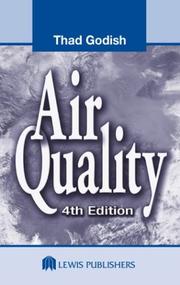
The standard survey of pollutants, measurement, health effects and standards, written for environmental-science courses rather than chemists. Lighter on mechanism than Jacobson and better on monitoring and indoor air.
The engineering side: scrubbers, precipitators, catalytic converters, and the mass balances that size them. Read it if you want to know what a control strategy physically consists of. Assumes engineering thermodynamics and fluid mechanics.
The Reference Shelf
BeginnerWork at research level on gas-phase and aerosol chemistry, and be able to read the primary literature.
▸ Study plan for this stage
Pace: Ongoing rather than scheduled — a year of use rather than a term of reading. Prerequisites are the highest on the path: differential equations, thermodynamics, physical chemistry including spectroscopy and kinetics, and enough fluid mechanics to follow transport and deposition; numerical methods hel
- Aerosol size distributions: number, surface and volume distributions of the same population, the lognormal representation, and why the three peak at different diameters
- Aerosol dynamics — nucleation, condensation, coagulation, deposition — and the timescales on which each dominates
- Particle motion: Stokes drag, the Cunningham slip correction, relaxation time, terminal settling velocity and aerodynamic diameter, which is what an impactor actually measures
- Aerosol thermodynamics and the water-uptake behaviour that governs hygroscopic growth, visibility and the optical properties behind every remote-sensing retrieval
- Cloud microphysics and Köhler theory: activation of a particle into a droplet, and the aerosol-cloud interaction that is still the largest uncertainty in radiative forcing
- How a rate constant is actually measured — flash photolysis, flow tubes, relative-rate methods — and how to read an evaluated kinetics recommendation with its uncertainty
- Structure-reactivity relationships and mechanism development for organic oxidation, including secondary organic aerosol formation
- How to use a reference: enter by mechanism or process, check the evaluated data source, and treat the chapter as an entry point to the primary literature
- Given a lognormal size distribution with stated geometric mean and geometric standard deviation, where do the number, surface and volume distributions peak, and why does the answer matter for a health standard?
- Compute the terminal settling velocity of a 1 micrometre and a 10 micrometre unit-density sphere. Why does the ratio explain how far each travels from its source?
- What is aerodynamic diameter, and why is PM2.5 defined in terms of it rather than geometric size?
- Sketch a Köhler curve and identify the critical supersaturation. What does a particle's composition change about it?
- You need the rate constant for a specific OH reaction. Where do you look, what uncertainty is attached, and how was it measured?
- Name one process where Seinfeld and Pandis and Finlayson-Pitts genuinely complement each other, and say what each supplies.
- Work Hinds' chapters on particle motion and size distributions with the problems. It is the one book in this stage that can be worked cover to cover, and it changes how you read every PM2.5 number from stage one.
- Compute the relaxation time and settling velocity for three particle sizes and use them to explain the deposition pattern in your own monitoring data.
- Take a Köhler curve calculation from Seinfeld and Pandis and reproduce it for two compositions — ammonium sulphate and a sparingly soluble organic — then state the implication for cloud droplet number.
- Pick one reaction from the methane oxidation chain you wrote out in stage three, look up its evaluated rate constant with uncertainty, and trace in Finlayson-Pitts how it was measured.
- Choose one recent paper in an atmospheric chemistry journal and read it with all three references open. Note every point where you needed one of them. That list is the honest measure of what you now have and what you still lack.
- Return to your week of monitoring data from stage one and rewrite your original interpretation of it. Between the titration chemistry, the source apportionment and the aerosol physics, almost none of the first reading should survive.
Next up: This is the end of the path: from the reported account of dirty air to the reference shelf the primary literature is written against, with the maths and chemistry introduced in the order the subject actually requires them.
Seinfeld and Pandis is the field's standard reference and has been for three decades — 1,100-odd pages covering gas-phase chemistry, aerosol thermodynamics and microphysics, cloud processes and transport. Assumes differential equations and thermodynamics. Not a book to read front to back; a book to own.
The deepest treatment of the reaction mechanisms and the laboratory kinetics behind them, and the complement to Seinfeld and Pandis rather than a competitor. Go here when you need to know how a rate constant was measured.

Particles as a discipline in their own right — size distributions, deposition, optical properties, sampling. The one book on this path that will change how you read every PM2.5 number in the first stage.
Discussion
Keep reading
Paths that share books, cover the same subject, or open a related topic.