Homer's Iliad and Odyssey: The Best Books to Read, in Order
This curriculum guides an intermediate reader from accessible, modern translations of Homer's epics through scholarly companions and critical studies, building toward a deep, nuanced understanding of the poems' language, structure, and cultural world. Each stage assumes familiarity with the previous, so that context, vocabulary, and interpretive tools accumulate naturally before tackling more demanding scholarship.
Read the Poems First
IntermediateExperience both epics as living literature in fluent, accurate modern translations before layering on scholarship.
Wilson's 2023 translation is metrically disciplined, scrupulously accurate, and written in plain but elevated English — ideal for an intermediate reader who wants both fidelity and readability. Start here to hear the poem fresh.
Essential Orientation
IntermediateGain the historical, mythological, and narrative context needed to understand what you just read and why it mattered to the ancient world.
▸ Study plan for this stage
Pace: 4–5 weeks, ~40–50 pages/day (approximately 280–350 pages total across both books)
- The oral tradition and its role in shaping Homer's epics: how bards preserved and transmitted stories before writing
- The historical Bronze Age Aegean world that inspired the Iliad and Odyssey, including Mycenaean civilization, palace economies, and warrior culture
- The distinction between historical fact and mythological embellishment in the epics, and how Finley reconstructs daily life from Homer's descriptions
- The social hierarchy, guest-friendship (xenia), and honor codes that governed Homeric society and drove the narrative conflicts
- The archaeological and textual evidence for the Trojan War: what we can verify, what remains contested, and why the war mattered geopolitically
- The role of gods, fate, and human agency in shaping events—how the ancient Greeks understood causation differently than we do
- Trade networks, colonization patterns, and the interconnected Mediterranean world that made conflicts like Troy possible and significant
- What does Finley mean by 'the world of Odysseus,' and how does it differ from the historical Mycenaean world that preceded it?
- How did the oral tradition shape the content and structure of Homer's epics, and what can we infer about pre-literate Greek culture from this?
- What evidence does Strauss present for the historical Trojan War, and what remains speculative or contested among scholars?
- How do the social institutions described in Homer (xenia, honor, kingship) reflect the actual values and power structures of the Bronze Age Aegean?
- Why was the Trojan War significant to the ancient Greeks, and how did Homer's version of it serve their cultural and political needs?
- How do Finley and Strauss help explain the gap between the mythological narrative and the historical reality of Bronze Age warfare and society?
- Create a timeline comparing Mycenaean history (c. 1600–1100 BCE) with Homer's likely composition period (c. 8th century BCE), marking key archaeological discoveries and the fall of Bronze Age civilizations
- Map the trade routes and settlements mentioned in both books, identifying which were historically real and which appear to be mythologized or invented
- Write a 2–3 page analysis of one Homeric scene (e.g., Odysseus's encounter with the Phaeacians, or Achilles's aristeia) explaining how it reflects real Bronze Age customs versus poetic invention
- Compile a glossary of key social terms from Finley (xenia, geras, timē, basileus) with definitions and examples from the epics, then note how these concepts shaped Homeric society
- Research and present one piece of archaeological evidence (e.g., Linear B tablets, Mycenaean palace ruins, Troy's excavation layers) that either supports or complicates Homer's narrative
- Compare Strauss's account of Trojan War logistics (supply lines, troop movements, siege duration) with a passage from the Iliad, identifying where Homer prioritizes drama over plausibility
Next up: This stage equips you with the historical and cultural scaffolding to recognize how Homer shaped myth to reflect his audience's values, preparing you to read the epics themselves with awareness of both their artistry and their roots in a real (if distant and transformed) world.

A concise, authoritative account of the society behind the Homeric poems — economy, kinship, honor, and gift-exchange. Reading this right after the translations grounds the poems' social logic in historical reality.

Strauss reconstructs the historical and archaeological backdrop of the Trojan War in a readable narrative, helping you distinguish myth from plausible history and enriching your sense of the poems' setting.
How Homer Works: Craft and Oral Tradition
IntermediateUnderstand the mechanics of oral-formulaic composition, Homeric style, and narrative structure so you can read the poems as a poet, not just a reader.
▸ Study plan for this stage
Pace: 5–6 weeks, ~25–30 pages/day. Start with Lord's *The Singer of Tales* (weeks 1–3, ~200 pages), then move to Bassett's *The Poetry of Homer* (weeks 4–6, ~150 pages). Build in 1–2 review days per week.
- Oral-formulaic composition: how fixed phrases and metrical patterns allow poets to compose and perform without writing
- The formula as a unit of meaning: how recurring epithets (e.g., 'swift-footed Achilles') serve both meter and characterization
- Themes and type-scenes: how traditional narrative units (assemblies, battles, journeys) structure the epic
- The role of improvisation within tradition: how Homer works within constraints to create unique variations
- Homeric style and diction: the use of similes, repetition, and parataxis to build meaning across long narrative
- The transition from oral to written text: how the poems were likely composed orally but eventually fixed in writing
- Narrative technique in the Iliad and Odyssey: how structure, pacing, and focalization shape the reader's experience
- What is a formula in Homeric poetry, and how does it function both metrically and semantically?
- How does Lord's concept of 'theme' differ from a simple plot point, and what role do themes play in oral composition?
- What is a type-scene, and can you identify 2–3 examples from the Iliad or Odyssey?
- How does Bassett explain the relationship between Homeric style (similes, epithets, parataxis) and the oral tradition?
- What evidence suggests the Homeric poems were composed orally, and what does this tell us about how to read them?
- How do the narrative structures of the Iliad and Odyssey reflect the constraints and possibilities of oral-formulaic composition?
- Track epithets in a single book of the Iliad or Odyssey: list all instances of a character's epithet (e.g., 'grey-eyed Athena'), note the metrical position, and discuss how it serves both meter and characterization.
- Identify and analyze 3–4 type-scenes from your reading (e.g., an assembly, a duel, a journey): describe the traditional elements and note how Homer varies them.
- Collect 5–6 Homeric similes from the poems and map their structure: what is compared, what is the point of comparison, and how does the simile's length or elaboration affect pacing?
- Rewrite a short passage (10–15 lines) from the Iliad or Odyssey in modern English prose, then reflect on what is lost and gained—what does this reveal about Homeric style?
- Create a 'formula inventory' for a single character or action: list recurring phrases, their metrical shapes, and their semantic range across different contexts.
- Compare a passage from the Iliad with a parallel or similar passage from the Odyssey: analyze how the same theme or type-scene is adapted, and what this tells you about Homer's compositional flexibility.
Next up: This stage equips you to recognize the *how* of Homeric composition, preparing you to read the poems as conscious artistic choices rather than fixed texts—a foundation for the next stage, which will likely focus on close reading of specific books or thematic analysis with this craft knowledge as your lens.
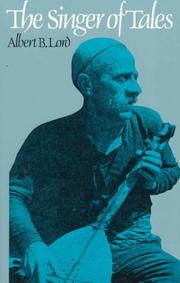
The foundational text on oral-formulaic theory, showing how Homer's repeated epithets, type-scenes, and formulas are features of a living oral tradition. Essential before tackling deeper literary criticism.

A close, sympathetic study of Homeric style — similes, narrative pace, characterization — that bridges the gap between Lord's linguistic theory and the aesthetic experience of reading the poems.
Deep Literary and Philosophical Reading
ExpertEngage with the poems as profound meditations on mortality, heroism, homecoming, and the human condition through major works of criticism and philosophy.
▸ Study plan for this stage
Pace: 8–10 weeks, ~25–30 pages/day (Weil: 2–3 weeks; Nagy: 5–7 weeks)
- Force as the central theme of the Iliad: how violence transforms human beings into objects and erases their humanity
- Weil's concept of 'the supernatural' in Homer—grace, compassion, and moments of transcendence amid brutality
- Nagy's evolutionary model of the Homeric tradition: how the poems developed through oral composition and performance
- The hero's *kleos* (glory/fame) and *nostos* (homecoming) as competing values in epic narrative
- Mortality and the human condition: how awareness of death shapes heroic choice and meaning-making
- The relationship between individual agency and fate (*moira*) in determining heroic action
- Comparative reading: how Weil's phenomenological approach differs from Nagy's historical-philological method
- The role of the audience and cultural memory in shaping the meaning of heroic excellence
- What does Weil mean by 'force' in the Iliad, and how does she argue it operates as the true protagonist of the poem?
- How does Weil identify moments of supernatural grace or compassion in the Iliad, and what is their significance for her reading?
- What is Nagy's 'best of the Achaeans' framework, and how does it explain the evolution of Homeric poetry through oral tradition?
- How do Nagy's concepts of *kleos* and *nostos* help explain the different heroic trajectories of Achilles and Odysseus?
- How do Weil's and Nagy's approaches differ in their treatment of heroism, mortality, and the human condition?
- What is the relationship between the poet's perspective and the characters' awareness of mortality in Homer's epics, according to these critics?
- Close-read 3–4 key passages from the Iliad (e.g., Priam supplicating Achilles, the death of Patroclus, Hector's farewell) through Weil's lens of force and grace; annotate where you see her themes emerge
- Create a comparative chart mapping Nagy's *kleos*/*nostos* framework onto major characters (Achilles, Hector, Odysseus, Penelope); note how each character's choices reflect these competing values
- Write a 2–3 page essay: 'How does Weil's phenomenological reading of force illuminate what Nagy's philological approach might miss (and vice versa)?'
- Trace the concept of mortality through one hero's arc (Achilles or Hector) using both Weil and Nagy; show how each critic explains the hero's awareness of death and its effect on their choices
- Perform a 'Nagy-style' analysis of a single Homeric episode: identify the layers of tradition, the audience's role in shaping meaning, and how *kleos* is constructed through performance
- Create a visual timeline or diagram showing Nagy's model of how the Homeric tradition evolved; annotate with specific examples from the Odyssey that illustrate oral-formulaic composition
Next up: This stage equips you with sophisticated critical frameworks—Weil's ethical phenomenology and Nagy's historical poetics—that prepare you to apply these lenses to later literary works and to evaluate competing interpretive methods in humanistic scholarship.

Weil's short, devastating essay reads the Iliad as a poem about the dehumanizing power of violence. It reframes everything you thought you understood about Achilles and war — read it before longer critical works to sharpen your questions.
Nagy's influential study of Homeric heroism, kleos (glory), and the relationship between epic and cult is the gold standard of Homeric scholarship and a fitting capstone to the literary stage.
The Afterlife of Homer
ExpertTrace Homer's towering influence on Western literature and thought, and situate the epics within the broader tradition they created.
▸ Study plan for this stage
Pace: 8–10 weeks, ~40–50 pages/day (Auerbach first at ~25 pages/day for 2 weeks, then Graves translation at ~40 pages/day for 6–8 weeks)
- Auerbach's concept of mimesis: how Homer's representation of reality differs fundamentally from biblical narrative in immediacy, psychological depth, and treatment of the everyday
- The Homeric style as foundational to Western literary realism—how Homer's technique of fully illuminating characters and situations became the template for later literature
- Homer's influence on the literary tradition: how subsequent writers from Virgil to the moderns absorbed, adapted, and reacted against Homeric conventions
- The tension between Homeric 'foreground' (vivid, present action) and 'background' (historical/mythic context)—and how this shapes narrative structure across centuries
- Graves's translation philosophy and choices: how translators mediate Homer for contemporary readers and what is gained or lost in the process
- The Iliad as a work of cultural memory: how Homer's treatment of heroism, mortality, and honor established archetypal patterns that reverberate through Western thought
- Intertextuality and allusion: recognizing how later authors invoke, echo, and subvert Homeric language, themes, and narrative structures
- The relationship between oral tradition and written text: how Homer's formulaic language and performance context shaped the epics' enduring formal influence
- According to Auerbach, what are the key differences between Homeric and biblical narrative styles, and why does he argue Homer's approach is more 'realistic' in its representation of human experience?
- How does Auerbach use the concept of mimesis to explain Homer's influence on the development of Western literature, and what examples does he provide?
- In Graves's translation of the Iliad, how does his rendering of Homeric language and tone reflect particular choices about what 'Homer' means for modern readers?
- Identify three specific moments in Graves's Iliad where Homer's treatment of character psychology, honor, or mortality established patterns that you recognize in later literature or thought
- How does the Homeric technique of 'illuminating' both foreground action and background context create a narrative model that subsequent writers inherited or resisted?
- What does it mean to say that Homer created a 'tradition' rather than simply wrote two poems? How do Auerbach and Graves's work together illustrate this?
- Close-read 3–4 passages from Graves's Iliad (e.g., Achilles' rage, Hector's farewell, a battle scene) and annotate them using Auerbach's framework: identify where Homer uses 'foreground' immediacy, where background context intrudes, and how this creates psychological depth
- Create a comparative chart: select one Homeric theme (honor, mortality, fate, heroism) and trace how it appears in Graves's translation, then research and note how the same theme is treated in one later work (e.g., Virgil's Aeneid, Dante, Shakespeare, or a modern novel). Write a 500-word analysis of continuity and change
- Write a translator's commentary: choose one famous Homeric passage from Graves and rewrite it in your own words, then reflect on what Graves's choices reveal about how he wants readers to understand Homer—what tone, what values, what kind of 'reality' is he representing?
- Construct a genealogy of one Homeric convention: pick a formal or thematic element (e.g., the epic simile, the catalog, the hero's fatal flaw, the descent into the underworld) and trace how it appears in Graves's Iliad, then identify how it echoes in 2–3 later literary works. Present as a visual diagram with brief notes
- Engage in a 'dialogue' exercise: write an imagined conversation between Auerbach (analyzing Homer's representational strategy) and Graves (defending his translation choices), debating what Homer 'really' offers to modern readers
- Read a secondary source excerpt (e.g., a chapter on Homeric influence from a literary history) and write a 300-word reflection on how it either confirms or complicates Auerbach's thesis about Homer's foundational role in Western realism
Next up: By understanding how Homer established the representational and narrative conventions that shaped all subsequent Western literature, you are now prepared to examine specific literary descendants—tracing how individual authors consciously inherit, transform, or rebel against the Homeric model across different periods and genres.
Auerbach's opening chapter — a comparison of Homer and the Bible — is one of the greatest pieces of literary criticism ever written. It crystallizes what makes Homeric style unique and launches a conversation that spans all of Western literature.
Graves's prose retelling, informed by his deep knowledge of Greek myth, offers a final creative synthesis — a way to re-experience the Iliad with all the critical and contextual knowledge you have now accumulated.
Discussion
Keep reading
Paths that share books, cover the same subject, or open a related topic.