Planetary science: a reading path across worlds and moons
This curriculum takes a beginner from wide-eyed wonder at the solar system all the way to graduate-level planetary science, building vocabulary and intuition at each stage before adding mathematical or technical depth. The four stages move from accessible narrative overviews → geological and atmospheric processes → moons and outer solar system → exoplanets and the cutting edge of exploration, so that each book's concepts are already partially familiar when you open it.
Foundations: The Solar System in Plain Sight
BeginnerBuild a mental map of the solar system — its major bodies, scale, and history — and develop the basic vocabulary needed for deeper study.
▸ Study plan for this stage
Pace: 8–10 weeks, ~25–30 pages/day. Start with "The Planets" (4–5 weeks), move to "Postcards from Mars" (2–3 weeks), then use the Card Deck as a reference and review tool throughout (ongoing).
- The eight planets organized by type: terrestrial (rocky) vs. gas giants, and their defining characteristics (size, composition, atmosphere, moons)
- Orbital mechanics and distance: understanding AU (astronomical units), relative spacing, and why planetary order matters
- Planetary formation and the history of the solar system: nebular hypothesis, migration, and why planets are where they are
- Mars as a case study: its geology, climate history, evidence of past water, and why it's a focus of exploration
- Comparative planetology: how studying one planet (Mars) illuminates understanding of others through shared processes
- Scale and perspective: grasping the vast distances and sizes involved, and how this shapes what we can observe
- The vocabulary of planetary science: terms like albedo, regolith, outgassing, impact cratering, and atmospheric circulation
- The role of moons and smaller bodies: how they shape planetary evolution and provide clues to solar system history
- What are the key differences between terrestrial planets and gas giants, and where does each type sit in the solar system?
- Why is Mars geologically and climatically different from Earth, and what evidence suggests it once had liquid water?
- How do we use comparative planetology to understand planetary processes—for example, what does Venus's runaway greenhouse effect teach us about Earth's climate?
- What is the nebular hypothesis, and how does it explain the current arrangement and composition of planets?
- How do distances in the solar system compare using AU, and why does this scale matter for understanding planetary orbits?
- What role do moons and impact cratering play in planetary evolution, as illustrated by examples from 'The Planets' and 'Postcards from Mars'?
- Create a scale model or diagram of the solar system using AU distances; note which planets are terrestrial vs. gas giants and list 2–3 defining traits of each.
- Read Sobel's chapters on Earth and Mars side-by-side, then write a 1–2 page comparison explaining why Mars lost its atmosphere while Earth retained its.
- Track Mars's features as you read 'Postcards from Mars': map major geological formations (Valles Marineris, Olympus Mons, polar caps) and note what they reveal about past and present processes.
- Use the Card Deck to quiz yourself: pick 10 random cards and for each, identify the body, state its type (terrestrial/gas giant/moon/other), and name one unique feature from Sobel or Bell.
- Create a timeline of solar system history based on Sobel's formation narrative; mark key events (planetary migration, late heavy bombardment, Mars's climate change) and explain their consequences.
- Choose one moon from 'The Planets' (e.g., Europa, Titan, Io) and write a brief research note on how its characteristics reflect broader planetary science principles discussed in the stage.
Next up: This stage equips you with a solid mental map of the solar system's layout, composition, and history—essential context for the next stage, which will likely dive deeper into specific planetary processes, atmospheres, geology, or the search for life beyond Earth.
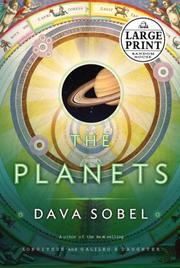
A beautifully written, chapter-by-chapter tour of each planet that introduces scale, mythology, and key physical characteristics without requiring any prior science background — the perfect first step.
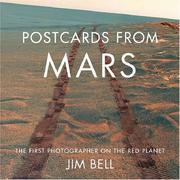
Stunning Mars Rover imagery paired with accessible science prose; grounds abstract planetary concepts in real exploration data and builds intuition for surface geology early on.

A concise, fact-rich primer covering formation, planetary types, and key processes — consolidates the tour begun by Sobel and prepares the reader for more mechanistic thinking.
Processes: How Planets Work
IntermediateUnderstand the physical and geological processes that shape planetary surfaces, interiors, and atmospheres — from volcanism and tectonics to climate and weather.
▸ Study plan for this stage
Pace: 10–12 weeks, ~40–50 pages/day. Start with "Volcanoes" (3–4 weeks), move to "Atmosphere, Clouds, and Climate" (3–4 weeks), then "The Story of Earth" (4 weeks). This pacing allows time for reflection and exercises between books.
- Magma generation, ascent, and eruption mechanisms: how pressure, temperature, and composition drive volcanic activity
- Volcanic hazards and products: lava flows, pyroclastic flows, ash, lahars, and their impact on planetary surfaces
- Atmospheric structure and thermodynamics: how energy from the Sun drives circulation, convection, and weather patterns
- Cloud formation, precipitation, and the hydrological cycle: the role of water in regulating planetary climate
- Planetary interiors and heat flow: how internal heat drives tectonics, volcanism, and long-term planetary evolution
- Plate tectonics and surface deformation: the connection between interior processes and crustal modification
- Climate feedbacks and long-term planetary habitability: how atmosphere, oceans, and life interact over geological time
- Comparative planetology: how processes on Earth differ from and illuminate processes on other planets
- What are the main mechanisms by which magma is generated in the mantle, and how do pressure-temperature conditions determine whether magma will erupt?
- How do volcanic eruption styles differ based on magma composition and viscosity, and what hazards does each style present?
- Explain the role of solar radiation in driving atmospheric circulation and how this circulation is modified by planetary rotation and surface features.
- What is the relationship between atmospheric water vapor, cloud formation, and the greenhouse effect, and how do clouds affect planetary energy balance?
- How does heat flow from Earth's interior drive plate tectonics and volcanism, and what evidence supports this connection?
- Describe the major events in Earth's geological history and explain how changes in atmospheric composition, volcanism, and life have shaped planetary habitability.
- How do feedback mechanisms (such as the carbonate-silicate cycle) regulate Earth's climate over millions of years?
- What can we learn about planetary processes by comparing Earth's volcanism, atmosphere, and interior structure to those of other terrestrial planets?
- After 'Volcanoes': Create a detailed diagram of a stratovolcano showing magma chamber, conduit, eruption column, and pyroclastic flow paths. Label the physical processes occurring at each stage.
- After 'Volcanoes': Analyze a real volcanic eruption (e.g., Mount St. Helens, Krakatoa, or a recent event) using Francis's framework: identify magma type, eruption style, hazards, and surface impacts.
- After 'Atmosphere, Clouds, and Climate': Track a weather system (low-pressure system, hurricane, or monsoon) for 3–5 days using satellite imagery and weather maps; explain the atmospheric processes driving its motion and intensity.
- After 'Atmosphere, Clouds, and Climate': Construct a simple energy balance model showing how solar radiation, atmospheric composition, and cloud cover affect planetary temperature. Test how changes in CO₂ or cloud albedo alter equilibrium.
- After 'The Story of Earth': Create a timeline of Earth's major geological and atmospheric transitions (e.g., Great Oxidation Event, Snowball Earth, emergence of plate tectonics). For each, explain the role of volcanism, life, or climate feedback.
- Integrative exercise: Compare volcanic and atmospheric processes on Earth to one other terrestrial planet (Venus, Mars, or Mercury) using Hazen's comparative framework. Explain why planetary size, distance from the Sun, and internal heat budget produce different outcomes.
Next up: This stage equips you with a mechanistic understanding of how planetary interiors, surfaces, and atmospheres interact—knowledge essential for the next stage, which will likely explore planetary formation, evolution, and the search for habitable worlds across the solar system and beyond.
The canonical comparative-planetology text on volcanism; uses Earth as a baseline then systematically applies the same principles to the Moon, Mars, Io, and Venus, cementing process-based thinking.

Provides a rigorous but accessible grounding in atmospheric physics and climate dynamics that is directly transferable to understanding Venus, Mars, Titan, and gas-giant weather systems.
Traces Earth's co-evolution of geosphere, hydrosphere, atmosphere, and biosphere — an essential comparative baseline for evaluating why other planets turned out so differently.
Worlds Within Worlds: Moons and the Outer Solar System
IntermediateExplore the rich diversity of moons, rings, ice giants, and small bodies, and understand why the outer solar system is a laboratory for planet formation and astrobiology.
▸ Study plan for this stage
Pace: 6–8 weeks, ~25–30 pages/day (with observation sessions and reflection breaks)
- Saturn's ring system: composition, structure, and formation mechanisms (shepherd moons, Roche limit, particle dynamics)
- Saturnian moons as diverse worlds: Titan's atmosphere and organic chemistry, Enceladus's subsurface ocean and geysers, Mimas's impact history, and their roles in ring dynamics
- Observational techniques for Saturn and its moons: telescopic methods, atmospheric features, and seasonal changes described in Benton's guide
- Pluto's reclassification and its implications: the definition of planets, dwarf planets, and the discovery of the Kuiper Belt
- The New Horizons mission and Pluto's complex geology: cryovolcanism, nitrogen ice plains, and atmospheric escape
- Moons as laboratories for astrobiology: subsurface oceans, organic chemistry, and the conditions for potential life
- The outer solar system as a record of planetary formation: migration models, resonances, and the Nice model
- What are the main compositional and structural features of Saturn's rings, and how do shepherd moons maintain ring stability?
- How do Titan and Enceladus exemplify the diversity of moons, and why are they considered potential habitats for life?
- What observational methods does Benton describe for viewing Saturn and its moons from Earth, and what features can amateur astronomers detect?
- Why was Pluto reclassified as a dwarf planet, and what does this reveal about planetary definitions and the structure of the outer solar system?
- What did the New Horizons mission reveal about Pluto's geology, and how do these findings challenge previous assumptions?
- How do moons and small bodies in the outer solar system inform our understanding of planet formation and the early solar system?
- Observe Saturn and its moons using a telescope (or planetarium software if weather/equipment unavailable); sketch ring orientation, cloud bands, and identify visible moons; compare observations to Benton's observational guides
- Create a detailed diagram of Saturn's ring system labeling the major rings (A, B, C, D, E), gaps (Cassini Division, Encke Gap), and shepherd moons; annotate with formation mechanisms
- Research and write a 2–3 page comparative profile of Titan vs. Enceladus covering atmosphere/subsurface, organic chemistry, and astrobiological potential
- Track Pluto's discovery history and reclassification: create a timeline from its 1930 discovery through the 2006 IAU decision and the 2015 New Horizons flyby, noting key evidence at each stage
- Analyze New Horizons images of Pluto: identify major geological features (Sputnik Planitia, Cthulhu Macula, Tombaugh Regio) and explain the processes that shaped them
- Construct a concept map linking the Nice model, Kuiper Belt formation, and the diversity of outer solar system bodies; explain how migration shaped the current architecture
Next up: This stage establishes the outer solar system as a dynamic, complex realm where moons reveal planetary formation history and harbor potential for life, preparing you to investigate the smallest bodies (asteroids, comets, meteorites) and their role in understanding solar system origins and delivering material to Earth.

Bridges observational familiarity with physical understanding of ring systems and giant-planet atmospheres, reinforcing concepts from Stage 2 in a new context.
Uses the Pluto debate as a lens to understand dwarf planets, the Kuiper Belt, and how planetary classification reflects real physical differences — a lively capstone to the outer solar system.
Advanced Frontiers: Formation, Exoplanets, and Deep Exploration
ExpertSynthesize everything into a modern scientific framework — how planetary systems form, what exoplanets reveal about our own solar system, and where the field is heading.
▸ Study plan for this stage
Pace: 10–12 weeks, ~40–50 pages/day (with 2 days/week for synthesis and exercises). Week 1–3: *Planetary Sciences* (foundational framework); Week 4–6: *The Exoplanet Handbook* (comparative analysis); Week 7–9: *The Planet Factory* (formation mechanisms); Week 10–12: Integration, projects, and capstone ana
- Planetary formation mechanisms: nebular hypothesis, disk evolution, and migration models (from de Pater and Tasker)
- Exoplanet detection methods and their observational biases, and what exoplanet populations reveal about planetary system architecture (Perryman)
- Comparative planetology: applying solar system knowledge to interpret exoplanetary systems (synthesis across all three)
- Planetary composition, internal structure, and habitability across diverse environments (de Pater, Perryman, Tasker)
- Disk-planet interactions, gap formation, and dynamical evolution during and after formation (de Pater, Tasker)
- The diversity of exoplanetary systems and what this tells us about our own solar system's uniqueness or typicality (Perryman, Tasker)
- Current frontiers in planetary science: direct imaging, biosignatures, and future mission design (all three)
- Quantitative modeling and observational constraints in modern planetary science
- How do the nebular hypothesis and modern disk models explain the formation of both terrestrial and gas giant planets, and what evidence from exoplanet discoveries has refined these models?
- What are the major exoplanet detection methods described by Perryman, what biases does each introduce, and how do these biases shape our understanding of planetary system demographics?
- Explain planetary migration (type I, II, and grand tack scenarios): how does it reshape planetary systems during formation, and what observational signatures of migration do we see in exoplanetary systems?
- How do the properties of exoplanets (masses, orbital periods, compositions) compare to our solar system's planets, and what does this tell us about whether our system is typical or unusual?
- What physical mechanisms drive disk evolution, gap formation, and planet-disk interactions during the protoplanetary phase, and how do these processes constrain planet formation timescales?
- Synthesize de Pater's planetary science framework with Perryman's exoplanet data and Tasker's formation physics: how would you design a mission to characterize a potentially habitable exoplanet?
- Create a comparative table of solar system planets vs. the top 10 most well-characterized exoplanets (from Perryman): mass, orbital period, composition, and inferred formation history. Identify patterns and anomalies.
- Work through a simplified disk model (using provided equations from de Pater or Tasker): calculate migration timescales for a Jupiter-mass planet at different disk radii and explain how this shapes system architecture.
- Analyze a real exoplanet discovery paper (e.g., a multi-planet system from NASA Exoplanet Archive): identify which detection method was used, what observational biases apply, and what the system's architecture suggests about its formation history.
- Design a hypothetical protoplanetary disk: specify initial conditions (mass, temperature profile, dust distribution), predict where planets will form using Tasker's mechanisms, and sketch the resulting planetary system.
- Read and summarize one recent review article (post-2018) on exoplanet formation or migration from a journal like *Annual Review of Astronomy and Astrophysics* or *Icarus*: how does it integrate concepts from all three books?
- Create a visual timeline of planetary system evolution for two contrasting systems (e.g., our solar system and a compact multi-planet system like TRAPPIST-1): annotate key formation events, migration phases, and current architecture.
Next up: This stage synthesizes planetary formation physics, observational exoplanet science, and comparative planetology into a unified modern framework—positioning you to specialize in either observational exoplanet characterization, formation modeling, or astrobiology, or to engage with emerging frontiers like direct imaging, biosignature detection, and next-generation mission design.
The definitive graduate-level textbook covering formation, interiors, atmospheres, magnetospheres, and small bodies with quantitative rigor — the single most comprehensive reference in the field.

A thorough, research-level survey of detection methods, planetary demographics, and atmospheric characterization that places our solar system in a galactic context.

Synthesizes planet-formation theory and exoplanet diversity in an engaging narrative, serving as an ideal bridge between the textbook rigor of de Pater and the broader scientific story — a satisfying capstone.
Discussion
Keep reading
Paths that share books, cover the same subject, or open a related topic.