The Best Books to Learn Danish
This curriculum takes a complete beginner from zero Danish to conversational fluency through four carefully sequenced stages: an audio-first survival course, a structured grammar foundation, graded reading practice, and finally authentic intermediate resources. Each stage builds directly on the vocabulary, grammar, and intuition developed in the one before it, ensuring no learner is thrown into the deep end unprepared.
First Words & Survival Danish
BeginnerAcquire basic pronunciation, essential phrases, and the mental 'sound' of Danish so that grammar study feels grounded rather than abstract.
▸ Study plan for this stage
Pace: 4–5 weeks, ~15–20 pages/day, with 2–3 days per week dedicated to audio/pronunciation practice
- Danish phonetics and pronunciation rules: stød (glottal stop), soft consonants, and vowel sounds that differ from English
- Essential survival phrases for greetings, introductions, and basic courtesies (Hej, Tak, Ja, Nej, Undskyld)
- Present tense verb conjugation and the structure of simple declarative sentences
- Common nouns, articles (en/et), and basic adjectives in context
- Listening comprehension: recognizing word boundaries and intonation patterns in spoken Danish
- The rhythm and melody of Danish speech to build intuition before diving into complex grammar
- What is the stød and how does it affect pronunciation and meaning in Danish words?
- Can you introduce yourself in Danish with your name, nationality, and a simple statement about what you do?
- How do you form the present tense of common verbs like 'at være' (to be), 'at have' (to have), and 'at gå' (to go)?
- What are the key differences between Danish and English pronunciation, and which sounds require the most practice?
- Can you order a coffee, ask for directions, or apologize in Danish using survival phrases from the book?
- How do Danish articles (en vs. et) work, and can you identify the gender of common nouns?
- Daily pronunciation drills: spend 10–15 minutes repeating the phonetic examples and dialogues from Colloquial Danish aloud, focusing on stød and soft consonants
- Flashcard practice: create cards for the 50–75 most essential survival words and phrases (greetings, numbers 1–20, basic questions) and review daily
- Shadowing exercise: listen to the audio companion for Colloquial Danish and repeat entire dialogues, matching intonation and rhythm
- Write out and memorize 5–10 short dialogues from the book (e.g., meeting someone, ordering food, asking the time) and practice them aloud until fluent
- Verb conjugation table: create a chart for present tense forms of 'være,' 'have,' 'gå,' and 3–4 other high-frequency verbs; practice conjugating them in simple sentences
- Listening comprehension check: without looking at the text, listen to dialogues from the audio and write down what you hear, then check against the book to identify missed words or sounds
Next up: By mastering the sound and rhythm of Danish and internalizing essential phrases, you'll have the phonetic foundation and conversational confidence needed to tackle grammar rules in the next stage without them feeling abstract or disconnected from real speech.
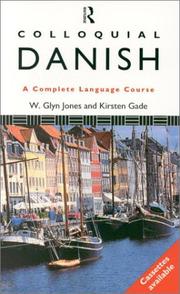
A classic beginner course with dialogues, audio, and exercises that introduces everyday vocabulary and basic sentence patterns in a communicative, low-pressure way — the ideal first active course.
Core Grammar & Structure
BeginnerUnderstand Danish noun genders, verb conjugation, word order (including the V2 rule), and basic clause structure well enough to construct your own sentences.
▸ Study plan for this stage
Pace: 4–5 weeks, ~25–30 pages/day (Units 1–6 of Complete Danish, focusing on grammar explanations and worked examples)
- Danish noun genders (common/neuter) and their role in article and adjective agreement
- Present and past tense verb conjugation, including regular and common irregular verbs
- The V2 (verb-second) rule and how it governs word order in main clauses
- Subordinate clause word order (verb-final position) and how it differs from main clauses
- Definite and indefinite article usage with nouns and adjectives
- Basic sentence construction: subject–verb–object (SVO) patterns and inversion rules
- Common prepositions and their role in phrase structure
- Negation patterns (ikke placement) and their interaction with verb position
- How do you determine whether a Danish noun is common or neuter gender, and what grammatical consequences does this have for articles and adjectives?
- Explain the V2 rule: when does the verb move to the second position in a Danish sentence, and what triggers inversion?
- What is the key difference between word order in main clauses versus subordinate clauses in Danish?
- How do you conjugate regular present and past tense verbs in Danish, and what are the most common irregular verbs you've encountered?
- Construct a sentence with a subordinate clause (e.g., using 'fordi', 'når', 'hvis') and explain why the verb position differs from the main clause.
- How does negation (ikke) interact with verb position, and where does it typically appear in a sentence?
- Complete all grammar exercises in Units 1–6 of Complete Danish, paying special attention to gender agreement drills and verb conjugation tables
- Create a personal reference chart listing 20–30 common nouns with their gender, definite/indefinite forms, and example adjective agreement
- Write 10 original sentences demonstrating the V2 rule: 5 with normal word order and 5 with fronted elements requiring inversion
- Translate 15–20 English sentences into Danish, focusing on correct verb conjugation and word order (use the book's vocabulary and structures)
- Identify and label the verb position in 20 provided Danish sentences, marking which are main clauses (V2) and which are subordinate clauses (verb-final)
- Practice conjugating 15 common verbs (both regular and irregular from the book) across present and past tense in a table format, then use 3 of them in example sentences
Next up: Mastering these core grammar structures equips you to move beyond isolated sentences to reading and producing connected discourse, where you'll apply these rules in authentic texts and more complex sentence combinations.

Picks up where Colloquial Danish leaves off, covering a fuller range of grammar topics through realistic dialogues and systematic exercises — the most widely used self-study course for Danish.
Graded Reading & Vocabulary Building
IntermediateDevelop reading fluency, expand vocabulary into everyday topics, and begin processing Danish at natural speed through texts written for learners.
▸ Study plan for this stage
Pace: 4–5 weeks, ~20–25 pages/day (approximately 2–3 short stories per week, allowing time for vocabulary review and re-reading)
- Recognizing common Danish vocabulary patterns in narrative contexts (food, family, daily activities, emotions)
- Understanding past tense forms (preterite and perfect) as they appear in story narratives
- Identifying sentence structure and word order in connected discourse, not isolated sentences
- Building contextual comprehension: inferring meaning from surrounding text rather than translating word-by-word
- Developing reading stamina and confidence by processing longer passages without constant dictionary use
- Recognizing colloquial expressions and idiomatic phrases embedded in natural dialogue
- Connecting story themes and character motivations to reinforce vocabulary retention
- Can you summarize the main plot and character motivations of each story in Danish or English without looking at the text?
- What past tense forms (preterite vs. perfect) appear most frequently in the stories, and can you identify them in new sentences?
- How does the author use everyday vocabulary to describe emotions, relationships, and everyday situations? Can you find 5–10 examples?
- What strategies did you use to understand unfamiliar words without immediately consulting a dictionary, and how effective were they?
- Can you identify and explain 10–15 new vocabulary items from the stories and use them in your own sentences?
- How has your reading speed and confidence changed from the first story to the last?
- Read one complete short story without stopping to look up words; note unfamiliar terms, then review them afterward and re-read the story
- Create a vocabulary journal organized by story and topic (e.g., family words, food words, emotion words); include example sentences from the text
- Retell each story aloud in Danish (or English if needed) immediately after reading to solidify comprehension and speaking confidence
- Identify and list all past tense verbs in a single story; categorize them as preterite or perfect and note any patterns
- Write a short paragraph (5–7 sentences) in Danish describing a character from the stories or imagining what happens next, using vocabulary from the text
- Record yourself reading a passage from one story aloud; listen back and compare your pronunciation and pacing to the author's intended rhythm
- Create flashcards for 20–30 high-frequency words from the stories; quiz yourself daily and track which words you retain without effort
Next up: This stage builds automatic recognition of everyday Danish vocabulary and narrative structures, preparing you to move into longer-form texts (novels, news articles, or authentic materials) where you can apply these fluency skills to more complex themes and less controlled language.

Eight engaging graded stories with vocabulary glossaries let you read real narrative Danish without a dictionary on every line — the best bridge between grammar study and authentic texts.
Discussion
Keep reading
Paths that share books, cover the same subject, or open a related topic.