Y: The Last Man Reading Order and Guide
Y: The Last Man is sixty issues telling one continuous story, collected in ten trade paperback volumes that must be read in numbered order — there are no side stories, no crossovers and nothing optional. This path follows the ten volumes in sequence, grouped by the story's own movements, and closes with two other Brian K. Vaughan series for readers who finish and want the same voice. If you prefer larger books, the same material exists in five deluxe hardcovers and in a Compendium; the volume numbers below map onto them in order.
Start Here: The Setup
BeginnerGet the premise, the cast and the road-trip structure that the rest of the series runs on.
▸ Study plan for this stage
Pace: A week for both volumes — 128 pages each, and comics read faster than the page count suggests, though not as fast as people assume. Two volumes a week is a comfortable pace for the whole run. One thing to know before you start, stated factually rather than as a warning: the premise is that every mam
- The premise: every mammal with a Y chromosome dies at once, except an amateur escape artist named Yorick Brown and his capuchin monkey Ampersand
- The four principals arrive immediately — Yorick, the Culper Ring agent known as 355, the geneticist Dr. Allison Mann, and Ampersand — and the series is a road story built around them
- The political vacuum is the real engine: the surviving members of Congress, the Israeli military, and the widows and daughters of the Republican dead all have claims, and the plot follows from the collapse of the succession
- Yorick's stated goal is to reach his girlfriend Beth in Australia; his actual function is to be the least competent person in every room, which is a deliberate structural choice
- The Daughters of the Amazon emerge in the second volume as a violent separatist movement that treats the die-off as a purification — they are the series' most direct engagement with its own premise and also its bluntest
- Pia Guerra's art is deliberately clear and unshowy, prioritising acting and legibility over spectacle, which is why sixty issues of talking heads never become confusing
- The die-off's practical consequences — infrastructure, corpses, supply chains, who actually knew how to run a train — are worked out with more care than most post-apocalyptic fiction manages
- Who has a legitimate claim to govern the United States after the die-off, and how does the series adjudicate between them?
- What does Yorick actually contribute to any scene he is in, and why might Vaughan have made his protagonist so ineffectual?
- What do the Daughters of the Amazon believe, and how seriously does the book take their argument before dismissing it?
- Which practical consequences of the die-off does the series get most right, and which does it wave through?
- Where does the premise's conflation of chromosome and gender show most clearly in how the world is drawn?
- How does Guerra's page layout keep a dialogue-heavy story readable? Look at panel counts and eye-lines rather than at drawing quality.
- Read each volume in one or two sittings rather than an issue at a time. These were serialised monthly but collected deliberately, and the arcs are built at trade length.
- Buy in one format and stay in it. The same material exists as ten trade paperbacks, five deluxe hardcovers and a compendium; mixing them makes it easy to skip or repeat an arc.
- Keep a note of the political factions as they appear — Congress, the Israelis, the Amazons, the Culper Ring. There are more than you expect and they recur two hundred pages later.
- Note the panel where you first stop registering that everyone drawn is a woman. That adjustment happening at all is worth being aware of, and it is the fastest route into what the book is doing.
- Do not read plot summaries or the character list on a wiki. The series withholds several things for thousands of pages and the reveals are load-bearing.
Next up: With the cast, the vacuum and the road-trip structure established, the middle volumes can widen the argument — and complicate the premise the first two volumes stated so simply.

Every mammal with a Y chromosome dies except an amateur escape artist and his monkey. This collects the first five issues and is the only place to begin — it establishes Yorick, Agent 355, Dr. Mann and the political vacuum that drives everything after.

The journey west begins and the Daughters of the Amazon become a real threat. Shorter and grimmer than the first volume, and the point at which the series stops being a high-concept joke.
Across America
BeginnerFollow the road trip to the West Coast and watch the series' argument about gender, power and survival get complicated.
▸ Study plan for this stage
Pace: 2–3 weeks for volumes three, four and five — around 148, 136 and 188 pages. Volume five is the longest and the most consequential, so give it its own sitting. Read them consecutively; volume five is the midpoint of the entire series and everything after it reads as consequence.
- The returning astronauts in volume three open the possibility of other male survivors, which is the plot mechanism that carries the entire back half of the series
- Volume four is the most self-contained arc in the run and the one that goes furthest inside Yorick's head; it is uncomfortable, better than its reputation, and changes how you read him for the rest of the series
- Volume five finally addresses why Yorick and Ampersand survived, and it is the structural midpoint — everything before it is setup, everything after is consequence
- Dr. Mann's research is the series' engine of plot rather than of theme; the science is a device and Vaughan does not pretend otherwise
- 355's competence is the counterweight to Yorick's uselessness, and the relationship between them is the emotional spine that the ending eventually cashes
- The road-trip structure lets Vaughan run a different social experiment per arc — a town, a movement, a prison, a theatre troupe — and the episodic variety is what keeps sixty issues from repeating
- The series' interest in performance, disguise and escape artistry recurs throughout and is not incidental to what it eventually concludes about identity
- What does the possibility of other survivors change about the stakes, and who benefits from that possibility being uncertain?
- What does volume four reveal about Yorick that the earlier volumes only implied, and why place it here?
- How satisfying is the explanation offered in volume five, and does the series behave as though it is settled?
- How does each town or group the trio passes through function as a test of a different idea about the new world?
- How does 355's characterisation change once you know more about the Culper Ring?
- At the midpoint, what has the series actually argued about gender and power, as opposed to what it has depicted?
- Reread the final pages of volume five immediately after finishing it. It is the hinge of the whole series and it moves quickly.
- Keep a list of the questions the series has raised and not answered. By volume five it is long, and tracking which get resolved is the best way to judge the ending later.
- Note where Guerra's art is doing work the script does not — a reaction shot, a background detail, an object held. Vaughan writes to be drawn and much of the characterisation is in the pictures.
- After volume four, decide whether it changed your view of Yorick for better or worse. Readers split on this arc and having a position sharpens the second half.
Next up: With the midpoint mystery addressed and the possibility of other survivors live, the story can leave America — which is where the political consequences of the die-off get their widest treatment.

Astronauts return to Earth and the possibility of other male survivors arrives. This is where the plot mechanics that carry the back half get set up.
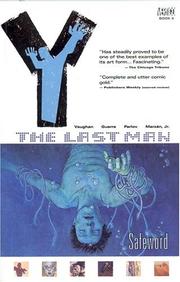
The most self-contained arc in the run and the one that goes furthest inside Yorick's head. Uncomfortable and much better than its reputation, and it changes how you read him for the rest of the series.
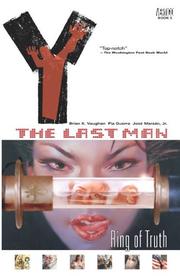
The volume that finally addresses why Yorick survived, and the midpoint of the whole series. Everything before this is setup; everything after is consequence.
Beyond the United States
BeginnerFollow the story out of America, and pick up the backstories the first half deliberately withheld.
▸ Study plan for this stage
Pace: 2–3 weeks for volumes six, seven and eight — around 127, 143 and 143 pages. Volumes seven and eight form a single movement and should be read back to back with no gap.
- Volume six takes the story onto a cargo ship, a submarine and the Australian navy; the series widens from a national to a global story and the pacing changes accordingly
- The international perspective corrects an imbalance in the first half — the die-off was a global event and the American political plot had begun to dominate it
- Volume seven moves to Australia and delivers the long-circled revelation about 355's background, and it is the point at which Yorick's continued existence stops being a secret
- A tabloid photographer becomes the plot device that ends the secrecy, which is a characteristically unglamorous choice — this series consistently resolves large stakes through small, ordinary means
- Volume eight moves to Japan and answers the mystery the series opened with; it should be read immediately after volume seven since the two form one continuous movement
- Ampersand's role, treated as comic relief for four volumes, becomes central here, and rereading the early volumes with that in mind is the series' best-hidden piece of construction
- The Culper Ring, an actual historical Revolutionary War spy network, is used as the series' fictional continuity of American secret government
- What did the die-off do outside the United States, and how does that change your sense of what the first five volumes covered?
- What does the revelation about 355 in volume seven recontextualise, and how far back does it reach?
- How does the end of Yorick's anonymity change the kind of story this is?
- Was the answer given in volume eight seeded fairly, or does it arrive from outside? Check the earlier volumes before deciding.
- How does Vaughan handle non-American settings — with specificity, or as backdrop?
- What has the series done with Ampersand across eight volumes, and when should you have noticed?
- Read volumes seven and eight in a single sitting if you can. They are one arc split by publication and lose momentum across a gap.
- After volume eight, go back to volume one and reread the first twenty pages. Several things are visible there that are invisible on a first read, and this is the single best reread in the series.
- Track how much of the plot in these three volumes is driven by ordinary human motives — jealousy, money, a photograph — rather than by the premise. It is most of it, and it is why the series holds up.
- Check your unanswered-questions list. Two volumes remain and this is the last point at which you can predict the ending honestly.
Next up: Every mystery the series raised is now either answered or in play, which leaves the last two volumes to do the thing long serialised comics almost never manage — end.

A cargo ship, a submarine and the Australian navy. The series widens from a national to a global story here, and the pacing shifts accordingly.

Australia, a tabloid photographer, and the moment Yorick's existence stops being a secret. It also delivers the reveal about Agent 355 that the previous six volumes have been circling.

Japan, and the answer to the mystery the series opened with. Read it immediately after Paper Dolls — the two form a single movement.
The Ending
BeginnerFinish the series and see whether its famously divisive conclusion earns itself.
▸ Study plan for this stage
Pace: 1–2 weeks for volumes nine and ten — around 144 and 167 pages. Read them consecutively and read volume ten in one sitting, including the final chapter. This is the payoff for roughly 1,400 pages and it should not be interrupted.
- Volume nine resolves the last of the outstanding mysteries and sets the pieces for the finale; the tone turns definitively toward loss here
- Volume ten collects the final five issues, including a closing chapter set sixty years later that a great many readers argue about
- The ending is a real ending rather than a stopping point — the series concludes on the terms it set for itself, which is rarer in ongoing comics than it should be
- The final issue's time jump is the single most divisive decision in the run; whether it is earned depends on what you think the series was about, and both readings are defensible
- The series is ultimately about grief and survivorship rather than about gender politics, and the last two volumes make that explicit — it is worth noticing how much of the sociology was scaffolding
- Yorick's arc across sixty issues is a slow movement from comic incompetence to something harder, and the ending only works if you have tracked it
- The escape-artist motif introduced in the first issue is paid off structurally in the last, which is the clearest evidence of how far ahead Vaughan was planning
- Does the ending earn the sixty-year time jump? Argue both sides before settling on one.
- Which of the questions on your list were answered, which were dropped, and does the balance feel deliberate?
- What is the series finally about, once the premise has done its work?
- How has Yorick changed between the first issue and the last, and where were the turning points?
- Does the ending's treatment of the die-off's cause matter to the emotional conclusion, or has the series moved past it?
- Having read all ten volumes, what does the premise's conflation of chromosome and gender cost the ending specifically?
- Read volume ten in one sitting with the final chapter included. Splitting it is the most common way readers end up unsatisfied with an ending they would otherwise have accepted.
- Before opening volume ten, write down how you expect it to end. Comparing that afterwards is the fairest test of whether the finale was earned or merely surprising.
- Reread the first issue immediately after the last. The bookending is deliberate and it is the strongest argument for the series' construction.
- Write a paragraph assessing the premise from 2002 as it reads now. The series is good enough to survive the criticism and honest engagement is better than either defensiveness or dismissal.
- Note which volume you would reread first. That answer usually identifies what you actually valued in the series.
Next up: With a completed sixty-issue story behind you, the obvious next step is the rest of Vaughan's creator-owned work — the same emphasis on character over concept, at a very different length.
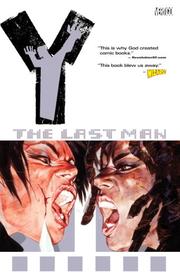
The last of the mysteries resolved, and the volume that sets the pieces for the finale. The tone turns definitively toward loss here.

The final five issues, including a closing chapter set sixty years later that a lot of readers argue about. It is a real ending rather than a stopping point, which is rarer in ongoing comics than it should be.
What to Read Next
IntermediateMove to the rest of Vaughan's creator-owned work with the same emphasis on character over concept.
▸ Study plan for this stage
Pace: An evening for the first volume, and then an open-ended commitment if it takes. Saga Volume 1 collects the opening arc and is a single sitting. Be aware of what you are stepping into: Saga is still an ongoing series with many volumes published and no announced end, which is the opposite kind of read
- Saga is Vaughan's best-known work and the natural next commitment: a war-crossed couple from opposite sides of a galactic conflict, their newborn daughter, and everyone sent to kill them
- Fiona Staples's art is the reason to read it in a way that is not true of Y — the design work, colour and character construction are the book's main pleasure and Staples is a co-creator rather than an illustrator
- It is warmer and stranger than Y, and considerably more explicit; the family comedy and the graphic violence sit in the same panel by design
- The narrative voice belongs to the daughter, Hazel, telling the story retrospectively — the same withheld-perspective trick Y used with its frame, deployed more openly
- Vaughan's constants are visible across both: a high-concept premise established in one page, then years of ordinary human consequence; casual cruelty to major characters; and dialogue that carries almost all the exposition
- Saga is ongoing rather than complete, so it offers no ending — which is precisely what made Y unusual and is worth knowing before you commit
- How quickly does Saga establish its premise compared with Y, and what does the difference in pacing suggest Vaughan learned?
- What does Staples's art contribute that a more conventional superhero-trained artist would not?
- How does Hazel's retrospective narration change what you are willing to fear for the characters?
- Which of Vaughan's habits from Y are visible in the first volume, and which has he abandoned?
- Knowing Saga is unfinished, is it worth starting now? There is a real answer either way and it depends on how you took Y's ending.
- Read Saga Volume 1 in one sitting and then wait a week before deciding whether to continue. It is designed to be immediately seductive and a week is a fair test.
- Compare the opening page of Saga with the opening page of Y. Both establish an impossible premise immediately, and the difference in confidence is a decade of craft.
- Note where Staples's colour is doing narrative work — scene transitions, emotional register, species distinction. It is the clearest short lesson in what colour does in comics.
- Decide your position on ongoing series before you commit. Having just finished a story that ended properly, you are unusually well placed to know what you want from the next one.
Next up: This is the end of the path: a complete sixty-issue story read in its ten collected volumes, plus the opening of the series Vaughan is best known for, so the natural next move is deeper into Saga or outward to the other creator-owned comics of the same era.

His best-known work and the natural next commitment: a war-crossed couple and their baby, drawn by Fiona Staples. Warmer and stranger than Y, and still running, so it is the opposite kind of reading experience — which is why it comes last here.
Discussion
Keep reading
Paths that share books, cover the same subject, or open a related topic.