Ex Machina Reading Order: Where to Start Brian K. Vaughan's Political Superhero Comic
Ex Machina is a fifty-issue comic by Brian K. Vaughan and Tony Harris about Mitchell Hundred, a civil engineer who gains the ability to talk to machines, spends an unsuccessful year as a costumed hero called the Great Machine, and is then elected Mayor of New York City after saving one of the towers on 11 September 2001. It is a superhero comic in which almost nobody punches anyone: the plots are gay marriage, a museum obscenity row, a transit strike, jury duty. Read it in trade order, because the series runs two clocks at once — the mayoral term moving forward and the origin filling in behind it — and both only pay off in sequence. One catalogue note before you start: the first collection resolves under its own title rather than as a numbered volume, and volume seven does not resolve here at all, so this path names it in place rather than pretending the run is unbroken.
The Premise, and Why It Is Not a Superhero Book
IntermediateMeet Hundred in both timelines, learn the structure — City Hall in the present, the Great Machine in flashback — and see the series establish that its real subject is governing rather than powers.
▸ Study plan for this stage
Pace: Two to three weeks for three trades. The First Hundred Days collects five issues, Tag and Fact v. Fiction five each, and a trade is comfortably an evening's read — but read them closer together than a week apart, because the two timelines are being cut against each other and the pattern only becomes
- The premise as book one states it: Mitchell Hundred, a civil engineer, is injured by an unexplained device and gains the ability to be obeyed by machines. He spends an unsuccessful year as a costumed hero called the Great Machine, then retires the identity and is elected Mayor of New York.
- The two-clock structure, which is the whole architecture: the mayoral term runs forward from January 2002 while flashbacks fill in the Great Machine year behind it. Both clocks pay off, and only in sequence.
- The genre inversion. This is a superhero comic in which the powers are almost never the solution — Hundred's ability lets him talk to a traffic light, and the actual problems are a snow-plough budget, a First Amendment fight and a jury summons.
- Why the Great Machine failed, which the flashbacks are steadily arguing: a masked man with a jetpack cannot fix a city, and the office of mayor can. That argument is the series' thesis and it is set up in these three volumes.
- The supporting cast established here and load-bearing later: Kremlin, the mentor who wants the Great Machine back; Bradbury, the bodyguard and only friend; Wylie and Angotti in the administration; Suzanne Padilla as the press.
- Tony Harris's art and its photo-referenced faces, which give the book a stillness unusual for the genre — most pages are people talking in rooms, and the storytelling has to carry political dialogue rather than action.
- Tag as the volume that declares what kind of book this is: a graffiti-related killing and a fight over a piece of public art, handled as a political problem with no clean answer rather than as a case to be solved.
- Fact v. Fiction pairs a jury-duty plot with the flashback strand beginning to deliver real information about the origin rather than colour. This pairing is where most readers commit to the run.
- What exactly can Hundred do? State the limits of the ability as the first trade establishes them, including what it costs him.
- How does the flashback strand relate to the present-day strand in each of these three volumes? Is it commentary, backstory, or plot?
- Why did the Great Machine fail? Give the book's answer and say whether the flashbacks actually demonstrate it.
- In Tag, what is the political problem, and what would a conventional superhero comic have done with the same setup?
- What does the jury-duty plot in Fact v. Fiction let Vaughan say that a City Hall plot could not?
- What do you know about the origin of Hundred's power after three volumes, and what has been deliberately withheld?
- Keep a two-column log as you read: present-day plot beats on one side, flashback beats on the other, with the issue number for each. By the end of Fact v. Fiction the pattern of what gets revealed when will be visible on the page, and you will use the same log through the endgame.
- Count the panels in any one issue where Hundred's power is used to solve the immediate problem. The number is small, and having the actual figure is the fastest way to see what kind of book this is.
- Take the art fight in Tag and write out both sides of the argument as the book gives them, without deciding. Vaughan is deliberately refusing to resolve it, and reconstructing the balance is how you check that he really is.
- Track Kremlin across all three volumes and note every time he asks Hundred to put the costume back on. His persistence is a plot engine set running here and paid off much later.
Next up: The structure and the premise are established; the next stage is the middle of the term, where the political stories get harder and the origin stops being background.

The first trade, and the correct starting point: the election, the origin, and the snow-plough problem that sets the tone. Note the edition convention this path uses — the first collection is catalogued under its bare volume title, because a numbered query for volume one returns an undifferentiated series record instead.
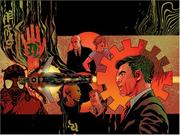
Tag, the second collection, and the arc that tells you what kind of book this is: a graffiti-related killing and a First Amendment fight over a piece of art, run as a political problem rather than a case. From here the numbered volumes resolve cleanly.
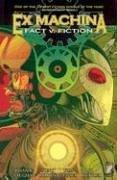
Fact v. Fiction, in which Hundred is called for jury duty and the flashback strand starts delivering real information about the origin rather than colour. Read it directly after volume two; the pairing is where most readers commit to the run.
The Term in Office
IntermediateFollow the middle of the mayoralty, where the political storylines get harder and the origin mystery stops being background — this is the stretch that turns a series of issue-of-the-week arcs into one plot.
▸ Study plan for this stage
Pace: Three weeks for three trades, five issues each. Read them in order and without a long gap — the fallout from Smoke Smoke runs straight into Power Down. March to War is built around the February 2003 anti-war demonstrations and depicts crowd policing and a bombing; Smoke Smoke involves drug use and a
- March to War is the strongest single political arc in the run: a mayor obliged to police a demonstration he privately agrees with, with no position available to him that is both honest and possible. This is the first time the job visibly costs him something.
- The structural point March to War makes about the office: a mayor's power is almost entirely over process — permits, police deployment, logistics — and almost never over the substance people are protesting about.
- Smoke Smoke moves the staff from functionaries to characters. Kremlin, Bradbury, Wylie and Angotti each get an interiority the earlier volumes did not give them, and the emotional core of the endgame is assembled here.
- The pattern of Hundred's compromises. Track what he trades away in each volume and to whom; by Power Down the accumulated ledger is the plot rather than the background.
- Power Down is the turn: a citywide blackout, and the source of Hundred's ability becomes the actual subject rather than a running question. Everything in the endgame stage assumes what happens here.
- The two strands begin to converge in Power Down. The flashbacks stop being a separate story about a failed superhero and start being an explanation of the present-day threat.
- Harris's page design in the blackout sequences, which is the most formally ambitious art in the run — the book has to depict a city with no light in a medium that is entirely light.
- The issue-of-the-week structure quietly ends across these three volumes. What looked like a series of self-contained political arcs turns out to have been one plot, and identifying the point where that becomes true is worth doing.
- In March to War, what options does Hundred actually have? List them and say what each costs.
- What does the arc argue about the limits of mayoral power? Is the argument made by the plot or asserted by a character?
- Which staff member changes most in Smoke Smoke, and what is revealed about them?
- What is established about the origin of Hundred's ability in Power Down? Be precise about what is shown and what is claimed.
- At what point does the series stop being a sequence of standalone arcs? Name the issue and defend the choice.
- List everything Hundred has compromised on across six volumes. What is the pattern?
- Continue the two-column log through Power Down and mark the point where the two columns start referring to each other. That crossover point is the series' hinge and it is visible in your own notes before it is stated in the text.
- Reread the demonstration sequence in March to War and note, panel by panel, whose point of view the art takes — mayor, police, protestors, press. Harris shifts it deliberately and the shifts carry the argument.
- Write out the compromise ledger: for each volume so far, what Hundred gave up and what he got. Six rows. The endgame is a settling of this account and having it written down makes the last volumes land.
- Take the blackout issues and cover the dialogue with a strip of paper, then read the art alone. Power Down is the clearest demonstration in the run of how much Harris is carrying, and the exercise makes it obvious.
- Compare an early Great Machine flashback from The First Hundred Days with one from Power Down. The tone changes from nostalgic to ominous, and the two placed side by side show how the series retunes its own past.
Next up: The origin has stopped being a mystery and become a threat; the endgame stage takes the two timelines to their convergence and to an ending a good number of readers actively dislike.
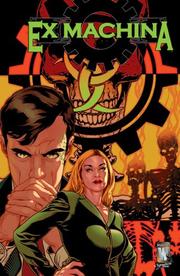
March to War, built around the 2003 anti-war protests and the impossible position of a mayor who has to police a demonstration he privately agrees with. The strongest single political arc in the run and the first time the job visibly costs him something.
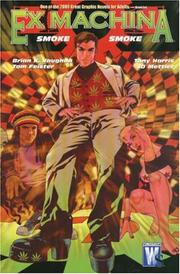
Smoke Smoke, where the personal and the political collide and Hundred's staff — Kremlin, Wylie, Bradbury, Angotti — stop being functionaries and become the emotional core. Read in order: the fallout runs straight into the next volume.
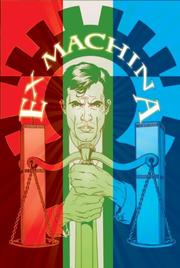
Power Down, a citywide blackout and the volume where the source of Hundred's ability becomes the actual subject rather than a running question. The turn happens here, and the endgame stage assumes it.
The Endgame
IntermediateRead the closing arcs, in which the origin is explained, the political story and the science-fiction story finally merge, and the series delivers an ending that a good number of readers actively dislike.
▸ Study plan for this stage
Pace: Three weeks. Dirty Tricks, Ring Out the Old and Term Limits collect four to five issues each and read at the same pace as the earlier trades. Read them in immediate sequence — Ring Out the Old exists to load the finale and loses most of its force if you leave a month between them. A gap to know abou
- Dirty Tricks moves the endgame into an election year, which forces every relationship in the book into a transactional register. The political machinery that has been background becomes the plot.
- What the missing seventh volume carries, stated so you can read around it: an escalation of the origin mystery on an international stage. Dirty Tricks refers back to it, and the references are followable without having read it.
- Ring Out the Old is where the two timelines converge properly — the Great Machine year and the mayoral term stop being two stories. Everything the compromise ledger recorded is totalled here.
- Term Limits and the deliberate anti-heroism of the ending: the resolution is about compromise, not about a victory, and it recontextualises the political arcs rather than capping them.
- Why the ending divides readers. It withholds the emotional payoff a fifty-issue run implies is owed, and it makes a claim about what Hundred was doing all along that many readers experience as a betrayal of the character. Whether that is a flaw or the point is the question the stage exists to make y
- The origin answer itself, and the test to apply to it: does the explanation account for what was shown in the first three volumes, or does it require rereading them differently?
- The final state of each supporting character, and the fact that the series is more interested in the fates of Kremlin, Bradbury and Wylie than in the science-fiction resolution. The staff established in Smoke Smoke are the ending's real subject.
- The series' overall argument, now fully stated: that governing is the harder and more consequential form of heroism, and that the person who does it is compromised by it. Term Limits is that argument's conclusion and it is not a comfortable one.
- How does the election year change the incentives of every character in Dirty Tricks? Take three and answer for each.
- In Ring Out the Old, what specifically converges? Name the flashback thread and the present-day thread it meets.
- What is the answer to the origin mystery, and does it account for what you were shown in the first three volumes?
- What is the ending's claim about Hundred, and at what point in the run was it first available to be inferred?
- Why do readers dislike the ending? State the objection in its strongest form and then answer it.
- Was the ending earned by the fifty issues before it? Argue from the compromise ledger rather than from taste.
- Complete the two-column log through Term Limits and then read your own notes straight through. The whole two-clock structure will be visible in one document, which is the only way to see it whole.
- Immediately after finishing Term Limits, reread the first issue in The First Hundred Days. Write down every panel that now reads differently. Vaughan has planted the ending in the opening and the reread is the proof.
- Take the compromise ledger from stage two, complete it through the final volume, and then write the one-sentence verdict on Hundred that the ledger supports. If that verdict differs from your gut reaction to the ending, work out why.
- Write the ending you expected before reading Term Limits, then write the one you got, and set the two beside each other. The gap between them is the divisiveness of this book made specific rather than reported.
- Track Bradbury from his first appearance to his last and write his arc in five sentences. He is the character the ending costs most, and following him alone is a fair test of whether the series earned it.
Next up: Ex Machina is finished; the last stage places it in Vaughan's work and picks the right follow-up from the series he was writing at the same time.

Dirty Tricks, and the point to note the gap: volume seven, Ex Cathedra — Hundred at the Vatican, and the volume that escalates the mystery — does not resolve in this catalogue, so read it separately before this one if you can find it. Dirty Tricks moves the endgame into an election year and works without it, though it is better with.
Ring Out the Old, the penultimate collection, where the two timelines converge and the cost of everything Hundred has done to stay in office is totalled up. Do not read out of order — this volume exists to load the finale.

Term Limits, the last trade and the answer to what the whole run was for. It is a divisive ending, deliberately unheroic and openly about compromise, and it recontextualises the political arcs you have just read. Read it immediately after volume nine.
Where to Go Next in Vaughan
IntermediatePlace Ex Machina in its author's work and pick the right follow-up, given that Vaughan wrote it concurrently with the series most readers know him for.
▸ Study plan for this stage
Pace: Three to four weeks for the three books, or open-ended if one of them takes. Y: The Last Man Vol. 1 collects five issues and is a sample rather than a commitment — the full series runs sixty issues across ten trades. Pride of Baghdad is a single self-contained graphic novel of around 130 pages and i
- Y: The Last Man was being written concurrently with Ex Machina, which makes it the natural comparison: the same interest in institutions under stress, the opposite setting, and a far more conventional adventure structure.
- The shared preoccupation across both series — what happens to the machinery of government and society when a single premise breaks it — and the difference in method. Ex Machina examines it from inside an office; Y examines it on the road.
- Pride of Baghdad, with Niko Henrichon, takes four lions who escaped Baghdad Zoo during the 2003 bombing and uses them to argue about liberation, occupation and whether freedom given by an invader is freedom. It is the same politics as March to War compressed into one sitting.
- The fable form and its risk: talking animals as a vehicle for a war argument invites the charge that the politics are being simplified. Judge whether the book earns the form, and compare it directly with how March to War handled the same subject in a realist register.
- Paper Girls, with Cliff Chiang, is the later Vaughan: four newspaper delivery girls in 1988 caught in a time war. The structural cleverness is intact and the political realism is entirely absent.
- Reading Paper Girls last is the point of the stage: it is the control condition. It shows what Vaughan's storytelling does without the civic subject matter, which is a fair way to judge what Ex Machina was actually attempting.
- The through-line across all four works: Vaughan constructs plots as machines with early plants and precise payoffs, and he is consistently more interested in institutions and rules than in individual heroics.
- Saga, his long-running series with Fiona Staples, is the other obvious destination and is a much larger commitment than anything here.
- What do Y: The Last Man and Ex Machina share as premises, and how do their approaches differ?
- In Pride of Baghdad, what is each lion's position on freedom? Name all four and say which one the book endorses, if any.
- Does the fable form strengthen or weaken the argument in Pride of Baghdad? Compare it directly with March to War.
- What is missing from Paper Girls that Ex Machina had? Is the book weaker for it, or just different?
- Across all four works, what is Vaughan consistently interested in? Answer with evidence from each.
- Having read the whole path, was Ex Machina a superhero comic? Defend the answer against the strongest objection.
- Read the first issue of Y: The Last Man and the first issue of Ex Machina back to back and compare how each establishes its premise and its protagonist. Written by the same man in the same period, the difference in how much is explained on page one is striking.
- Read Pride of Baghdad in one sitting and then reread March to War the same day. Two treatments of the 2003 invasion by the same writer, one realist and one fabular, is as clean a comparison as comics offer.
- Take one Vaughan plot device from Ex Machina — a plant in an early issue paid off much later — and find the equivalent in Paper Girls Vol. 1. The machinery is identical and the subject matter is not.
- Write two paragraphs deciding what to read next and why: Y in full, Saga, or nothing. Use what you have learned about what you actually valued in Ex Machina, not what is best regarded.
- Write the one-page case for Ex Machina you would give someone who does not read comics, naming the two volumes you would hand them and the two you would warn them about. That case is what fifty issues and this path were for.
Next up: This is the final stage; you have read the fifty-issue run in trade order with its one catalogue gap named rather than hidden, and placed it inside the work of the writer who made it.

The obvious next read, and the series Vaughan was writing at the same time — every mammal with a Y chromosome dies except one man and his monkey. Same interest in institutions under stress, opposite setting, and it uses the same bare-volume trade convention as this path.
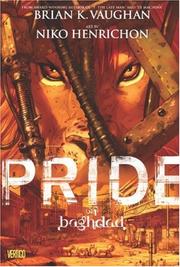
A single self-contained graphic novel with Niko Henrichon, about four lions who escape Baghdad Zoo during the 2003 bombing. Read it after Ex Machina's March to War arc if you want the same politics distilled into one sitting — it is the shortest thing here and the most direct.

The later Vaughan, with Cliff Chiang: four newspaper delivery girls in 1988 caught in a time war. Read it last, as the contrast — the same structural cleverness with none of the political realism, which is a fair way to judge what Ex Machina was actually attempting. His long-running Saga is the other obvious destination.
Discussion
Keep reading
Paths that share books, cover the same subject, or open a related topic.